🎬 Chuck Norris Biography: Remarkable Rise of a Martial Arts Star

Few figures have shaped the image of modern toughness quite like Chuck Norris, whose name became shorthand for strength, discipline, and quiet authority. Emerging during a period when action cinema was redefining itself, he stood apart by grounding his screen presence in real-world martial arts mastery rather than theatrical flair. This authenticity gave his performances a weight that audiences recognized immediately, turning him into a cultural touchstone that extended far beyond film.
Chuck Norris stands as one of the most recognized action figures in American entertainment, known for his martial arts mastery and commanding screen presence. He gained global attention through films like Way of the Dragon (1972) and later defined television with Walker, Texas Ranger (1993–2001). His career bridges competitive karate, Hollywood action cinema, and cultural icon status. Over time, his name became synonymous with discipline, strength, and enduring influence.
Norris brought a distinct blend of restraint and intensity to his roles, often portraying men who spoke little but carried decisive force. In an era dominated by larger-than-life personalities, he cultivated a style built on control, precision, and moral clarity. His work helped bridge the gap between traditional martial arts philosophy and mainstream entertainment, influencing how combat and heroism were depicted across television and film for decades.
Over time, his reputation moved beyond performance into folklore, as his persona inspired humor, myth-making, and recognition across generations. What began as a disciplined career in martial arts and action storytelling evolved into a lasting cultural identity, one that continues to symbolize endurance, self-reliance, and a distinctly American vision of strength.
His transition from undefeated karate champion to global action star was not built on hype, but on real-world discipline that audiences could feel in every performance.
👶 Early Life
Summary: His early life laid the groundwork for a mindset built on consistency and personal discipline.
Chuck Norris was born on March 10, 1940, entering a world far removed from the fame and recognition that would later define his name. His early years reflected a modest, working-class upbringing, shaped by a strong sense of perseverance and responsibility. Those close to him often noted a quiet determination, the kind that does not call attention to itself but builds steadily over time.
Life at home carried its share of challenges, which helped form the foundation of his independent nature. Rather than seeking the spotlight, he developed a habit of self-reliance and discipline, qualities that would later become central to both his personal identity and professional reputation. There was little indication at the time that he would grow into a figure recognized worldwide, yet the groundwork was already being laid in subtle ways.
As he moved through his early years, a pattern began to emerge, one marked by focus, structure, and a growing interest in physical discipline. These formative influences built gradually, shaping a mindset that favored consistency over flash. In many respects, the traits that would later define his public image were already present, quietly taking hold long before the world took notice.
Explore the Biographies of Iconic Celebrities
🥋 Martial Arts Career
Summary: His martial arts career established him as a champion and respected figure in competitive karate.
Chuck Norris built his reputation through measurable success in competition, earning titles that placed him among the top martial artists of his time. On June 24, 1967, he won S. Henry Cho's All-American Karate Championship at Madison Square Garden, a victory that helped solidify his standing on the national stage. He went on to claim multiple professional middleweight karate championships and remained undefeated for several years, recording victories over respected fighters such as Joe Lewis, Allen Steen, and Skipper Mullins before retiring from competition.
His achievements were not limited to tournament wins. Norris later received formal recognition within the martial arts community, including being named “Fighter of the Year” by Black Belt magazine and eventually earning a place in the Black Belt Hall of Fame. These honors reflected both his competitive dominance and his broader influence on the discipline, as he helped bring structured, professional attention to American karate during a period of rapid growth.
At the same time, Chuck Norris became a sought-after instructor, teaching martial arts to a number of high-profile figures. Among his students were Steve McQueen, who encouraged him to pursue acting, along with Priscilla Presley, Bob Barker, and Donny and Marie Osmond. Through both competition and instruction, he bridged the gap between traditional martial arts and popular culture, extending his influence far beyond the tournament circuit.
He was the first Westerner in documented history to receive an 8th-degree black belt in Taekwondo.
🎬 Film and TV Career
Summary: His film and television work shaped the modern action hero and expanded his global recognition.
Chuck Norris entered the film world with a moment that still defines martial arts cinema, his appearance opposite Bruce Lee in Way of the Dragon (1972). That single fight sequence placed him on the global stage and led to a steady climb into leading roles. By the late 1970s, he was headlining films such as Breaker! Breaker! (1977), Good Guys Wear Black (1978), and A Force of One (1979), working alongside actors like Jennifer O’Neill and Clint Walker. These films established his screen identity as a disciplined, no-nonsense figure whose strength came from control rather than excess.
As the 1980s began, Chuck Norris expanded his presence with The Octagon (1980), which explored the world of ninja combat, followed by An Eye for an Eye (1981), featuring Christopher Lee, and Forced Vengeance (1982). He continued with Silent Rage (1982), blending horror and action, before taking on one of his most memorable roles in Lone Wolf McQuade (1983), where he squared off against David Carradine. Around this period, he also shared the screen with legendary actor Lee Marvin along George Kennedy in The Delta Force (1986), a film that paired Norris’s modern action style with Marvin’s classic tough-guy presence.
His box office strength reached a peak with the Missing in Action series, including Missing in Action (1984), Missing in Action 2: The Beginning (1985), and Braddock: Missing in Action III (1988). These films connected strongly with audiences and helped define the era’s action landscape. He also starred in Code of Silence (1985) with Henry Silva and Dennis Farina, often regarded as one of his strongest performances, along with Invasion U.S.A. (1985), The Delta Force (1986), Firewalker (1986) with Louis Gossett Jr., and Hero and the Terror (1988). Each project reinforced his reputation as a reliable lead in action cinema.
In the 1990s, Chuck Norris shifted to television with Walker, Texas Ranger (1993–2001), a series that became one of the most recognized shows of its time. Starring alongside Clarence Gilyard Jr., Sheree J. Wilson, and Noble Willingham, he brought martial arts into a weekly crime format that emphasized justice, discipline, and moral clarity. The show ran for eight seasons and continued with television films such as Walker, Texas Ranger: Trial by Fire (2005), maintaining a strong presence in syndication.
Later appearances were more selective, but Chuck Norris returned to the big screen in The Expendables 2 (2012), joining Sylvester Stallone, Arnold Schwarzenegger, Jason Statham, and Jean-Claude Van Damme in a film that celebrated classic action stars. Though his output slowed, his body of work from the 1970s through the 1990s remained widely viewed, securing his place as one of the defining figures in American action film and television.
Walker, Texas Ranger: The Complete Collection
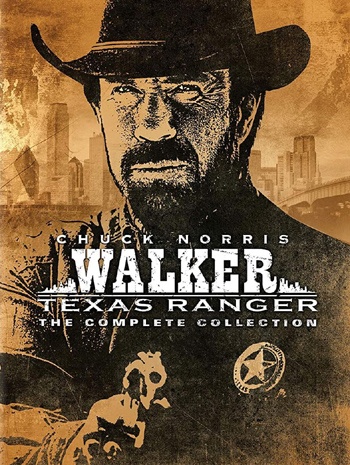
Product Description:
Step into the world of justice and action with Walker, Texas Ranger, the long-running television series that helped define Chuck Norris as a household name. This complete collection brings together every episode from the hit series, following Cordell Walker as he upholds the law with strength, discipline, and unwavering moral code.
Set Highlights:
• Includes all episodes from the full series run (1993–2001) across multiple discs.
• Starring Chuck Norris, Clarence Gilyard Jr., Sheree J. Wilson, and Noble Willingham.
• Features a blend of martial arts action, crime drama, and character-driven storytelling.
• Showcases iconic fight scenes and moral themes that became a signature of the series.
Why You’ll Enjoy This Set:
This collection captures the essence of 1990s television action, combining fast-paced storytelling with a strong sense of right and wrong. Each episode delivers a mix of suspense, physical skill, and grounded heroism, making it easy to see why the show remained popular for years. Whether revisiting the series or discovering it for the first time, this set offers a complete look at one of television’s most recognizable lawmen.
He trained law enforcement and military personnel, extending his influence beyond entertainment into real-world application.
❤️ Personal Life
Summary: His personal life reflected strong values centered on family, service, and public engagement.
Chuck Norris has maintained a personal life that reflects the same discipline and structure seen in his professional career. He has been married more than once, most notably to Gena O’Kelley, with whom he shares a long-standing partnership. Family has remained central to his life, and he is the father of several children, balancing his public career with a strong commitment to those closest to him.
Outside of entertainment, Norris has devoted considerable time to philanthropy and community work. He founded the Kickstart Kids program, an initiative designed to teach character development and discipline through martial arts training in schools. His efforts in this area reflect a broader interest in mentorship, personal responsibility, and providing opportunities for younger generations to build confidence and direction.
In later years, Norris has focused more on writing, faith-based projects, and public speaking. He has authored books that explore his views on discipline, belief, and personal growth, while also remaining active in causes that align with his values. Though he stepped back from regular film and television work, his personal life continued to reflect a commitment to family, purpose, and service.
In addition, Chuck Norris became increasingly visible in political and public discourse, aligning himself with conservative causes and figures. He expressed support for leaders such as George H. W. Bush, George W. Bush, Mike Huckabee, and later publicly endorsed Ted Cruz during the 2016 presidential race, and often spoke on issues related to personal responsibility, faith, and American values. While not a politician himself, his public stance added another dimension to his later-life identity, reflecting convictions consistent with the disciplined and principled image he carried throughout his career.
Norris created his own martial arts system called Chun Kuk Do, blending multiple fighting styles into one discipline.
🕊️ Later Years
Summary: His later years focused on legacy, mentorship, and continued public influence.
In his later years, Chuck Norris stepped away from the steady pace of film and television, choosing instead to focus on family, writing, and select public appearances. Though no longer a regular presence on screen, he remained closely tied to his legacy through interviews, speaking engagements, and continued involvement in martial arts organizations. His influence did not fade, as reruns of Walker, Texas Ranger (1993–2001) and his earlier films kept his image in public view.
Even as he slowed professionally, Chuck Norris stayed active in personal pursuits and maintained a visible connection with fans. He continued to write books, share reflections on discipline and faith, and support programs like Kickstart Kids, which carried forward his long-standing commitment to mentoring younger generations. His later years reflected a quieter version of the same principles that defined his career, consistency, purpose, and a strong sense of personal values.
Chuck Norris passed away on March 19, 2026, at the age of 86 after being hospitalized in Hawaii following a medical emergency. He was surrounded by family, and his passing was described as peaceful, marking the end of a life that had spanned martial arts excellence, film and television success, and a lasting cultural impact.
🏆 Legacy
Chuck Norris leaves behind a legacy that extends far beyond film and television, rooted in a rare combination of real-world achievement and cultural influence. As a martial artist, he helped bring legitimacy and structure to competitive karate in the United States, setting standards that others would follow. His tournament success and later recognition, including his induction into the Black Belt Hall of Fame, placed him among the most respected figures in the discipline’s modern history.
In entertainment, Norris defined a particular kind of action hero, one built on restraint, discipline, and moral clarity rather than excess. Films like Lone Wolf McQuade (1983), Code of Silence (1985), and the Missing in Action series (1984–1988), along with Walker, Texas Ranger (1993–2001), established a consistent screen identity that resonated across decades. His influence can be seen in later action stars who adopted a similar balance of physical credibility and quiet authority.
Beyond his professional work, Chuck Norris became a lasting figure in popular culture through an unexpected avenue, the widespread humor and myth-making that turned his name into a symbol of near-mythical toughness. While often exaggerated, these stories reflected a deeper truth about his public image and enduring recognition. Taken together, his achievements in martial arts, entertainment, and cultural identity form a legacy embedded in American popular history.
🗣️ Why They Still Matter:
Chuck Norris remains a lasting figure in American culture because his image was built on authenticity rather than illusion. His work in martial arts, film, and television created a standard of discipline and credibility that continues to influence both entertainment and public perception of strength and character.
Further Reading & Resources
📖 Read: Chuck Norris: Biography, Actor, Martial Arts, Facts
🔍 Explore: Chuck Norris - Biography - Wikipedia