☠️ Welcome to the Ultimate Dangerous Halloween Vacations Guide
Haunted houses are fun. You know the werewolf is a guy named Darren. The fog machine smells like a county fair. Somebody's kid is running the chainsaw. You scream, you laugh, you buy a funnel cake on the way out. Good times.
But what if you wanted Halloween to feel genuinely, uncomfortably, wonderfully real? What if the danger was not theatrical but actual, the atmosphere not manufactured but earned by decades of catastrophe, war, geological fury, or biological nightmare? What if the most frightening thing about your Halloween destination was not the decorations, but the place itself?
That is exactly what this list is about. These are real places on this actual planet where nature, history, and circumstances have conspired to create destinations that no haunted house designer could improve upon. We ranked them using four categories because not every dangerous place is equally creepy, equally photogenic, or equally worth the trip. A place can be terrifying and also completely inaccessible. A place can be moderately dangerous and absolutely spectacular. The ratings reflect all of it.
Pack wisely. Tell someone where you are going. And whatever you do on Snake Island, do not sit down in the grass.
The Rating System
👻 Scare Factor: How deeply unsettling the destination feels in person, beyond just knowing it is dangerous.
☠️ Danger Level: The actual, documented, measurable risk to a human visitor.
📸 Photo Opportunity: How spectacular and visually extraordinary the location is for photography.
⭐ Worth Visiting: The overall bucket-list verdict, balancing atmosphere, access, uniqueness, and value of the experience.
Each category is rated on a scale of one to five. Five means maximum. One means you could probably find something scarier in your own attic.
7 Scary Ghost Stories That Will Keep You Up on Halloween
#1 🇧🇴 North Yungas Road, Bolivia
The World's Most Dangerous Road
👻 Scare Factor: ⭐⭐⭐⭐⭐
☠️ Danger Level: ⭐⭐⭐⭐⭐
📸 Photo Opportunity: ⭐⭐⭐⭐⭐
⭐ Worth Visiting: ⭐⭐⭐⭐
Why It's Famous
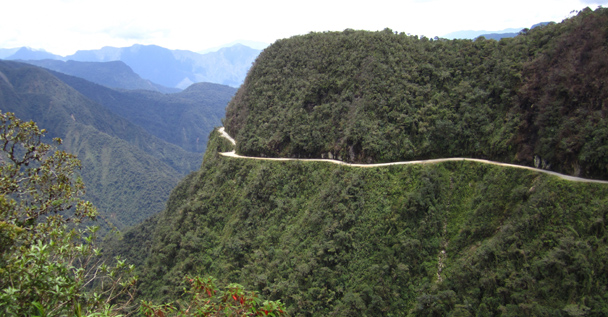
The North Yungas Road in Bolivia earned its nickname, El Camino de la Muerte, the Death Road, honestly. In 1995, the Inter-American Development Bank made it official by declaring it the most dangerous road in the world. Built in the 1930s during the Chaco War by Paraguayan prisoners of war using hand tools and sheer desperation, this sixty-four kilometer single-lane track drops more than 3,500 meters from the Andes into the Amazon rainforest. White crosses mark nearly every bend. Rusting truck hulks lie at the bottom of canyons so deep that recovery was never attempted. A man named Timoteo, who lost his own family when their vehicle went over the edge in 1978, spent twelve years living in a timber shelter at the road's most dangerous point, personally directing traffic to stop more people from dying. That is the kind of road this is.
Why It's Dangerous
Before a safer bypass opened in 2006, this road killed an estimated 200 to 300 people every year. The road is barely wide enough for one vehicle in places. One side is solid cliff face. The other side is a 600-meter drop into a gorge. Bolivia actually inverted its own traffic laws on this stretch, requiring drivers to keep left so they could lean out their windows and watch their outer tires hang over the edge. Hairpin turns, fog, waterfalls pouring directly onto the road, and no guardrails make this a road where even a moment of inattention is permanently consequential. In one stretch in the mid-1990s, witnesses counted twenty-six vehicles going off the edge in a matter of weeks.
Halloween Appeal
You are riding or driving a road built by prisoners of war, lined with memorials to people who did not make it, through fog so thick that the cliff edge disappears entirely. The cloud forest presses in from above. The valley below is invisible. Every vehicle you meet coming the other way requires both drivers to perform a choreography of survival on a ledge barely wider than their vehicles. There is no haunted house anywhere on Earth that delivers this kind of atmospheric terror, because no haunted house has stakes this real.
Can You Visit?
Yes, and around 25,000 tourists do every year, mostly on mountain bikes with guided tour operators who provide equipment and some degree of safety infrastructure. Since the bypass road took most local traffic off the Death Road, it has been re-purposed as a cycling destination. The scenery is genuinely extraordinary, with waterfalls, cloud forest canopy, and views into the Amazon basin that would be worth the trip even if the road were perfectly safe. Tour operators depart from La Paz. The best season runs from May to October when rain is less likely to turn the gravel surface into a skating rink.
Halloween Verdict
The Death Road is the only entry on this list that combines five-star terror with five-star photography with five-star access into one genuinely unforgettable experience. If you are going to spend Halloween anywhere on this list, go here. Ride the bikes. Look over the edge. Think about Timoteo. Then ride very, very carefully.
#2 🇫🇷 Zone Rouge, France
The Forbidden Land of World War I
👻 Scare Factor: ⭐⭐⭐⭐⭐
☠️ Danger Level: ⭐⭐⭐⭐
📸 Photo Opportunity: ⭐⭐⭐⭐
⭐ Worth Visiting: ⭐⭐⭐⭐
Why It's Famous
In 1919, the French government looked at a stretch of northeastern France that included the former battlefields of Verdun and the Somme and made a declaration so blunt it has never been improved upon. Completely devastated. Damage to properties: 100%. Damage to agriculture: 100%. Impossible to clean. Human life impossible. They called it the Zone Rouge, the Red Zone, and they were not exaggerating. At its peak, it covered roughly 460 square miles of land, an area the size of a major modern city, declared permanently unfit for human habitation. Six entire villages were erased from the map. Their road signs still exist near Verdun, reading simply village detruit: destroyed village. They died for France.
Why It's Dangerous
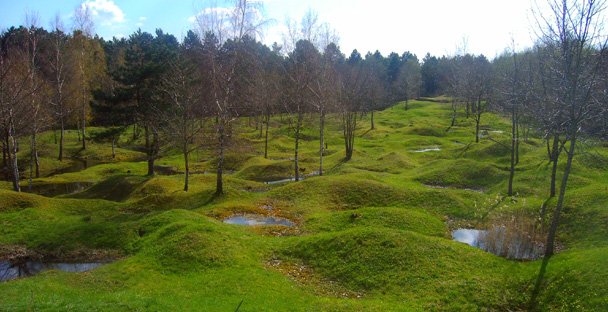
More than a century after the guns fell silent, the Zone Rouge is still fighting back. The soil in the worst areas contains arsenic at concentrations thousands of times above safe levels. Up to 99 percent of all plants in certain zones cannot survive because of what the land absorbed. More than 60 million artillery rounds were fired into this region during World War I alone. Hundreds of those shells were filled with chemical agents including chlorine, mustard gas, and phosgene. Farmers in the surrounding areas still plow up what is grimly known as the iron harvest every spring. In the worst areas, there are estimated to be up to 300 unexploded shells per hectare in just the top six inches of soil. France's demining agency estimates that at current rates, it could take 700 years to fully clear the remaining ordnance.
Halloween Appeal
Dense forest has grown back over what was once an absolute moonscape of shell craters and barbed wire. The trees are tall. Moss covers the old craters. Nature appears to have healed. But the silence is wrong. No birds in certain patches. No undergrowth. The ground itself bulges in places where shells have not yet been found. Ghost villages exist at the edges of the zone, their street patterns still visible, their names still on maps that nobody lives on. Walking through the Zone Rouge on an October day, with the fog coming off the Meuse River and the forest closing in around the old trench lines, is about as close to genuine supernatural atmosphere as a living landscape can produce.
Can You Visit?
Parts of it, yes. The Zone Rouge has shrunk from its original 460 square miles to approximately 65 to 168 square miles today, as remediation has made some areas accessible. The battlefield memorials, cemeteries, and museums around Verdun and the Somme are among the most visited historic sites in France and are entirely safe. The Ossuary at Douaumont contains the remains of more than 130,000 unidentified soldiers. The restricted inner zones are genuinely off-limits and are monitored by French authorities. Do not go into the restricted areas. Not because of the mood. Because of the shells.
Halloween Verdict
The Zone Rouge is the only destination on this list where the danger is literally invisible, buried, and patient. It has been waiting more than a hundred years already. It is in absolutely no hurry. Visit the accessible areas, pay your respects, and walk carefully near the tree lines. This is history that did not end in 1918 and won't for centuries more.
#3 🇺🇸 Centralia, Pennsylvania
America's Real-Life Silent Hill
👻 Scare Factor: ⭐⭐⭐⭐⭐
☠️ Danger Level: ⭐⭐⭐⭐
📸 Photo Opportunity: ⭐⭐⭐⭐⭐
⭐ Worth Visiting: ⭐⭐⭐
Why It's Famous
In May 1962, someone set fire to trash in an abandoned strip-mine pit outside of Centralia, Pennsylvania. This was not the first time they had done it. It was just the first time the fire found its way through an unblocked opening into the vast interconnected labyrinth of abandoned anthracite coal mines beneath the town. More than sixty years later, the fire is still burning. The mines beneath Centralia contain enough anthracite coal to feed the fire for another hundred years or more. The town that once had 2,500 residents and fourteen active mines has fewer than six remaining inhabitants. The federal government revoked its ZIP code. Pennsylvania demolished most of the buildings. The ground occasionally opens up without warning and there are places where the temperature beneath the surface exceeds 900 degrees Fahrenheit. The video game Silent Hill was directly inspired by Centralia. You will understand why the moment you arrive.
Why It's Dangerous
The Pennsylvania Department of Environmental Protection describes the area surrounding the fire as extremely dangerous, noting that walking in the immediate area could result in serious injury or death. The dangers are real and multiple. Carbon monoxide and other toxic gases seep from cracks in the ground without warning. The earth is prone to sudden and unexpected collapse. In 1981, a twelve-year-old boy named Todd Domboski fell into a sinkhole that opened beneath his feet without warning. The hole was 150 feet deep. The ground at the bottom was searing hot. He survived only because he managed to grab a tree root before his cousin pulled him out. The sinkholes are still a risk.
Halloween Appeal
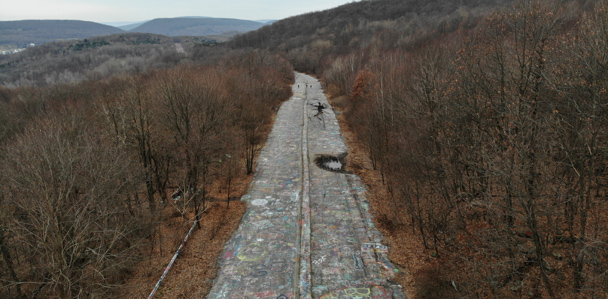
Smoke rises from cracks in the pavement along old Route 61. The road itself has buckled and cracked so badly it was closed permanently, and the graffiti highway that replaced it is one of the most photographed abandoned roads in the United States. Driveways lead nowhere. Trees die in patches where the heat from below kills their roots. The cemeteries are still maintained, which is its own kind of eerie: the dead cannot leave but neither can the living who tend their graves. On a cold October morning, with steam rising from fissures in the ground and the surrounding forest completely silent, Centralia is the most genuinely unsettling place in America you can drive to in an afternoon.
Can You Visit?
Yes, and many people do, though the Pennsylvania DEP strongly discourages visits to the immediate area near active ground disturbance. The graffiti highway and surrounding streets can be walked, and the view from the old road is spectacular in a deeply melancholy way. The small remaining community and the churches are private property and should be treated with respect. Do not attempt to enter any structure. Do not walk on ground that shows signs of heat, subsidence, or gas venting. This is a real ghost town with real fire under it, not a theme park.
Halloween Verdict
Centralia is the easiest destination on this list to reach and arguably the most photographically stunning. The combination of smoke, cracked earth, dead vegetation, and the ghostly remains of an entire American town creates imagery that no set designer could replicate. Go in the morning. Bring good boots. Stay on solid ground. And do not miss the graffiti highway.
#4 🇺🇸 Salton Sea, California
California's Forgotten Apocalypse
👻 Scare Factor: ⭐⭐⭐⭐
☠️ Danger Level: ⭐⭐⭐
📸 Photo Opportunity: ⭐⭐⭐⭐⭐
⭐ Worth Visiting: ⭐⭐⭐
Why It's Famous
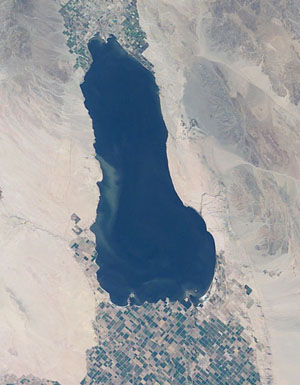
In the 1950s and 1960s, the Salton Sea was a celebrity playground. Dean Martin boated on it. Frank Sinatra drank on its shores. Developers built resorts along its beaches and called it the California Riviera. The Salton Sea is California's largest lake by surface area, formed by accident in 1905 when an irrigation canal broke and poured Colorado River water into the Salton Sink for two years. For a while it was wonderful. Then the agricultural runoff started accumulating. The water grew saltier than the Pacific Ocean. The fish died in massive die-offs that left miles of shoreline carpeted in their bleached bones. The resorts closed. The developers left. The celebrities found somewhere else to be. What remained was something genuinely strange: a vast, dying inland sea surrounded by abandoned infrastructure, collapsing buildings, and a shoreline made of compressed fish bones and toxic sediment.
Why It's Dangerous
As the Salton Sea shrinks, its lakebed is exposed and the wind picks up what it finds there: arsenic, selenium, pesticide residue, DDT, chromium, lead, and zinc from decades of agricultural runoff. That dust goes airborne and travels into surrounding communities. Children in the Imperial Valley have asthma hospitalization rates double the California state average. Nearly one in four kids in the area has been diagnosed with asthma. The sediment also contains bacteria, algae, and fungi that researchers are still studying for their health effects. This is not a lake you swim in. It is not a shore you sit on for long without a good reason and ideally a decent mask.
Halloween Appeal
The Salton Sea has a particular flavor of apocalyptic beauty that belongs entirely to itself. The light at sunset over the water turns the sky shades of orange and pink that look like a painting of the end of the world. Abandoned motels still have their signs. The town of Bombay Beach on the eastern shore has become a strange art installation of rusted structures and surrealist sculptures built by artists who were drawn precisely to the strangeness of the place. Dead fish bones crunch under your feet. A smell that is part sulfur and part brine and part something you cannot quite identify follows you around. It is not pleasant. It is absolutely unforgettable.
Can You Visit?
Yes. The Salton Sea State Recreation Area is open for day use. Bombay Beach is accessible and has become something of a destination for photographers, artists, and people with a high tolerance for surreal environments. The Sonny Bono Salton Sea National Wildlife Refuge on the southern end hosts significant migratory bird populations and is worth seeing on its own terms. Avoid spending extended time on the exposed lakebed, especially on windy days. The dust is the real hazard here, not the water.
Halloween Verdict
The Salton Sea is not the most dangerous place on this list by a significant margin, but it may be the most hauntingly beautiful. It is California filtered through forty years of slow-motion catastrophe, and the result is one of the most genuinely atmospheric landscapes in the American West. Go at sunset. Photograph everything. Come back before the wind picks up.
#5 🇪🇹 Erta Ale, Ethiopia
The Gateway to Hell
👻 Scare Factor: ⭐⭐⭐⭐⭐
☠️ Danger Level: ⭐⭐⭐⭐⭐
📸 Photo Opportunity: ⭐⭐⭐⭐⭐
⭐ Worth Visiting: ⭐⭐⭐
Why It's Famous
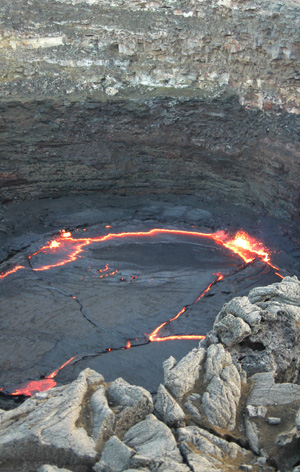
Erta Ale means Smoking Mountain in the Afar language, and the people who named it were not given to exaggeration. This basaltic shield volcano in northeastern Ethiopia sits in the Danakil Depression, one of the lowest, driest, and hottest places on Earth, where temperatures regularly exceed 104 degrees Fahrenheit and occasionally reach 118. Erta Ale contains one of only a handful of continuously active lava lakes on the entire planet. The lava lake has been active at least since the 1960s and possibly since as early as 1906. Standing at the crater rim and looking down into a churning pool of liquid rock that glows orange and red and occasionally fountains six to thirteen feet into the air is an experience that does not require Halloween decorations of any kind. The locals call it the gateway to hell. When you see it, you will understand that this is a description, not a metaphor.
Why It's Dangerous
The volcano itself has erupted multiple times, including in 2005 when it killed hundreds of livestock and forced thousands of people to evacuate, and again in 2007 when two people went missing and are presumed to have died. The Danakil Depression is brutally inhospitable, requiring at least six liters of water per person per day to survive. But the volcano is not the only danger. In January 2012, armed militants ambushed a group of tourists and scientists camped on the crater rim. Five European visitors were killed and four others were abducted. The Afar Revolutionary Democratic Front claimed responsibility. Armed militia escorts are now required for all visits. Whether that is reassuring or just an additional data point is a matter of personal interpretation.
Halloween Appeal
You trek across lava fields at night to avoid the lethal daytime heat. The lava lake glows below you in the darkness, casting orange light on the crater walls. The ground is warm under your feet. Lava fountains erupt without warning and the sound travels up from the pit like something alive. Your guide is armed. There are no other lights anywhere in any direction because there is nothing else out here. This is not an attraction designed to frighten you. This is a geological event older than human history that happens to look exactly like what every culture on Earth has ever imagined hell to look like.
Can You Visit?
Yes, with significant preparation and a reputable licensed Ethiopian tour operator. Tours depart from Mekelle, approximately 300 kilometers away, by 4x4 vehicle to a basecamp, followed by a three to four hour trek across lava fields that is usually done at night. Visitors camp on the caldera rim. Armed Afar militia escorts accompany all groups. The best visiting season is November through February when temperatures are slightly less lethal. This is not a casual trip. It requires physical fitness, heat tolerance, and a genuine acceptance of risk that goes well beyond any other destination on this list.
Halloween Verdict
Erta Ale is the most visually extraordinary and the most genuinely dangerous destination on this list where visiting is actually possible. The lava lake alone justifies the journey for anyone willing to make it. But go with eyes fully open. The guide who told a journalist that tourists will die here someday was not trying to be dramatic. He was being accurate.
#6 🇧🇷 Snake Island (Ilha da Queimada Grande), Brazil
The Island Ruled by Venom
👻 Scare Factor: ⭐⭐⭐⭐⭐
☠️ Danger Level: ⭐⭐⭐⭐⭐
📸 Photo Opportunity: ⭐⭐⭐
⭐ Worth Visiting: ⭐
Why It's Famous
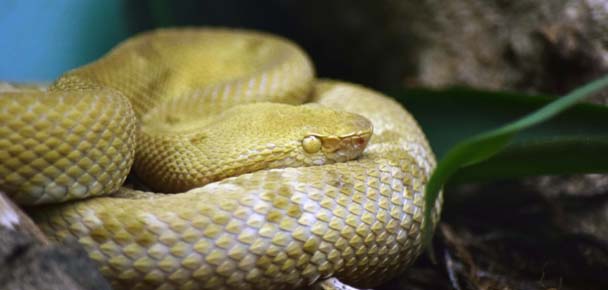
Ilha da Queimada Grande sits roughly 33 kilometers off the coast of São Paulo state, Brazil. It is 43 hectares of forest, rocky terrain, and one of the highest concentrations of venomous snakes anywhere on the planet. The golden lancehead pit viper, Bothrops insularis, exists nowhere else on Earth. When rising sea levels at the end of the last ice age cut the island off from the mainland roughly 12,000 years ago, the snakes were trapped and began evolving in isolation. With no ground-level prey, they specialized in hunting migratory birds and developed venom three to five times more potent than their mainland relatives, specifically so prey could not escape into the air after being bitten. The Brazilian Navy closed the island to civilians in the 1920s. It has never been reopened. Researchers reach it only with federal permits and a doctor in the boat.
Why It's Dangerous
Estimates of the snake population range from 2,000 to 4,000 individuals on 43 hectares. Some studies suggest there may be one to five snakes per square meter in certain areas. The golden lancehead's venom causes rapid tissue destruction, severe internal bleeding, kidney failure, and brain hemorrhage. Without treatment, a bite can kill within hours. There is no treatment available on the island. The last known lighthouse keeper and his family, according to local legend, died after snakes entered their home through the windows. The Brazilian government did not decide to close this island on a whim. They looked at the situation and reached an obvious conclusion.
Halloween Appeal
You cannot visit Snake Island. That is part of what makes it so perfect for this list. It exists as a place you can only look at from the water, knowing that somewhere in the beautiful green forest covering those rocky slopes, thousands of the deadliest snakes in the Western Hemisphere are doing whatever they please because nothing alive can stop them. The island looks lovely from a boat. That tension between the beauty and the knowledge of what lives there is its own kind of horror, and it requires no special effects whatsoever.
Can You Visit?
No. Civilians cannot land on Snake Island. The Brazilian government enforces this prohibition, and the snakes enforce it even more convincingly. Only vetted research scientists with approved permits and a medical professional present are legally permitted to set foot on the island. If you want to see it, hire a boat out of São Paulo state and view it from a respectful distance on the water. That is as close as you are going to get, and it is genuinely close enough.
Halloween Verdict
Snake Island earns five skulls for danger and five skulls for scare factor and a single star for worth visiting, because you simply cannot go there. It is the most elegant entry on this list: a place so thoroughly and efficiently dangerous that the Brazilian government, which manages the Amazon rainforest and deals with caiman and jaguars on a daily basis, decided that this small island required a permanent prohibition on human access. Respect that decision. View it from the water. Go home with all of your flesh intact.
#7 🇲🇭 Bikini Atoll, Marshall Islands
Paradise with a Nuclear Past
👻 Scare Factor: ⭐⭐⭐⭐⭐
☠️ Danger Level: ⭐⭐⭐
📸 Photo Opportunity: ⭐⭐⭐⭐⭐
⭐ Worth Visiting: ⭐⭐⭐
Why It's Famous
Between 1946 and 1958, the United States detonated 23 nuclear devices at Bikini Atoll in the Marshall Islands. The largest of these, the Castle Bravo test in 1954, was a 15-megaton hydrogen bomb, the most powerful nuclear weapon the United States had ever detonated. The explosion was two and a half times larger than expected. Fallout covered nearby inhabited islands in what witnesses described as a fine white ash, which locals later called Bikini snow. Residents burned, their eyes streamed, and they developed symptoms of acute radiation sickness within hours. Three of the original 23 islands within the atoll were vaporized entirely. The crater from Castle Bravo is still clearly visible in satellite photography. Today, Bikini Atoll is a UNESCO World Heritage Site, uninhabited, occasionally visited by divers, and still radioactive enough that eating anything grown in the soil remains genuinely inadvisable.
Why It's Dangerous
Background gamma radiation on Bikini Island averages around 190 millirem per year, nearly twice the relocation threshold agreed upon by the United States government. Research published in 2019 found contamination levels in parts of the atoll higher than those recorded in affected zones around Chernobyl and Fukushima. Long-lived radioisotopes including plutonium-239, plutonium-240, and americium-241 have contaminated ocean sediment in and around the Bravo Crater at levels orders of magnitude above background. Scientists estimate this contamination could affect coral regrowth and marine ecosystems for centuries. The original Bikinian people were relocated in 1946, allowed to return briefly in the 1970s, and then evacuated again in 1978 when their bodies showed elevated cesium-137 levels from eating local food. They have not returned permanently. Most have never seen their home island.
Halloween Appeal
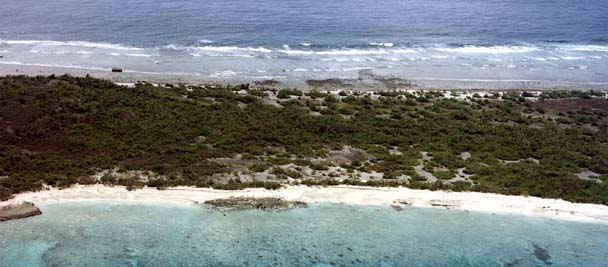
Bikini Atoll looks like paradise. Crystal clear water, white sand, swaying palms, coral that has grown back over sunken warships in the lagoon below. The USS Saratoga, the USS Arkansas, and dozens of other naval vessels sit on the bottom of the lagoon, now home to coral and marine life and the occasional diver who has earned the right to be here. The contradiction between the visual beauty and the invisible, patient contamination that makes permanent habitation impossible is the most genuinely eerie thing on this list. There are no sound effects required. The horror here is entirely in what you know.
Can You Visit?
Yes, with significant logistics. Bikini Atoll is extremely remote, lying 225 miles northwest of Kwajalein Atoll. Liveaboard dive operations are the primary means of access. To dive the wrecks, you need advanced technical diving certifications, at least 100 logged dives, and documented deep wreck experience. Tour operators limit visitors to two technical dives per day with mandatory four-hour surface intervals. Brief visits to the island surface are occasionally offered. Do not eat the coconuts. Do not eat anything grown in the soil. The fish in the lagoon have been declared safe, which is one of the more unusual sentences associated with this location. A handful of caretakers live on the atoll full time. The broader Bikinian community lives primarily on Kili Island and Majuro, hundreds of miles away, having never been permitted to permanently return to the home their grandparents were asked to temporarily leave in 1946.
Halloween Verdict
Bikini Atoll is the most beautiful and the most historically haunting destination on this list. The wrecks in the lagoon are world-class diving. The landscape is genuinely extraordinary. And the weight of what happened here, to the land, to the ocean, and to the people who lived here for generations before a government decided their island was expendable, gives the entire experience an emotional gravity that no haunted house has ever come close to producing. Go if you can get there. Dive if you are qualified. And think about the Bikinian people, most of whom have never seen their home, while you float above the wrecks of the warships their island was sacrificed to test.
Which Dangerous Halloween Vacation Would You Choose?
Seven destinations. Seven very different flavors of genuinely unsettling. Let us recap the options for anyone still making up their mind.
North Yungas Road in Bolivia is the complete package: five-star terror, five-star scenery, and a cycling tour that is actually available to book. Zone Rouge in France is history that never ended, a landscape still at war with anyone who enters the wrong area. Centralia in Pennsylvania is the closest thing to a living ghost town that exists in the United States, complete with smoke rising from the ground and a road so thoroughly cracked and abandoned that it became a canvas for graffiti artists from around the world.
The Salton Sea in California is not the most dangerous stop on this tour but it is the most haunting, a place where the California dream came to die in a slow and spectacular fashion. Erta Ale in Ethiopia is the real thing if you want to stand at the edge of an actual lava lake in one of the hottest and most remote places on Earth. Snake Island off the coast of Brazil is the one destination you absolutely cannot visit, which makes it the most perfectly Halloween entry on the list: pure dread, no access, and thousands of the world's most venomous snakes going about their business entirely without regard for your curiosity. And Bikini Atoll in the Marshall Islands is paradise made terrible, beautiful lagoon water glowing above sunken warships in contaminated sediment, on an island whose original people were never allowed to come home.
Each of these places is real. The danger in each of them is documented, measured, and ongoing. None of them requires a fog machine.
A word for the true adventurists. If you are reading this list as a travel checklist rather than a travel cautionary tale, we admire the commitment and we want you to come home with the same number of limbs you left with. Hire licensed guides. Research current conditions before you go because volcanos erupt, political situations shift, and roads that were rideable last season can be washed out this one. Tell someone exactly where you are going and when you expect to return. Carry the right gear, the right insurance, and a realistic understanding that the danger ratings on this list are not a challenge. They are an honest accounting of places where the planet, history, and in one case several thousand vipers have made very clear that human beings are guests at best and an afterthought at worst. Respect that. Travel carefully. And have the most genuinely terrifying Halloween of your life.