🎶 Cheetah Chrome Biography: Wild Life of an American Punk Legend
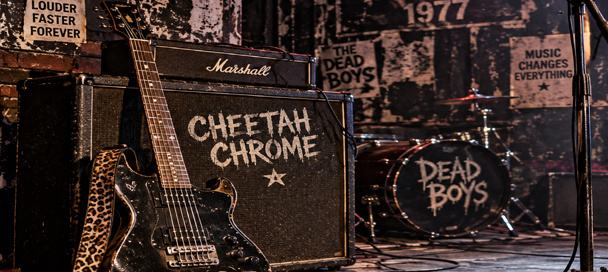
Cheetah Chrome, influential guitarist for the Dead Boys and a founding figure in American punk rock.
Cheetah Chrome was one of the raw, unmistakable figures who helped give American punk rock its sound and attitude. Best known as the guitarist for the Dead Boys, he belonged to the generation that pushed rock music away from polish and excess and toward something faster, harsher, and deliberately unruly. His guitar playing was aggressive without losing its connection to traditional rock and roll, giving the Dead Boys a sound that could be chaotic and sharply focused at the same time.
Cheetah Chrome was an American punk rock guitarist best known as a founding member of the Dead Boys and a member of the influential Cleveland proto-punk group Rocket From the Tombs. His aggressive guitar work helped define Dead Boys recordings including Young, Loud and Snotty and the punk standard "Sonic Reducer." Chrome became closely associated with the formative CBGB era alongside Stiv Bators and other first-generation punk musicians. His career linked Cleveland's early underground rock movement with the emergence of punk in New York during the 1970s.
Chrome's place in punk history reaches beyond a single band or record. His work with Rocket From the Tombs connected him to Cleveland's remarkably fertile underground music scene, while the Dead Boys carried that energy to New York and became closely identified with the world surrounding CBGB. Songs such as "Sonic Reducer" survived the original punk era and became part of the genre's permanent vocabulary, influencing musicians who encountered the Dead Boys years after their first records appeared.
What made Chrome distinctive was that he remained recognizably himself long after punk ceased to be a small underground movement. The name, the guitar, the battered rock-and-roll image, and his association with some of punk's most notorious personalities made him a living link to the period when American punk was still being invented. His death at 71 closes the career of a musician whose importance rested less on mainstream celebrity than on helping create a sound and culture that continued to spread long after its original clubs and scenes disappeared.
Cheetah Chrome lived long enough to see the music industry reverse its judgment of him. The Cleveland musicians who once struggled to find an audience eventually became recognized as pioneers, turning records that had failed to make them mainstream stars into documents of American music history.
👶 Early Life
Summary: Born Eugene Richard O'Connor in Cleveland, Chrome grew up amid the city's changing industrial landscape before rock and roll gave him a direction that conventional schooling never provided.
Cheetah Chrome was born Eugene Richard O'Connor on February 18, 1955, in Cleveland, Ohio. He was an only child raised by his mother in a Catholic household, growing up in the Lakeview housing projects near Cleveland's West 25th Street. His relationship with his father was difficult and largely absent, something Chrome later spoke about openly when reflecting on his own childhood and his determination to be a different kind of father to his son.
Chrome's childhood unfolded against the backdrop of a Cleveland that was beginning a long period of industrial decline. He moved from school to school and remembered having relatively few friends while growing up. One unlikely influence was local television horror host Ghoulardi, whose irreverent humor and willingness to ridicule convention appealed strongly to O'Connor and other Cleveland youngsters who would later become part of the city's underground rock culture.
By his teenage years, music had become increasingly important to him. He listened to powerful AM rock stations such as Detroit's CKLW and absorbed records by the Beatles, Rolling Stones, the Stooges, and other acts that offered something more exciting than his everyday surroundings. As concerts and Cleveland's club scene began taking up more of his attention, his interest in school faded. Guitar and rock and roll provided a direction that formal education had not, and by the early 1970s he was beginning to find his place among the young musicians gathering around Cleveland's small but unusually adventurous rock scene.
Explore the Biographies of Iconic Music Stars
In 1998, singer-songwriter Tommy Womack released a song called "Whatever Happened to Cheetah Chrome?", making Chrome himself the subject of a rock song years before the wider revival of interest in the Dead Boys.
🎶 Music Career
Summary: From Rocket From the Tombs and the Dead Boys to later collaborations and reunions, Chrome built a career that connected proto-punk, CBGB, punk rock, and several generations of underground musicians.
Cheetah Chrome's professional story began in Cleveland's volatile underground rock scene of the early 1970s. He became part of Rocket From the Tombs, a short-lived but enormously influential group whose lineup included David Thomas, Peter Laughner, Craig Bell, and Johnny Madansky, later known as Johnny Blitz. The band existed only briefly in its original form and left no proper studio album during that period, but its mixture of garage rock, hard rock, and confrontational experimentation anticipated much of what American punk would soon become.
When Rocket From the Tombs broke apart, its members moved in two important directions. David Thomas and Peter Laughner helped form Pere Ubu, while Chrome and Johnny Blitz joined forces with singer Stiv Bators, bassist Jeff Magnum, and guitarist Jimmy Zero. Initially known as Frankenstein, the group soon became the Dead Boys. Their sound was direct, loud, theatrical, and deliberately abrasive, with Chrome's guitar providing much of its force.
The Dead Boys moved from Cleveland to New York and became closely associated with CBGB, the Bowery club that served as a home for the emerging American punk movement. They entered a scene that included Ramones, Blondie, Talking Heads, Television, and Patti Smith. The Dead Boys were among its most physically explosive acts. Stiv Bators was a reckless and magnetic frontman, while Chrome supplied the slashing guitar sound that helped distinguish the band from many of its New York contemporaries.
The group's connection with Joey Ramone proved especially important. Ramone championed the Cleveland musicians after seeing them perform and helped introduce them to the New York punk community. The Dead Boys eventually came under the management of Hilly Kristal, the owner of CBGB, further cementing their place in the club's history.
In 1977, the Dead Boys released their debut album, Young, Loud and Snotty, produced by Genya Ravan. Its defining track, "Sonic Reducer", grew from material first developed during the Rocket From the Tombs period and became the Dead Boys' signature recording. Songs including "All This and More", "What Love Is", "Not Anymore", and "Ain't Nothin' to Do" captured the group's combination of hard-rock muscle, punk speed, and sneering humor. Although the album was not a major commercial success, its reputation steadily increased until it was regarded as a landmark of first-generation American punk.
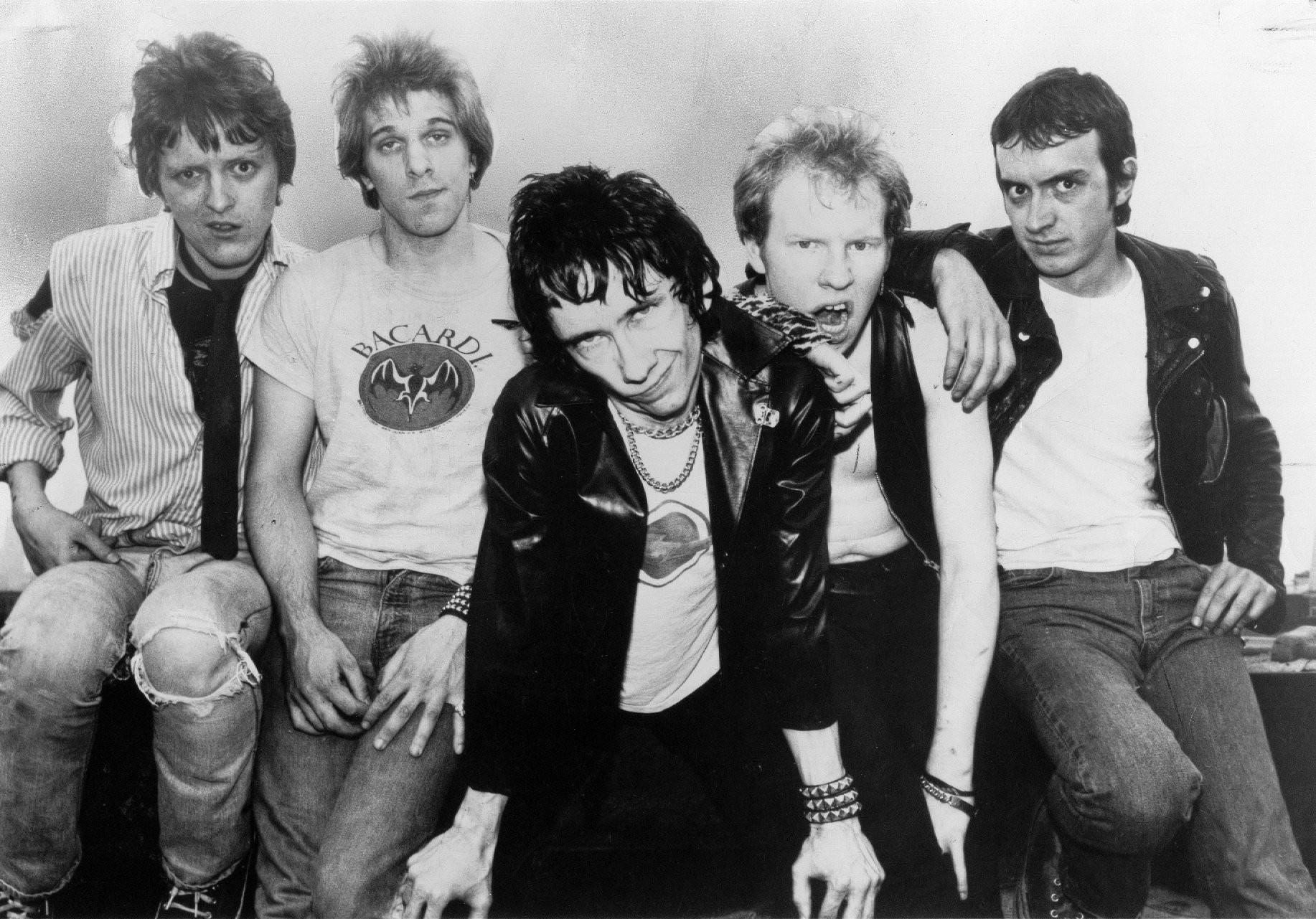
Dead Boys in 1977. From left: Jimmy Zero, Johnny Blitz, Stiv Bators, Cheetah Chrome, and Jeff Magnum
The Dead Boys returned in 1978 with We Have Come for Your Children, produced by Felix Pappalardi, best known for his work with Cream and as a member of Mountain. The album included "3rd Generation Nation", "Flame Thrower Love", "Son of Sam", and "Ain't It Fun". The latter, written by Chrome and Peter Laughner, eventually became one of Chrome's best-known compositions outside the Dead Boys' original audience.
Internal tensions, management problems, record-company pressures, and the punishing lifestyle surrounding the group contributed to the Dead Boys' collapse near the end of the 1970s. Their original recording career had been remarkably short, yet the band's influence was already spreading. The Dead Boys became an important bridge between the harder garage and proto-punk music of the early 1970s and the increasingly aggressive punk and hardcore scenes that followed.
Chrome remained active after the breakup. He worked with former Velvet Underground singer Nico and played with Ronnie Spector, the unmistakable voice of the Ronettes. Those associations placed him alongside artists from very different chapters of rock history and demonstrated that his musical identity extended beyond the narrow boundaries sometimes placed around punk.
During the 1980s, Chrome continued playing in various projects while also participating in periodic Dead Boys reunions with Stiv Bators and other former members. The band's reputation continued to grow even when its members were scattered among other projects. Live recordings, reissues, and renewed interest in the original New York and Cleveland punk scenes introduced the Dead Boys to listeners who had been too young to encounter them during their first run.
Chrome also crossed paths professionally with one of underground rock's most notorious performers, GG Allin. He played guitar with Allin during part of the singer's career, entering a musical environment even more confrontational and unpredictable than the one surrounding the Dead Boys. Chrome's involvement became another unusual chapter in a career filled with musicians who operated well outside conventional popular music.
The death of Stiv Bators in 1990 ended any possibility of a lasting reunion of the classic Dead Boys lineup. Chrome nevertheless continued performing the band's material and protecting its place in punk history. Over time, "Sonic Reducer" became far more widely known than it had been during the group's original existence, while "Ain't It Fun" gained a new audience when Guns N' Roses recorded it for their 1993 covers album "The Spaghetti Incident?". That version introduced a song associated with Chrome and Cleveland's early underground scene to millions of mainstream hard-rock listeners.
Chrome later revisited his earliest musical history when Rocket From the Tombs was revived. The reconstructed band included Chrome and David Thomas alongside musicians including Richard Lloyd of Television. Material that had once circulated largely through rehearsal tapes and live recordings was finally given new life, allowing the group to receive recognition as one of the important missing links in the development of American punk.
In 2009, Chrome formed Batusis with Sylvain Sylvain, guitarist for the influential New York Dolls. Bringing together members of the Dead Boys and New York Dolls connected two closely related branches of early punk and glam-influenced rock. Batusis released a self-titled EP and performed live, giving Chrome another opportunity to work with a musician whose career had helped shape the environment from which punk emerged.
The Dead Boys name also returned to active use in the twenty-first century. Chrome performed with later versions of the group and participated in projects that introduced the band's songs to another generation. In 2017, a new Dead Boys lineup recorded Still Snotty: Young, Loud & Snotty at 40!, a re-recording of the band's debut album marking its fortieth anniversary. Rather than allowing the Dead Boys to exist solely as an archival act, Chrome continued taking the music onto stages and treating the songs as a living repertoire.
Across more than five decades, Chrome's musical importance rested on a relatively small collection of recordings whose influence greatly exceeded their original sales. Rocket From the Tombs helped define Cleveland's proto-punk underground, while the Dead Boys became one of the essential bands associated with the first American punk generation. Through Stiv Bators, Johnny Blitz, David Thomas, Peter Laughner, Nico, Ronnie Spector, GG Allin, Sylvain Sylvain, and the many musicians who later recorded or performed his songs, Cheetah Chrome occupied an unusually durable place in the history connecting 1970s underground rock to the punk music that followed.
Down on the Bowery (Vinyl)
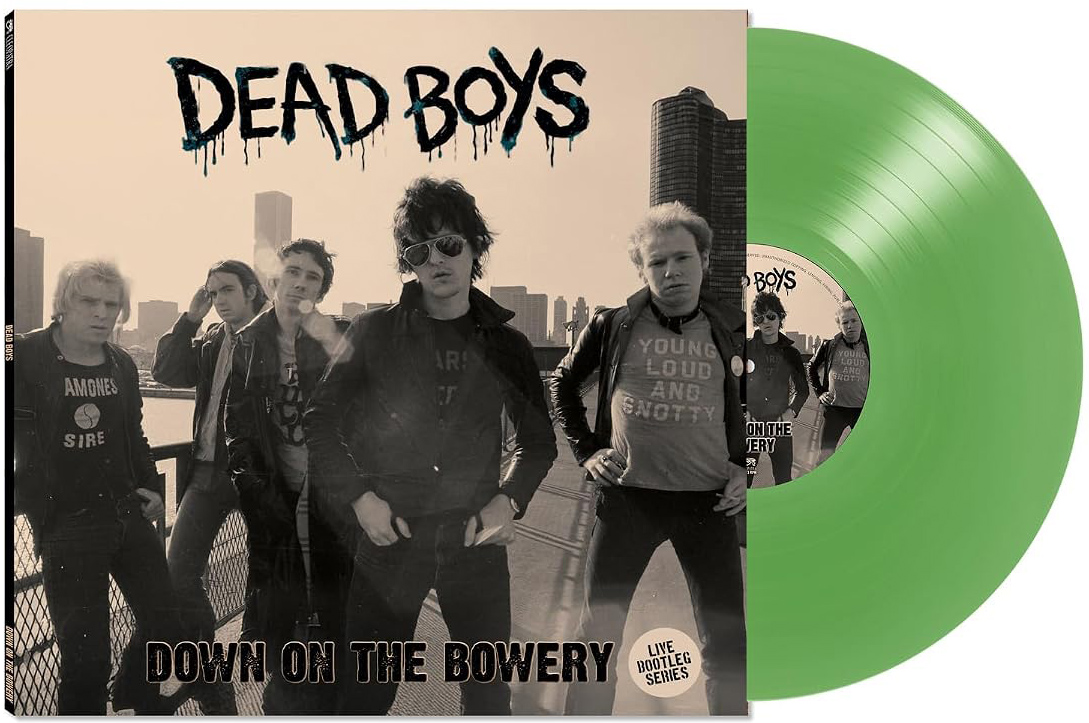
Down on the Bowery Vinyl featuring Cheetah Chrome
Product Description:
Fans of Cheetah Chrome will appreciate this energetic live collection celebrating one of punk rock's most influential guitarists. Down on the Bowery captures the raw spirit and attitude that helped define the early American punk scene, featuring many of the songs that made Cheetah Chrome and the Dead Boys underground legends.
Key Features:
• Live vinyl collection featuring Cheetah Chrome
• Includes punk classics such as Sonic Reducer favorites including Ain't It Fun, All This and More, 3rd Generation Nation, and Son of Sam
• High-quality vinyl pressing for collectors and music enthusiasts
• A great addition to any punk rock or classic vinyl collection
• Perfect for longtime Dead Boys fans and newcomers discovering Cheetah Chrome's music
Why This Works:
After reading about Cheetah Chrome, there's no better way to experience his legacy than by hearing the music that made him famous. Down on the Bowery captures the energy, attitude, and unmistakable guitar work that helped shape American punk rock, making it an excellent companion to any biography or music collection.
Buy on Amazon
Chrome's 2010 book tour took him to institutions that would have seemed unlikely destinations during the Dead Boys' chaotic 1970s heyday, including the Rock & Roll Hall of Fame in Cleveland and the GRAMMY Museum in Los Angeles.
🕊️ Later Years
Summary: Chrome's later decades brought sobriety, fatherhood, an autobiography, renewed recognition, and opportunities to preserve the history of the punk movement he helped create.
By the 2000s, Cheetah Chrome had survived an era that had taken many of the musicians around him. Years of drug and alcohol abuse had been a major part of his life, but he eventually moved away from the destructive habits that had followed him through much of his earlier career. Sobriety brought a degree of stability that had often been missing, and Chrome increasingly became an articulate witness to the Cleveland and New York punk scenes he had helped create.
Chrome settled in Nashville, Tennessee, a city far removed from the Bowery clubs and industrial Cleveland landscape most closely associated with his reputation. He became a father to his son, Elvis, and spoke openly about how parenthood changed his priorities. Having grown up with a difficult relationship with his own father, Chrome regarded being present for his son as one of the most important accomplishments of his later life.
In 2010, Chrome published his autobiography, Cheetah Chrome: A Dead Boy's Tale From the Front Lines of Punk Rock, written with Mike Hudson of the Cleveland punk band Pagans. The book offered an unusually direct account of the personalities, clubs, drugs, violence, friendships, and music surrounding the birth of the Dead Boys. It also gave Chrome the opportunity to tell the story from the perspective of someone who had survived circumstances that had claimed several of his friends and contemporaries.
His standing as a first-generation punk figure increasingly brought him into projects devoted to preserving that history. Chrome appeared as himself in the 2013 film CBGB, which dramatized the history of Hilly Kristal and the famous New York club. Rupert Grint portrayed Cheetah Chrome in the film, while Justin Bartha played Stiv Bators and Alan Rickman portrayed Kristal. Chrome's own appearance gave the production a direct connection to one of the musicians who had actually occupied the CBGB stage during its formative years.
Chrome also became involved with Nashville's music community beyond his own performances. He worked with Plowboy Records, the label founded by Shannon Pollard, grandson of country-music legend Eddy Arnold. His role placed him behind the scenes as well as onstage and showed how far his professional life had expanded beyond the narrow definition of punk guitarist.
Recognition of the Dead Boys and Cleveland's early punk movement continued to increase as Chrome grew older. Reissues, documentaries, books, anniversary performances, and renewed interest in CBGB transformed music once dismissed as abrasive underground noise into an established part of American rock history. Chrome regularly participated in interviews and appearances concerning Rocket From the Tombs, the Dead Boys, Stiv Bators, and the musicians who had surrounded them.
The deaths of old friends increasingly marked Chrome's later years. Stiv Bators had died in 1990, while Peter Laughner had died even earlier, in 1977. Sylvain Sylvain, Chrome's partner in Batusis, died in 2021. As the surviving ranks of the original punk generation grew smaller, Chrome became one of the musicians able to describe the period from firsthand experience rather than through the mythology that accumulated around it.
Chrome continued performing and remained publicly identified with the Dead Boys until the closing period of his life. The band's music had long since outgrown its original commercial fortunes, with "Sonic Reducer" in particular becoming a standard of the punk repertoire. For Chrome, later life brought something the Dead Boys had rarely received during their original existence: acknowledgment that the unruly music created by a handful of Cleveland outsiders had become an enduring part of rock history.
Cheetah Chrome died on September 13, 2026, at the age of 71. His death was announced by his bandmates in the Dead Boys. No cause of death was immediately disclosed. His death left another gap in the small circle of musicians who had been present when Cleveland proto-punk collided with the emerging New York scene and helped produce one of the defining sounds of American punk.
Before his death, Cheetah Chrome had already experienced the strange phenomenon of reading reports that he was dead. During a 1999 Detroit performance, he joked about a recurring death rumor that had even resulted in a newspaper obituary.
🏆 Legacy
Cheetah Chrome's legacy rests on something larger than record sales, chart positions, or mainstream fame. With Rocket From the Tombs and the Dead Boys, he occupied a crucial place between the aggressive underground rock of the early 1970s and the American punk explosion that followed. Cleveland rarely receives the same attention as New York or London in popular accounts of punk history, but Chrome was part of the generation that made the city's contribution impossible to dismiss.
The Dead Boys remain his defining achievement. Alongside Stiv Bators, Johnny Blitz, Jimmy Zero, and Jeff Magnum, Chrome helped create a band whose reputation grew considerably after its original lifespan. Their 1977 album Young, Loud and Snotty became a landmark of early American punk, capturing the speed, hostility, humor, and rock-and-roll swagger that made the group different from many of its contemporaries.
"Sonic Reducer" became the clearest measure of that influence. Emerging from the earlier Rocket From the Tombs repertoire, the song survived changing fashions and generations of punk bands to become a standard of the genre. It was recorded or performed by numerous later artists, including Pearl Jam, whose performances helped expose the song to a vast audience that had never seen the original Dead Boys. Its survival demonstrates how music created inside a small underground scene could travel far beyond the circumstances that produced it.
Chrome's songwriting also reached mainstream rock through "Ain't It Fun", which he wrote with Peter Laughner. When Guns N' Roses recorded the song for their 1993 album "The Spaghetti Incident?", a piece of Cleveland's underground rock history reached millions of listeners. The recording provided an unusually direct connection between the proto-punk musicians of Chrome's generation and the hard-rock stars who followed them.
His influence was equally visible in the musicians and scenes that treated the Dead Boys as predecessors. Punk, hardcore, alternative rock, and later garage-rock bands repeatedly returned to the group's records for their combination of speed and traditional rock-and-roll guitar. Chrome's playing never depended on technical display. Its value came from attack, rhythm, memorable riffs, and an instinct for making a guitar sound dangerous without losing the structure of the song.
Chrome also became one of the surviving storytellers of punk's first generation. Through interviews and his autobiography, Cheetah Chrome: A Dead Boy's Tale From the Front Lines of Punk Rock, he preserved memories of Stiv Bators, Peter Laughner, Hilly Kristal, CBGB, Cleveland's underground musicians, and the unstable world in which the Dead Boys developed. His recollections helped replace some of punk's mythology with the perspective of someone who had actually lived through it.
There was also an unlikely durability to Cheetah Chrome himself. The name sounded invented for a comic book or a cheap exploitation movie, yet Eugene O'Connor carried it for more than half a century until it became inseparable from American punk history. He survived the excesses that destroyed several of his contemporaries, continued playing the music, raised a family, wrote his story, and lived long enough to watch music once regarded as disposable noise become recognized as historically important.
Cheetah Chrome will always be associated with a particular combination of places and people: Cleveland and New York, Rocket From the Tombs and the Dead Boys, Stiv Bators and CBGB. Together they represent a period when American punk had no established rules, commercial formula, or guaranteed audience. Chrome helped build it while it was still being invented, and the records he left behind ensured that his guitar would continue to be heard long after the clubs, arguments, and chaos surrounding their creation had passed into history.
🗣️ Why He Still Matters:
Cheetah Chrome matters because punk history cannot be told accurately by looking only at London or the better-known New York bands. Cleveland was producing its own abrasive underground music before punk had settled into a recognizable movement, and Chrome stood directly at the point where that scene connected with CBGB and the Dead Boys. Every later generation that discovers Young, Loud and Snotty or hears "Sonic Reducer" encounters a piece of that original collision. Chrome's importance lies in having been there when American punk was still an experiment and helping give it a guitar sound that survived long after the experiment became history.
Further Reading & Resources
📺 See: Cheetah Chrome talks A.I., the new Dead Boys album, and Jake Hout
🔍 Cheetah Chrome - Wikipedia
ML Lamp is the owner of Kilroy Was Here. After his 20 years of working in Las Vegas in the entertainment promotions field, Mr. Lamp retired in 2002 from his job to pursue his passion for collectibles. Now as a guest speaker and author he’s living the dream, and sharing his warmth with You.