Gerrit Graham Biography: The Brilliantly Unusual Character Actor
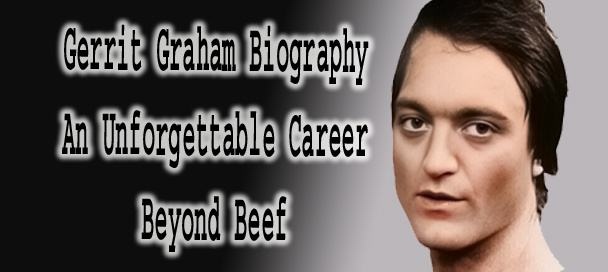
Gerrit Graham, the versatile character actor best remembered as Beef in Phantom of the Paradise.
Gerrit Graham was one of American film and television’s most distinctive character actors, building a career around an unusual ability to move between broad comedy, horror, science fiction, satire, and straight dramatic roles. He rarely played conventional leading men. Instead, Graham specialized in characters whose eccentricities could dominate a scene, often giving supporting roles a life far beyond their place in the script.
Gerrit Graham was an American character actor, writer, voice performer, and songwriter whose career stretched across film and television for more than four decades. He became a cult-film favorite as Beef in Brian De Palma's Phantom of the Paradise and later appeared in Used Cars, TerrorVision, Child's Play 2, and numerous television series. His work ranged from comedy and horror to science fiction, animation, and drama. Graham also wrote for television and collaborated with Bob Weir on the Grateful Dead song "Victim or the Crime."
Graham became especially important to the world of cult cinema, where his heightened delivery, expressive face, and willingness to push a character toward the absurd made him instantly recognizable. His performance as Beef in Brian De Palma’s Phantom of the Paradise became his signature screen role, but it represented only one side of an unusually varied career. Films such as Used Cars, Demon Seed, TerrorVision, and Child’s Play 2 helped make him a familiar presence across several generations of genre filmmaking.
His work also extended well beyond acting. Graham wrote for television and animation, contributed to Disney productions, performed voice work, and collaborated with Bob Weir on songs recorded by the Grateful Dead. That range made him difficult to place in a single Hollywood category, something Graham himself recognized when discussing his reputation for versatility. Over the decades, the combination of mainstream television work, offbeat films, writing, music, and enduring cult roles gave him a career that remained remarkably difficult to classify.
One of the strangest parts of Gerrit Graham's career is that a movie largely rejected upon its original release ultimately supplied his most enduring character. Beef survived the changing fashions of Hollywood because Phantom of the Paradise found an audience that refused to let the film disappear.
👶 Early Life
Summary: Graham developed an interest in theater while young, continued performing at school, and became involved with the Columbia Players before pursuing professional acting.
Gerrit Graham was born on November 27, 1948, in New York City. He was the son of John MacDougall Graham and Janet Welldon Graham. His father was an educator and private-school headmaster, a profession that contributed to a childhood spent in several parts of the country. Graham grew up at various times in St. Louis, Missouri, Chicago, Illinois, and Grosse Pointe, Michigan, rather than remaining rooted in one hometown.
Graham's interest in performing appeared early. At eight years old, he acted in a stage production of Winnie the Pooh at the Detroit Institute of Arts. By his teenage years, theater had become a serious part of his life. He attended the Groton School in Massachusetts, where he served as president of the school's dramatic association. These experiences gave him substantial time onstage well before acting became his profession.
Graham later enrolled at Columbia University in New York, where he became general manager of the Columbia Players, the university's student theater organization. It was through Columbia's theater community that he encountered Brian De Palma, who had previously managed the same group. Graham did not complete his degree, choosing instead to pursue performance professionally, including work with Chicago's Second City. Leaving college for the uncertain life of a working actor was his first major professional gamble, moving him from organized student theater into the much less predictable world of professional performance.
Explore the Biographies of Iconic Celebrities
Graham participated in an audio commentary for a later Phantom of the Paradise home-video release alongside Archie Hahn, Jeffrey Comanor, and Peter Eibling, the actors who played the Juicy Fruits.
🎬 Movie and TV Career
Summary: Graham worked steadily across film and television for decades, becoming especially associated with Phantom of the Paradise while appearing in everything from Used Cars and Child's Play 2 to Star Trek and television.
Gerrit Graham's screen career began during one of the more experimental periods in American filmmaking. Director Brian De Palma cast him as Lloyd Clay in Greetings (1968), an independent counterculture comedy that also featured a young Robert De Niro. Graham returned to De Palma's orbit for Hi, Mom! (1970), again working alongside De Niro. These early pictures established a professional relationship with De Palma that would become one of the most important associations of Graham's career.
After an appearance in Beware! The Blob (1972), directed by Larry Hagman, Graham reunited with De Palma for the film that would permanently attach his name to cult cinema. In Phantom of the Paradise (1974), he played Beef, the flamboyant rock singer chosen to perform composer Winslow Leach's music. Graham shared the film with William Finley, Paul Williams, Jessica Harper and George Memmoli. His exaggerated physical performance, comic timing and deliberately theatrical rock-star manner made Beef one of the film's most memorable characters and ultimately Graham's signature role.
Graham spent much of the 1970s moving freely between comedy, exploitation pictures, science fiction and mainstream television. His films included Tunnel Vision (1976), Bobbie Jo and the Outlaw (1976) with Lynda Carter and Marjoe Gortner, Special Delivery (1976) and director Paul Bartel's Cannonball! (1976). In Cannonball! he played Perman Waters, an aspiring country singer, in a cast that included David Carradine, Bill McKinney, Veronica Hamel and Mary Woronov.
Science fiction gave Graham one of his more restrained roles when he appeared as Walter Gabler in Demon Seed (1977), starring Julie Christie and Fritz Weaver. The film's story of an advanced artificial intelligence taking control of a home placed Graham inside a very different kind of production from the broad satire for which he was already known. The following year he appeared as Highpockets opposite Brooke Shields, Keith Carradine and Susan Sarandon in director Louis Malle's Pretty Baby (1978).
Another De Palma collaboration arrived with Home Movies (1979), in which Graham played James Byrd alongside Nancy Allen, Keith Gordon, Kirk Douglas and Vincent Gardenia. By then, Graham had become particularly useful to filmmakers who wanted an actor capable of making an eccentric character believable without sanding away the character's oddness. He could play broadly when the material demanded it, then shift into a relatively straight dramatic performance in another picture.
One of Graham's best-known comedies came with director Robert Zemeckis' Used Cars (1980). Graham played Jeff, working in an ensemble headed by Kurt Russell, Jack Warden, Deborah Harmon and Frank McRae. The film's aggressive satire of used-car salesmen and American advertising gave Graham exactly the kind of heightened comic environment in which he excelled. The movie later developed a strong cult following, adding another enduring offbeat title to his filmography.
His film work continued with Soup for One (1982) and National Lampoon's Class Reunion (1982), in which he played Bob Spinnaker. He appeared in The Creature Wasn't Nice (1983) with Leslie Nielsen, Cindy Williams and Patrick Macnee, followed by The Man with One Red Shoe (1985) with Tom Hanks, Dabney Coleman, Lori Singer, Charles Durning and Carrie Fisher. In The Annihilators (1985), Graham took another harder-edged role as Vietnam veteran Ray Track.
Graham returned to full-scale genre eccentricity in TerrorVision (1986), playing Stanley Putterman in the deliberately outrageous science-fiction horror comedy. Directed by Ted Nicolaou, the film also starred Mary Woronov, Diane Franklin, Chad Allen, Jon Gries and Bert Remsen. Its mixture of monsters, television culture, suburban excess and grotesque comedy eventually made it another cult favorite closely associated with Graham's screen persona.
His late-1980s filmography became especially dense with genre pictures. Graham appeared in It's Alive III: Island of the Alive (1987) and Walker (1987), then took the title monster role of Bud Oliver in C.H.U.D. II: Bud the C.H.U.D. (1989). That same period brought Big Man on Campus (1989) and Police Academy 6: City Under Siege (1989), placing Graham alongside another large comedy ensemble that included Bubba Smith, David Graf, Michael Winslow, Leslie Easterbrook, George Gaynes and G.W. Bailey.
Horror audiences received another memorable Graham performance when he joined Child's Play 2 (1990) as Phil Simpson, the foster father of Andy Barclay. The sequel starred Alex Vincent, Jenny Agutter, Christine Elise and Brad Dourif as the voice of Chucky. Graham's presence connected him with another horror property that would remain popular for decades, giving him recognizable roles in both the cult-film world and a major horror franchise.
The 1990s kept him moving between theatrical releases, television movies and genre productions. His film credits included Martians Go Home (1990), Frozen Assets (1992), This Boy's Life (1993) with Robert De Niro, Ellen Barkin and Leonardo DiCaprio, The Philadelphia Experiment II (1993), and My Girl 2 (1994) with Anna Chlumsky, Austin O'Brien, Dan Aykroyd and Jamie Lee Curtis. He also appeared in National Lampoon's Favorite Deadly Sins (1995) as Satan, The Break (1995), Magic in the Mirror: Fowl Play (1996), One True Thing (1998) with Meryl Streep, Renée Zellweger and William Hurt, and The Love Letter (1998).
Television was an equally large part of Graham's career. During the 1970s and 1980s he appeared on series including Harry O (1974), Baretta (1975), Starsky & Hutch (1976), Laverne & Shirley (1976), Stockard Channing in Just Friends (1979), Fame (1982), St. Elsewhere (1982), The A-Team (1983), The Dukes of Hazzard (1983), Miami Vice (1988) and My Two Dads (1988). The sheer variety of these programs showed how readily Graham could move from police drama to sitcoms and prime-time drama without becoming tied to one television format.
He also became part of the anthology tradition. Graham appeared in The Twilight Zone (1986) segment Welcome to Winfield (1986) as Griffin St. George. He later appeared as Theodore Carne in Tales from the Crypt (1989), in the episode The Man Who Was Death (1989). His connection to The Twilight Zone extended behind the camera as well, with Graham writing three episodes of the 1980s revival.
A particularly visible recurring television role came with Parker Lewis Can't Lose (1990–1992), where Graham played Dr. Norman Pankow. The Fox comedy starred Corin Nemec, Billy Jayne, Troy Slaten, Melanie Chartoff and Abraham Benrubi. Pankow's tightly wound personality fit Graham's gift for turning authority figures into memorable comic characters, and the recurring part introduced him to an audience that might never have encountered his earlier cult films.
Graham's television appearances during the 1990s became a roll call of recognizable series. He appeared on The Wonder Years (1988–1993), Dallas (1978–1991), Seinfeld (1989–1998), The Larry Sanders Show (1992–1998), Babylon 5 (1993–1998), Weird Science (1994–1998), Family Matters (1989–1998) and Law & Order (1990–2010). His career was particularly well suited to guest television because Graham could establish a character quickly, often within only a few scenes.
Science-fiction television gave him two especially notable guest appearances within the Star Trek universe. In Star Trek: Deep Space Nine (1993), Graham played the Hunter pursuing Tosk in Captive Pursuit (1993), one of the early episodes dealing directly with cultures arriving through the Bajoran wormhole. He later appeared in Star Trek: Voyager (1996) as Quinn, a member of the Q Continuum, in the episode Death Wish (1996). That episode placed him opposite Kate Mulgrew, Robert Beltran, Robert Duncan McNeill, Tim Russ and recurring Star Trek performer John de Lancie.
Animation provided another branch of Graham's television career. He supplied the voice of Franklin Sherman on The Critic (1994–1995), the father of film critic Jay Sherman, voiced by Jon Lovitz. Graham also performed voice work connected with productions including Gargoyles (1994–1997) and other animated projects. His strong vocal characterization translated naturally to animation, where the exaggerated qualities that distinguished many of his live-action performances could be pushed even further.
Near the end of the 1990s, Graham landed a regular role on the CBS science-fiction drama Now and Again (1999–2000) as Roger Bender. The series starred Eric Close, Dennis Haysbert, Margaret Colin, Heather Matarazzo and Graham. Unlike many of his one-episode television appearances, the role allowed him to remain part of an ongoing series and gave viewers sustained exposure to his character work.
His later television work included Third Watch (2005) and another appearance on Law & Order, while later films included Building Girl (2005), Spanish filmmaker Julio Medem's Caótica Ana (2007), Stick It in Detroit (2008) and Cove Road (2012). By this stage, Graham's filmography stretched from the American counterculture cinema of the late 1960s through several generations of horror, comedy, science fiction, television and independent filmmaking.
That breadth was the defining feature of Graham's acting career. He worked with filmmakers including Brian De Palma, Robert Zemeckis, Louis Malle, Paul Bartel and Larry Cohen, while sharing screens with performers ranging from Robert De Niro, Kirk Douglas, Julie Christie, Susan Sarandon and Kurt Russell to Tom Hanks, Carrie Fisher, Leonardo DiCaprio, Meryl Streep, Renée Zellweger and Brad Dourif. His credits crossed cult classics, studio comedies, horror sequels, prestige dramas, sitcoms, police shows, animation and two different Star Trek series. Few character actors followed quite the same path, and fewer still left behind so many performances that remained recognizable long after the original releases.
Phantom of the Paradise Blu-ray
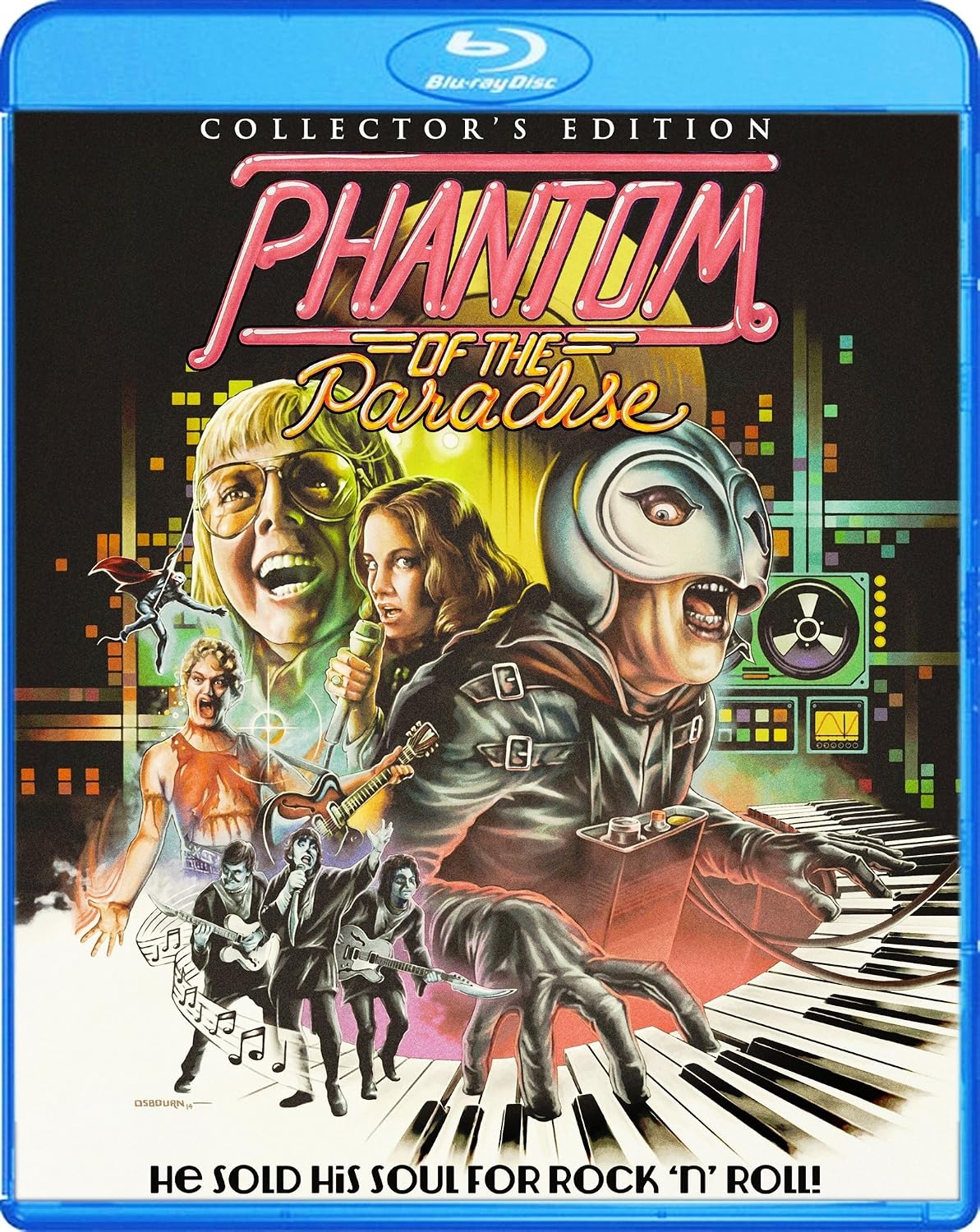
Phantom of the Paradise Blu-ray featuring Gerrit Graham
Product Description:
For anyone discovering Gerrit Graham and his wonderfully strange film career, Phantom of the Paradise is essential viewing. Brian De Palma's 1974 cult rock musical mixes horror, comedy, glam rock, and the Faust legend into a movie unlike almost anything else from the era. Graham appears as the flamboyant rock star Beef, delivering one of the film's funniest and most memorable performances.
Key Features:
• Brian De Palma's cult 1974 rock-horror musical on Blu-ray
• Features Gerrit Graham in his unforgettable role as Beef
• Stars William Finley, Paul Williams, Jessica Harper, and Gerrit Graham
• Combines horror, dark comedy, rock music, and supernatural themes
• A cult favorite for fans of unusual 1970s cinema and rock-and-roll horror
Why This Works:
If you've been reading our Gerrit Graham biography, Phantom of the Paradise shows exactly why he became such a memorable cult-film performer. His outrageous performance as Beef takes an already bizarre movie and pushes it even further over the top. It's a perfect companion to the biography and a great introduction to one of Graham's best-known screen roles.
Buy on Amazon
Graham's connection with Phantom of the Paradise eventually extended to Phantom of Winnipeg, a documentary devoted to the unusual story of Winnipeg's decades-long fascination with the movie.
🎶 Music Career
Summary: Graham's musical work extended beyond his famous performance as Beef. He collaborated with Bob Weir and wrote the lyrics for "Victim or the Crime," recorded by the Grateful Dead for Built to Last.
Music was a smaller but genuine part of Gerrit Graham's creative career. His most visible musical performance came through Phantom of the Paradise (1974), in which his character Beef became part of the film's elaborate parody of the rock business. Although Paul Williams wrote the film's songs, Graham's theatrical performance helped turn Beef into one of the picture's most memorable musical personalities.
Away from acting, Graham also worked as a songwriter and lyricist. His most notable connection was with Bob Weir of the Grateful Dead. Graham co-wrote Victim or the Crime (1989) with Weir, a dark and unconventional composition that entered the Grateful Dead's live repertoire and later appeared on Built to Last (1989). Graham's best-documented songwriting collaboration with Weir was Victim or the Crime (1989), for which Graham wrote the lyrics to Weir's music. The Grateful Dead recorded the song for Built to Last (1989), and it remained part of the band's concert repertoire.
These collaborations gave Graham an unusual place in popular culture. He was remembered by cult-film audiences as Beef, while followers of the Grateful Dead encountered his work as a lyricist. Music never displaced acting as the center of his career, but his songwriting showed that his creative work extended well beyond the screen.
🕊️ Later Years
Summary: Graham's screen work became less frequent in later life while appreciation for his earlier performances continued to grow, particularly among cult-film, horror, science-fiction, and Star Trek audiences.
As Gerrit Graham grew older, his screen appearances became less frequent, but his earlier work continued to find new audiences. Phantom of the Paradise (1974) remained especially important to his public identity as the film developed an increasingly devoted cult following. Graham took part in reunions and retrospective events connected with the picture, where Beef remained the character most closely associated with his name.
Graham also maintained ties to the creative work that had accompanied his acting career. His interests in writing, music, and performance had always overlapped, and his later years reflected the unusual range of a career that had never followed a conventional Hollywood path. Appearances connected with cult cinema and fan events gave him opportunities to discuss films that had initially been modest releases but had acquired lasting reputations over several decades.
In later life, Graham largely withdrew from the steady cycle of film and television production that had occupied much of his career. His public profile increasingly rested on the rediscovery and continued appreciation of his earlier performances, particularly among horror, science-fiction, cult-film, and Star Trek audiences.
Gerrit Graham died on September 15, 2026, at an assisted-living facility in Rhinebeck, New York, from complications of lung disease. His sons, Jack and Henry, were with him when he died. Graham was 77 years old.
Phantom of the Paradise struggled in much of North America but became an extraordinary local phenomenon in Winnipeg, Canada. Decades later, Graham returned to celebrations of the film in the city where Beef had become a genuine cult icon.
🏆 Legacy
Gerrit Graham left behind the kind of career that rarely fits neatly into a single category. He was a character actor, comedian, dramatic performer, writer, voice actor, and songwriter whose work stretched from the American counterculture films of the late 1960s through decades of mainstream television and cult cinema. He worked with directors including Brian De Palma, Robert Zemeckis, Louis Malle, Paul Bartel, and Larry Cohen, while appearing alongside several generations of major Hollywood performers.
His defining performance remained Beef in Phantom of the Paradise (1974). The film's reputation grew enormously after its original theatrical run, and Graham's flamboyant, explosive performance became one of its most recognizable elements. Beef secured Graham a lasting place in cult-film history, but roles in Used Cars (1980), TerrorVision (1986), C.H.U.D. II: Bud the C.H.U.D. (1989), and Child's Play 2 (1990) strengthened his standing among horror, comedy, and genre-film audiences.
Television broadened that legacy. Graham appeared across an extraordinary range of programs, from Starsky & Hutch (1976) and Miami Vice (1988) to Parker Lewis Can't Lose (1990–1992), The Critic (1994–1995), and Now and Again (1999–2000). His appearances in both Star Trek: Deep Space Nine (1993) and Star Trek: Voyager (1996) gave him an enduring connection to the Star Trek universe as well.
His work behind the scenes added another dimension. Graham wrote for television and animation and collaborated with Bob Weir on songs performed by the Grateful Dead, including Victim or the Crime (1989) and Easy Answers (1993). Few actors associated with cult horror and science fiction could also claim a songwriting connection to one of the defining American rock bands of its era.
Graham's lasting importance rests largely in the individuality of his performances. He could make an eccentric supporting character as memorable as the leads around him, often through an unusual mixture of theatricality, intelligence, physical comedy, and deliberate excess. More than half a century after his first screen appearances, films that once occupied the edges of popular culture continued to attract new audiences, keeping Graham and his unmistakable characters in circulation long after their original moment had passed.
Further Reading & Resources
📺 See: Gerrit Graham Movies & TV Shows List | Rotten Tomatoes
🔍 Gerrit Graham — The Movie Database (TMDB)
ML Lamp is the owner of Kilroy Was Here. After his 20 years of working in Las Vegas in the entertainment promotions field, Mr. Lamp retired in 2002 from his job to pursue his passion for collectibles. Now as a guest speaker and author he’s living the dream, and sharing his warmth with You.