🛣️ The Car 1977 Review: When a Black Sedan Became a Driverless Nightmare
My Rating: ⭐ ⭐ ⭐ ⭐ ☆ 4.7/5
Kilroy's The Car 1977 review heads out to a lonely Utah highway, where a customized black Lincoln with no visible driver starts running people down. There's no license plate, the windows are blacked out, and the horn sounds like it came straight from Hell. James Brolin plays the lawman who has to figure out how you stop a car that doesn't follow the rules. Nearly fifty years later, this killer car still owns the road.
The Car 1977 Review: Making a Desert Highway Dangerous
Two bicycle riders are traveling along an empty desert road.
There's almost nobody around.
Then a black car appears.
No license plate.
Dark windows.
A horn that sounds like it came directly from Hell.
And whoever is driving doesn't seem interested in passing.
The Car takes one wonderfully simple idea and spends the rest of the movie proving how much trouble four wheels can cause.
Universal Pictures released The Car in theaters on May 13, 1977. Elliot Silverstein directed and produced, working from a screenplay by Michael Butler, Dennis Shryack, and Lane Slate. The film is rated PG and runs 96 minutes.
Kilroy's The Car 1977 review stays spoiler free.
Welcome to Santa Ynez
The story takes place around the fictional desert community of Santa Ynez.
It's exactly the sort of isolated small town this movie needs.
Long empty highways stretch through the surrounding landscape.
Police coverage is limited.
People know one another.
And when something strange begins happening on the roads, there isn't a SWAT team waiting five minutes away.
There's just a sheriff's department trying to figure out how you arrest a car.
The movie sets Santa Ynez in Utah, and that's where the cameras went too.
Filming began in Kanab on July 28, 1976.
The crew also shot around St. George, Zion National Park, Hurricane, and Glen Canyon. Interiors were filmed back at Universal Studios.
James Brolin Is the Man Who Has to Stop It
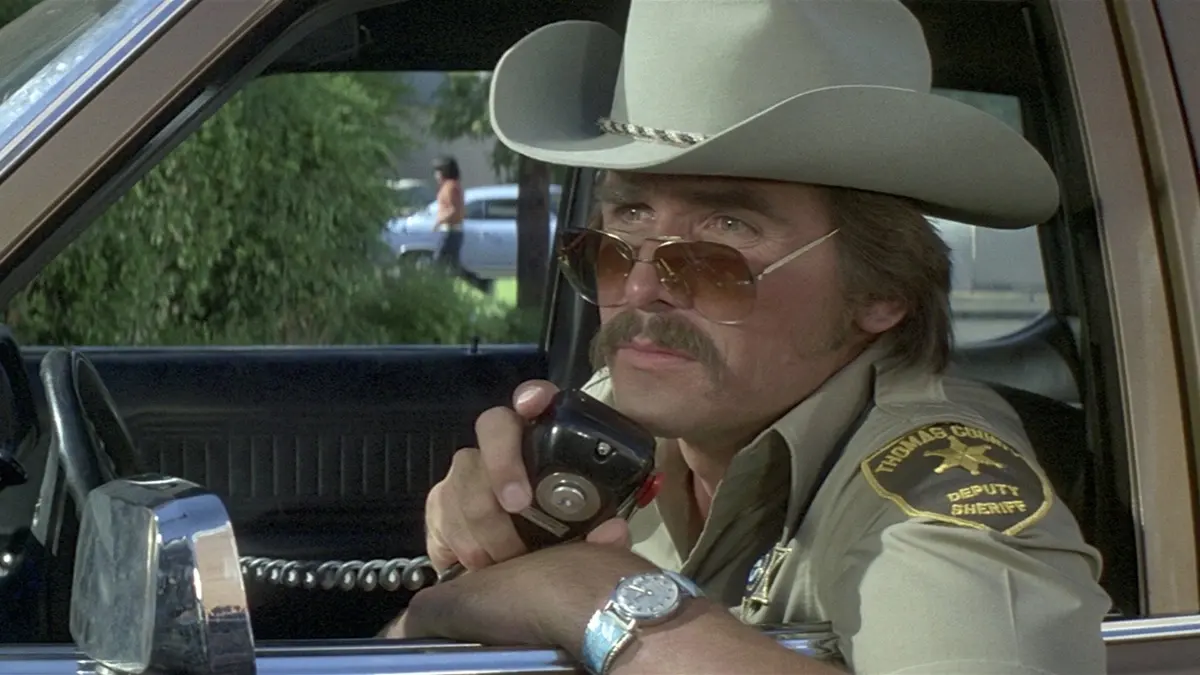
James Brolin stars as Chief Deputy Wade Parent, a local lawman who becomes increasingly involved as the mysterious vehicle begins terrorizing the community.
Brolin was already a familiar TV face from Marcus Welby, M.D.
Two years later, he'd move into a haunted house in The Amityville Horror.
John Marley plays Sheriff Everett Peck, Wade's boss.
Brolin gives the movie exactly what it needs.
He plays Wade seriously.
That's important.
A movie about an apparently evil automobile could easily become ridiculous if everyone acted as though they knew they were starring in a killer-car movie.
Wade treats the threat as real.
So does the movie.
Let’s Talk About That Car
This thing is magnificent.
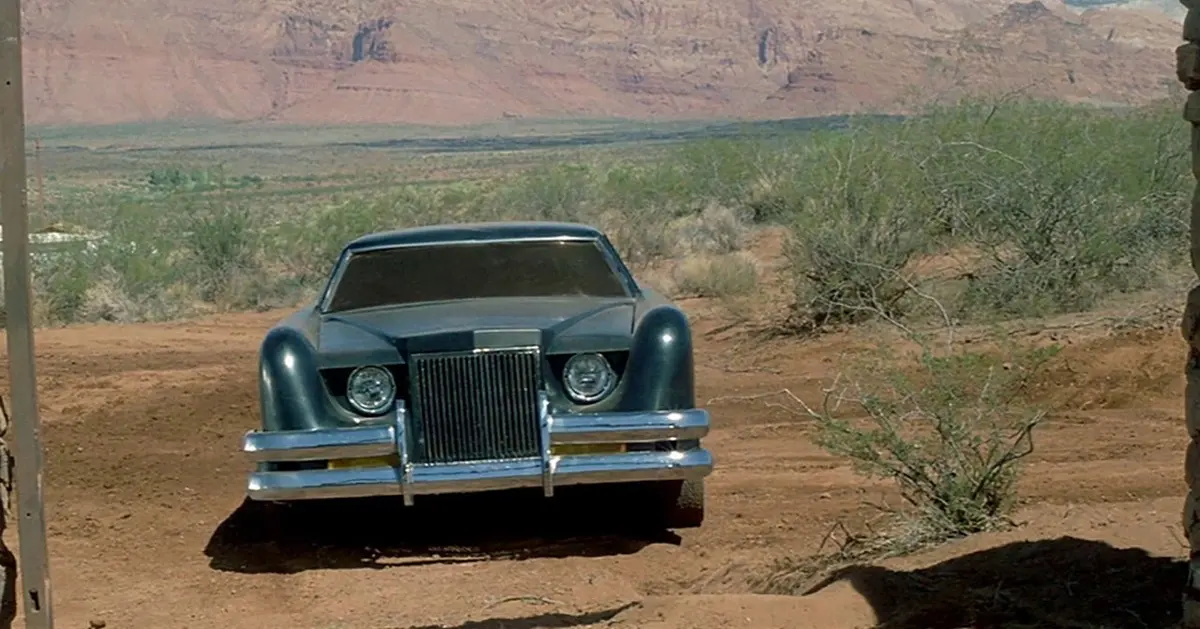
The vehicle was created from a heavily customized Lincoln Continental Mark III, transformed into something that looks almost familiar but somehow wrong.
Hollywood customizer George Barris built it.
Yes, the same George Barris who created the Batmobile for the 1960s Batman TV series.
He started with a 1971 Mark III, a huge two-door luxury coupe.
The director wanted it sinister, so Barris lowered the roof four inches.
More than one car was built for the production. Each one weighed 5,550 pounds.
The roofline is unusually low.
The body looks enormous.
The windows are dark.
The front end appears almost like a face.
And then there's that horn.
You don't need to see a driver.
Once you hear that sound approaching, you already know who's coming.
There Doesn’t Seem to Be Anybody Driving
This is where The Car gets interesting.
At first, the obvious question is:
Who's behind the wheel?
Then people start getting a better look at the vehicle.
Those windows aren't giving away many answers.
The movie gradually makes it clear that finding the driver may be considerably more complicated than anybody expected.
I'm not going any further than that. The Car 1977 review rules say the driver stays a mystery.
The Car Doesn’t Need a Face
Freddy has a face.
Michael Myers has a mask.
Leatherface has a chainsaw.
The Car has headlights, a grille, blacked-out windows, and a horn.
That's enough.
The filmmakers manage to give a machine personality without sticking cartoon eyes on the windshield or turning it into something ridiculous.
When the car sits motionless in the distance, you know it's watching.
A car shouldn't be able to watch you.
This one does.
That Horn Deserves Its Own Credit
Some horror villains have theme music.
This one has a horn.
Leonard Rosenman wrote the score, but that horn steals every scene it's in.
The sound announces that the car is nearby before you necessarily see it.
After the movie establishes what that sound means, it becomes a warning.
Hear the horn.
Start looking for somewhere to hide.
Preferably somewhere without a road leading to it.
Ronny Cox Gives the Movie Another Familiar Face
Ronny Cox plays Deputy Luke Johnson.
Movie fans know Cox from Deliverance, which came out five years earlier, and from later films like RoboCop and Total Recall.
Here he's part of the small-town police department trying to understand something that doesn't behave according to any normal rules.
Elizabeth Thompson plays Margie, Luke's wife.
The relationship between Wade and Luke also gives the movie more human weight than you'd expect from something advertised around an evil automobile.
Kathleen Lloyd Gives Wade Something Worth Protecting
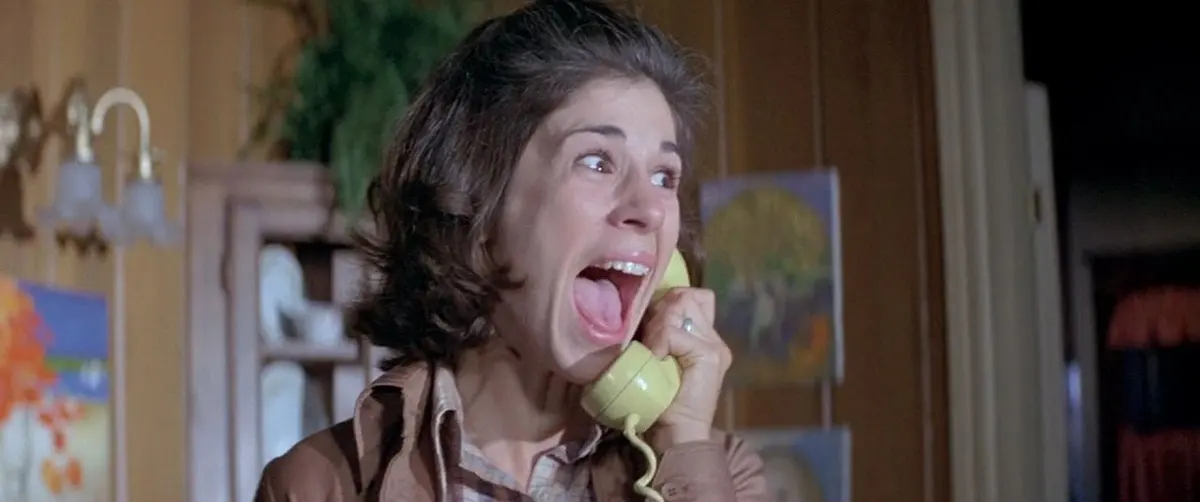
Kathleen Lloyd plays Lauren Humphries, Wade's girlfriend and a schoolteacher.
Her presence gives Wade's life outside the police department some importance.
Wade has a family too.
Real-life sisters Kim and Kyle Richards play his daughters, Lynn Marie and Debbie.
Kim had already starred in Disney's Escape to Witch Mountain. Both sisters were decades away from reality TV.
That matters because eventually the car's attacks stop feeling like an unusual law-enforcement problem.
They become personal.
And Lauren proves she's not particularly interested in being intimidated by an oversized black automobile.
Maybe she should be.
R.G. Armstrong Shows Up Too
Here's another familiar Kilroy face.
R.G. Armstrong appears as Amos Clements.
Armstrong was one of those wonderful character actors who could walk into almost any production.
Put him in a Western, a horror movie, a television episode, or an exploitation picture.
He'd immediately look like he'd lived there his entire life.
We've already talked about him in connection with Friday the 13th: The Series, where he played Lewis Vendredi.
Finding him in The Car is another reminder of just how many genre productions Armstrong passed through during his long career.
The rest of the town includes John Rubinstein as John Morris, Roy Jenson as Ray Mott, and Kate Murtagh as Miss McDonald.
The Desert Is Half the Movie
Putting The Car in an urban environment wouldn't have been nearly as effective.
The desert gives the vehicle room.
Long roads disappear toward the horizon.
Rock formations tower over tiny human figures.
There are stretches where absolutely nothing seems to be moving.
Then you notice a black shape in the distance.
And it's getting closer.
Cinematographer Gerald Hirschfeld frames those red rock canyons like a Western.
Universal's legendary matte artist Albert Whitlock handled the visual effects.
The landscape turns the car into something almost mythic.
The Car Came Along at Exactly the Right Time
The 1970s were a wonderful period for movies about ordinary things suddenly becoming dangerous.
Animals.
Trucks.
Buildings.
Machines.
The decade seemed willing to ask:
What everyday thing haven't we turned against people yet?
Eventually somebody looked out the window at the parking lot.
Problem solved.
Steven Spielberg's Duel had already put a menacing truck on a lonely highway back in 1971.
Director Elliot Silverstein brought a Western touch of his own. He had already made Cat Ballou and A Man Called Horse.
Yes, You’re Going to Think About Jaws
It's difficult not to.
Jaws had arrived only two years earlier.
It demonstrated how effective a story could be when an unstoppable threat suddenly appeared, attacked, and disappeared.
Ordinary people were left trying to figure out how to stop it.
The Car uses some of that same basic machinery.
Both movies even came from Universal.
Except instead of staying out of the water, you'd better stay off the road.
Unfortunately, roads are considerably harder to avoid.
But The Car Has Its Own Personality
Calling this simply "Jaws with a car" doesn't give the movie enough credit.
The vehicle itself is too memorable.
The Western desert setting changes the atmosphere completely.
And the supernatural suggestions push the story into territory that an ordinary killer-behind-the-wheel movie couldn't reach.
The car isn't simply transportation for the villain.
The car is the villain.
That's the fun of it.
The Stunts Give the Movie Real Weight
One advantage of making a killer-car movie in 1977 is obvious:
When a car crashes through something, they generally had to crash a car through something.
Vehicles race along real roads.
Dust gets kicked into the air.
Metal hits physical objects.
Stunt performers actually have to react to several tons of automobile coming toward them.
When the production staged one of its big car plunges, many St. George locals turned out to watch.
Free entertainment in 1976 didn't get much better than that.
That physical quality gives The Car a weight that fits the story perfectly.
The Car Looks Like Something Detroit Built During a Nightmare
The customized Lincoln is one of the best decisions in the entire production.
It isn't transformed so completely that it stops looking like a real automobile.
Instead, it looks like a car you might recognize from a distance.
Then it gets closer.
Something about the proportions isn't right.
The windows are wrong.
The roof is wrong.
The front is wrong.
It feels like someone took a luxury car and removed everything friendly about it.
There’s Some Great 1970s Americana Here
This is another reason The Car belongs on Kilroy.
Small-town police.
Desert highways.
School events.
Big American automobiles.
Local bars.
Dusty roads.
A community where everybody knows what's happening almost immediately.
Then into that recognizable world comes a machine that looks like it escaped from the darkest corner of Detroit.
It's supernatural horror wrapped in pure 1970s roadside Americana.
The Movie Is More Suspenseful Than Gory
Anyone expecting modern levels of gore should adjust expectations.
Remember, this one carries a PG rating.
The Car is primarily about pursuit, suspense, crashes, atmosphere, and the mystery surrounding the vehicle.
The threat comes from watching this enormous machine approach people who have very few ways to defend themselves.
Sometimes all the movie needs is an empty road and the sound of that horn.
Could You Make The Car Today?
Certainly.
But it probably wouldn't feel the same.
A modern version would almost certainly contain more computer-generated destruction, faster editing, more explanations, and a great deal more spectacle.
The 1977 movie has something better:
A real customized automobile occupying real space.
When that huge black machine comes down the road, it looks heavy because it is heavy.
That matters.
Somebody did take another spin. The Car: Road to Revenge arrived in 2019, with Ronny Cox back in the cast.
Don’t Look Up Exactly What the Car Is
If you've never seen the movie, resist the temptation to search for explanations.
The mystery is part of the fun.
Who's driving?
Why is it attacking people?
Can it be stopped?
Does it follow normal rules?
Let Wade Parent figure those things out while you do.
Kilroy isn't ruining them here.
Why The Car Became a Cult Favorite
The premise is impossible to forget.
You may forget character names.
You may forget individual scenes.
You're probably not going to forget the enormous black customized Lincoln terrorizing people through the Utah desert.
Sometimes that's all a horror movie needs.
One image that sticks in your head.
The Car definitely has it.
Does The Car Still Work Today?
Yes, particularly if you enjoy 1970s horror and can appreciate a movie that doesn't feel obligated to explain everything immediately.
The pace is different from modern horror.
The effects are practical.
The cars are enormous.
And nobody has a smartphone available to solve the plot.
Good.
That's exactly how The Car should be.
As far as The Car 1977 review verdicts go, this one is an easy thumbs up.
Who Should Watch The Car?
Watch The Car if you enjoy 1970s horror, killer-machine movies, supernatural mysteries, practical vehicle stunts, and desert settings.
Same goes for cult films, James Brolin, old American cars, and horror stories built around wonderfully simple ideas.
It's also an easy recommendation for anyone who loves movies where the villain itself becomes an instantly recognizable piece of design.
Car collectors and Barris fans will want to see it just for the Lincoln.
This thing deserves its parking space beside horror's better-known monsters. That's the bottom line of Kilroy's The Car 1977 review.
Final Thoughts 4.7/5
This one earns a 4.7 out of 5 from Kilroy. Wrapping up The Car 1977 review, Elliot Silverstein's killer car classic still delivers dread on four wheels. George Barris built a villain with no face and no voice, just that horn. James Brolin anchors it with total conviction, and the Utah desert does the rest.
"A relentless, wickedly fun 1970s horror classic with an unforgettable villain on wheels."
ML Lamp, Kilroy Was Here Shop
The Car starts with an idea that sounds almost too simple:
What if a car were evil?
Then it commits to it.
James Brolin treats the threat seriously. The desert landscape gives the story scale. The practical driving and stunt work make the attacks feel physical.
But the real star is sitting on four tires.
That customized black Lincoln doesn't talk.
It doesn't have a human face.
It doesn't need an elaborate backstory every ten minutes.
It appears on the horizon, sounds that unforgettable horn, and starts coming toward you.
Nearly fifty years later, that's still enough.
Picture a huge black Lincoln with no license plate pulling up behind you on a deserted highway. This might be one time when stopping to exchange insurance information isn't necessary.