Chilling Thrilling Sounds of the Haunted House and the Record That Started It All Review
My Rating: ⭐ ⭐ ⭐ ⭐ ⭐ 5 / 5
Before Spotify playlists and Bluetooth speakers, before downloadable Halloween sound packs and streaming horror ambience channels, somebody had to put a record on the turntable.
That record was Chilling, Thrilling Sounds of the Haunted House. Disneyland Records released it in 1964. It went gold. It scared children who then grew up and scared their own children with it. It is still being pressed on vinyl today.
This is the story of one of the strangest and most beloved records in the Disney catalog. It is also one of the most useful Halloween records ever made. And it came from a company that most people associate with princesses and talking animals.
Disney was always stranger than it looked.
Chilling, Thrilling Sounds of the Haunted House Arrived in 1964
Disneyland Records had been operating since 1956. Most of its catalog was exactly what you would expect. Songs from animated films. Stories read aloud for children. Gentle educational material for young listeners.
Then someone at Walt Disney Studios looked at the sound effects library the company had built over decades of animated filmmaking. That library was enormous. It contained screams, crashes, animal sounds, storms, groans, mechanical noises, and things that went bump in ways that defied easy description.
Someone decided to put those sounds on a record.
The 1964 release came in a white sleeve. The cover painting was the work of Paul Wenzel, an artist who had been doing concept work for Disney during the same period they were developing the Haunted Mansion attraction at Disneyland. His painting shows a dark Victorian house under a moonlit sky. It looks exactly right for the contents.
The label printed a note inside the cover. It specified that this record was not intended for young impressionable children between three and eight. It was intended for older children, teenagers, and adults.
That warning was one of the shrewdest pieces of marketing in the Disney catalog. Telling a child that something is not for young impressionable children is an excellent way to ensure that child listens to it immediately.
The album sold well from the start. By December 1972, the RIAA certified it gold for sales of 500,000 copies. For a record of sound effects and narration, that number is remarkable.
 Discover More Record & Vinyl Information
This Was Not a Haunted Mansion Soundtrack
Here is something that surprises almost everyone who learns it.
Despite the title, despite the cover, and despite the timing of its release alongside the development of the Haunted Mansion attraction, Chilling, Thrilling Sounds of the Haunted House is not a Haunted Mansion soundtrack. It was not made as a companion to the ride.
Some of the sounds on the record did find their way into the Haunted Mansion. The moaning ghost on the first track was originally used in a 1937 Mickey Mouse short called Lonesome Ghosts. Other sounds from the Disney library appeared in both the record and the attraction. But the record was not produced as a tie-in.
It was produced because Disney had a remarkable sound effects library. Someone figured out that people might pay to take those sounds home.
They were correct.
Side One Turned Sound Effects Into Little Nightmares
Side one of Chilling, Thrilling Sounds of the Haunted House is the side most people remember. It contains ten short pieces. Each one combines narration with sound effects. Each one ends badly for someone.
The format is simple and effective. The narrator sets up a situation in a few sentences. Then the sound effects take over and tell the rest of the story. The listener's imagination fills in everything the record does not supply.
The tracks are not all haunted-house stories. That is part of what makes the record so odd and so memorable. The Haunted House opens the album as a kind of overture. It runs nearly three minutes and hits most of the sounds that will appear elsewhere on the record.
Then things get stranger.
The Very Long Fuse is exactly what it sounds like. Someone lights a fuse. The fuse burns. The listener waits. The result is not good for whoever lit it.
The Unsafe Bridge sends a traveler across a structure that was never going to hold. Timber features a lumberjack who misjudges which direction a tree will fall. Ship Wreck deposits an ocean liner onto rocks. Chinese Water Torture delivers on its title with patient precision.
The Martian Monsters sends the listener to the surface of Mars. The welcome there is enthusiastic and hungry.
These are not ghost stories. They are disaster scenarios set to sound. They work because the sounds are excellent and because Laura Olsher knows exactly what she is doing.
Laura Olsher Guided Listeners Through the Stories
Laura Olsher was a writer for children's radio programming in the late 1950s. She began doing narration for her own series when no other actors were available. That voice caught the attention of Walt Disney. He asked her to record a children's album for the Disneyland label about how to tell time.
She also did voice work for Mr. Magoo's Christmas Carol.
For Chilling, Thrilling Sounds of the Haunted House, Olsher wrote and delivered the narration that opens each of the ten Side One tracks. She speaks directly to the listener in second person. You are a bold and courageous person, she says. Afraid of nothing.
Then she puts you in the situation.
Her voice has exactly the right quality for this material. It is warm and authoritative and slightly theatrical. She sounds like someone delighted to be telling you something you might regret hearing. She was uncredited on the original release. That credit gap has been corrected in subsequent documentation.
Her narration is short by design. She sets the scene and hands things off to the sound effects within a sentence or two. The listener does the rest. That restraint is what makes the record hold up. It trusts the audience to imagine.
Side Two Let Kids Build Their Own Haunted House
Side two is the practical side. Disney understood that people buying a Halloween sound effects record might want to use those sounds themselves.
Side two drops the narration entirely. It is a collection of effects grouped by category. Screams and Groans. Thunder, Lightning, and Rain. A Collection of Creaks. Fuses and Explosions. A Collection of Crashes.
The liner notes explain the purpose plainly. These sounds may be used to create your own stories in sound.
In 1964, that meant putting the record on a turntable at a neighborhood haunted house. It meant using the sounds as a backdrop for a Halloween party. It meant recording your own stories over the effects with a tape recorder if your family had one.
The record included an insert with Spooky Party Hints. Disney was not leaving listeners without ideas.
Side two sounds less polished than Side one. It is meant to. These are tools, not performances. The creaking door on Side two is the same creaking door you could use in your own production without the narrative framework the first side built around it. That flexibility made the record useful in ways that a purely theatrical album would not have been.
Dogs, Crashes, Screams and Things From Space
One of the pleasures of Chilling, Thrilling Sounds of the Haunted House is its track selection. It is wonderfully committed to going in directions nobody expected.
The Dogs sends a character into a situation involving a pack of animals that does not end well. Your Pet Cat describes a domestic scene that turns feral. The Birds is exactly as Hitchcock-adjacent as it sounds. Those three tracks suggest someone at Disney had a real sense of humor about the material.
The Martian Monsters track is the record's strangest and most charming moment. The premise is that you have traveled to Mars. The Martians are there. They are delighted to see you. Their delight is expressed through the sound of enthusiastic consumption. Olsher describes the encounter with a cheerfulness that makes it funnier than it should be.
None of these have anything to do with haunted houses in the traditional sense. That is the record's great trick. It sold itself as a haunted house album. It delivered something broader and weirder and more interesting than that title promised.
The sounds themselves hold up well. Disney's audio technicians had been collecting and refining these effects for decades of animated film production. They were not cheap or thin. They had weight and clarity and the particular quality of sounds that were made to communicate something specific to an audience.
The Orange Album Cover Became a Halloween Memory
The original 1964 release came in a white sleeve. Most people who remember this record do not remember the white cover. They remember the orange one.
In 1973, Disneyland Records reissued the album. The contents were identical. The Wenzel painting remained. The track listing did not change. The only difference was the sleeve color. The white cover became orange.
That orange cover is the version that sat in attics and basements and record collections across America through the 1970s. It is the version that came out every October. It is the version that parents played for children and children played for younger siblings. It became the visual shorthand for the record itself.
When people describe finding this album at a thrift store or an estate sale or in a box in their parents' garage, they almost always describe finding the orange one. The white cover is rarer and slightly more sought after by collectors. The orange cover is the one that lived in people's memory.
A British release in 1974 featured completely different cover photography showing the original Haunted Mansion in New Orleans Square at Disneyland. That version is its own collector's item for different reasons. The American versions remained consistent in their Wenzel painting across both cover colors.
Disney Created a Different Version in 1979
Fifteen years after the original, Disney released a follow-up called New Chilling, Thrilling Sounds of the Haunted House.
This was a different record. Not a reissue. Not the same material in new packaging. A new production with entirely different content.
The 1979 version replaced Olsher's narrated vignettes with seven ambient Frightening Situations on Side One. These are more atmospheric and less story-driven than the original tracks. Night Creatures opens the album. Haunted House follows, though it is a different piece than the 1964 track of the same name. The Dungeon, The Witches, Encounter in the Fog, A Grave Matter, and Mad Scientist's Laboratory complete Side One.
Side Two contains twenty-six tracks of Eerie Sound Effects. The Elements. Creatures. Ghosts and Phantoms. Frightening Devices. Haunting Music. These are grouped for practical use, like the original Side Two but expanded significantly.
The 1979 version used sounds from a variety of sources. Some were created exclusively for the album. Others came from the Elektra Records and Major Records sound libraries. Some of those same sounds had been used in Looney Tunes productions and on Sesame Street.
The 1979 version also went gold. The RIAA certified it on April 11, 1988. Both editions of this record reached the same sales threshold. That is not a small achievement for Halloween sound effects albums.
The 1979 version is the one currently available on translucent smoke-colored vinyl. That reissue appeared in 2023 and marked the first time this edition had been pressed on vinyl in decades. If you want to hear it the way it was meant to be heard, this is the version in print right now.
Chilling, Thrilling Sounds of The Haunted House! Vinyl
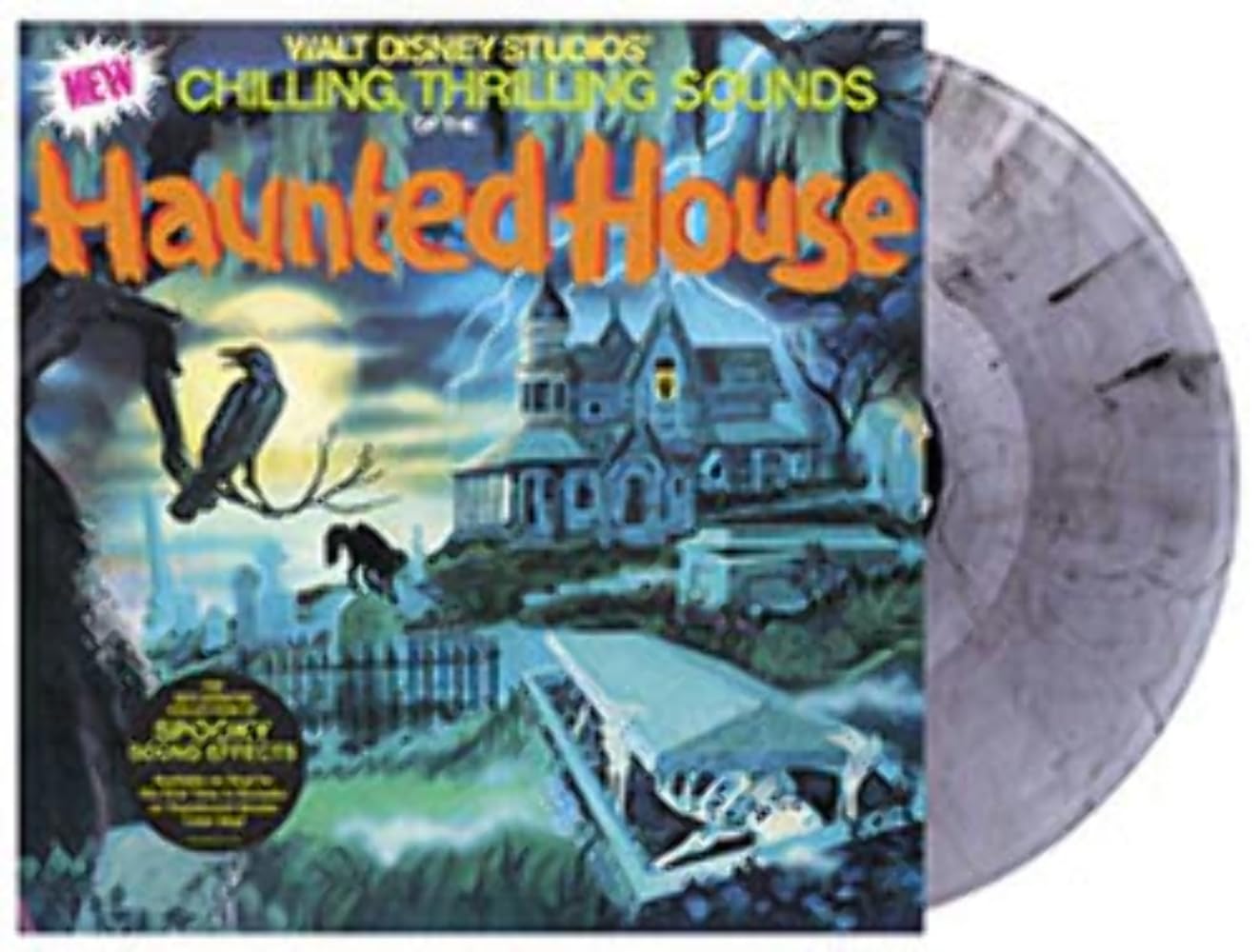
Product Description:
If our article brought back memories of spooky Halloween records, Chilling, Thrilling Sounds of The Haunted House! is one of the most entertaining additions you can make to your seasonal collection. Pressed on eye-catching translucent smoke vinyl, this classic album features eerie narrated scenes and an impressive collection of sound effects that have delighted Halloween fans for generations. It's perfect for decorating, haunted houses, parties, or simply enjoying a nostalgic October evening.
Key Features:
• Pressed on beautiful translucent smoke vinyl
• Features classic spooky stories and atmospheric Halloween sound effects
• Includes haunted houses, witches, ghosts, monsters, laboratories, storms, and eerie music
• Perfect for Halloween parties, haunted attractions, and seasonal decorating
• A wonderful collectible for fans of vintage Halloween records and spooky audio
Why This Works:
After reading about classic Halloween records, hearing them is half the fun. Chilling, Thrilling Sounds of The Haunted House! captures the spirit of vintage Halloween entertainment with creepy soundscapes that are ideal for greeting trick-or-treaters, setting the mood at a Halloween party, or simply reliving the golden age of spooky sound effect albums.
Buy on Amazon
Why Halloween Sound-Effects Records Disappeared
For a period from the late 1970s through the 1980s, Halloween sound-effects records and cassettes were a genuine category. Several labels produced them. They appeared in seasonal displays at department stores. They were inexpensive and widely available.
Then cassettes gave way to CDs. CDs gave way to digital downloads. Digital downloads gave way to streaming. Each transition made the format slightly more inconvenient and slightly less physical.
You cannot hold a Spotify playlist. You cannot pull it out of a box in October and feel the weight of it. You cannot read the liner notes or look at the sleeve while the sounds play. The ritual of putting a record on a turntable and hearing the needle drop before the first track starts is a different experience from pressing play on a phone screen.
The market for physical Halloween audio largely collapsed through the 1990s. What replaced it was free and immediate and completely lacking in the particular quality that made sitting in a room listening to a record special.
The vinyl revival of the 2010s brought some of that back. Reissues of classic Halloween records, including both editions of Chilling, Thrilling Sounds of the Haunted House, found new audiences. Some of those audiences were people who remembered the original. Others were younger collectors who had never heard it before.
Both groups wanted the physical object. That says something worth noticing.
Why This Strange Disney Record Still Works
Chilling, Thrilling Sounds of the Haunted House is not frightening by any modern standard. Nobody listening to it now is going to be kept awake by The Very Long Fuse or The Martian Monsters.
That is not the point. It was never quite the point.
The record works because it is committed to its own logic. Every track does what it promises. The sounds are real and well-made. Olsher's narration hits exactly the right tone of theatrical menace with a wink underneath it. The whole thing understands that the best Halloween entertainment is slightly funny and slightly unsettling at the same time.
It also works because of what it asks the listener to do. Side Two especially requires imagination. You bring the story. The record brings the atmosphere. That collaboration between the listener and the material is what gives it staying power that fully produced entertainment often lacks.
And it works as an object. A translucent smoke-colored piece of vinyl sitting on a turntable in October, with that Wenzel haunted house painting on the sleeve and the needle tracking through sounds that have been giving children ideas since 1964, is a specific and pleasurable thing.
Disney has made more technically impressive records. They have made more musically sophisticated ones. They have made ones with bigger budgets and more famous voices.
They have not made many that people still pull out of boxes every October and put on the turntable one more time.
That is a kind of success that does not expire.
Further Reading & Resources
📺 Chilling, Thrilling Sounds of the Haunted House
🔍 Chilling, Thrilling Sounds of the Haunted House - Wikipedia