🎸 Kenny Rogers Biography: Enduring Legacy of a Country Legend
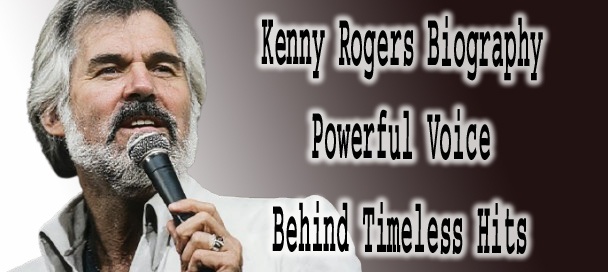
Kenny Rogers performing during his peak crossover years.
Kenny Rogers was one of the most recognizable voices in country and American popular music. Over the course of his career, he bridged country and pop with uncommon ease, selling millions of records and becoming a fixture on radio, television, and concert stages around the world. His appeal was not built on flash. It was built on storytelling and control.
Kenny Rogers was a Grammy-winning country and pop crossover artist whose storytelling songs reshaped modern country music. Best known for “The Gambler,” “Lucille,” and the duet “Islands in the Stream” with Dolly Parton, he became one of the best-selling recording artists of all time. Beyond music, he starred in television films including The Gambler series and maintained a decades-long touring career. His calm delivery and narrative style made him a defining voice of late twentieth-century American music.
He understood the power of a well-paced lyric. Where others pushed for drama, Rogers often held back, allowing a song to unfold naturally. That restraint gave his performances weight and credibility, whether he was singing a ballad or a narrative piece built around character and consequence.
By the time he reached his peak, he was more than a chart presence. He was a cultural figure whose songs crossed generational lines. His steady delivery and unmistakable tone helped define an era when country music moved confidently into the mainstream without losing its sense of story.
Kenny Rogers mastered the art of restraint. While others belted, he narrated. That calm, measured delivery turned simple lyrics into enduring American folklore.
👶 Early Life
Summary: His Early Life shaped the discipline and steady character that defined his career.
Kenny Rogers was born Kenneth Donald Rogers on August 21, 1938 in Houston, Texas, into a large working-class family. He was one of eight children, raised in a modest federal housing project where privacy was rare and responsibility came early. His father worked as a carpenter, and his mother served as a nurse’s assistant. The household valued discipline, faith, and steady effort more than grand ambition.
Money was limited, but music was present. Rogers attended Jefferson Davis High School and developed an interest in the rhythm and blues records that filled local radio stations. He was not groomed for the stage. He was simply drawn to sound and performance. A guitar became his tool of choice, and he began practicing with quiet determination.
As a teenager, he recorded his first single with a local Houston group called the Scholars. The song gained regional airplay and offered him an early look at how recording studios and radio promotion worked. Those initial experiences did not bring national fame, but they gave him practical knowledge of the industry and confirmed that music would be more than a passing interest.
Explore the Biographies of Iconic Music Stars
🎶 Music Career
Summary: He produced chart-topping hits, legendary collaborations, and over 100 million records sold worldwide.
Kenny Rogers did not begin as a solo country star. His early national exposure came with the folk group The New Christy Minstrels in the mid-1960s, a respected ensemble known for polished harmonies and collegiate folk arrangements. Although his tenure was brief, it introduced him to structured touring and professional recording. He soon moved on to form The First Edition, later billed as Kenny Rogers and the First Edition, a group that blended rock, pop, and country influences at a time when musical boundaries were beginning to loosen.
The First Edition scored a major breakthrough with “Just Dropped In (To See What Condition My Condition Was In)” (1967), a psychedelic-leaning hit that showed Rogers was willing to experiment. The group followed with socially conscious material such as “Ruby, Don’t Take Your Love to Town” (1969), written by Mel Tillis, which became a defining early success. Other notable releases included “Reuben James” (1969) and “Something’s Burning” (1970). During this period, Rogers learned how to front a band while balancing commercial appeal with narrative songwriting.
By the mid-1970s, Rogers stepped fully into a solo career, and his direction shifted decisively toward country storytelling. His first major solo success, “Lucille” (1977), became an international hit and established him as a crossover artist. That same year, he released the album Kenny Rogers (1976), which helped reposition him in the country market. His calm delivery and mature phrasing distinguished him from more overtly dramatic vocalists of the era.
His defining moment came with “The Gambler” (1978), written by Don Schlitz. The song became a signature piece and earned Rogers a Grammy Award. It also led to a series of television films based on the character, reinforcing his cultural presence beyond radio. The album The Gambler (1978) solidified his standing as one of country music’s leading voices.
Rogers continued his dominance with “She Believes in Me” (1979) from the album The Gambler, followed by the album Kenny (1979), which produced “Coward of the County” (1979). That song, another narrative piece, topped charts and further defined his identity as a storyteller. His collaborations expanded his reach even further. In 1980, he recorded “Lady”, written and produced by Lionel Richie, from the album Kenny Rogers’ Greatest Hits (1980). The song became a massive pop and country success, proving his crossover power.
Perhaps his most iconic duet arrived with “Islands in the Stream” (1983), performed with Dolly Parton and written by Barry Gibb, Robin Gibb, and Maurice Gibb of the Bee Gees. The track topped multiple charts and remains one of the most recognizable duets in country-pop history. That same era saw albums such as Eyes That See in the Dark (1983), further blending pop production with country storytelling.
Throughout the 1980s, Rogers collaborated widely, recording with Sheena Easton on “We’ve Got Tonight” (1983) and continuing to build a catalog that balanced commercial polish with accessible themes. Albums such as Love Will Turn You Around (1982) and What About Me? (1984) demonstrated his consistent chart presence.
In later decades, Rogers maintained relevance through touring, holiday albums, and special projects, including seasonal releases like Christmas (1981) and later recordings that reflected his enduring appeal. By the time he announced his farewell tour in the 2010s, his catalog included dozens of albums and charting singles.
Across genres and generations, Kenny Rogers built a music career defined by narrative strength, careful vocal control, and strategic collaborations. His ability to move between country and pop without losing credibility remains one of the most distinctive achievements in modern American music.
He performed more than 200 concert dates a year during the height of his touring career in the 1980s.
🎬 Movie & TV Career
Summary: Kenny Rogers expanded his storytelling persona into Western television films and crossover events.
Kenny Rogers’ success in music naturally led to television, where his storytelling persona translated easily to the screen. His most significant acting role grew directly from his signature song. In Kenny Rogers as The Gambler (1980), he portrayed Brady Hawkes, a disciplined card player navigating the Old West. The television film was a ratings success and led to multiple sequels, including The Gambler: The Adventure Continues (1983) and The Gambler, Part III: The Legend Continues (1987), co-starring Bruce Boxleitner as Billy Montana. The franchise cemented Rogers as a believable Western lead rather than a novelty casting choice.
He expanded that role with The Gambler Returns: The Luck of the Draw (1991), a crossover television event that united several classic Western television figures. The film featured Chuck Connors as Lucas McCain from The Rifleman, Jack Kelly as Bart Maverick from Maverick, Clint Walker as Cheyenne Bodie from Cheyenne, Claude Akins as Jason McCord from The Loner, Gene Barry as Bat Masterson from Bat Masterson, Brian Keith as Dan Troop from The Virginian, and Patrick Macnee, widely known from The Avengers. Country star Reba McEntire also appeared in the film. The project functioned as both tribute and nostalgia, positioning Rogers alongside enduring Western television icons.
Rogers also starred in Coward of the County (1981), a television adaptation of his hit song. The film translated the narrative ballad into a dramatic story, reinforcing his identity as a musical storyteller whose songs could stand alone as scripts. In Six Pack (1982), he moved into theatrical film, playing a race car driver who mentors a group of runaway children. The movie introduced a young Diane Lane to many audiences and showed Rogers stepping outside the Western mold.
Throughout the 1980s and 1990s, Rogers remained a strong television presence through concert specials and holiday programming. Seasonal productions such as Kenny & Dolly: A Christmas to Remember (1984) with Dolly Parton highlighted his chemistry with fellow performers and strengthened his family-friendly public image. He also appeared on variety programs, award shows, and talk shows, becoming a frequent presence on television alongside his radio success.
Although acting never replaced music as his primary focus, Rogers’ screen work reinforced the themes that defined his songs: honor, resilience, and measured confidence. His film and television projects extended his brand beyond recording studios and concert halls, ensuring that his storytelling voice reached audiences in more than one format.
Explore the Biographies of Iconic Celebrities
Six Pack (DVD)
Product Description:
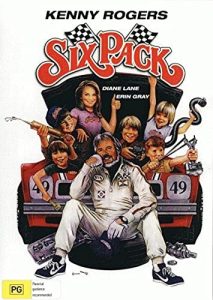
Cover Art for Six Pack (DVD)
Kenny Rogers' theatrical movie debut casts him as Brewster Baker, a road-weary stock car driver in need of a new pit crew. The answer to his search comes in the form of six runaway orphan siblings who give a boost to his career and change his life. Fast-paced family comedy also stars Diane Lane, Anthony Michael Hall, Erin Gray, Barry Corbin, and Terry Kiser; directed by Daniel Petrie. 108 minutes. Widescreen. Soundtrack: English. Region Free.
Film Highlights:
• Kenny Rogers in his first starring theatrical film role
• Family-friendly racing comedy with heart
• Features early performances from Diane Lane and Anthony Michael Hall
• Directed by Daniel Petrie, known for character-driven storytelling
• Fast-paced stock car racing action mixed with heartfelt drama
Why You’ll Enjoy This Film:
Six Pack blends racing excitement with family humor and emotional depth. Rogers plays Brewster Baker with the same steady charm that defined his music career, creating a character who is both tough and compassionate. The chemistry between the children and Rogers gives the film warmth, while the racing sequences provide energy and momentum. It remains a nostalgic early-1980s family classic that showcases a different side of the country music legend.
He was a photographer and published a coffee-table photography book showcasing images from his travels.
🕊️ Later Years
Summary: His Later Years focused on legacy, farewell touring, and preserving a catalog of enduring classics.
In the later decades of his life, Kenny Rogers gradually shifted from chasing charts to preserving legacy. He continued recording into the 1990s and 2000s, releasing projects such as Timepiece (1994) and The Gift (1996), but touring remained his strongest connection to audiences. His concerts leaned heavily on the songs that had defined him, and crowds came to hear the stories as much as the music.
He maintained high-profile collaborations, including continued appearances with Dolly Parton, whose duet “Islands in the Stream” (1983) had become a permanent part of both of their careers. Anniversary performances and television tributes reinforced the lasting appeal of that partnership. Rogers also worked with younger artists, recording duets that linked generations of country performers and affirmed his standing as a veteran statesman of the genre.
In 2015, he announced his farewell tour, titled The Gambler’s Last Deal, signaling the end of decades on the road. Health concerns eventually shortened the run, but the tour allowed him to say goodbye on his own terms. Even as public appearances became less frequent, his catalog remained active through reissues, streaming, and television broadcasts.
Kenny Rogers passed away on March 20, 2020, at the age of 81, at his home in Sandy Springs, Georgia. Tributes came from across the music industry and beyond, reflecting not only commercial success but personal respect. In his final years, he appeared reflective rather than nostalgic, comfortable with the knowledge that his voice and stories had secured a permanent place in American popular culture.
Kenny Rogers once owned a successful chain of restaurants called Kenny Rogers Roasters. The brand became so recognizable that it was famously referenced in a popular sitcom episode.
🏆 Legacy
Summary: His Legacy remains rooted in narrative songwriting, crossover success, and cultural staying power.
Kenny Rogers left behind one of the most commercially successful careers in modern music history. With more than 100 million records sold worldwide, he stood among the best-selling artists of any genre. His catalog produced enduring standards that remain fixtures on country and adult contemporary playlists, particularly “The Gambler” (1978), “Lucille” (1977), “Coward of the County” (1979), “Lady” (1980), and “Islands in the Stream” (1983) with Dolly Parton.
His achievements were recognized formally when he was inducted into the Country Music Hall of Fame (2013). Over the course of his career, he earned multiple Grammy Awards, Country Music Association Awards, and Academy of Country Music honors. Yet awards only tell part of the story. Rogers helped redefine what a country artist could be during the late twentieth century, proving that crossover success did not require abandoning storytelling roots.
He also influenced a generation of performers who embraced narrative songwriting and smooth vocal restraint. Artists who blended country with pop production found a blueprint in the work he created with producers and collaborators such as Lionel Richie and the Bee Gees. His calm phrasing and deliberate pacing became hallmarks of a style that valued clarity over vocal excess.
Beyond sales and trophies, Rogers’ legacy rests on character-driven songs that felt lived rather than performed. He presented himself as a steady observer of human choices, often delivering cautionary tales with empathy rather than judgment. Decades after their release, his recordings continue to resonate because the stories remain universal.
🗣️ Why They Still Matter:
Kenny Rogers still matters because his songs remain part of the American soundtrack. His storytelling approach continues to influence country and crossover artists who aim for emotional clarity rather than vocal excess. Decades later, “The Gambler” still feels current because its lessons about risk and consequence never fade.
Further Reading & Resources
📖 Read: Kenny Rogers | Biography, Songs, & Facts | Britannica
🔍 Explore: Kenny Rogers | Biography

ML Lamp is the owner of Kilroy Was Here. After his 20 years of working in Las Vegas in the entertainment promotions field, Mr. Lamp retired in 2002 from his job to pursue his passion for collectibles. Now as a guest speaker and author he’s living the dream, and sharing his warmth with You.