🎬 Robert Vaughn Biography: The Incredible Journey from Magnificent Gunman to Hollywood Scholar
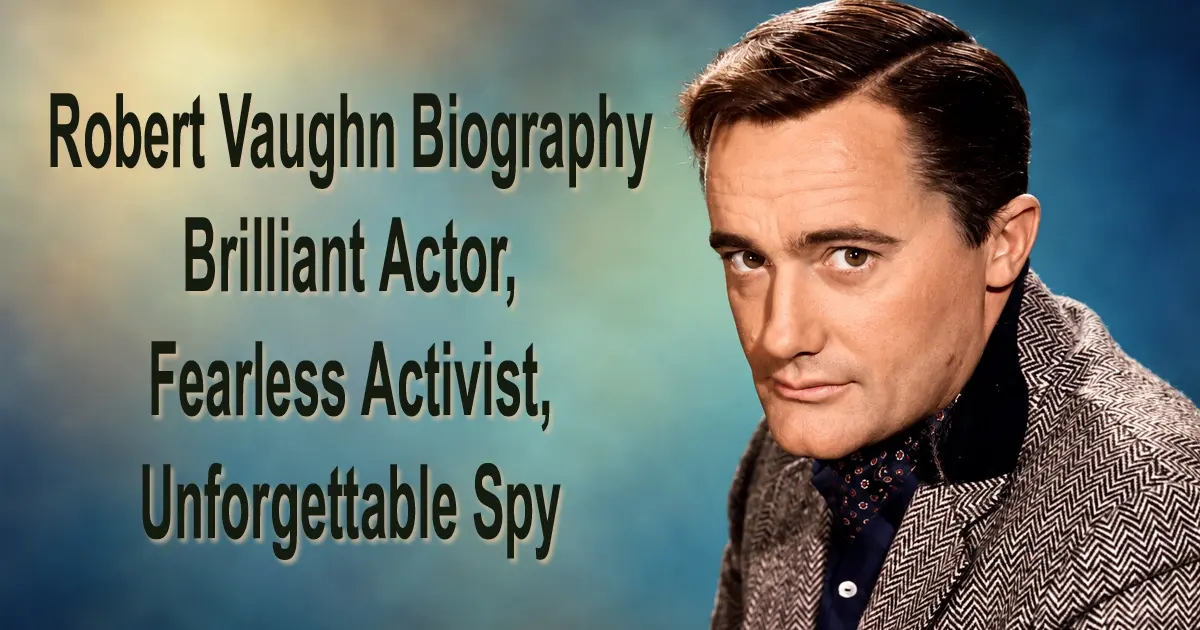
Robert Vaughn was one of the most recognizable and enduring American actors of the twentieth century, a performer whose career stretched across nearly six decades of film, television, and theater. He rose from radio work and Western guest spots in the 1950s to an Academy Award nomination, a starring role in one of the most celebrated Westerns ever made, and international fame as the star of one of the defining television series of the 1960s. He kept working steadily into his eighties, finding new audiences on both sides of the Atlantic.
Robert Vaughn (November 22, 1932, to November 11, 2016) was an American film, television, and stage actor whose career spanned nearly six decades. He earned an Academy Award nomination for The Young Philadelphians (1959), played the haunted gunfighter Lee in The Magnificent Seven (1960), and became an international star as secret agent Napoleon Solo in The Man from U.N.C.L.E. (1964 to 1968). He won an Emmy Award for Washington: Behind Closed Doors (1977), played memorable villains in Bullitt (1968) and Superman III (1983), and found late career success as con man Albert Stroller in the BBC series Hustle. He was also a published scholar of the Hollywood blacklist and an outspoken opponent of the Vietnam War.
As a performer, Vaughn was defined by an air of cool intelligence. He was at his best playing men of polish and calculation, whether suave heroes, smooth politicians, haunted gunfighters, or elegant villains. His precise diction, sardonic wit, and watchful reserve made him a natural for roles in which charm concealed something sharper underneath, and he brought the same urbane authority to comedy, espionage, war films, and political drama.
Off screen, Vaughn was unusual among Hollywood stars. He was a serious scholar who earned a doctorate, a published historian of the entertainment industry, and an outspoken political activist at a time when most actors avoided controversy. That combination of glamour and intellect, of a matinee idol who read history and debated public policy, gave him a public identity unlike any of his contemporaries and helped him endure long after the era that made him famous.
Vaughn was filming The Bridge at Remagen, a story about soldiers trapped by the collapse of a regime, in Czechoslovakia in 1968 when real history overtook the movie. Soviet led forces invaded the country to crush the Prague Spring, and the production was caught in the middle of it. Decades later, Vaughn played himself in a BBC Radio 4 drama recounting the experience.
👶 Early Life
Summary: Born in New York City to actor parents, Vaughn grew up with his grandparents in Minneapolis, began on radio as a child, studied theater in Los Angeles, and served in the U.S. Army.
🏙️ Birth and Family
Robert Francis Vaughn was born on November 22, 1932, at Charity Hospital in New York City. He was born into a show business family. His father, Gerald Walter Vaughn, was a radio actor, and his mother, Marcella Frances Vaughn (née Gaudel), was a stage actress. His parents divorced when he was very young.
🌾 A Minneapolis Childhood
Because his mother traveled frequently to perform, Vaughn spent much of his childhood living with his maternal grandparents, Frank and Mary Gaudel, in Minneapolis, Minnesota. His family was active in Democratic politics in the city, an influence that shaped his lifelong interest in public affairs. Vaughn later described himself as an emotionally fragile and unhappy child who often felt like an outsider.
His mother encouraged his interest in performing from an early age and taught him to recite Hamlet’s famous soliloquy when he was just five years old. With her help, he found work as a child performer on radio in the Chicago area, making his debut in the role of Billy on the adventure serial Jack Armstrong, the All-American Boy.
📚 Schooling
Vaughn attended Lowell Elementary, Jordan Junior High School, and North High School in Minneapolis, where he worked on the school newspaper, served on the student council, and competed in sports, including cross country. He graduated in 1950 and took a job as a page at the Minneapolis radio station WCCO. He then enrolled at the University of Minnesota as a journalism major, but left after a year and moved to Los Angeles with his mother.
In California, Vaughn studied theater arts at Los Angeles City College and then transferred to Los Angeles State College of Applied Arts and Sciences, where he earned a master’s degree in theater in 1960. His academic ambitions did not end there, and he would continue his studies even after becoming a star.
🎖️ Army Service
Robert Vaughn was inducted into the U.S. Army Reserve on November 29, 1955, and entered active duty at Fort Ord, California, on December 18, 1956. During his first leave, he learned that his mother had been diagnosed with a serious kidney disease, and he applied for a hardship discharge. While the request was considered, he served as a drill instructor at Fort Ord. He was discharged from active duty on May 26, 1957, and remained in the Army Reserve until November 1962.
Explore the Biographies of Iconic Celebrities
🎭 Stage Career
Summary: Vaughn’s stage work ranged from early Los Angeles productions to Love Letters on Broadway and a West End run in Twelve Angry Men at the age of eighty.
🎬 Early Stage Work in Los Angeles
Vaughn’s theatrical training gave him a foundation he would return to throughout his life. In 1955 he played Judas Iscariot in the long running Pilgrimage Play, staged at the outdoor Pilgrimage Theater in Hollywood. His performance in a Los Angeles production of Calder Willingham’s military academy drama End as a Man caught the attention of Burt Lancaster, who signed him to a contract with his production company, an early sign that Hollywood had taken notice of the young actor.
⚖️ Inherit the Wind and Love Letters
Between screen assignments, Vaughn continued to work in the theater. He appeared in Tom Stoppard’s comedy The Real Inspector Hound in 1979, and in March 1985 he played the crusading defense attorney Henry Drummond in Inherit the Wind at the Paper Mill Playhouse in Millburn, New Jersey. From October 1989 to January 1990, he appeared on Broadway at the Edison Theatre in A. R. Gurney’s two character drama Love Letters, directed by John Tillinger, in which a pair of performers read the lifelong correspondence of two old friends.
🇬🇧 Twelve Angry Men in the West End
In the autumn of 2013, at the age of eighty, Vaughn played Juror 9, the elderly man who is the first to support the lone holdout juror, in a production of Twelve Angry Men that opened at the Birmingham Repertory Theatre and then transferred to the Garrick Theatre in London’s West End, where it ran into 2014. The role marked a fitting late career triumph for an actor who had long loved the stage.
At the height of his U.N.C.L.E. fame, Vaughn was one of the bachelors on the very first episode of the nighttime version of The Dating Game on October 6, 1966. Miss America first runner up Karen Carlson picked him, and their prize date was a trip to London.
🎬 Film and TV Career
Summary: From The Young Philadelphians and The Magnificent Seven to Bullitt, The Towering Inferno, Superman III, and The A-Team, Vaughn built one of the busiest careers in Hollywood.
📺 Early Television
Vaughn made his television debut on November 21, 1955, in the “Black Friday” episode of the medical drama Medic (1955), the first of more than two hundred episodic television roles he would play over the next half century. He became a familiar face in the Western and drama anthologies of the late 1950s, appearing on Gunsmoke, Zane Grey Theater, Tales of Wells Fargo (in which he played Billy the Kid), Wagon Train, The Rifleman, Zorro, and Alfred Hitchcock Presents. In Law of the Plainsman he played a young Theodore Roosevelt, and in 1963 he guest starred on The Dick Van Dyke Show as Jim Darling, an old flame of Laura Petrie.
🤠 First Film Roles
Vaughn’s first credited film role came in the Western Hell’s Crossroads (1957), directed by Franklin Adreon, in which he played Bob Ford, the man who shot Jesse James. He followed it with the juvenile delinquency drama No Time to Be Young (1957) and Roger Corman‘s low budget prehistoric adventure Teenage Caveman (1958), in which he played the restless son of a tribal leader who defies his people’s taboos. He also appeared in Unwed Mother (1958) and the Western Good Day for a Hanging (1959), directed by Nathan Juran, playing a young outlaw named Eddie Campbell.
⚖️ The Young Philadelphians (1959)
Vaughn’s breakthrough came in Vincent Sherman’s drama The Young Philadelphians (1959), based on Richard Powell’s novel The Philadelphian. Paul Newman starred as Anthony Lawrence, an ambitious young lawyer climbing the ranks of Philadelphia society, with Barbara Rush and Alexis Smith co-starring. Vaughn played Chester A. “Chet” Gwynn, a wealthy, embittered Korean War veteran who has lost an arm and turned to drink, and who is later accused of murdering his uncle. Newman, who knew Vaughn from the gym they both attended, encouraged him to pursue the part and generously read with him at his screen test. Vaughn’s raw, vulnerable performance made him one of the most talked about young actors in Hollywood.
🔫 The Magnificent Seven (1960)
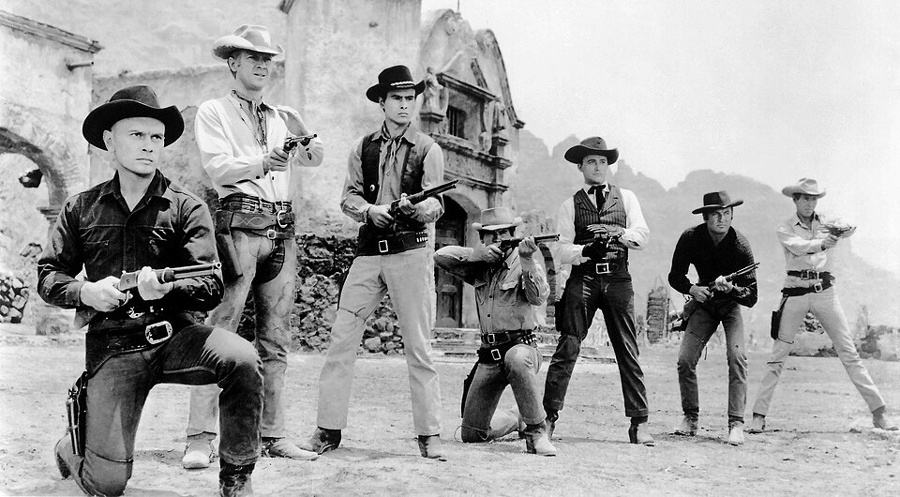
Director John Sturges cast Vaughn in The Magnificent Seven (1960), his Western reimagining of Akira Kurosawa’s Seven Samurai (1954). Yul Brynner led a cast that included Steve McQueen, Charles Bronson, James Coburn, Brad Dexter, and Horst Buchholz as seven gunmen hired to protect a Mexican farming village from a bandit leader played by Eli Wallach. Vaughn played Lee, an elegant, black gloved gunfighter on the run from his past who has secretly lost his nerve. Lee is haunted by nightmares and fear, yet in the climactic battle he summons his courage to free the villagers held hostage, sacrificing his life in the process. Shot in Mexico and propelled by Elmer Bernstein‘s rousing score, the film became one of the most beloved Westerns ever made, and Vaughn’s tormented Lee gave the ensemble one of its most psychologically complex characters.
🎞️ The Early 1960s
Vaughn played Klaus Everard in the circus drama The Big Show (1961) and Jim Melford in Hall Bartlett’s psychiatric hospital drama The Caretakers (1963). On television, he played Boston private detective A. Dunster Lowell in “The Boston Terrier,” a 1962 episode of The Dick Powell Show intended as a pilot for a series from Blake Edwards. During the 1963 to 1964 season, he played Captain Raymond Rambridge in Gene Roddenberry‘s Marine Corps drama The Lieutenant (1963 to 1964), starring Gary Lockwood. Frustrated that his part had been diminished, Vaughn went to the producers to ask for more to do, and the meeting led directly to the offer of a series of his own.
🚔 Bullitt (1968)
After his television series ended, Vaughn returned to features in Peter Yates‘s landmark police thriller Bullitt (1968), opposite Steve McQueen as San Francisco detective Frank Bullitt and Jacqueline Bisset. Vaughn played Walter Chalmers, an ambitious and ruthless politician who is willing to sacrifice anyone to advance a high profile organized crime hearing. His silky, menacing performance gave McQueen’s laconic hero a perfect adversary, and the film, famous for its car chase through the hills of San Francisco, became one of the defining crime films of its era.
🌉 The Bridge at Remagen (1969)
In John Guillermin‘s World War II drama The Bridge at Remagen (1969), based on Ken Hechler’s account of the battle for the Ludendorff Bridge over the Rhine in March 1945, Vaughn played Major Paul Krüger, a weary German officer ordered to hold the bridge long enough for retreating troops to escape before destroying it. George Segal and Ben Gazzara co-starred as the American soldiers fighting to capture it. Vaughn brought dignity and moral weight to a soldier caught between duty and the futility of a lost war.
🏛️ The Early 1970s
Vaughn appeared in the comedy If It’s Tuesday, This Must Be Belgium (1969), and he played the conspirator Casca in Stuart Burge’s star studded film of Shakespeare’s Julius Caesar (1970), opposite Charlton Heston, Jason Robards, and John Gielgud. He played a scientist in the thoughtful science fiction drama The Mind of Mr. Soames (1970) and appeared in the British comedy The Statue (1971) with David Niven. In The Man from Independence (1974), directed by Jack Smight, he played the young Harry S. Truman, the first of several American presidents he would portray.
🔥 The Towering Inferno (1974)
Vaughn joined the all star cast of the Irwin Allen disaster epic The Towering Inferno (1974), directed by John Guillermin, as Senator Gary Parker, a politician attending the gala opening of the world’s tallest skyscraper when a fire traps the guests on the top floor. Paul Newman, Steve McQueen, William Holden, Faye Dunaway, and Fred Astaire headed the cast. The film was one of the biggest box office hits of the decade.
🔎 Columbo and the Miniseries Era
Vaughn played the murderer in two episodes of Columbo, appearing as Hayden Danziger in “Troubled Waters” (1975), set aboard a cruise ship, and as Charles Clay in “Last Salute to the Commodore” (1976). He became one of the busiest actors in the new format of the television miniseries, playing Charles Desmond in Captains and the Kings (1976) and Morgan Wendell, the corrupt political opponent of David Janssen‘s character, in James Michener‘s sprawling Centennial (1978 to 1979). In Backstairs at the White House (1979), he played President Woodrow Wilson.
🏛️ Washington: Behind Closed Doors (1977)
Vaughn gave one of the finest performances of his career in the ABC miniseries Washington: Behind Closed Doors (1977), based on John Ehrlichman’s novel The Company and loosely inspired by the Nixon administration. Jason Robards starred as the paranoid President Richard Monckton, and Vaughn played Frank Flaherty, the cold, controlling White House chief of staff who guards access to the Oval Office and orchestrates the administration’s abuses of power. The role drew on everything Vaughn did best, combining icy calculation with intelligence, and it was widely praised as a chilling portrait of power in the Watergate era.
🖥️ Demon Seed (1977)
In Donald Cammell‘s unsettling science fiction thriller Demon Seed (1977), based on Dean Koontz‘s novel, Vaughn provided the voice of Proteus IV, a supercomputer that becomes self aware and imprisons the wife of its creator, played by Julie Christie, inside her own automated home. His calm, cultivated voice made the machine all the more frightening.
🚀 Battle Beyond the Stars (1980)
Producer Roger Corman‘s space opera Battle Beyond the Stars (1980), directed by Jimmy T. Murakami, was a science fiction reworking of The Magnificent Seven, and Vaughn was cast in a role that knowingly echoed his own. He played Gelt, a wealthy, lonely mercenary hunted across the galaxy who joins the fight to defend a peaceful planet because he longs for a place to belong. Richard Thomas, John Saxon, and George Peppard co-starred.
🎬 S.O.B. (1981)
In Blake Edwards’s savage Hollywood satire S.O.B. (1981), Vaughn played David Blackman, a cynical, scheming studio chief maneuvering to seize control of a troubled film. The ensemble included Julie Andrews, William Holden, Richard Mulligan, and Robert Preston.
🦸 Superman III (1983)
Robert Vaughn played Ross Webster, a megalomaniacal business tycoon plotting to control the world’s coffee and oil supplies, in Richard Lester’s Superman III (1983), opposite Christopher Reeve as Superman and Richard Pryor as a bumbling computer genius whom Webster exploits. Vaughn’s smooth, amused villainy made Webster a memorable foil, and the role introduced him to a new generation of moviegoers.
📺 Television in the 1980s
Vaughn played Franklin D. Roosevelt in the HBO film FDR: That Man in the White House (1982) and again in Murrow (1986), and he played General Douglas MacArthur in the Australian miniseries The Last Bastion (1984). He joined the naval drama Emerald Point N.A.S. (1983 to 1984) as industrialist Harlan Adams. In the fifth and final season of The A-Team (1986 to 1987), he played General Hunt Stockwell, a shadowy government official who takes control of the fugitive commandos and sends them on covert missions, reuniting him with his friend George Peppard. He also appeared three times on Murder, She Wrote between 1985 and 1992 and played Deputy Chief Curtis Moorehead in a three part story on Hunter (1989).
🎥 Films of the 1980s and 1990s
Vaughn worked prolifically in feature films during these decades, including the action thrillers Black Moon Rising (1986), written by John Carpenter, and The Delta Force (1986), in which he played General Woodbridge opposite Chuck Norris and Lee Marvin. He later appeared in the comedies Joe’s Apartment (1996) and BASEketball (1998), playing the scheming team owner Baxter Cain in the latter, which was reported to be his 100th feature film.
⚖️ Law and Order and Later Television
During the 1990s Vaughn appeared on the daytime dramas As the World Turns and One Life to Live, guest starred on Roseanne, Diagnosis: Murder, and Walker, Texas Ranger, and played James Sheffield, the father of Charles Shaughnessy’s character, on The Nanny. In the eighth season of Law and Order, he had a recurring role as Carl Anderton, a powerful businessman who vows revenge on the district attorney’s office after his grandson is prosecuted. He also played Judge Oren Travis on the CBS series The Magnificent Seven (1998 to 2000), a television adaptation of the film that had helped make him famous.
🕵️ The Man from U.N.C.L.E.
Summary: As Napoleon Solo opposite David McCallum, Vaughn became a worldwide television star and helped define the 1960s spy craze.
💼 From Solo to U.N.C.L.E.
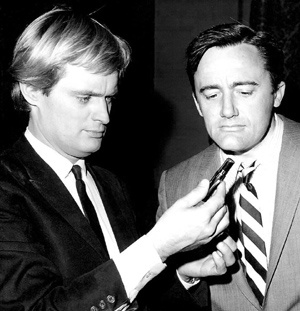
The series that made Vaughn a household name began as a project called Solo, developed by producer Norman Felton and writer Sam Rolfe for NBC. After the pilot was reworked, adding Leo G. Carroll as the hero’s distinguished boss, the show premiered in September 1964 as The Man from U.N.C.L.E. (1964 to 1968). Vaughn starred as Napoleon Solo, the top field agent of the United Network Command for Law and Enforcement, a secret international organization that battles THRUSH, a sinister criminal syndicate bent on world domination.
🤝 Solo and Kuryakin
Vaughn was paired with the Scottish actor David McCallum as Illya Kuryakin, Solo’s cool, enigmatic Russian partner. The casting of a Russian agent as a hero at the height of the Cold War was quietly daring, and the chemistry between the two leads became the heart of the show. Vaughn’s Solo was debonair, witty, and unflappable, a ladies’ man in a sharp suit, while McCallum’s Kuryakin was introverted and mysterious. Vaughn later joked that the two appealed to different segments of the audience, with McCallum drawing the younger girls and Vaughn appealing to older teenagers and grown women because of his detached cool.
🌍 A Global Phenomenon
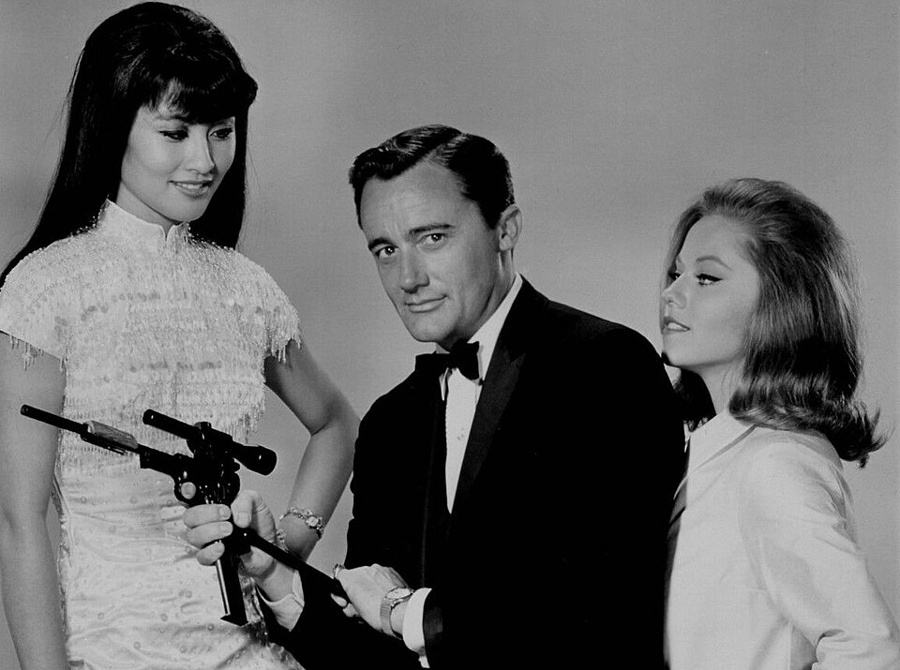
Riding the wave of the James Bond craze, The Man from U.N.C.L.E. became one of the most popular programs on television and a worldwide sensation, recognized even behind the Iron Curtain. The show generated a spinoff, The Girl from U.N.C.L.E. (1966 to 1967), starring Stefanie Powers, in which Vaughn appeared as Solo, along with toys, books, comic books, and a flood of other merchandise. Two part episodes were re-edited into feature films released in theaters overseas, beginning with To Trap a Spy (1964) and continuing with titles such as The Spy with My Face (1965), One Spy Too Many (1966), The Karate Killers (1967), and How to Steal the World (1968).
📉 The End of the Affair
The series ran for 105 episodes. In its third season, producers pushed it toward broad, campy comedy in an attempt to compete with the success of Batman, and ratings declined. A fourth season returned to a more serious tone, but the show was cancelled midway through the season, with its final episode airing in January 1968. Vaughn credited the series with transforming his career, saying it moved him from being a working actor to one with the power to negotiate his terms.
🔁 The Return of the Man from U.N.C.L.E. (1983)
Vaughn and McCallum reunited for the CBS television film The Return of the Man from U.N.C.L.E.: The Fifteen Years Later Affair (1983), in which Solo, now retired and running a computer business, is called back into service when THRUSH resurfaces. The reunion delighted fans and confirmed the lasting affection audiences had for the pair.
🇬🇧 A Star on British Television
Summary: Vaughn found great success in Britain with The Protectors, the long running BBC con artist drama Hustle, and a celebrated stint on Coronation Street.
🛡️ The Protectors (1972 to 1974)
In the early 1970s Vaughn moved his career partly to Britain, starring in the Gerry Anderson produced action series The Protectors (1972 to 1974). He played Harry Rule, the head of an international private detective agency who travels across Europe solving crimes with partners played by Nyree Dawn Porter and Tony Anholt. The series ran for two seasons and fifty two half hour episodes, and Vaughn’s own production company provided production management. Vaughn himself was candid in interviews that he considered the show light escapist entertainment rather than serious work.
🃏 Hustle (2004 to 2012)
Vaughn enjoyed a remarkable late career revival with the BBC drama Hustle (2004 to 2012), created by Tony Jordan. He played Albert Stroller, an elegant, elderly American con man and the father figure of a crew of London grifters who target the greedy and corrupt with elaborate scams. Adrian Lester, Marc Warren, Robert Glenister, and Jaime Murray co-starred. As the gang’s “roper,” Albert specialized in identifying marks and drawing them into the con. The show was a hit in Britain and was broadcast in the United States on AMC. Vaughn appeared in all eight series, and the role brought his signature charm to a whole new generation of viewers.
☕ Coronation Street (2012)
In January and February 2012, Vaughn appeared in Britain’s longest running soap opera, Coronation Street, as Milton Fanshaw, a wealthy American widower who romances one of the residents of Weatherfield. His casting was greeted with delight by British audiences who had grown up watching him.
Robert Vaughn said he received about 70,000 fan letters a month during The Man from U.N.C.L.E., along with countless house and apartment keys from admirers. By the end of the first season, he had installed an electric fence around his home to keep overeager fans away.
🎓 The Scholar and the Activist
Summary: Vaughn earned a doctorate, published a respected study of the Hollywood blacklist, and became the first major American actor to publicly oppose the Vietnam War.
📖 A Doctorate in Hollywood
Even at the height of his fame, Vaughn pursued his academic studies. In 1970 he earned a PhD in communications from the University of Southern California. His dissertation, The Influence of the House Committee on Un-American Activities on the American Theater, 1938 to 1958, examined how the congressional investigations of the McCarthy era had affected the theater and entertainment world. For his research, Vaughn sent questionnaires to and interviewed witnesses who had been branded uncooperative by the committee, gathering firsthand testimony from people whose careers had been damaged or destroyed.
📕 Only Victims (1972)
In 1972 Vaughn published his dissertation as a book, Only Victims: A Study of Show Business Blacklisting. Reviewers praised it as one of the most complete and intelligent accounts of the blacklist ever written, and it remained in print for decades as a respected reference work on the era. Vaughn opposed the blacklist on principles of free speech while remaining a critic of communism as a political system, a nuanced position that reflected his independent thinking.
🗳️ Democratic Politics
A lifelong Democrat, Vaughn campaigned for John F. Kennedy in the 1960 presidential election. During the 1960s he chaired the speakers bureau of the California Democratic State Central Committee and campaigned actively for party candidates across the state. He was widely reported to have political ambitions of his own, though he later denied ever intending to run for office.
🕊️ Opposing the Vietnam War
Vaughn was the first prominent American actor to take a public stand against the Vietnam War, speaking out at a time when doing so carried real professional risk. He was active in the peace organization Another Mother for Peace, and he debated the conservative commentator William F. Buckley Jr. about the war on Buckley’s program Firing Line. With Dick Van Dyke and Carl Reiner, he helped found a group called Dissenting Democrats, which supported Minnesota Senator Eugene McCarthy’s antiwar challenge in the 1968 presidential campaign.
💔 The Loss of Robert Kennedy
Vaughn became a close friend and fervent supporter of Senator Robert F. Kennedy. Kennedy’s assassination in June 1968 devastated him, and Vaughn later said that after Kennedy’s death he lost heart for political battle. Although his interest in public affairs never faded, he largely withdrew from the front lines of campaign politics afterward.
❤️ Personal Life
Summary: Robert Vaughn was married to actress Linda Staab for more than forty two years, raised two adopted children in Connecticut, and wrote the memoir A Fortunate Life.
💍 Marriage to Linda Staab (1974 to 2016)
Vaughn was a famously eligible bachelor through the 1960s and was linked romantically with the actress Joyce Jameson, among others. He met the actress Linda Staab when she guest starred in a 1973 episode of The Protectors, and the two married in 1974. The marriage lasted for the rest of his life, more than forty two years.
👨👩👧👦 Children and Family
Robert Vaughn and his wife adopted two children, a son, Cassidy, born in 1976, and a daughter, Caitlin, born in 1981. The family eventually settled in Ridgefield, Connecticut, where Vaughn lived for many years and where he was a respected member of the community. For years Vaughn was also believed to be the biological father of the British film director and producer Matthew Vaughn, born to the socialite Kathy Ceaton, with whom Vaughn had a relationship in the early 1970s. A later paternity investigation established that Matthew’s biological father was another man, but Matthew continued to use the Vaughn surname professionally.
💰 Business Ventures
In 1966 Vaughn founded a production company, Ferdporqui Productions, with his lifelong best friend, the actor Sherwood Price. Based at MGM in Culver City, the company optioned books and screenplays, opened a British office in 1968, and later handled production management on The Protectors. Vaughn also invested shrewdly in livestock and natural gas wells in West Texas, investments that made him a millionaire. He was known for his frugality, reportedly living on a fraction of his income for years.
📚 A Fortunate Life (2008)
In 2008 Vaughn published his autobiography, A Fortunate Life, a warm and witty account of his career, his friendships with Hollywood figures and politicians, and his years in the spotlight. Throughout the book he credited good luck and timing as much as talent for his long career, describing himself as a man who had managed to stretch a brief moment of fame into more than half a century of good fortune.
🤝 Friendships
Vaughn’s friendships with Paul Newman, who helped launch his film career, and with George Peppard, his co-star in Battle Beyond the Stars and The A-Team, were among the most important of his professional life. His bond with David McCallum endured for more than five decades after their partnership as Solo and Kuryakin, and his friendship with Sherwood Price lasted from their early years as struggling actors until the end of his life.
When John Sturges hired Vaughn for The Magnificent Seven, the director asked if he knew any other good young actors because he still had roles to fill. Vaughn recommended his friend and former classmate James Coburn, and Sturges hired him.
🕊️ Later Years and Death
Summary: Honored with an Emmy and a Hollywood Walk of Fame star, Robert Vaughn worked into his eighties and died of acute leukemia on November 11, 2016, at the age of 83.
🏆 Honors and Recognition
Over his career, Robert Vaughn received an Academy Award nomination for Best Supporting Actor and a Golden Globe nomination for The Young Philadelphians (1959), a Golden Globe nomination as New Star of the Year for The Magnificent Seven (1960), and two Golden Globe nominations, in 1965 and 1966, for The Man from U.N.C.L.E.. In 1965 Photoplay readers named him the most popular male star. He received a BAFTA nomination for Best Supporting Actor for Bullitt (1968). He won the Primetime Emmy Award for Outstanding Continuing Performance by a Supporting Actor for Washington: Behind Closed Doors (1977) and received another Emmy nomination for his portrayal of Woodrow Wilson in Backstairs at the White House (1979). In 1998 he received a star on the Hollywood Walk of Fame.
🎬 Final Roles
Vaughn kept working well into his eighties. After completing his long run on Hustle and his West End stage appearance, he played Walter Briggs in the 2015 Law and Order: Special Victims Unit episode “December Solstice,” a poignant story about an elderly man caught in a family dispute over his care. He appeared in the independent thriller The American Side (2016), and his final film role was Carmine, a dying man cared for by his aimless young daughter, in Victoria Negri‘s independent drama Gold Star (2016).
⚕️ Illness and Death
Robert Vaughn died on November 11, 2016, at the age of 83, just eleven days before his eighty fourth birthday. The cause of death was acute leukemia, for which he had undergone about a year of treatment. His manager reported that he died with his family around him. Sources differ slightly on the location. The New York Times and The Washington Post reported that he died in a hospice in Danbury, Connecticut, while other reports placed his death in his longtime hometown of Ridgefield, Connecticut. He was survived by his wife of forty two years, Linda, his children, Cassidy and Caitlin, and several grandchildren.
News of his death drew tributes from around the world, particularly in Britain, where his work on Hustle had made him a beloved figure, and from fans of The Man from U.N.C.L.E. who had followed his career for more than half a century.
🏆 Legacy
🕴️ The Gentleman Spy
Vaughn’s Napoleon Solo helped define the image of the television secret agent in the 1960s. At a moment when spy fiction dominated popular culture, he showed that a television hero could be as stylish, witty, and sophisticated as any movie star. His partnership with David McCallum set a template for buddy duos that television would imitate for decades, and the series remained a touchstone of the era’s optimism and style.
🎭 The Art of the Elegant Villain
Vaughn was equally memorable on the other side of the moral line. His cunning politicians, calculating executives, and polished schemers turned the role of the antagonist into a showcase for intelligence and restraint. He understood that the most dangerous men are often the most charming, and he brought that insight to role after role, giving audiences villains they loved to watch.
📖 An Actor Who Thought
Few actors of his generation combined a star career with serious scholarship and principled political engagement. Vaughn’s study of the blacklist preserved the testimony of people whose voices might otherwise have been lost, and his early opposition to the Vietnam War showed a willingness to risk his popularity for his convictions. He offered a model of the performer as a citizen, someone who believed that entertainers had both the right and the responsibility to take part in public life.
🔄 A Career of Reinvention
Vaughn’s longevity was itself a remarkable achievement. He moved from radio to live television, from Westerns to spy drama, from Hollywood blockbusters to British television, and from leading man to beloved elder statesman of the screen. Each generation discovered him anew, whether as a gunfighter, a secret agent, a supervillain, a mercenary commando boss, or a silver haired con man, and he greeted each reinvention with the same professionalism and good humor.
🏆 Robert Vaughn’s Place in American Entertainment
Robert Vaughn occupied a distinctive place in American entertainment as a performer who brought intelligence, polish, and conviction to every medium he touched. He embodied the cool sophistication of the 1960s while remaining relevant long after that decade had passed, and he proved that an actor could be both a popular star and a serious thinker. His legacy is ultimately one of style anchored by substance, of a man whose suave screen persona concealed a restless mind, a principled conscience, and a deep love of his craft that sustained one of the longest and most varied careers of his generation.
🗣️ Why He Still Matters
Robert Vaughn still matters because he proved that cool and conscience could live in the same man. When he died in 2016, he was the last surviving actor among the seven gunmen of The Magnificent Seven, a living link to one of the greatest Westerns ever made. His Napoleon Solo remains the model for the witty, unflappable television spy, his villains still set the standard for menace delivered with a smile, and his scholarship on the Hollywood blacklist continues to inform anyone who studies that dark chapter of American history. New viewers keep finding him, whether through classic films, spy television, or Hustle, and each discovers the same rare blend of elegance, intelligence, and integrity.