Strange Fruit and the Two Stories That Should Never Have Met
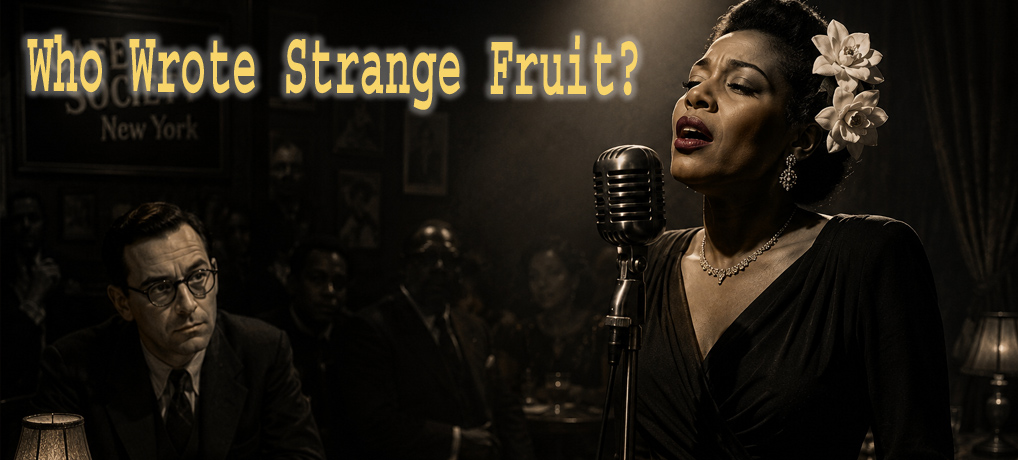
Picture Billie Holiday at a microphone in a darkened nightclub in 1939, a single spotlight on her face, the room gone completely silent. She is singing a song called Strange Fruit, and every person in that room knows they are hearing something unlike anything they have ever heard before. Something that will not let them go.
Now picture a different scene. June 19, 1953. Julius and Ethel Rosenberg are executed at Sing Sing Prison in Ossining, New York, convicted of conspiracy to commit espionage, accused of passing atomic secrets to the Soviet Union. They leave behind two young sons, Michael, age ten, and Robert, age six. The boys are shuttled between relatives, spend time in a children's shelter, and become the most famous orphans in Cold War America.
Two completely separate pieces of American history. One from the jazz clubs of Greenwich Village. One from the electric chair at Sing Sing.
They are connected by a single man most people have never heard of. His name was Abel Meeropol. He wrote Strange Fruit. He also became the father of the Rosenberg boys. And the chain of connections running through his life does not stop there. Not even close.
Who Wrote Strange Fruit?
Most people who have ever heard Strange Fruit assume Billie Holiday wrote it. That assumption is entirely understandable. Holiday's voice is so completely fused with the song that the two feel inseparable. But the man who wrote both the words and the music was a Bronx schoolteacher named Abel Meeropol, who published his work under the pen name Lewis Allan.
Meeropol was born on February 10, 1903, in New York City, the son of Ukrainian Jewish immigrants. He became an English teacher at DeWitt Clinton High School in the Bronx, one of those quietly extraordinary public school careers that rarely make it into the history books. He wrote poetry, short pieces, political commentary. He was, by the standards of the 1930s, a man of the left, a Communist Party member, and a believer in civil rights at a time when most of white America was not yet ready to have that conversation in public.
What Meeropol wrote under the name Lewis Allan was not always comfortable reading. Strange Fruit was not comfortable at all. It is, in fact, one of the most direct and unsparing pieces of protest writing that American popular music has ever absorbed, and the fact that it became a popular song at all is one of the stranger stories in American cultural history.
The Photograph Abel Meeropol Could Not Forget
The origin of Strange Fruit begins with a photograph that Meeropol saw sometime in the 1930s. The photograph, taken by Lawrence Beitler, documented the August 7, 1930, lynching of two young Black men in Marion, Indiana: Thomas Shipp, eighteen years old, and Abram Smith, nineteen. The image shows their bodies hanging from a tree, surrounded by a crowd of white men and women who appear, in several cases, to be in a festive mood. It is one of the most disturbing photographs in American history, and it was not an unusual document for its era. Photographs of lynchings were sometimes sold as postcards.
The photograph that stopped Abel Meeropol in his tracks is publicly available and has been preserved in historical collections. Viewer discretion is strongly advised. It is one of the most disturbing images in American history, and it is every bit as sickening as it sounds.
Meeropol could not shake the image. He was a Jewish schoolteacher in New York, not a Black man in the South, but the photograph connected something in him to the long history of what happens to people that power decides do not fully count as people. He sat down and wrote a poem. He called it Bitter Fruit. It was published in early 1937 in The New York Teacher, the publication of the city's teachers union, under his pen name Lewis Allan. It was also published in the leftist journal New Masses.
The poem was blunt in a way that 1930s American public culture almost never was. It described Black bodies swinging in the Southern breeze. Bulging eyes and twisted mouths. The scent of magnolias giving way to the smell of burning flesh. There was no metaphor obscuring what he was talking about. He was talking about lynching, and he was naming it directly in a public document in 1937 America, which was not a place that welcomed such naming.
He set the poem to music in November 1938, changed the title to Strange Fruit, and his wife Anne sang it and played it on her guitar at Teachers Union events. Then a door opened that changed everything.
Explore the Biographies and other Facts of Iconic Music Stars
How Strange Fruit Reached Billie Holiday
In December 1938, a former shoe salesman from Trenton, New Jersey, named Barney Josephson opened a nightclub in the basement of 1 Sheridan Square in Greenwich Village. He called it Café Society, borrowing the name from a term used to describe the idle rich, and then turned it into its own ironic slogan: the wrong place for the right people.
Café Society was New York City's first racially integrated nightclub. In an era when clubs like the Cotton Club featured Black performers but barred Black patrons, and when segregation in American public life was not a Southern peculiarity but a nationwide reality, Josephson built a room where Black and white audiences sat together, Black and white performers shared the stage, and the music was politically charged and unapologetically so. He later said he wanted a club where Blacks and whites worked together behind the footlights and sat together out front, and there wasn't, so far as he knew, a place like it in New York or in the whole country.
Billie Holiday was part of the opening lineup in 1938 and performed at Café Society for the better part of 1939. Abel Meeropol came to the club and played his new song for her. She was, by her own account, initially reluctant. She said she was scared people would hate it, and that the first time she sang it she thought it was a mistake. But she agreed to perform it, and what happened in that room on those early nights permanently altered the landscape of American popular music.
Josephson set the rules for how Strange Fruit would be performed at Café Society, and he did not leave the atmosphere to chance. The song would close Holiday's set. Just before she began, the waiters would stop serving. The room would go dark except for a single spotlight on her face. She would leave the stage when it was over without taking any encore. The audience would be left in silence with what they had just heard.
What they had just heard was a protest song unlike any that had ever been performed in an American nightclub. It was not coded. It was not subtle. It said exactly what it meant, and what it meant was this: people are being murdered in the American South in an organized, public, photographed way, and the country is doing nothing about it.
The Song Billie Holiday Made Impossible to Ignore
Holiday wanted to record Strange Fruit the same year she began performing it. She approached Columbia Records, her label at the time. Columbia declined. They were worried about Southern record retailers and radio stations, and the calculation was straightforward: the song would cost them more than it would earn them in the markets that mattered to their business. They did, however, give Holiday a one-session release from her contract so she could record it elsewhere.
She recorded it on April 20, 1939, for Commodore Records, the small independent label run by Milt Gabler. The backing was provided by Frankie Newton's eight-piece Café Society Band. The recording sold more than one million copies. It became one of Holiday's signature songs, the one that audiences who saw her perform live remembered for the rest of their lives. Ahmet Ertegun, who co-founded Atlantic Records and knew as much about the music business as anyone alive, called it a declaration of war and the beginning of the civil rights movement.
And through all of it, the man who wrote the song was slowly disappearing behind it. Billie Holiday became the face of Strange Fruit in exactly the way that great performers absorb great material and make it theirs. Which is not a criticism of Holiday. What she did with Abel Meeropol's words was transcendent. It is simply that the transcendence came at the cost of the attribution, and the schoolteacher from the Bronx receded while the jazz singer ascended.
He was also receding for another reason. The Rapp-Coudert Committee, a New York State legislative body investigating communist teachers, called Meeropol to testify in 1940 and demanded to know whether the Communist Party had paid him to write the song. He testified that it had not, which was true. But the suspicion followed him. The pen name Lewis Allan, which he had adopted partly for its own sake and partly as protection, gave the song one more layer of distance from its actual author.
The Schoolteacher Behind One of America’s Most Famous Songs
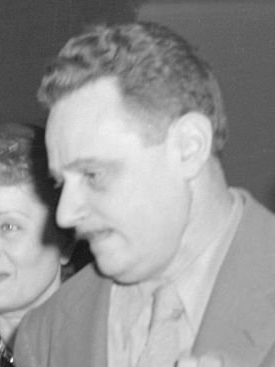
This is the moment to stop and properly account for Abel Meeropol, because the full picture of what this one man produced is genuinely staggering and almost entirely unknown.
He was the son of immigrants, a public school English teacher, a poet and songwriter who published under a pseudonym, a political activist who paid real professional and personal costs for his beliefs, and a man whose personal motto was Try. He married Anne Shaffer in 1931 and they remained together until her death in 1973. They performed his songs at union events and political gatherings, and they moved through the same world of New York leftist culture that produced much of the century's most interesting American art and thought.
He wrote Strange Fruit. He also wrote the lyrics to The House I Live In.
Stop on that for a moment. In 1945, Frank Sinatra starred in a ten-minute short film of the same name, made to oppose antisemitism and promote tolerance in the wake of World War II. Sinatra played himself taking a break from a recording session, encountering a group of boys bullying a Jewish kid, and delivering a lesson in American values. The film won an honorary Academy Award and a special Golden Globe for Best Film Promoting International Understanding. The song at the center of it, with its vision of what America could be at its best, was written by Abel Meeropol under his pen name Lewis Allan, with music by Earl Robinson.
When Meeropol saw the film for the first time, he walked out of the theater. The producers had cut the line in his lyric that referred to my neighbors white and black, the line that made the song's racial inclusivity explicit rather than implied. He had to be removed from the building. He was enraged that the most important line he had written for that song was the one they had decided was too controversial to include in a film about tolerance.
So the same man who wrote Billie Holiday's most famous and enduring protest song also wrote Frank Sinatra's Oscar-winning testament to American idealism. And almost nobody connects those two facts to the same person, because that person was named Lewis Allan on both of them.
Abel Meeropol. Strange Fruit. Billie Holiday. Frank Sinatra. One thread through all of it. And the thread was not finished pulling yet.
Then Came Julius and Ethel Rosenberg
Abel Meeropol is not in the Rosenberg story yet. Hold that thought.
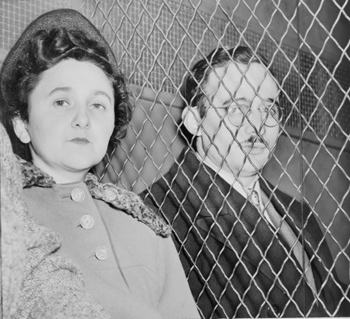
Julius and Ethel Rosenberg were a married couple living in New York City, both of them members of the American Communist Party. Julius was an electrical engineer who had worked for the U.S. Army Signal Corps during World War II. In 1950, Julius was arrested on suspicion of heading a spy ring that had passed classified information about the atomic bomb to the Soviet Union. Ethel was arrested two months later as a co-conspirator.
The trial began on March 6, 1951. The case against them rested heavily on the testimony of Ethel's own brother, David Greenglass, an army machinist who had been stationed at Los Alamos and who confessed to providing nuclear secrets to the Soviets through an intermediary. Greenglass testified against his sister and brother-in-law in exchange for a lighter sentence for himself. He later served ten years.
The prosecutor who examined Greenglass and was crucial in securing the Rosenbergs' convictions was a twenty-three-year-old assistant U.S. attorney named Roy Cohn. Cohn was a Bronx-born Jewish lawyer, a Columbia University graduate, and a man who had already demonstrated an appetite for high-stakes confrontation that went well beyond his years. His examination of Greenglass was considered a decisive factor in the case.
The Rosenbergs were convicted and sentenced to death. Albert Einstein and Pope Pius XII were among those who urged the government to show clemency. Both Presidents Truman and Eisenhower refused. On June 19, 1953, Julius and Ethel Rosenberg became the first American civilians executed for espionage during peacetime. They died in the electric chair at Sing Sing, minutes apart. They maintained their innocence until the end.
The case would be debated for decades. Evidence that emerged later, including Soviet-era intelligence documents and the 2008 confession of Rosenberg associate Morton Sobell, established that Julius had been involved in espionage. The case against Ethel was built largely on her brother's testimony, which was later revealed to have been significantly embellished. Both of the Rosenberg sons, who now carry the Meeropol name, have spent years arguing that their mother was convicted on false testimony and deserved exoneration. The debate over the justice of the case, particularly regarding Ethel, has never fully closed.
Roy Cohn, the young prosecutor who helped send them to the electric chair, went on to become chief counsel to Senator Joseph McCarthy during the Army-McCarthy hearings, the centerpiece of America's most hysterical period of Communist witch-hunting. And then, years later, Cohn became the personal lawyer and mentor to a young New York real estate developer named Donald Trump, teaching him the approach to legal and public confrontation that Trump would eventually carry into the White House. Cohn introduced Trump to political strategist Roger Stone. He represented him through the 1970s and 1980s until his own death from AIDS-related complications in 1986, the same year he was disbarred for dishonesty, fraud, deceit, and misrepresentation.
The prosecutor who convicted the Rosenbergs became the mentor of a future American president. That is a documented fact. And it belongs in this story because it tells you how tightly wound the threads of American history can become when you start following any one of them long enough.
But Roy Cohn is not the thread we are following. Abel Meeropol is. And Meeropol is about to enter the Rosenberg story in a way that nobody would have predicted.
What Happened to the Rosenberg Children?
Michael Rosenberg was ten years old when his parents died. Robert was six. They had last lived at home with their parents before the arrests in 1950. After that, they were passed between relatives, some of whom were terrified to have them in their homes because of the attention and suspicion that came with being connected to the Rosenbergs during the McCarthy era. They spent time in a children's shelter. Their legal guardian was a man named Emmanuel Bloch, who had represented the Rosenbergs at trial and who intended to arrange for the boys' future care. Bloch died of a heart attack before he could complete the process.
With Bloch gone, conservative groups who had been following the case filed a petition in Children's Court arguing that the boys were being improperly cared for. Armed police removed Michael and Robert from the home where they had been staying and placed them in an orphanage. The country had executed their parents. Now it was fighting over what to do with them.
The question of who would take in the Rosenberg boys was not easily answered. They were the children of two people that much of America had been taught to view as traitors. Taking them in meant accepting the attention and controversy that came with them. Most people were not willing to do that.
Abel and Anne Meeropol were willing.
The Man Behind Strange Fruit Became Their Father
The Meeropols had no children of their own. They took Michael and Robert into their home, began the adoption process, navigated the legal obstacles that conservative groups continued to throw in their path, and eventually succeeded. The boys became Michael Meeropol and Robert Meeropol. They grew up in the Meeropol household, raised by the man who had written Strange Fruit and The House I Live In, the man who had watched Billie Holiday make his words into something that silenced roomfuls of people, the man who had walked out of a theater because Frank Sinatra's film cut the line about neighbors white and black.
Sit with that collision for a moment. The man whose poem about racial violence in America became the most famous protest song of the twentieth century was now raising the children at the center of one of America's most famous Cold War espionage cases. Two completely separate American stories had come to live inside one family.
Robert Meeropol later recalled his childhood in the Meeropol home as genuinely loving. Abel Meeropol was not a famous man. He was not wealthy. He was a retired schoolteacher with a pen name and a modest legacy in a world that had given most of the credit for his most famous work to the woman who sang it. But he was, by all accounts, a devoted father to two boys who had been given very few reasons to trust that anyone would be.
Growing Up as Michael and Robert Meeropol
The boys were not publicly identified for years. The Meeropols kept their whereabouts deliberately quiet, protecting them from the attention and hostility that would certainly have followed had their location been widely known. They grew up with the Meeropol name, educated and cared for in a household shaped by exactly the kind of political and cultural commitments that had gotten their biological parents killed.
As adults, both brothers chose engagement over silence. Michael Meeropol became an economist and professor. Robert Meeropol became a lawyer and activist and in 1990 founded the Rosenberg Fund for Children, a nonprofit organization that provides support to the children of progressive activists who have been targeted by government or employer action. The fund's name is itself a statement: Robert Meeropol chose to identify the organization with his biological parents rather than erase them, to make the connection explicit and public rather than something to be managed or concealed.
Both brothers ultimately came to accept that their father Julius had been involved in espionage, though they continued to argue that the information he passed was of limited value and that neither parent deserved the death penalty. Their position on their mother has been consistent and documented: Ethel Rosenberg was convicted largely on the false testimony of her own brother, and in 2015 they formally petitioned President Obama to exonerate her posthumously. The petition was not granted.
They carry both names with them. They are the Meeropol brothers and the Rosenberg children simultaneously, the living connection between the man who wrote Strange Fruit and the Cold War case that defined a generation's understanding of loyalty and betrayal in America.
The Strange Afterlife of Strange Fruit
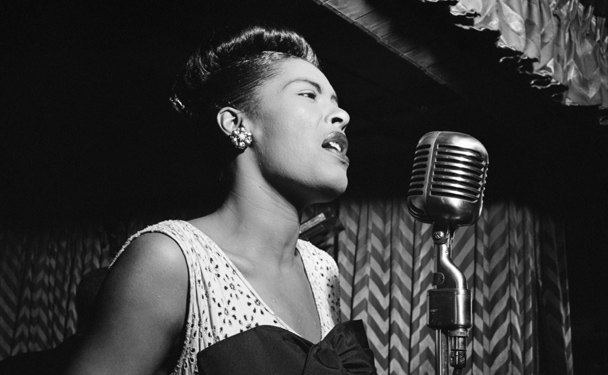
Billie Holiday died on July 17, 1959, at the age of forty-four, from cirrhosis of the liver complicated by heart and kidney disease. She died under police guard in a New York hospital, having been arrested for drug possession while on her deathbed. The federal government had pursued her for years, in part because of her refusal to stop performing Strange Fruit. Federal Bureau of Narcotics Commissioner Harry Anslinger had personally targeted Holiday, viewing the song as dangerous and her performances of it as politically subversive. When she refused to stop, he arranged for her arrest on drug charges. She spent time in prison. She lost her cabaret card, which meant she could not perform in New York clubs for years. None of it made her stop.
Abel Meeropol lived until October 29, 1986, dying in Longmeadow, Massachusetts, at the age of eighty-three. He spent his later years watching what his most famous creation did in the world, and his feelings about it were complicated. He was proud of the song. He was not always comfortable with what surrounded it.
Strange Fruit kept moving. Nina Simone recorded it in 1965 for her album Pastel Blues, bringing a different weight and tone to the material, her piano stripped down and her voice pulling every syllable into something almost unbearable. Diana Ross sang it in the 1972 film Lady Sings the Blues. The song has since been recorded by more than sixty artists. Kanye West sampled Nina Simone's version for his 2013 track Blood on the Leaves. In 2020, following the police killing of George Floyd, veteran R&B singer Bettye LaVette moved up the release of her new cover because, as she put it, the language in the news had started to change from unarmed Black man to lynching.
Holiday's 1939 recording was inducted into the Grammy Hall of Fame in 1978. It was among the first fifty recordings inducted into the National Recording Registry by the Library of Congress in 2003. Bruce Springsteen included it on a playlist of protest songs and called it an epic piece of music that was so far ahead of its time that it still strikes a deep, deep, deep nerve in the conversation of today.
The song that a Bronx schoolteacher wrote in response to a photograph he could not stop seeing has now outlasted almost everything that surrounded its creation. The nightclub where it was first performed is gone. The woman who made it famous died at forty-four. The men who prosecuted the people whose children the songwriter raised are long dead. But the song keeps going.
How Did Abel Meeropol Become the Forgotten Man?
The answer is almost built into his accomplishments, and it is more interesting than simple neglect.
Billie Holiday became the face of Strange Fruit. Julius and Ethel Rosenberg became the names attached to the espionage case. Michael and Robert became known publicly as the Rosenberg children. Roy Cohn became famous as McCarthy's attack dog and Trump's lawyer. Even the pen name Lewis Allan helped obscure the actual person.
Abel Meeropol stood behind all of it. He was the author whose words were absorbed so completely by the performer that the performance became the artifact. He was the father whose sons carried their biological parents' name into history rather than his. He was the writer whose most famous work was credited to a pseudonym for reasons that were not entirely his choice. He built things that outlasted him and then stepped back behind them, sometimes by design and sometimes by circumstance.
He also made enemies in the right places. The Rapp-Coudert Committee investigated him. His Communist Party membership made him a target during the McCarthy era. The government that spent years pursuing Billie Holiday for performing his song had no more affection for the man who wrote it. Being politically inconvenient to powerful people is one of the more reliable roads to historical invisibility.
And yet the work remained. Strange Fruit remained. The Rosenberg Fund for Children remained. Robert and Michael Meeropol remained, carrying both names, refusing to let either story be fully forgotten.
One Man, Two of America’s Darkest Chapters
Bring it back to the beginning. Two images. Two pieces of American history that have no business being in the same story.
Billie Holiday at a microphone in 1939, singing Strange Fruit, the room gone dark and silent around her.
Michael and Robert Rosenberg, ten and six years old, losing their parents to the electric chair at Sing Sing in 1953.
The man connecting those images was Abel Meeropol. He did not merely brush against famous people or wander accidentally into historical events. His life became genuinely entangled with two of the largest American questions of the twentieth century: what this country does to Black people, and what it does to people it decides are its enemies.
He wrote the words for the song that named the first question in public, in a nightclub, in 1939, and watched a woman turn those words into something that the government spent two decades trying to silence.
He became the father of two boys who were the most visible human cost of the second question, raised them in his home with his name, and watched them grow into men who spent their lives insisting that both questions be answered honestly.
Millions of people have heard Billie Holiday sing Strange Fruit. Millions know the names Julius and Ethel Rosenberg. Millions more, by now, have heard the name Roy Cohn and understand the thread that runs from the Rosenberg prosecution through McCarthyism to the mentorship of a future president.
Far fewer know that the thread connecting all of it, the man standing quietly at the center of two of America's darkest chapters, was Abel Meeropol. A schoolteacher from the Bronx. A poet writing under someone else's name. A father to boys the country tried to abandon.
Now you know.
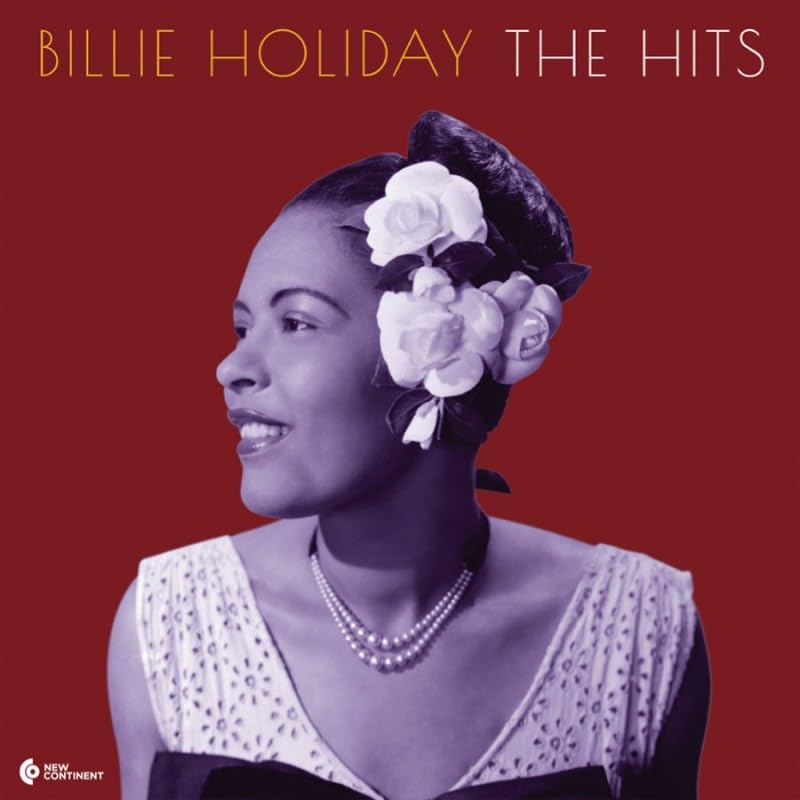
Billie Holiday – The Hits (Vinyl)
Product Description:
If reading about the remarkable history behind Strange Fruit leaves you wanting to hear the song for yourself, this collection is an excellent place to start. Billie Holiday – The Hits brings together many of the most celebrated recordings, including two powerful studio performances of "Strange Fruit," along with timeless classics that helped define American jazz and popular music.
Key Features:
• Includes two studio recordings of Strange Fruit
• Features 14 of Billie Holiday's greatest performances
• Includes classics like God Bless the Child, Lover Man, All of Me, and Lady Sings the Blues
• High-quality vinyl pressing for collectors and music lovers
• A wonderful addition to any jazz, blues, or American history collection
Why This Works:
Understanding the story of Strange Fruit is one thing. Hearing Billie Holiday perform it is something entirely different. Her haunting interpretation transformed Abel Meeropol's poem into one of the most important protest songs ever recorded. This vinyl collection allows listeners to experience that landmark recording alongside many of the songs that established Billie Holiday as one of the greatest vocalists in American music history.
Buy on Amazon