🎞️ The Incredible Melting Man Review: Rick Baker’s Gooey Drive-In Masterpiece
My Rating: ⭐ ⭐ ⭐ ⭐ ☆ 4.4/5
The Incredible Melting Man review starts in 1977, when an astronaut came home from Saturn and started falling apart. The story is pure drive-in material. The acting is stiff, and the script wanders. But Rick Baker’s makeup turns the whole thing into a walking showcase of practical effects that horror fans still talk about today.
The Incredible Melting Man Review: Rick Baker’s Slimiest Calling Card
Some movies are worth watching for the story.
Some are worth watching for the actors.
And some are worth watching for one reason.
The goo.
The Incredible Melting Man is that third kind of movie.
Nobody remembers the dialogue.
Everybody remembers the face.
William Sachs wrote and directed the film. American International Pictures released it in December 1977, and it carried an R rating. It runs about 86 minutes. Scream Factory put it out on Blu-ray in 2013, and Vinegar Syndrome followed with a 4K UHD in 2022.
This is The Incredible Melting Man review, and it stays spoiler free.
Houston, We Have a Problem
Colonel Steve West is an astronaut.
He’s part of a manned mission to Saturn.
Something goes wrong out there.
He’s hit with radiation.
He comes back to Earth alive.
Mostly.
Then his body starts melting.
And the only thing that slows it down is feeding on people.
That’s the setup.
That’s also pretty much the whole plot.
Alex Rebar plays Steve West, and he spends most of the movie under layers of rubber, gelatin, and slime.
A Movie That Started as a Joke
Here’s a fun piece of backstory.
The idea reportedly came from William Sachs’ mother.
She worked at a spray paint company and joked that he should make a movie about the gooey stuff they used.
Sachs took her up on it.
His working title was The Ghoul from Outer Space.
He wrote it as a tongue-in-cheek spoof of 1950s monster movies, with a comic book tone.
The producers had other plans.
They decided a straight horror movie would make more money.
Comedy scenes were cut.
Horror scenes were added.
The space and hospital scenes were reshot, and Sachs said that happened without him.
The story was rearranged so the astronaut angle comes right up front.
So the movie you’re watching is part spoof and part serious horror.
That explains a lot about the strange tone.
Behind the Camera
This was a small production with a few surprising names attached.
Samuel W. Gelfman produced it for Quartet Productions.
Max Rosenberg, the co-founder of Britain’s Amicus Productions, got a “presented by” credit and helped with the financing.
Amicus was known for horror anthologies like Tales from the Crypt in 1972.
Willy Curtis handled the cinematography.
The music came from Arlon Ober, who also worked as a conductor with the London Philharmonic Orchestra.
Harry Woolman worked on the special effects alongside Baker.
Tina Lewis and Dulcie Smith handled the regular makeup.
That last job sounds easy compared to what Baker was doing down the hall.
Rick Baker Is the Real Star
Let’s get to the reason this movie exists on your shelf.
Rick Baker.
In 1977, Baker was a young makeup artist fresh off the 1976 King Kong remake.
He was a few years away from becoming a legend.
His work on An American Werewolf in London would win the first Academy Award for Best Makeup in 1982.
He went on to win seven Oscars in all.
But before all that, he was building a melting astronaut on a drive-in budget.
And he went all in.
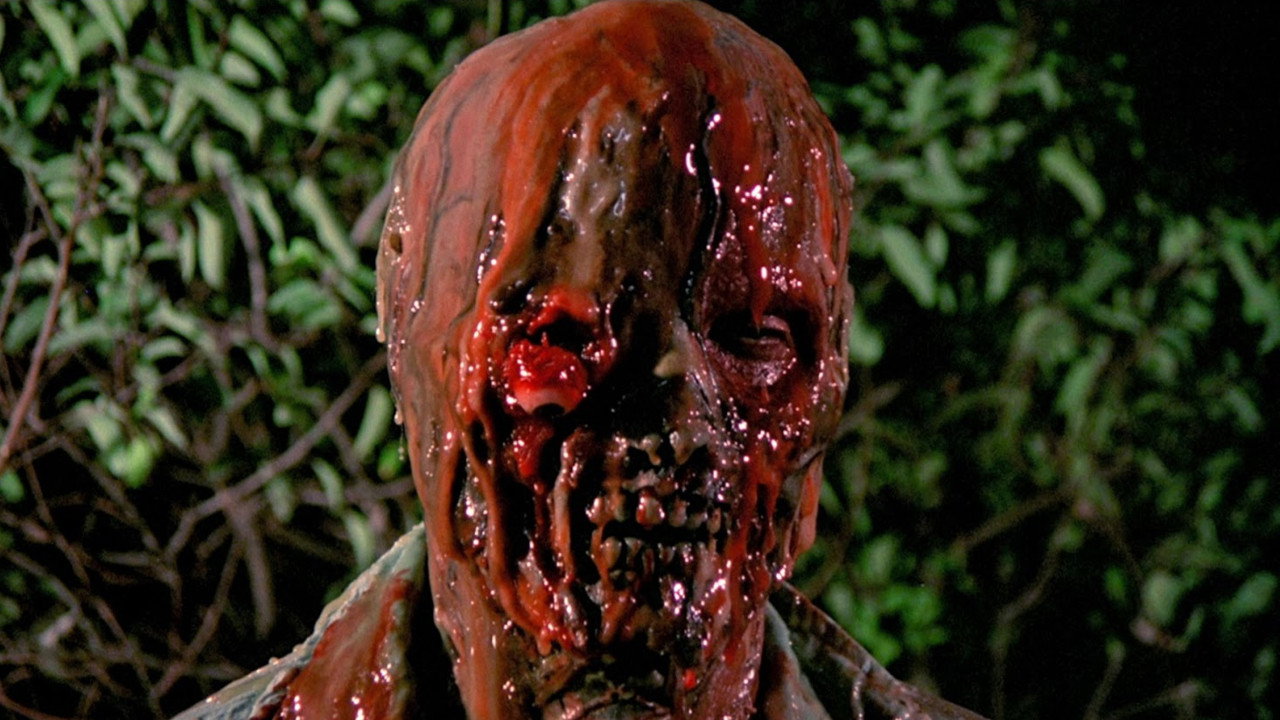
A Walking Practical Effect
This is why you watch.
Layers of damaged skin.
Exposed tissue.
Dripping material.
Appliances that get more distorted as the movie goes on.
Steve West isn’t wearing a monster mask.
He is a monster in progress.
Every time he shows up, there’s a little less of him holding together.
It’s gross.
It’s sticky.
It’s wonderful.
Even critics who hated the movie in 1977 tended to praise the makeup. The Hollywood Reporter said the makeup work was the most notable thing about it.
The Melting Was Supposed to Be Even More Gradual
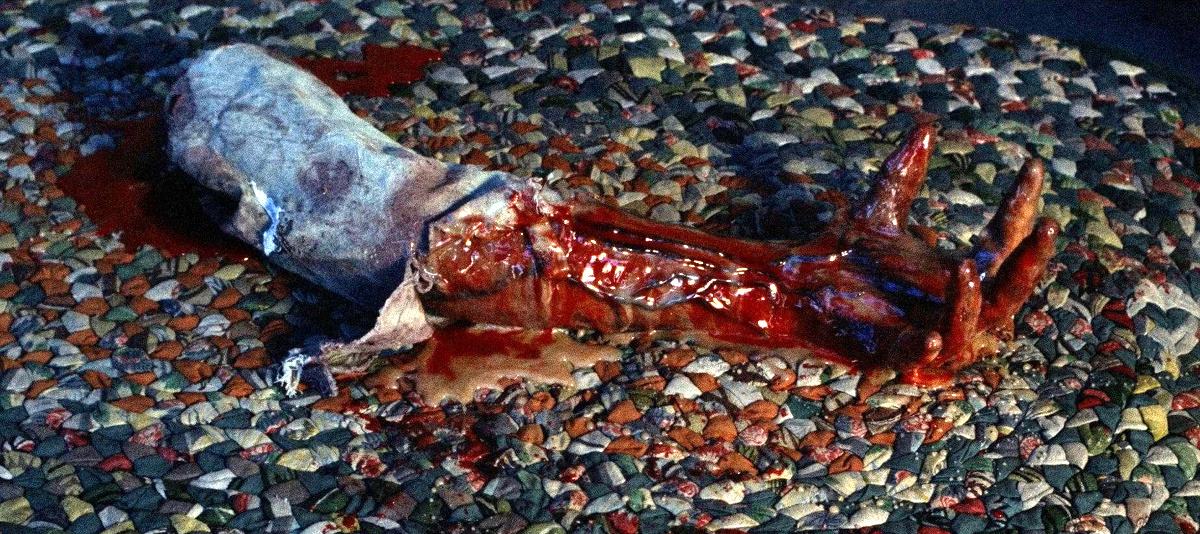
Baker designed four separate stages of makeup to show West slowly coming apart.
Not all of that progression survived the final cut.
Some of it was lost in editing.
One account even blames Rebar’s impatience with the long makeup sessions.
Sitting in a chair for hours while people glue melting flesh to your face would test anybody.
Even so, the deterioration is still the backbone of the movie.
You can see the character getting worse.
And you can see how much care went into every drip.
Rob Bottin Was There Too
Here’s a detail effects fans love.
A young Rob Bottin is credited on the special effects makeup.
Bottin was working alongside Baker early in his career.
He would go on to create the creatures for John Carpenter’s The Thing and the transformations in The Howling.
Then came RoboCop in 1987.
Remember the guy who drives into a vat of toxic waste?
Bottin built that famous melting effect.
And the crew nicknamed it the “Melting Man” as a tip of the hat to this movie.
So if that RoboCop scene ever made you lose your lunch, you can thank 1977.
The Rest of the Cast
Burr DeBenning plays Dr. Ted Nelson, the scientist and friend who tries to track West down.
Ann Sweeny plays his wife, Judy.
Myron Healey plays General Michael Perry, who wants the whole mess kept quiet.
Michael Alldredge plays Sheriff Neil Blake.
Lisle Wilson plays Dr. Loring.
Horror fans should watch for Janus Blythe as Nell Winters. She was also in Wes Craven’s The Hills Have Eyes the same year.
Cult favorite Rainbeaux Smith turns up as a model.
The performances are about what you’d expect.
Earnest.
Stiff.
Very 1977.
Nobody is winning an Oscar here except the makeup guy, eventually.
Spot the Famous Faces
Here’s where the movie gets really fun for trivia hounds.
Director Jonathan Demme plays Matt Winters.
Yes, that Jonathan Demme.
About fourteen years later, he won the Oscar for directing The Silence of the Lambs.
Former Detroit Tigers pitcher Mickey Lolich shows up as a security guard.
Producer Samuel W. Gelfman even gives himself a cameo as a fisherman.
It’s that kind of movie.
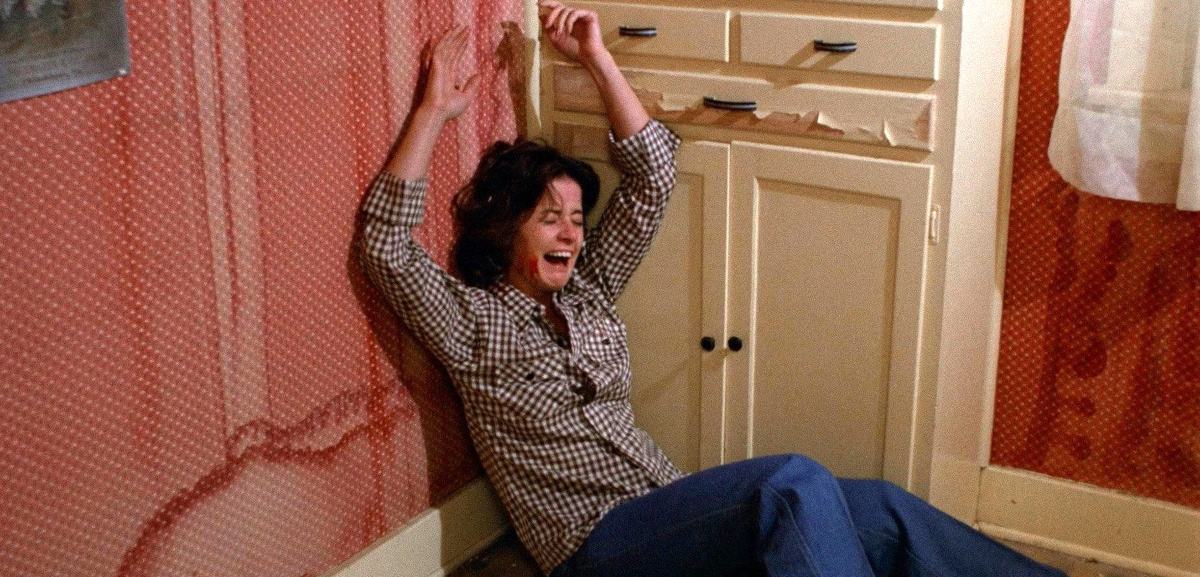
Pure Drive-In Material
Let’s not pretend this is a hidden masterpiece of storytelling.
It isn’t.
The plot is thin.
Characters wander.
Some scenes drag.
Some scenes seem to exist only because the movie needed to fill time.
But that’s part of the charm.
This was made for drive-ins, double features, and late-night TV.
You weren’t supposed to study it.
You were supposed to yell at the screen and pass the popcorn.
Summer drive-in crowds across America lived on movies just like this one.
Half the fun was hearing the cars honk when the monster showed up.
The 1950s Monster Movie DNA
If the story feels familiar, there’s a reason.
Critics have compared it to First Man into Space from 1959.
Others see shades of The Quatermass Xperiment from 1955.
Both involve astronauts who come home changed for the worse.
Sachs has said he never saw either one.
What he was going for was the feel of a classic 1950s creature feature.
He just added a lot more slime.
Marketing the Melting Man
AIP knew exactly what it was selling.
Some ads called West “the first NEW horror creature.”
One trailer wouldn’t even show the monster, just to keep audiences curious.
There were promotional candles.
Melting candles.
Of course there were.
One poster got the studio into trouble. It credited Baker with makeup work on The Exorcist.
Baker had assisted on that film, but the makeup was mainly Dick Smith’s work. William Friedkin reportedly tore the poster down, and Baker publicly apologized.
Baker had worked under Smith on that film, so that one probably stung.
The producers also tried to get a PG rating. The appeal was rejected, and the film kept its R.
One look at the makeup tells you why.
The Melting Man Hits Theaters
AIP picked up the domestic distribution rights in the summer of 1977.
The plan was an early 1978 release.
Instead, the movie started rolling out in December 1977.
It opened at the Roosevelt Theater in Chicago and pulled in $38,000 in its debut there.
Los Angeles got it on February 1, 1978.
New York had to wait until May 3, 1978.
That slow rollout was typical for a drive-in picture.
Movies like this moved from town to town, playing wherever a theater or a drive-in had an open screen.
Columbia handled the overseas release.
So the Melting Man got to drip on audiences around the world.
The Critics Were Not Kind
Reviews in 1977 were mostly brutal.
Today, Rotten Tomatoes lists the film at 7 percent from 14 reviews.
It has even landed on IMDb’s Bottom 100 list.
That sounds bad.
It’s also a little unfair.
Most of those complaints are about the story and acting.
Almost nobody complains about the makeup.
Writer Welch D. Everman summed it up nicely. He called it “cheaply made, nasty, and lots of fun.”
Kilroy agrees with all three words.
Mystery Science Theater 3000 Made It Famous Again
A whole new generation met the Melting Man in 1996.
Mystery Science Theater 3000 featured it in a Season 7 episode that aired on February 24, 1996.
Mike and the bots had plenty to say.
That episode helped turn the movie into a cult favorite.
RedLetterMedia later featured it on their Best of the Worst show.
Sharp-eyed viewers can even spot its poster in Home Alone.
Not bad for a movie the critics wanted to flush.
The Melting Man’s Long Afterlife
The movie kept popping up in strange places.
Clips turned up in the 1982 compilation It Came from Hollywood, a tribute to bad movies.
Later filmmakers have named it as an influence.
Matt Maiellaro, co-creator of Aqua Teen Hunger Force, is one of them.
Indie horror director Tim Ritter is another.
That’s the thing about cult movies.
Critics write them off.
Kids watch them on late-night TV anyway.
Then those kids grow up and make their own movies.
Why Practical Effects Still Matter
Today, a melting man would be built in a computer.
It might look smoother.
It might look cleaner.
But it wouldn’t look real in the same way.
When West drips, something is actually dripping.
When his face sags, a real appliance is sagging on a real actor.
There’s a weight to that work that CGI rarely matches.
For effects fans, this movie is like a museum exhibit you can watch.
You’re seeing Rick Baker and Rob Bottin learning the tricks that would later change horror.
Collecting The Incredible Melting Man
This one has a long life on home video.
Vestron put it out on VHS in 1986.
Orion and MGM followed with their own tapes.
MGM issued a print-on-demand DVD-R in 2011.
Scream Factory gave it a proper Blu-ray in 2013.
That disc includes a commentary by William Sachs, an interview with Sachs and Rick Baker, and a short interview with makeup artist Greg Cannom.
Vinegar Syndrome released a 4K UHD and Blu-ray set in 2022 that carries over those extras.
Those old Vestron tapes with the gooey cover art still turn up at shows.
Grab one if you see it.
Does The Incredible Melting Man Still Work Today?
As a story, not really.
As a makeup showcase, absolutely.
The movie is slow in spots.
The tone is all over the place.
The acting won’t win anyone over.
But every time Steve West shuffles back on screen, you can’t look away.
Here’s the honest bottom line of The Incredible Melting Man review. The script melts long before the monster does, but the effects carry the whole show.
Who Should Watch The Incredible Melting Man?
Watch it if you love practical effects, Rick Baker, Rob Bottin, drive-in movies, 1970s horror, and body horror.
It’s also a must for Mystery Science Theater 3000 fans and anyone who grew up on late-night creature features.
If you’ve ever wondered where modern gross-out effects came from, start here.
Then watch RoboCop and look for the family resemblance.
Maybe skip dinner first.
Final Thoughts 4.4/5
This one earns a 4.4 out of 5 from Kilroy. Wrapping up The Incredible Melting Man review, the film stands as a gloriously gooey drive-in favorite. The story may be thin, but Rick Baker’s makeup makes it essential viewing for effects fans.
“Rick Baker’s spectacular, stomach-churning makeup turns this drive-in shocker into gooey genius.”
ML Lamp, Kilroy Was Here Shop
The Incredible Melting Man is not a great movie in the usual sense.
It doesn’t need to be.
It’s a monster movie built around one big idea and one great makeup artist.
And it lets you watch a future legend at work.
Along the way, it helped inspire one of the most famous effects in RoboCop.
That’s quite a legacy for a movie that started as a joke about spray paint.
If an astronaut ever comes home from Saturn looking a little damp around the edges, skip the welcome-home hug.