☘️ Origins of Irish Halloween superstitions in America

Carved lanterns and costumes linked to Irish Halloween superstitions
Irish Halloween superstitions arrived in the United States largely through nineteenth-century immigration. Families who left rural counties during and after the Great Famine carried with them a seasonal calendar shaped by older Celtic belief. In Ireland, the end of October marked a hinge in the year, a night when boundaries between the living and the dead were thought to weaken. Those assumptions did not vanish at the port of arrival. They were practiced in tenements, farmhouses, and parish halls, gradually adjusting to American surroundings.
Irish Halloween superstitions refer to seasonal folk beliefs associated with the ancient Celtic festival of Samhain and later rural Irish observance of October 31. These practices governed household rituals, protective customs, and symbolic acts marking the transition into winter. They were carried to the United States during nineteenth-century immigration and gradually merged with other regional traditions. Their influence can be traced in modern Halloween customs involving lanterns, disguises, and seasonal divination games.
In early immigrant communities, Irish Halloween superstitions were observed within the privacy of the household rather than as public festivals. Children learned small customs that had been routine in Ireland: leaving offerings, speaking cautiously about spirits, and treating the final night of October as charged with unseen presence. The details differed by region, yet the underlying pattern remained consistent.
As decades passed, Irish Halloween superstitions began to move beyond the immigrant neighborhood. Intermarriage and urban mixing exposed other groups to the customs. Newspaper reports from the late nineteenth century described pranks, lantern displays, and autumn gatherings that echoed older practices. What had once been local belief started to assume a broader social character.
By the early twentieth century, these customs had blended into civic celebrations organized by schools and community groups. The language of spirits and wandering souls softened, but the structure of the night retained its Irish foundation. The American version did not replicate rural Ireland exactly, yet its framework can be traced to that origin.
Ancient Samhain and the Celtic Calendar
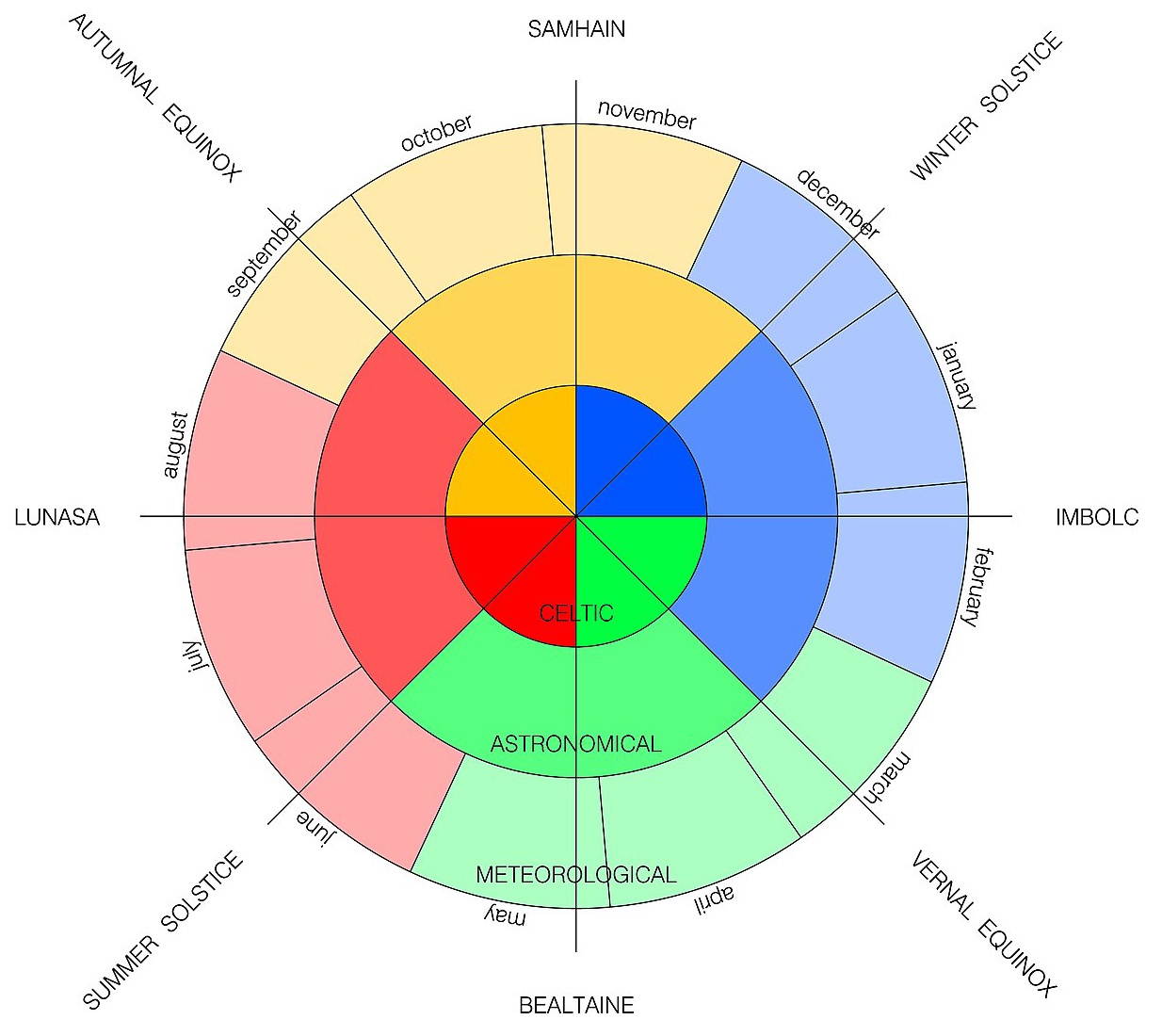 The older festival that underlies Halloween was known as Samhain. In the pre-Christian Celtic calendar, Samhain marked the close of the harvest and the beginning of the darker half of the year. It stood opposite Beltane, which opened the lighter months. Early Irish sources describe Samhain as a liminal time, when the ordinary order of things loosened.
Accounts preserved in medieval manuscripts refer to gatherings at royal sites, seasonal feasts, and ritual fires. The night carried associations with the Otherworld, a realm inhabited by spirits and ancestral figures. Though these records were written centuries after the earliest observances, they reflect a persistent belief that the transition between October and November held unusual power.
When Christianity spread through Ireland, church leaders placed the feasts of All Saints and All Souls at the beginning of November. The calendar adjustment did not erase earlier ideas. Instead, folk practice layered Christian observance over existing seasonal customs. The result was a hybrid pattern in which saints, souls, and older spirits occupied the same symbolic space.
This layered heritage provided the background from which later customs emerged. It shaped the stories, warnings, and household rites that emigrants would eventually carry overseas.
Discover more Irish Articles Here
How Irish Halloween superstitions Transformed Colonial Celebrations
In colonial America, autumn festivals already existed, though they varied by region. English harvest suppers, German gatherings, and Scottish seasonal customs were part of local life. When Irish Halloween superstitions entered this setting, they encountered a population accustomed to marking the agricultural year but not necessarily to the same folklore.
Irish Halloween superstitions introduced a more explicit focus on wandering spirits and protective disguise. In parts of the Northeast, young people adopted the practice of wearing masks or altered clothing on October 31. The stated reason was to confuse harmful forces that might be abroad. Over time, the protective purpose faded, yet the act of dressing in costume remained.
Printed sources from the late nineteenth century show Irish Halloween superstitions influencing popular amusements. Articles described apple-based games, mirror rituals, and playful attempts at fortune-telling. These were often framed as quaint survivals rather than serious belief. Even so, the structure of the evening, centered on mild disorder and symbolic testing of fate, reflected Irish precedent.
Municipal authorities sometimes attempted to regulate Halloween mischief, which had grown beyond household games into public pranks. Community parties and school events were organized to channel the energy of the night. In this way, inherited customs were reshaped to fit urban American life.
Immigration Waves and Cultural Blending
Large-scale Irish immigration in the mid-1800s altered the cultural balance of several American cities. Boston, New York, Philadelphia, and Chicago developed neighborhoods in which Irish speech and parish life dominated. Seasonal customs were maintained through church groups, family gatherings, and neighborhood traditions.
As other immigrant groups arrived, they encountered these practices. Exchange followed. Elements of Scottish and English folklore mingled with Irish material, producing a broader set of autumn habits. American commercial culture later added printed decorations, party supplies, and eventually mass-produced costumes.
The blending did not proceed evenly across the country. Rural areas retained different rhythms than industrial cities. In some regions, Halloween remained a modest observance. In others, it expanded into parades and large civic events. Yet the persistence of spirit imagery, lantern displays, and fortune games indicates the durable influence of earlier belief.
Symbols and Rituals Within Irish Halloween superstitions
Many of the most recognizable Halloween symbols have roots in Irish Halloween superstitions. The carved lantern, now made from pumpkin, derives from older turnip lanterns associated with the tale of a wandering soul known as Stingy Jack. In Ireland, a hollowed vegetable with a candle inside served both as warning and protection.
Irish Halloween superstitions also included specific household rites intended to reveal the future. Apples were peeled in long strips and tossed over the shoulder to form initials. Nuts were placed near a hearth to test the faithfulness of a suitor. Such acts were not treated as formal prophecy but as seasonal diversions with an undercurrent of seriousness.
Another element within Irish Halloween superstitions was the idea of concealment. People darkened their faces or exchanged clothing to avoid recognition by spirits believed to roam on that night. The custom later shifted into playful masquerade. Though the supernatural rationale faded, the practice endured in altered form.
Offerings left for unseen visitors, prayers for departed relatives, and small acts of household precaution all formed part of the pattern. The emphasis lay less on spectacle than on managing the uncertain boundary between worlds.
Bonfires, Harvests, and Seasonal Beliefs
 Bonfires held a central place in older autumn observances. Communities gathered wood and lit large fires on hilltops or common land. The flames symbolized purification and protection at the year’s turning point. Livestock might be driven between two fires as a safeguard against illness.
In agricultural settings, the close of harvest carried practical significance. Fields stood bare, and winter stores were measured. Seasonal rites acknowledged both relief and anxiety. The dark months brought vulnerability, and communal fire provided reassurance.
When these customs crossed the Atlantic, large public bonfires were less common in crowded American cities. Nevertheless, the memory of fire as protective symbol survived in lantern light and candle displays. The hearth, central to Irish rural life, found a modest echo in urban apartments where families marked the night in quieter ways.
The agricultural frame eventually receded as Halloween became more urban and commercial. Yet the seasonal timing, at the threshold of winter, preserved its older resonance.
Discover more Halloween Articles Here
Modern Traditions Rooted in Irish Halloween superstitions
Modern Halloween practices in the United States continue to reflect this inherited tradition, even when participants are unaware of its origin. The carved pumpkin, the emphasis on disguise, and the association with wandering spirits all trace back to earlier belief.
Irish Halloween superstitions shaped the tone of the holiday more than any single ritual. The combination of mild fear, humor, and symbolic testing of fate echoes the older understanding of a night when ordinary rules might loosen. In contemporary neighborhoods, children travel door to door for sweets, a practice that has its own layered history, yet the structure of movement through darkness carries the imprint of past ideas.
Community events, haunted attractions, and seasonal decorations have amplified certain themes while minimizing others. The spiritual dimension has largely receded into folklore. Still, the persistence of specific images suggests that the older framework has not disappeared entirely.
From Rural Ireland to Suburban America
The movement from Irish countryside to American suburb involved more than geography. It marked a shift from tight rural networks to diverse urban and suburban communities. Customs that once belonged to a shared village calendar became part of a national celebration.
In Ireland, seasonal observance was tied to land, livestock, and parish life. In the United States, it adapted to school schedules, municipal planning, and commercial cycles. Yet the date remained fixed, and the imagery remained familiar.
Suburban streets lined with carved pumpkins and costumed children represent the latest stage in a long process of adaptation. What began as local belief embedded in a specific rural culture now functions as a broadly shared civic ritual. Its origins lie in a set of seasonal convictions formed centuries ago.
The continuity is not exact. Details have shifted, meanings have softened, and commercial elements have multiplied. Even so, the thread connecting contemporary celebration to earlier practice can be traced without difficulty. The customs that crossed the Atlantic in immigrant trunks have settled into the American calendar, altered but still recognizable in outline.
Samhain in Your Pocket: A Tiny Little Book About the Celtic Origins of Halloween
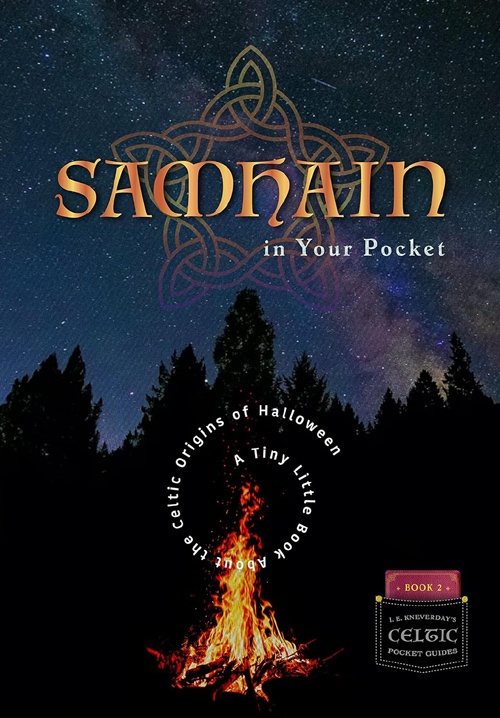
Cover Art for Samhain in Your Pocket
Product Description:
Carving jack-o’-lanterns, bobbing for apples, dressing up in costumes, decorating with black and orange, giving out candy, trick-or-treating. These familiar customs trace back to ancient Celtic observances centered on Samhain. This compact volume explains how seasonal rituals marking the end of summer evolved into what is now Halloween.
Book Highlights:
• Explains the Celtic origins of Irish Halloween superstitions.
• Summarizes key Irish myths and folktales connected to Samhain.
• Reviews historical and archaeological evidence.
• Examines the evolution from ancient ritual to modern custom.
• Compact format designed for quick reference.
Why It Fits This Page:
This book provides historical context for Irish Halloween superstitions and clarifies how older seasonal beliefs shaped American observance. It connects folklore, migration, and cultural adaptation in a concise format suitable for readers seeking primary background.
ML Lamp is the owner of Kilroy Was Here. After his 20 years of working in Las Vegas in the entertainment promotions field, Mr. Lamp retired in 2002 from his job to pursue his passion for collectibles. Now as a guest speaker and author he’s living the dream, and sharing his warmth with You.