🎬 Gene Hackman Biography: Remarkable Career of a Hollywood Legend
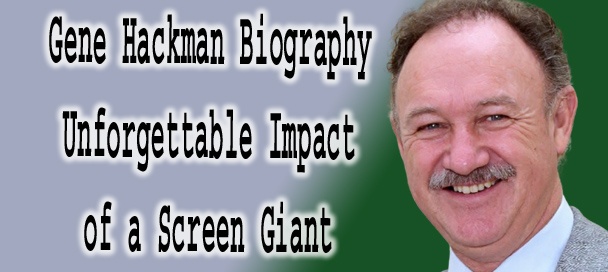
Gene Hackman stands as one of the most commanding screen presences of modern American film, a performer whose authority and restraint reshaped expectations of leading men in the late twentieth century. He did not rely on glamour or theatrical excess, but instead brought a grounded, lived-in realism that made even larger-than-life characters feel authentic. His work carried a quiet intensity, often revealing complexity beneath a plain exterior, which allowed audiences to recognize something true rather than merely watch a performance.
Gene Hackman was one of the most respected actors in American film history, known for commanding performances in classics like “The French Connection,” “Unforgiven,” and “The Conversation.” His career spanned decades, marked by realism, authority, and versatility across drama, thriller, and comedy. Hackman’s work helped redefine modern acting with a grounded, natural style. He remains a benchmark for serious performers and character-driven storytelling.
Across decades of film, Hackman became a defining figure in a period when American cinema shifted toward grittier stories and morally complicated protagonists. He excelled in roles that demanded intelligence, volatility, and a sense of internal conflict, often portraying men in positions of power who were as flawed as they were formidable. Whether in crime dramas, political thrillers, or character-driven pieces, his presence lent weight to the material, anchoring films with a sense of credibility that few actors could match.
What set Hackman apart was his refusal to soften his characters for easy approval. He embraced contradiction, allowing strength and vulnerability to exist side by side without explanation. This approach gave his performances a lasting edge and helped define a generation of actors who favored truth over polish. In doing so, he secured a place not only as a major star, but as a craftsman whose influence continues to echo through American film.
Gene Hackman walked away from Hollywood on his own terms, leaving behind a career that never relied on fame, only on the strength of the work itself.
👶 Early Life
Summary: His early life shaped a disciplined, observant personality that would later define his acting style.
Gene Hackman was born on January 30, 1930, in San Bernardino, California, to Eugene Ezra Hackman and Anna Lyda Elizabeth Gray. His father worked a series of jobs that required frequent moves, and the family’s unstable footing shaped an early sense of independence in Hackman. When his father left the household during his youth, the departure left a lasting impression, one that would quietly inform the emotional depth he later brought to the screen.
His childhood was marked by constant relocation and a lack of steady roots, conditions that demanded resilience rather than comfort. Raised largely by his mother after the separation, Hackman learned to observe people closely, a habit born from adapting to new environments and unfamiliar faces. During his teenage years, he showed little interest in formal education, preferring instead to look outward, searching for direction beyond the confines of school and routine expectations.
As a young man, Gene Hackman explored several paths before settling on acting, including a brief period of military service that offered discipline but little personal fulfillment. His early attempts to pursue performance were met with discouragement, as he was often dismissed for not fitting the conventional image of a leading man. These early struggles forced him to rely on persistence rather than promise, shaping a work ethic grounded in determination rather than opportunity.
Explore the Biographies of Iconic Celebrities
Gene Hackman shared an apartment early in his career with Dustin Hoffman, both struggling actors at the time.
🎬 Film Career
Summary: Hackman built a remarkable film career with award-winning performances and collaborations with major directors.
Gene Hackman entered the film world with determination rather than fanfare, taking small roles before gaining notice in “Lilith” (1964) alongside Warren Beatty. His breakthrough came with “Bonnie and Clyde” (1967), where his portrayal of Buck Barrow earned him his first Academy Award nomination for Best Supporting Actor. Acting opposite Faye Dunaway and Beatty, Hackman helped define a new era of American cinema that favored grit and realism over polished studio formulas.
He solidified his place in Hollywood with “The French Connection” (1971), with Roy Scheider. He delivered a fierce, unrelenting performance as Detective Jimmy “Popeye” Doyle. The role earned him the Academy Award for Best Actor, and the film itself became a landmark of the decade, directed by William Friedkin. Hackman returned to the role in “French Connection II” (1975), further cementing his association with hard-edged law enforcement characters. Around this time, he also appeared in “The Poseidon Adventure” (1972) with Ernest Borgnine, Red Buttons, Roddy McDowall and Shelley Winters, showing his ability to anchor large-scale ensemble films.
The mid-1970s expanded his range. In “The Conversation” (1974), directed by Francis Ford Coppola, Hackman delivered a quiet, introspective performance as a surveillance expert, widely regarded as one of his finest roles. He then shifted gears with “Young Frankenstein” (1974), along side Gene Wilder, Peter Boyle, and Marty Feldman in a memorable comedic turn directed by Mel Brooks. His versatility continued with “Night Moves” (1975) and “Bite the Bullet” (1975), with Candice Bergen and James Coburn, proving he could handle both noir and western genres with equal authority.
Hackman became a major box office presence through the late 1970s and 1980s, notably as Lex Luthor in “Superman” (1978) and its sequels, starring alongside Christopher Reeve, Margot Kidder, and Ned Beatty. He balanced mainstream appeal with serious roles in films like “Reds” (1981) with Diane Keaton and Jack Nicholson, and “Under Fire” (1983) with Nick Nolte. His performances carried a sense of authority that made him equally convincing as a hero, villain, or morally conflicted figure.
The 1980s also saw strong work in “Hoosiers” (1986), where he portrayed a determined basketball coach, earning widespread acclaim, and “Mississippi Burning” (1988), which brought him another Academy Award nomination for Best Actor. Acting opposite Willem Dafoe, Frances McDormand, and R. Lee Ermey, Hackman delivered a performance marked by controlled intensity and moral complexity.
In the 1990s, Hackman reached another peak. His role in “Unforgiven” (1992), directed by Clint Eastwood, earned him the Academy Award for Best Supporting Actor for his portrayal of the brutal Sheriff Little Bill Daggett. He followed with standout performances in “The Firm” (1993) alongside Tom Cruise, “Crimson Tide” (1995) with Denzel Washington, and “Get Shorty” (1995) with John Travolta, Rene Russo, and Danny DeVito, where he displayed sharp comedic timing.
His later work continued to show range and authority, including “The Birdcage” (1996) with Robin Williams and Nathan Lane, “Enemy of the State” (1998) with Will Smith, and “The Royal Tenenbaums” (2001), which earned him a Golden Globe Award for his portrayal of the eccentric family patriarch under the direction of Wes Anderson.
Hackman’s final film appearance came with “Welcome to Mooseport” (2004), a political comedy in which he starred opposite Ray Romano andMarcia Gay Harden. By the time of his retirement, he had built a body of work that spanned genres, generations, and styles, leaving behind a filmography defined by strength, intelligence, and a rare commitment to authenticity.
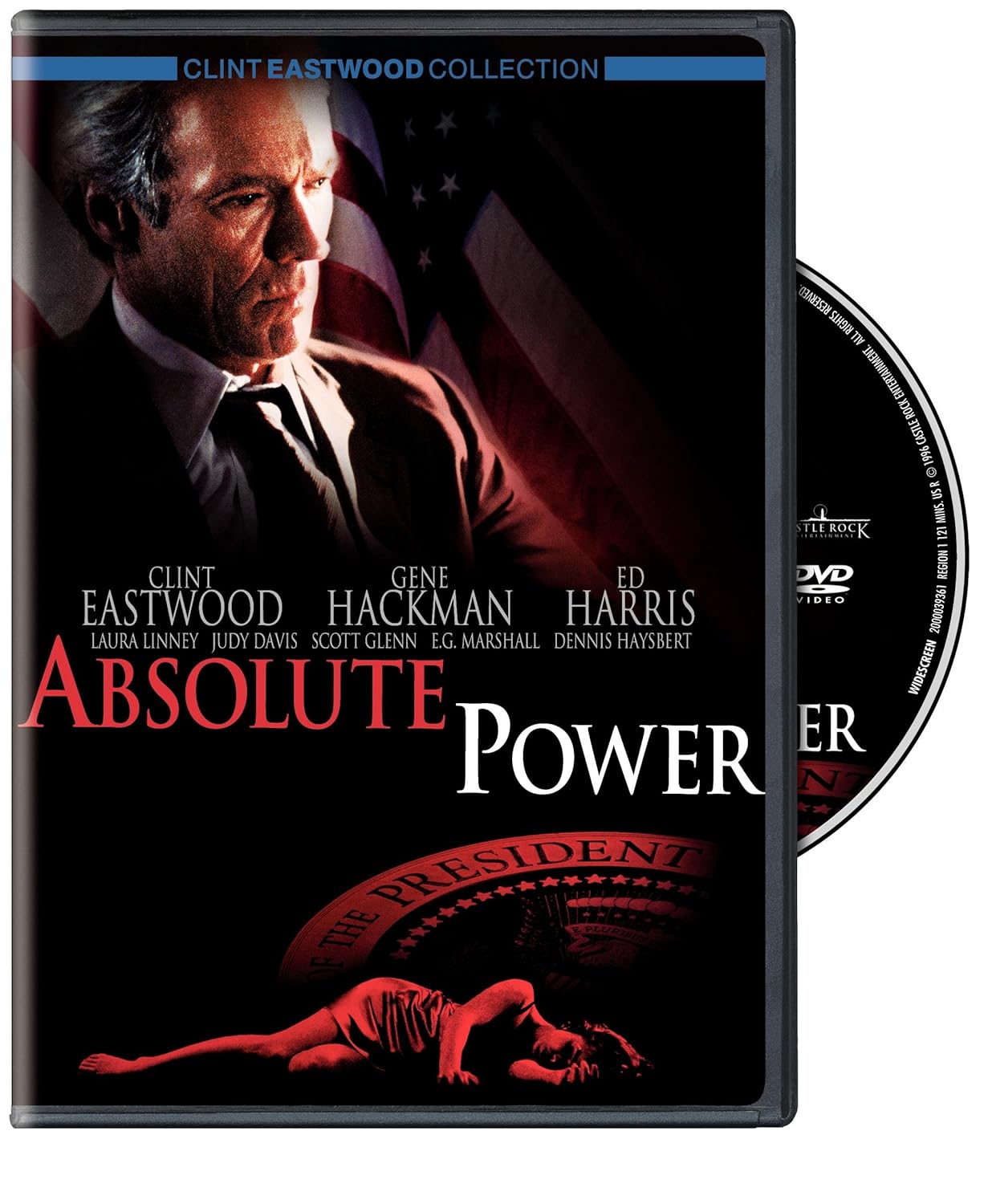
Absolute Power (DVD)
Product Description:
He was where he shouldn’t have been and saw what he shouldn’t have seen. Now, who will believe the word of a career thief and ex-con? Who will trust Luther Whitney when he says he saw a woman killed – and that the man responsible for her death is the President of the United States? Clint Eastwood portrays Whitney and directs this crisp, finely acted caper based on David Baldacci’s bestseller. Gene Hackman, Ed Harris, Laura Linney and more top-drawer acting talents create well-rounded characters that intensify a constantly spiralling game of cat-and-mouse between Whitney, local police and the highest levels of Oval Office power.
Starring:
Clint Eastwood, Gene Hackman, Ed Harris, Laura Linney
Why This Film Stands Out:
• A tightly constructed political thriller built on tension and secrecy
• Strong performances led by Clint Eastwood and Gene Hackman
• Intelligent storytelling that unfolds with steady precision
• A gripping cat-and-mouse narrative set against powerful institutions
• Based on a bestselling novel with a sharp, cinematic edge
Gene Hackman was once voted “least likely to succeed” by acting classmates, a prediction he quietly disproved.
🕊️ Later Years
Summary: In later years, he transitioned to writing and lived privately until his passing.
Gene Hackman stepped away from acting after “Welcome to Mooseport” (2004), choosing a quieter life that stood in sharp contrast to the intensity of his screen work. Rather than remain in the public eye, he turned his attention to writing, establishing himself as a serious novelist. He co-authored several historical works with Daniel Lenihan, including “Wake of the Perdido Star” (1999), “Justice for None” (2004), and “Escape from Andersonville” (2008), each reflecting a disciplined approach to storytelling rooted in research and structure.
In addition to his collaborations, Hackman wrote novels on his own, including “Payback at Morning Peak” (2011) and “Pursuit” (2013), showing a continued interest in character-driven narratives and American themes. His writing carried the same steady confidence that defined his acting, favoring clarity over excess and allowing the story to unfold without ornament. Though he rarely gave interviews during these years, his work spoke for itself, revealing a mind still engaged with craft even after leaving the screen behind.
Hackman spent his final years largely out of public view, maintaining a private life away from the industry that had made him a defining figure. He died on February 18, 2025, at the age of 95, closing the chapter on a career that had influenced generations of actors and filmmakers. His passing was met with widespread respect, not only for the roles he played, but for the quiet dignity with which he chose to leave them behind.
Gene Hackman once turned down several major film roles at the height of his career, choosing instead to step away quietly rather than remain in the spotlight.
🏆 Legacy
Gene Hackman left behind a body of work that continues to define what natural screen acting looks like in American film. At a time when performances often leaned toward style or spectacle, he brought a sense of lived reality that reshaped audience expectations. His characters felt unvarnished and human, marked by contradictions that made them believable rather than idealized. This approach influenced a generation of actors who moved away from theatrical delivery toward something quieter, more internal, and ultimately more powerful.
His legacy is also measured by the consistency of his choices. Hackman moved easily between genres, from crime dramas to comedies to large-scale productions, yet maintained the same level of control and credibility in each role. He worked alongside some of the most respected figures in the industry, including Clint Eastwood, Francis Ford Coppola, and Wes Anderson, contributing to films that remain central to American cinema. His performances did not chase attention, but they endured, often becoming the standard against which similar roles were judged.
Beyond awards and recognition, Hackman’s lasting impact lies in his discipline and restraint. He proved that authority on screen did not require excess, and that a performance could command attention through precision alone. Long after his retirement and passing, his work continues to be studied for its clarity and strength, securing his place among the most respected actors of his era.
🗣️ Why They Still Matter:
Gene Hackman’s influence remains deeply embedded in modern acting, where authenticity and restraint are now valued over theatrical display. His performances continue to be studied for their precision and emotional truth, proving that quiet authority can leave the strongest impression.
Further Reading & Resources
📖 Read: Gene Hackman: Biography, Actor, Academy Award Winner
🔍 Explore: Gene Hackman: Biography, Actor, Academy Award Winner