🎬 Bette Davis Biography: Remarkable Film Legend
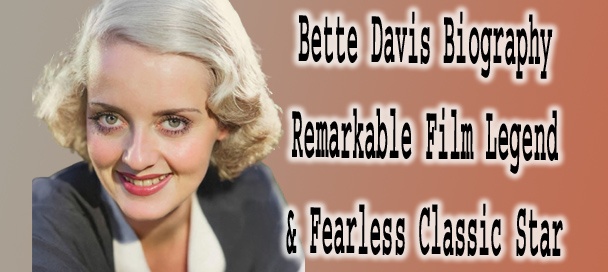
Few actresses in the history of American film carried the authority, intensity, and unmistakable presence of Bette Davis. At a time when Hollywood often favored glamour over depth, she built a reputation on sharp intelligence, emotional force, and a refusal to soften difficult characters for audience comfort. Her performances reshaped expectations for women on screen and helped push dramatic acting into darker, more psychologically layered territory.
Bette Davis was one of the most influential dramatic actresses in Hollywood history, known for her fierce performances, commanding screen presence, and refusal to conform to traditional studio expectations. Her career spanned more than five decades and included legendary films such as “All About Eve,” “Now, Voyager,” “Jezebel,” and “What Ever Happened to Baby Jane?” Davis became a defining figure of classic American cinema and helped reshape serious dramatic roles for women on screen. Her impact on film, acting, and Hollywood culture continues to influence performers and film historians decades after her death.
During the height of the studio era, Davis became one of the defining faces of prestige motion pictures. She brought a fierce independence to roles that might have been forgettable in lesser hands, turning ambitious, flawed, and emotionally complicated women into unforgettable centerpieces. Audiences recognized her immediately by her expressive eyes, clipped delivery, and commanding screen presence, while critics viewed her as one of the rare stars capable of elevating nearly any production through sheer performance.
Beyond her success as an actress, Bette Davis represented a larger shift inside Hollywood itself. She challenged studio control, fought publicly for stronger material, and helped establish the idea that major female stars could demand serious dramatic roles rather than simply serve as romantic decoration. Long after the golden age of cinema faded, her influence remained visible in generations of performers who admired her fearlessness, discipline, and willingness to embrace characters others considered too severe or unconventional.
Bette Davis did not become a Hollywood legend by fitting the studio system. She became one by openly fighting it, refusing weaker roles, challenging executives, and proving audiences would embrace complicated women on screen.
👶 Early Life
Summary: Her early life shaped the discipline and determination that later defined her acting career.
Bette Davis was born Ruth Elizabeth Davis on April 5, 1908, in Lowell, Massachusetts. She was the daughter of Harlow Morrell Davis, a patent attorney, and Ruthie Augusta Davis, a photographer with artistic ambitions of her own. After her parents separated, Davis and her younger sister were raised primarily by their mother, who encouraged independence and education while moving the family through several New England schools and boarding environments.
As a child, Davis developed a serious, observant personality that contrasted sharply with the polished image many studios later tried to impose on young actresses. She was drawn to literature, stage productions, and dramatic performance at an early age, often studying the mannerisms and delivery of actors she admired. Her mother recognized that interest and enrolled her in schools where theater and discipline were taken seriously, giving Davis early exposure to structured performance training rather than casual amateur theatrics.
During her teenage years, Bette Davis attended the Cushing Academy before continuing her studies at John Murray Anderson’s dramatic school in New York. The path was not smooth. She lacked the conventional beauty standards celebrated during the era and was frequently told she appeared too intense, too serious, or too unconventional for major success. Even so, those criticisms only strengthened her determination. Davis approached acting as craft rather than fantasy, studying voice control, posture, and emotional expression with unusual focus for someone so young.
Explore the Biographies of Iconic Celebrities
Kim Carnes’ 1981 hit song “Bette Davis Eyes” introduced her name to an entirely new generation decades after her biggest film successes.
🎬 TV & Movie Career
Summary: Bette Davis built a legendary filmography filled with award-winning performances and unforgettable screen roles.
Bette Davis began building her screen career during the early 1930s after signing with Warner Bros.. Her first films offered little opportunity to stand out, but her forceful style quickly separated her from many of the studio’s more polished contract stars. Early appearances in “Bad Sister” (1931) and “Seed” (1931) were followed by stronger material opposite actors including George Arliss in “The Man Who Played God” (1932). Davis steadily gained attention for the emotional intensity she brought to supporting and dramatic roles.
Her breakthrough arrived with “Of Human Bondage” (1934) alongside Leslie Howard. Playing the cruel and manipulative Mildred Rogers, Davis delivered one of the decade’s most talked-about performances. Critics praised her willingness to appear harsh, exhausted, and emotionally raw on screen. Although she was not officially nominated for the Academy Awards that year, the reaction was so strong that it contributed to changes in Oscar voting discussions throughout Hollywood.
Davis won her first Academy Award for “Dangerous” (1935) and followed it with a second Oscar-winning performance in “Jezebel” (1938) opposite Henry Fonda. The success of “Jezebel” firmly established her as one of Warner Bros.’ most important stars. During this same period, she appeared in major productions including “Marked Woman” (1937) with Humphrey Bogart, “Kid Galahad” (1937) alongside Edward G. Robinson and Wayne Morris, and “Dark Victory” (1939) with George Brent and Ronald Reagan. “Dark Victory” became one of her signature dramatic performances and remains closely associated with her career.
The year 1939 proved especially important. Alongside “Dark Victory,” Davis starred in “The Old Maid” (1939) with Miriam Hopkins and the lavish historical drama “The Private Lives of Elizabeth and Essex” (1939) opposite Errol Flynn. Her portrayals during this period balanced emotional vulnerability with fierce determination, qualities that became central to her screen identity.
Throughout the 1940s, Davis remained one of Hollywood’s dominant dramatic actresses. She starred in “The Letter” (1940) with Herbert Marshall, earning another Academy Award nomination. She followed with “The Little Foxes” (1941) opposite Teresa Wright, “Now, Voyager” (1942) with Paul Henreid and Claude Rains, and “Watch on the Rhine” (1943). “Now, Voyager” became one of the defining romantic dramas of the era and produced several of Davis’ most famous scenes and lines.
She continued appearing in major productions including “Mr. Skeffington” (1944), “The Corn Is Green” (1945), “A Stolen Life” (1946), and “Deception” (1946) opposite Paul Henreid and Claude Rains once again. Davis often portrayed intelligent, emotionally layered women whose ambitions or personal conflicts drove the story rather than simply supporting male leads.
By the late 1940s and early 1950s, changing audience tastes and studio politics created challenges for many classic stars, yet Davis remained active. She returned to critical acclaim with “All About Eve” (1950), one of the most celebrated films of her career. Directed by Joseph L. Mankiewicz, the film co-starred Anne Baxter, George Sanders, Celeste Holm, Gary Merrill, and a young Marilyn Monroe in an early screen appearance. Davis’ portrayal of aging Broadway star Margo Channing became one of the most iconic performances in film history.
She continued working steadily in productions including “Payment on Demand” (1951), “The Star” (1952), and “Storm Center” (1956). During the 1960s, Davis experienced a major resurgence with the psychological thriller “What Ever Happened to Baby Jane?” (1962) opposite longtime rival Joan Crawford. Directed by Robert Aldrich, the film became a massive success and introduced Davis to a new generation of moviegoers. The intense off-screen feud between Davis and Crawford became nearly as famous as the film itself.
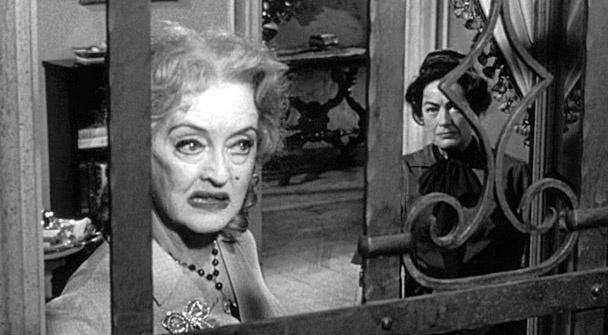
Following the success of “Baby Jane,” Davis appeared in suspense and horror productions including “Dead Ringer” (1964), “Hush…Hush, Sweet Charlotte” (1964) with Olivia de Havilland and Joseph Cotten, “The Nanny” (1965), and “Burnt Offerings” (1976) featuring Karen Black, Oliver Reed, and Burgess Meredith.
Television became an increasingly important part of Davis’ later career. She appeared in productions such as “The Dark Secret of Harvest Home” (1978), “Strangers: The Story of a Mother and Daughter” (1979) with Gena Rowlands, and the Agatha Christie mystery “Death on the Nile” (1978) alongside Peter Ustinov, Angela Lansbury, Maggie Smith, and David Niven.
Even in her later years, Davis maintained the sharp delivery and commanding presence that defined her career from the beginning. Across more than five decades, she built one of the most respected filmographies in Hollywood history while earning ten Academy Award nominations and becoming one of the few classic performers whose name alone symbolized uncompromising dramatic acting.
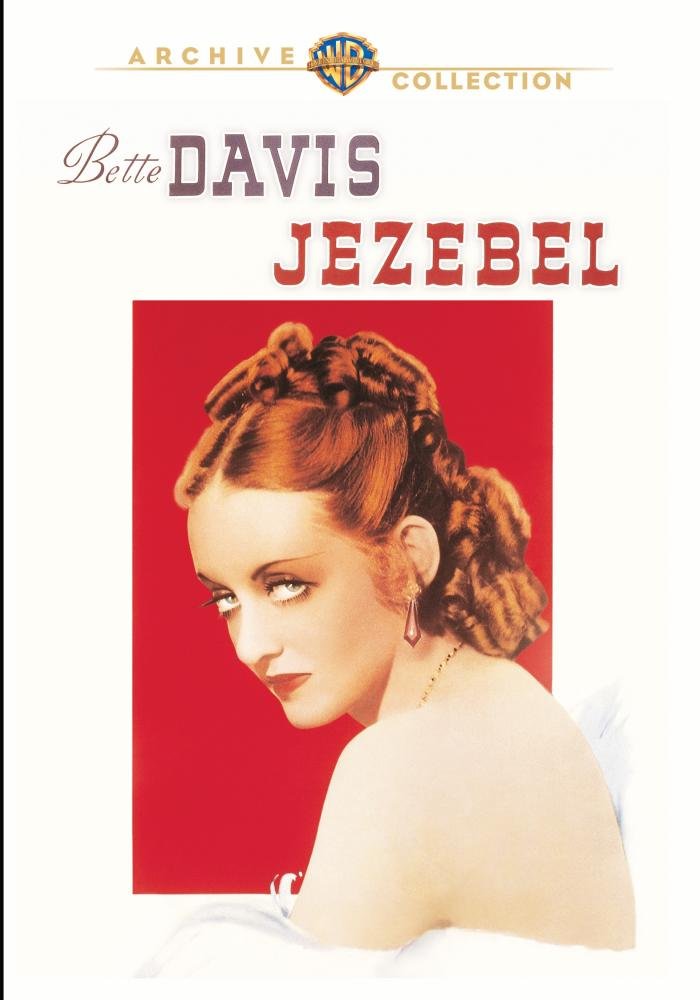
Jezebel DVD
Product Description:
While movie fans waited to see who would become Scarlett O’Hara in Gone with the Wind, Jezebel gave Bette Davis one of the most explosive Southern roles ever placed on film. Davis stars as Julie Marsden, a proud and reckless New Orleans woman whose stubborn behavior slowly destroys her engagement to Pres Dillard, played by Henry Fonda. What begins as romance soon turns into bitterness, jealousy, and emotional revenge as Julie realizes too late the damage she has caused.
Film Highlights:
• Academy Award-winning performance from Bette Davis for Best Actress.
• Co-stars Henry Fonda, George Brent, Margaret Lindsay, and Oscar winner Fay Bainter.
• Directed by legendary filmmaker William Wyler.
• Lavish antebellum costumes and richly detailed New Orleans settings.
• Features a powerful yellow fever sequence considered one of the film’s most unforgettable moments.
Why Classic Film Fans Still Love Jezebel:
Jezebel remains one of the defining dramas of Hollywood’s golden age because it allows Bette Davis to dominate the screen with fearless emotional intensity. Rather than playing a gentle romantic heroine, Davis created a proud, deeply flawed character whose actions carry real consequences. The film blends romance, social pressure, pride, and tragedy into a tense Southern drama that still feels sharp decades later. For many classic movie fans, this remains one of the strongest performances of Davis’ entire career.
Bette Davis once placed a cigarette between her teeth during a tense audition simply to appear older and tougher than other actresses competing for the role. The bold move helped establish the sharp, fearless image that later defined her screen career.
🕊️ Later Years
Summary: Even during declining health, she remained active and respected within the entertainment industry.
During the final years of her career, Bette Davis remained active in film, television, and public appearances despite ongoing health problems. She suffered a stroke in the early 1980s while working on the television miniseries “The Dark Secret of Harvest Home” (1978) and later battled breast cancer, yet she continued accepting roles and appearing before audiences with the same determination that had defined her entire career. Even as younger generations discovered her through revival screenings and television broadcasts, Davis maintained a reputation for sharp wit, blunt honesty, and complete professionalism.
In 1983, she published the memoir “This ’N That”, offering personal reflections on Hollywood, fame, aging, and the changing entertainment industry. Public fascination with her legendary rivalry with Joan Crawford also continued to grow during this period, keeping both actresses firmly tied to discussions about classic Hollywood history. Davis frequently appeared at retrospectives and award events where younger performers openly praised her influence on dramatic acting.
One of her final major film appearances came in “The Whales of August” (1987) alongside Lillian Gish, Vincent Price, and Ann Sothern. The film served as a gathering of legendary screen veterans and was widely viewed as a tribute to an earlier era of American cinema. Davis later traveled to Europe to receive honorary recognition for her lifetime achievements, including awards celebrating her contribution to film history.
Bette Davis died on October 6, 1989, in Neuilly-sur-Seine, France, at the age of 81 after suffering from cancer. Her body was returned to the United States, where she was buried at Forest Lawn Memorial Park in Hollywood Hills, California. Her grave carries one of the most fitting epitaphs in entertainment history: “She did it the hard way.”
Davis was the first woman elected president of the Academy of Motion Picture Arts and Sciences, although her term was brief.
🏆 Legacy
Bette Davis remains one of the defining figures of classic American cinema and one of the most influential dramatic actresses ever placed before a camera. Her work changed expectations for female performers during Hollywood’s studio era by proving audiences would embrace difficult, intelligent, emotionally flawed women when portrayed with honesty and conviction. At a time when many actresses were carefully shaped into glamorous screen symbols, Davis built her reputation through strength, intensity, and fearless character work.
Her performances in films such as “Of Human Bondage” (1934), “Jezebel” (1938), “Dark Victory” (1939), “Now, Voyager” (1942), “All About Eve” (1950), and “What Ever Happened to Baby Jane?” (1962) continue to be studied by actors, critics, and film historians. Generations of performers, including Meryl Streep, Susan Sarandon, Jessica Lange, and Geena Davis, have cited her influence or praised her willingness to challenge Hollywood conventions. Her style emphasized emotional precision over vanity, helping reshape serious screen acting for women in dramatic roles.
Davis also left a lasting impact behind the scenes. She openly challenged studio contracts, fought for better scripts, and demanded creative respect in an era when few actors publicly resisted studio authority. Her legal battles with Warner Bros. became a major Hollywood story and helped inspire later conversations about artistic control and performer rights within the industry.
Beyond awards and critical praise, Bette Davis became part of American popular culture itself. Her name evolved into shorthand for sharp-tongued intelligence, commanding presence, and uncompromising determination. Songs, television programs, interviews, documentaries, and modern films continued referencing her decades after her death, introducing new audiences to her work long after the golden age of Hollywood ended. Few stars from that era remain as recognizable or culturally influential, and even fewer left behind a body of work with such enduring dramatic power.
🗣️ Why They Still Matter
Bette Davis remains one of the clearest symbols of artistic independence in classic Hollywood. Her performances still feel modern because she embraced flawed, intelligent, emotionally complicated characters at a time when studios often avoided them. Film schools continue studying her dramatic technique, while movie fans still discover her through classic television, streaming services, and revival screenings. Few performers from Hollywood’s golden age remain as culturally recognizable or critically respected.
Further Reading & Resources
📖 Read: Bette Davis – Movies, Children & Facts – Biography
🔍 More: Bette Davis Biography