Robert A. Burns Biography: Shocking Art Behind Leatherface
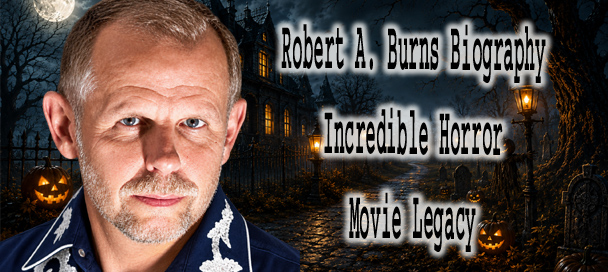
Robert A. Burns was one of the craftsmen who helped give independent American horror its rough, unsettling physical identity. Best known for his production design on The Texas Chain Saw Massacre, Burns transformed ordinary materials, discarded objects, animal remains, handmade props, and carefully dressed spaces into environments that felt disturbingly authentic. His work helped demonstrate that atmosphere did not require an enormous studio budget when a designer understood how objects, texture, and setting could tell a story.
Robert A. Burns was an American production designer, artist, filmmaker, and actor whose work helped shape the visual language of modern horror. He created Leatherface's original masks and helped construct the disturbing world of The Texas Chain Saw Massacre (1974), later contributing to films including The Hills Have Eyes, Tourist Trap, The Howling, and Re-Animator. Burns also directed Mongrel and starred as a Henry Lee Lucas-inspired killer in Confessions of a Serial Killer. His ability to transform inexpensive, discarded, and ordinary materials into unforgettable screen imagery made him one of horror cinema's distinctive behind-the-scenes craftsmen.
Burns became closely associated with a remarkable period of horror filmmaking in which resourceful crews created memorable images with limited money and practical materials. His work crossed paths with filmmakers including Tobe Hooper, Wes Craven, Joe Dante, and Stuart Gordon, and his contributions can be found across films that became cult favorites and genre landmarks. Burns was more than a conventional production designer. He was a prop builder, set decorator, filmmaker, writer, actor, and collector whose unusual eye could turn something commonplace into an object audiences remembered.
His greatest cultural impact remains the visual world of The Texas Chain Saw Massacre, particularly the grotesque Sawyer farmhouse and the masks that helped define Leatherface. Burns gave the film a handmade realism that made its horrors seem discovered rather than manufactured for a movie camera. That ability to find menace in ordinary things became his defining artistic trait and secured his place among the largely unsung craftspeople who changed the appearance of modern horror cinema.
Robert A. Burns became famous within horror without becoming famous to the general public. Millions of people recognize objects he created, particularly Leatherface's masks and the grotesque surroundings of the Sawyer farmhouse, while relatively few know the name of the artist responsible for them.
👶 Early Life
Summary: Robert A. Burns developed an early fascination with horror, art, unusual objects, and actor Rondo Hatton, interests that encouraged the resourcefulness and visual imagination that defined his work.
Robert A. Burns was born on May 27, 1944, in Odessa, Texas, and grew up in a working-class Texas environment far removed from the Hollywood film industry he would later enter. Reliable published accounts of Burns concentrate heavily on his adult creative life, and details about his parents and immediate family are poorly documented. Rather than invent names or family circumstances that cannot be firmly established, the surviving record is clearest about the interests that began shaping him while he was young.
As a child and teenager, Burns developed an intense fascination with movies, monsters, art, and unusual objects. One figure particularly captured his imagination: Rondo Hatton, the 1940s character actor whose appearance was altered by acromegaly and who became known for playing intimidating characters. Burns sought out Hatton's obscure films and collected information about him at a time when finding old movies and biographical material required considerable effort. The fascination stayed with Burns throughout his life and became much more than the passing interest of a young horror fan.
Burns also showed an early talent for drawing, constructing things, collecting odd materials, and finding unexpected uses for ordinary objects. His interests extended into music and performance, but visual creation became his strongest natural territory. There was no established path into professional filmmaking waiting for him, particularly for a young Texan interested in unconventional art and horror. Burns instead developed the practical resourcefulness that became his greatest strength: working with what was available, making things himself, and learning how imagination could compensate for limited money and materials.
Explore the Biographies of Iconic Celebrities
Robert A. Burns crossed into novelty music when a recording connected with him received airplay from Dr. Demento, the nationally known radio personality famous for broadcasting strange and comedic records.
🎬 Movie Career
Watch It Free: Rondo and Bob is currently available to stream free on Tubi.
Summary: From The Texas Chain Saw Massacre and The Hills Have Eyes to The Howling and Re-Animator, Burns worked across production design, art direction, prop making, writing, directing, and acting.
Robert A. Burns entered film history through Tobe Hooper's The Texas Chain Saw Massacre (1974), where his title of production designer hardly captures the range of work he performed. Working with an extremely small design budget, Burns helped transform an ordinary Texas farmhouse into the home of Leatherface and his murderous family. He gathered animal bones, skulls, feathers, hides, teeth, discarded furniture, and other materials, then combined them into the grotesque household objects scattered throughout the film.
The famous bone furniture, macabre decorations, and clutter surrounding Gunnar Hansen, Marilyn Burns, Edwin Neal, Jim Siedow, and the rest of the cast were central to the movie's disturbing sense that the filmmakers had stumbled into a real place rather than constructed a horror set.
Burns also created the three original masks worn by Gunnar Hansen as Leatherface. Rather than treating the masks as interchangeable disguises, the production used them to suggest different roles Leatherface assumed within the household. Burns's work extended beyond masks and set dressing. He constructed props, handled practical problems, worked with special effects and stunts, and reportedly made the breakaway sugar-glass window through which Marilyn Burns crashed during Sally's escape because the production could not afford to purchase one. Even the preserved corpse of the family's grandmother was a Burns creation that became part of the finished film.
The result was one of the most influential environments in horror cinema. Director Tobe Hooper, cinematographer Daniel Pearl, co-writer Kim Henkel, Burns, and the small Texas crew made limited resources work in their favor. Burns understood that the Sawyer house should not look professionally decorated for a horror movie. Its objects needed to appear accumulated, used, filthy, and functional within the family's world. That distinction helped give The Texas Chain Saw Massacre (1974) the uncomfortable realism that separated it from more polished studio horror.
Burns's reputation for creating disturbing worlds from limited materials soon carried him into other independent productions. He worked on Wes Craven's The Hills Have Eyes (1977), another low-budget horror landmark built around an isolated family confronted by killers in an unforgiving landscape. Burns helped dress the environment inhabited by the mutant desert family, including the caves and makeshift surroundings that made their world appear scavenged rather than designed. His resourcefulness was particularly suited to filmmakers such as Craven and Hooper, whose early horror films depended on convincing audiences that civilization had disappeared only a few miles beyond the highway.
Another major Burns showcase came with director David Schmoeller's Tourist Trap (1979), starring Chuck Connors, Tanya Roberts, Jocelyn Jones, Jon Van Ness, and Robin Sherwood. The story required a bizarre roadside attraction filled with mannequins, masks, wax figures, and increasingly surreal rooms. Burns helped construct the visual world of Slausen's Lost Oasis, creating an environment where viewers could never be certain whether a figure in the background was an object or a person. The film became a cult favorite, and its mannequin-filled interiors remain among the most distinctive settings associated with Burns's career.
Burns also moved outside straight horror. His credits from this period included work connected with Rudy Ray Moore's Disco Godfather (1979), starring Moore as Tucker Williams, a retired police officer and disco owner fighting drug dealers. He also contributed to productions such as Microwave Massacre (1979/1983) and later Larry Cohen's Full Moon High (1981). These projects reflected the working reality of Burns's career. He moved between horror, exploitation, comedy, and independent filmmaking, often providing the practical visual ingenuity that small productions needed.
He returned to particularly influential horror territory with Joe Dante's The Howling (1981). Burns served as art director on the film, working within a production that also included groundbreaking creature effects by Rob Bottin. The cast featured Dee Wallace, Patrick Macnee, Dennis Dugan, Christopher Stone, Belinda Balaski, Kevin McCarthy, John Carradine, and Slim Pickens. Burns's work helped establish the visual character of the Colony, the secluded retreat where Wallace's character gradually discovers that the residents are werewolves. The film became one of the defining werewolf pictures of the 1980s and placed Burns alongside another generation of filmmakers reshaping American horror.
Burns then took control of a feature himself with Mongrel (1982), which he wrote and directed. The low-budget horror film concerned a vicious dog and the people caught within its territory, giving Burns an opportunity to move beyond designing another filmmaker's world and construct an entire picture around his own ideas. Although Mongrel never achieved the reputation of his production-design work, it demonstrated that Burns's interests extended well beyond props and sets. He understood filmmaking from the standpoint of someone accustomed to solving problems with whatever materials and money were available.
Burns also maintained an association with Tobe Hooper beyond their landmark Texas collaboration. Props made or prepared by Burns reportedly found their way into Poltergeist (1982), Hooper's supernatural blockbuster produced and co-written by Steven Spielberg and starring JoBeth Williams, Craig T. Nelson, Heather O'Rourke, Dominique Dunne, and Zelda Rubinstein. Burns was not a credited member of the film's principal art department, so his contribution belongs among the less formally documented corners of his career rather than his official production-design credits. His connection nevertheless illustrates how his practical work could travel into productions without his name necessarily appearing prominently on screen.
One of the strangest turns in Burns's career came with Confessions of a Serial Killer (1985). Instead of remaining behind the camera, Burns took the starring role as Daniel Ray Hawkins, a murderer loosely modeled on real serial killer Henry Lee Lucas. The film also featured Dennis Hill as Moon Lewton, a character inspired by Ottis Toole, and Berkley Garrett as Sheriff Will Gaines. The story follows Hawkins as he confesses to an enormous number of murders while investigators begin questioning whether everything he tells them is true. Burns's quiet, unsettling appearance made the casting particularly effective because he avoided playing Hawkins as a theatrical movie monster.
Remarkably, Burns was also the production designer on Confessions of a Serial Killer (1985). He therefore helped construct the film's physical world while portraying the killer at its center. The movie arrived during the same period as John McNaughton's Henry: Portrait of a Serial Killer (1986), starring Michael Rooker, which became the better-known fictional treatment inspired by Henry Lee Lucas. Burns's film, however, stands as an unusual example of a noted horror production designer stepping directly in front of the camera to carry a feature built around a real-world serial-murder case.
That same year brought Burns into one of the defining cult horror films of the decade, Stuart Gordon's Re-Animator (1985). Burns served as art director, working on the adaptation of H. P. Lovecraft's story starring Jeffrey Combs as Herbert West, Bruce Abbott as Dan Cain, Barbara Crampton as Megan Halsey, and David Gale as Dr. Carl Hill. The morgues, laboratories, medical rooms, and institutional spaces gave Gordon a believable foundation from which increasingly outrageous events could unfold. Burns's ability to make a setting feel functional before destroying its normality was particularly valuable to a film balancing horror, black comedy, sex, and extreme practical effects.
Burns remained connected to the group surrounding Gordon and producer Brian Yuzna as their Lovecraft adaptations continued. He contributed to the art department on From Beyond (1986), again featuring Jeffrey Combs and Barbara Crampton, this time joined by Ken Foree and Ted Sorel. Production designer Giovanni Natalucci headed the design work, with Burns among the artists contributing to the film's elaborate physical world. The picture's Resonator machinery, laboratory spaces, transformed bodies, and grotesque imagery represented a more elaborate production than Burns's early Texas work, but it remained rooted in the practical, handmade horror tradition in which he excelled.
By this stage, Burns had accumulated an unusual collection of collaborators. Tobe Hooper, Wes Craven, Joe Dante, David Schmoeller, Stuart Gordon, and Brian Yuzna represented different branches of modern horror, yet Burns fit naturally into each of their worlds. His career also crossed paths with performers who became genre fixtures, including Gunnar Hansen, Marilyn Burns, Dee Wallace, Chuck Connors, Tanya Roberts, Jeffrey Combs, Barbara Crampton, Ken Foree, and Michael Rooker through the parallel Henry Lee Lucas films.
What separated Burns from many production designers was the difficulty of assigning him a single job description. Depending on the production, he could be a production designer, art director, set decorator, prop builder, special-effects problem solver, writer, director, or actor. On a small independent film, those boundaries frequently disappeared altogether. His greatest skill was recognizing cinematic possibilities in materials that had never been intended for a movie set.
That versatility also explains why Burns's filmography can look incomplete when reduced to conventional screen credits. Some of his work was credited, some was performed under broader art-department titles, and some consisted of individual objects or practical contributions that never earned a separate screen credit. What remained consistent was his approach. Burns built environments rather than merely decorating them, and the strongest examples, from the Sawyer farmhouse in The Texas Chain Saw Massacre (1974) and the mannequin nightmare of Tourist Trap (1979) to the Colony in The Howling (1981) and the medical spaces of Re-Animator (1985), became inseparable from the films themselves.
Confessions Of A Serial Killer: Director’s Cut (Collector’s Edition) [Blu-ray]
Product Description:
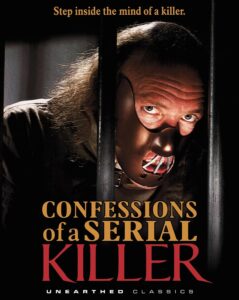
See Robert A. Burns in one of the strangest and most unexpected roles of his career. In Confessions of a Serial Killer, Burns steps out from behind the sets and props to play Daniel Ray Hawkins, a murderer loosely inspired by real-life serial killer Henry Lee Lucas. The film offers a rare chance to watch the celebrated horror production designer carry a feature as its central character.
Collector's Edition Highlights:
• Features Robert A. Burns as serial killer Daniel Ray Hawkins.
• Presented in the Director's Cut of the disturbing 1980s crime-horror film.
• A fascinating companion to Burns's better-known behind-the-scenes work in horror.
• Collector's Edition Blu-ray presentation for fans of cult and independent horror.
• An unusual piece of Robert A. Burns history showing his talents in front of the camera.
Why It Belongs With This Biography:
Most horror fans know Burns for helping create the nightmare worlds of The Texas Chain Saw Massacre, The Howling, and Re-Animator. Confessions of a Serial Killer turns that history around and puts Burns directly in front of the camera. For anyone interested in the man behind Leatherface's masks and some of horror's most memorable sets, this is one of the most unusual films in his career.
📌 Fun Fact
Robert A. Burns's fascination with Rondo Hatton became so deep that he held birthday celebrations honoring the long-deceased horror actor, decades before Burns's own story became linked with Hatton's in the documentary Rondo and Bob.
🕊️ Later Years
Summary: Robert A. Burns remained connected with horror fans through conventions and independent filmmaking while continuing his lifelong fascination with Rondo Hatton and hands-on prop creation.
As the reputation of The Texas Chain Saw Massacre (1974) grew, Robert A. Burns became an increasingly familiar figure to horror fans interested in the people who had created the film behind the camera. He appeared at horror conventions and reunions, sometimes alongside Gunnar Hansen and other members of the original cast and crew. For fans, Burns offered a perspective different from that of the actors. He could explain how Leatherface's masks, the bone furniture, the Sawyer farmhouse, and other disturbing objects had actually been conceived and constructed on an extraordinarily small budget.
Burns and Hansen made an interesting convention pairing. Hansen was immediately recognizable to fans as the man who had played Leatherface, while Burns was the craftsman responsible for much of the physical world surrounding the character. By then, objects Burns had once assembled simply because a low-budget movie needed them had become pieces of horror history. Conventions gave Burns an opportunity to talk directly with audiences about an era when independent filmmakers routinely built, borrowed, scavenged, altered, and improvised whatever they could not afford to buy.
Away from the convention circuit, Burns remained an artist, collector, writer, and lifelong student of unusual corners of popular culture. None of those interests was more persistent than his fascination with Rondo Hatton, the distinctive character actor who appeared in films including The Pearl of Death (1944), The Jungle Captive (1945), House of Horrors (1946), and The Brute Man (1946). Burns spent decades researching Hatton, collecting material connected with him, tracking down obscure appearances, and helping keep his name alive among classic-horror enthusiasts.
Burns's fascination with Hatton went far beyond ordinary movie collecting. He became known for holding birthday celebrations in Hatton's honor decades after the actor's death and accumulated enough knowledge to become an informal authority on his life and career. Burns eventually wrote a screenplay centered on Rondo Hatton and Hatton's wife, Mae, although the project was never produced as a dramatic feature. The screenplay and Burns's years of research later became important pieces of the story preserved by filmmaker Joe O'Connell.
That connection ultimately resulted in Rondo and Bob (2020), O'Connell's documentary examining the unusual parallel between Burns and the actor who had fascinated him for much of his life. Burns did not live to see the completed documentary, but archival recordings and the memories of friends and collaborators allowed his personality to remain at its center. The film brought together Burns's obsession with classic horror and his own place in a later generation of horror history.
Burns also continued taking part in smaller independent productions, sometimes in ways that never appeared in conventional film databases. One such production was the unreleased feature Harkaim, a locally produced independent horror movie filmed on VHS and intended for direct-to-video distribution. The approximately 93-minute film was completed after a roughly three-week shoot but never received its planned commercial release.
During the production of Harkaim, Burns spent about a week working with the filmmakers and creating props and set pieces. According to Michael Lamp, who played the film's principal killer, Rollie, Burns borrowed Lamp's car and drove around searching for ordinary objects that could be transformed into pieces of the movie's world. One of his creations was a restraint chair whose wrist and ankle hardware was actually made from plastic refrigerator wine-bottle holders painted to resemble metal. It was a small-scale example of the same practical imagination Burns had brought to much larger and better-known productions.
Burns also made weapons for Rollie, including a lightweight stage axe constructed from balsa wood and foam but finished to appear convincing on camera. Another of the character's signature weapons was fashioned from chainsaw bumper spikes, the toothed metal pieces normally mounted near a chainsaw bar to grip wood while cutting. Removed from the saw and repurposed as a hand weapon, the spikes resembled a vicious industrial version of brass knuckles. The objects survived even though the film itself disappeared from commercial circulation, providing a rare physical record of Burns's otherwise undocumented work on the production.
These small productions reveal something important about Burns in his later years. The man who had helped create one of the most famous environments in horror cinema was still willing to arrive at an independent movie, search local stores and available materials, build what the production needed, and solve problems with his own hands. Fame within horror circles did not separate him from the practical work that had defined him from the beginning.
Robert A. Burns died on May 31, 2004, at the age of 60. His death came only days after his birthday and ended a career that had rarely followed conventional Hollywood boundaries. By then, many of the films he had helped create had moved from inexpensive exploitation and independent cinema into the established history of American horror, while the strange objects, environments, and images Burns fashioned continued reaching audiences who often had no idea who had built them.
Read more about Gunnar Hansen in our exclusive bio.
📎 Did You Know?
Robert A. Burns had an unexpected connection to Texas music history. Before becoming known for horror films, he created artwork associated with Blackbird, an early Austin band featuring a young Stevie Ray Vaughan.
🏆 Legacy
Robert A. Burns left a permanent mark on horror cinema because he understood that a frightening environment could be built from ordinary things. His work on The Texas Chain Saw Massacre (1974) helped give the film a physical reality that expensive studio sets might have destroyed. The Leatherface masks, bone furniture, decaying interiors, and grotesque household objects became inseparable from Tobe Hooper's film. Burns helped establish a visual style in which horror looked handmade, dirty, used, and disturbingly plausible, an approach that influenced generations of independent filmmakers.
His importance extends well beyond a single movie. Through films including The Hills Have Eyes (1977), Tourist Trap (1979), The Howling (1981), Confessions of a Serial Killer (1985), and Re-Animator (1985), Burns contributed to several distinct periods of modern horror while moving easily between production design, art direction, prop making, writing, directing, and acting. He belonged to a generation of filmmakers for whom job titles mattered less than getting the picture made, and his ability to transform inexpensive or discarded materials into convincing screen objects became one of his defining talents.
Burns remains less famous than the actors, monsters, and directors associated with the films he helped create, but that anonymity makes his legacy especially revealing. Audiences may recognize Leatherface's mask or the nightmare inside the Sawyer farmhouse without knowing the name of the man responsible for much of what they are seeing. Yet those images have survived for more than half a century, preserved in films, exhibitions, documentaries, fan collections, and horror culture itself. Robert A. Burns demonstrated how one imaginative craftsman working behind the camera could help determine what horror would look like for decades to come.
🗣️ Why He Still Matters
Robert A. Burns represents a kind of filmmaking that remains essential to independent horror: looking at an ordinary object and imagining what else it could become. His work helped prove that memorable horror did not depend on expensive sets or enormous effects departments. More than fifty years after The Texas Chain Saw Massacre, Leatherface's masks, the Sawyer farmhouse, and Burns's grotesque handmade objects remain instantly recognizable, even to audiences who have never known the name of the man who created them.
Further Reading & Resources
📺 See: Robert A. Burns - The Movie Database (TMDB)
🔍 More: Robert A. Burns - Wikipedia