Tim Curry Biography: The Extraordinary Legacy of a Fearless Performer
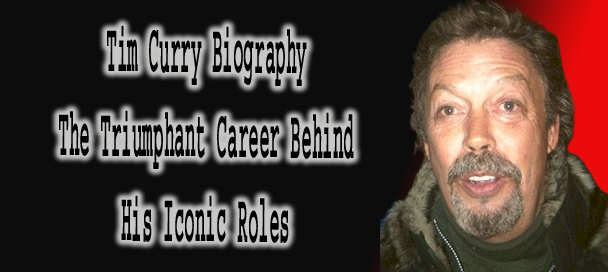
Tim Curry, the versatile British actor whose unforgettable performances range from Dr. Frank-N-Furter to Pennywise.
Tim Curry is one of the most distinctive performers of his generation, an actor whose voice, wit, and commanding presence have made him instantly recognizable across stage, film, television, and voice acting. He built a career that resisted easy classification, moving comfortably between comedy, horror, fantasy, drama, and musical performance. Few actors have created so many memorable characters while remaining unmistakably themselves.
Tim Curry is an English actor and singer whose career spans stage, film, television, music, and voice acting. He became internationally famous as Dr. Frank-N-Furter in The Rocky Horror Picture Show and later created memorable characters in Clue, Legend, and the television adaptation of Stephen King's It. His distinctive voice also led to decades of work in animation, video games, and narrated productions. Curry was one of the most recognizable character actors of his generation.
Curry became a cultural icon through his fearless approach to unusual and larger-than-life roles. His performances often combine theatrical confidence with sharp humor and a hint of danger, allowing him to make even outrageous characters feel deliberate rather than cartoonish. That quality helped turn several of his roles into enduring parts of popular culture, embraced by audiences long after their original releases.
His influence is especially strong in cult entertainment, where characters can take on lives far beyond the films or productions that introduced them. Curry possessed the rare ability to dominate a scene without overwhelming the other performers, using timing, expression, movement, and his unmistakable voice as precisely as another actor might use dialogue. His body of work established him as a performer with unusual range and lasting appeal, equally at home before a theater audience, a movie camera, or a microphone.
Tim Curry accomplished something few actors manage: he created several characters that audiences remember immediately from a voice, expression, or entrance. Even when he was not the leading man, Curry had an extraordinary ability to become the person viewers remembered after the credits rolled.
👶 Early Life
Summary: Tim Curry's early life and theatrical training prepared him for a career that would move easily between serious theater, outrageous comedy, horror, music, and character acting.
Timothy James Curry was born on April 19, 1946, in Grappenhall, Cheshire, England. His father, James “Jim” Curry, was a Methodist chaplain in the Royal Navy, while his mother, Maura Patricia “Pat” Curry, worked as a school secretary. Because of his father's naval service, the family moved frequently, including a period in Hong Kong when Curry was very young. They later returned to England, and Curry spent his childhood around several naval communities before the family settled in Plymouth when he was about 11.
Curry began singing at an early age and became a talented boy soprano, singing in church from about the age of six. His childhood also brought a serious loss when his father, who had suffered a stroke, died from pneumonia in 1958. Curry was only 12. After his father's death, the family moved to South London, and Curry continued his education at boarding school and later Kingswood School in Bath. At Kingswood, he took part in school plays while continuing to develop his voice, which changed during his teenage years from soprano into the rich lower register that would become one of his most recognizable traits.
Curry later recalled that he was bullied while attending Kingswood, an experience that formed part of a school life otherwise rich in opportunities for theater and singing.
After finishing school, Curry spent a gap year traveling and working on boats in Europe before entering the University of Birmingham in 1965. He studied English and drama, although he later recalled being far more interested in acting in university productions than attending lectures. At this stage he had not settled firmly on whether he wanted to become an actor or a singer. He graduated in 1968 with a combined degree in English and drama, leaving university with theatrical experience but without an established professional career.
Explore the Biographies of Iconic Celebrities
Before acting became his career, Curry originally went to university intending to study drama but switched to English and drama because the school did not offer drama as a standalone honors subject.
🎬 Film and TV Career
Summary: The Rocky Horror Show and The Rocky Horror Picture Show transformed Curry's Dr. Frank-N-Furter into one of the most recognizable characters in cult entertainment.
Tim Curry entered film with one of the most audacious screen debuts of the 1970s. After originating Dr. Frank-N-Furter onstage, he brought the character to the screen in The Rocky Horror Picture Show (1975), directed by Jim Sharman and co-starring Susan Sarandon, Barry Bostwick, Richard O'Brien, Patricia Quinn, Nell Campbell, Jonathan Adams, Charles Gray, and Meat Loaf. The film initially struggled at the box office, but midnight screenings transformed it into a cultural phenomenon. Curry's swaggering, funny, sexually provocative performance became the film's centerpiece and remains the role most closely associated with him.
Rather than spend his career repeating Frank-N-Furter, Curry deliberately pursued very different characters. He appeared as Robert Graves in the psychological horror film The Shout (1978), directed by Jerzy Skolimowski and starring Alan Bates, Susannah York, and John Hurt, and played William Shakespeare in the British television production Will Shakespeare (1978). Establishing early that his screen work would extend well beyond the flamboyant image that had made him famous.
Curry found another memorable film role as Rooster Hannigan in Annie (1982), directed by John Huston. Working alongside Carol Burnett, Bernadette Peters, Albert Finney, Aileen Quinn, and Ann Reinking, Curry played the crooked brother of Miss Hannigan with a mixture of sleaze, charm, and comic menace. The musical gave him a prominent Hollywood role without simply recreating the character that audiences already knew from Rocky Horror.
He moved into darker territory in The Ploughman's Lunch (1983) with Jonathan Pryce and appeared in the Cold War thriller The Osterman Weekend (1983), the final theatrical film directed by Sam Peckinpah. That production placed Curry alongside an unusually strong cast that included Rutger Hauer, John Hurt, Craig T. Nelson, Dennis Hopper, Burt Lancaster, and Meg Foster.
One of Curry's most unusual leading roles came in Legend (1985), directed by Ridley Scott. Hidden beneath elaborate makeup and prosthetics, Curry played the demonic Lord of Darkness opposite Tom Cruise, Mia Sara, and David Bennent. His deep voice and theatrical physicality turned Darkness into one of the most visually memorable fantasy villains of the decade. The film developed a strong following over time, and Curry's towering red-horned villain became one of the defining images of 1980s fantasy cinema.
That same year, Curry demonstrated the opposite side of his screen personality in Clue (1985). As the frantic but impeccably controlled butler Wadsworth, he worked with Eileen Brennan, Madeline Kahn, Christopher Lloyd, Michael McKean, Martin Mull, Lesley Ann Warren, and Colleen Camp. Curry drives much of the picture, particularly its rapid-fire conclusion, in which Wadsworth races through the mansion reconstructing the night's murders. Like Rocky Horror, Clue grew substantially in reputation after its original release and became a cult favorite.
Curry continued working steadily in films including The Worst Witch (1986), in which his performance as The Grand Wizard produced the wonderfully strange musical number “Anything Can Happen on Halloween.” He appeared in Pass the Ammo (1988) with Bill Paxton, Linda Kozlowski, and Annie Potts, and played the eccentric Dr. Thornton Poole in the comedy Oscar (1991) with Sylvester Stallone, Marisa Tomei, Chazz Palminteri, and Peter Riegert.
Television gave Curry one of his most frightening roles when he played Pennywise the Dancing Clown in Stephen King's It (1990). The two-part ABC miniseries, based on Stephen King's novel, featured Richard Thomas, John Ritter, Annette O'Toole, Harry Anderson, Dennis Christopher, Tim Reid, and Jonathan Brandis. Working with relatively limited television makeup and effects, Curry relied heavily on his voice, facial expressions, sudden changes in temperament, and ability to shift from playful to threatening within seconds. His Pennywise became a horror landmark and introduced the character to millions of viewers long before the later theatrical adaptations.
Curry appeared as Cardinal Richelieu in The Three Musketeers (1993) opposite Charlie Sheen, Kiefer Sutherland, Chris O'Donnell, Oliver Platt, Rebecca De Mornay, and Gabrielle Anwar. His Richelieu was sophisticated, sarcastic, and openly villainous, another example of Curry's ability to make an antagonist entertaining without softening the character.
He returned to broad family comedy as the suspicious concierge Mr. Hector in Home Alone 2: Lost in New York (1992). Curry's scenes with Macaulay Culkin, Rob Schneider, and Dana Ivey became some of the film's best remembered comic sequences. His exaggerated expressions, offended dignity, and slow realization that Kevin McCallister has fooled the Plaza Hotel staff gave Curry a substantial comic showcase within an already established franchise.
In Muppet Treasure Island (1996), Curry played Long John Silver opposite Kevin Bishop as Jim Hawkins and a cast led by Kermit the Frog, Miss Piggy, Gonzo, and Rizzo the Rat. Curry treated the material with remarkable seriousness while still fitting naturally into the Muppets' comic world. His Silver could be charming, dangerous, sentimental, and funny, sometimes within the same scene. The performance became another favorite among audiences who had grown up with his family films.
Curry's television appearances were remarkably varied. He appeared in series including Tales from the Crypt (1993), Roseanne (1995), The Naked Truth (1997), Lexx (2001), Monk (2004), Psych (2010), and Criminal Minds (2010). In Criminal Minds, he played serial killer Billy Flynn, known as the Prince of Darkness, giving the series one of its more disturbing guest villains.
Animation and voice acting eventually became a major part of Curry's career. His unmistakable voice made him particularly effective as villains, authority figures, eccentric intellectuals, and comic monsters. He voiced Dr. Anton Sevarius in Gargoyles (1994–1997), joining a voice cast that included Keith David, Ed Asner, Jonathan Frakes, Marina Sirtis, and Frank Welker.
Curry became especially familiar to younger audiences as Nigel Thornberry in Nickelodeon's The Wild Thornberrys (1998–2004). The eccentric wildlife filmmaker, famous for his booming enthusiasm and enormous mustache, became one of Curry's most recognizable animated characters. He reprised the role in The Wild Thornberrys Movie (2002) and Rugrats Go Wild (2003).
His voice credits spread across an enormous range of animated television and film. Curry performed in Peter Pan & the Pirates (1990–1991) as Captain Hook, a performance that earned him a Daytime Emmy Award. He also contributed voices to productions including Batman: The Animated Series, Mighty Max, Sonic the Hedgehog, The Mask: Animated Series, Superman: The Animated Series, The New Adventures of Winnie the Pooh, Duckman, The Little Mermaid, and numerous other animated projects.
Curry also became a prolific voice performer in video games. His credits included Gabriel Knight: Sins of the Fathers (1993) as Gabriel Knight, alongside voice performers Mark Hamill, Leah Remini, and Michael Dorn. He returned to the character in Gabriel Knight 3: Blood of the Sacred, Blood of the Damned (1999). Later game work included Command & Conquer: Red Alert 3 (2008), in which he played Soviet Premier Anatoly Cherdenko alongside J.K. Simmons, George Takei, Jonathan Pryce, Peter Stormare, Jenny McCarthy, and David Hasselhoff.
Across film and television, Curry developed an unusually durable career because casting directors could use him in almost any setting. He could be frightening without becoming humorless, funny without losing authority, and theatrical without losing control of a scene. Dr. Frank-N-Furter, Lord of Darkness, Wadsworth, Pennywise, Cardinal Richelieu, Mr. Hector, Long John Silver, and Nigel Thornberry reached different generations and different audiences, giving Curry a screen career whose cultural reach extended far beyond any single genre.
Clue: The Movie (DVD)
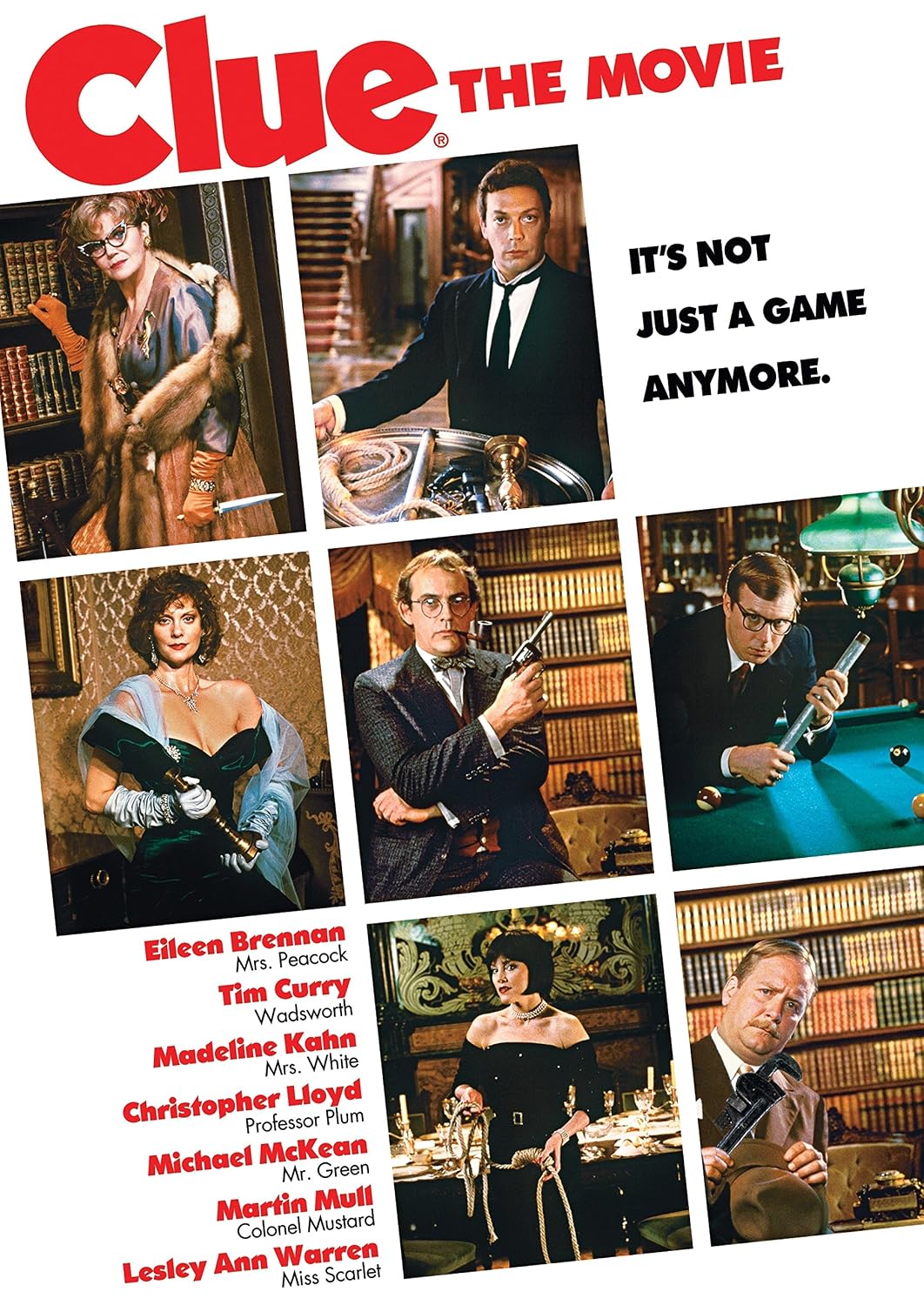
Clue: The Movie DVD starring Tim Curry as Wadsworth
Product Description:
For many fans, no Tim Curry performance better showcases his incredible comic timing than his unforgettable role as Wadsworth in Clue: The Movie. Based on the classic board game, this fast-paced murder mystery has grown from a box office disappointment into one of the most beloved cult comedies ever made. Tim Curry's energetic performance is the heart of the film and remains one of the highlights of his remarkable career.
Key Features:
• Classic 1985 comedy based on the Clue board game
• Stars Tim Curry, Madeline Kahn, Christopher Lloyd, and an all-star cast
• Features the famous multiple-ending mystery
• A must-own film for Tim Curry fans and classic comedy collectors
• Perfect for movie nights, mystery lovers, and cult film collections
Why This Works:
If you're reading about Tim Curry, this is one of the essential films to experience. His performance as Wadsworth is widely regarded as one of the greatest comedic roles of the 1980s, helping turn Clue into a lasting cult favorite. Whether you've never seen it or are adding it to your collection, it's an easy recommendation for anyone exploring Tim Curry's career.
Buy on Amazon
Curry provided the voice of Captain Hook in the animated series Peter Pan and the Pirates, a performance that earned him a Daytime Emmy Award.
🎤 Music Career
Music was never simply a side project for Tim Curry. Alongside his acting career, he pursued recording seriously during the late 1970s and early 1980s, developing a sound rooted in rock, blues, theatrical pop, and rhythm and blues. His powerful baritone gave the records an identity quite different from the polished pop singers of the period. Although his albums never reached the commercial level of his acting work, they revealed Curry as a genuine rock vocalist rather than an actor temporarily trying his hand at music.
Curry signed with A&M Records and released his debut solo album, Read My Lips (1978). Produced by Bob Ezrin, whose credits included Alice Cooper, Lou Reed, and KISS, the album mixed original material with carefully chosen covers. The album consisted largely of covers and included Curry's interpretations of songs such as “Birds of a Feather,” “Wake Nicodemus,” and The Beatles' “I Will.” The record established the rough-edged, theatrical vocal style that would characterize his solo work.
His second album, Fearless (1979), became the strongest statement of Curry's recording career. Produced by Michael Kamen and Dick Wagner, the album included “I Do the Rock,” Curry's best-known solo song. Written by Curry himself, the track name-checked an assortment of cultural and political figures while poking fun at celebrity, fashion, and popular culture. It received radio play and gave Curry one of his few songs that became widely identified with him outside The Rocky Horror Picture Show.
Fearless (1979) also contained “Paradise Garage,” “Sloe Gin,” “Cold Blue Steel and Sweet Fire,” and “Charge It.” The material allowed Curry to move between straight rock, blues, and more theatrical arrangements without relying on the Frank-N-Furter persona. His performances were forceful and sometimes deliberately exaggerated, but the records showed that his unusual voice could carry material without the visual element that made his acting performances so recognizable.
Curry followed with Simplicity (1981), again released through A&M Records. The album included “Working on My Tan,” “On a Roll,” “Take Me I'm Yours,” and “Out of Pawn.” Its production leaned toward the cleaner rock and pop sound emerging in the early 1980s. Despite Curry's growing fame as an actor, the album did not produce the commercial breakthrough needed to establish a long-running recording career.
Curry also toured as a musician, appearing with a full band rather than presenting his concerts as extensions of Rocky Horror. His live performances emphasized his identity as a singer and frontman, and he appeared on television programs promoting his records during this period. Audiences who knew him primarily as an actor sometimes discovered a performer whose musical interests reached well beyond the songs associated with his most famous film.
His connection to The Rocky Horror Picture Show (1975) nevertheless remained an important part of his musical legacy. Curry's performances of “Sweet Transvestite,” “Rose Tint My World,” and “I'm Going Home” became inseparable from the film's enduring popularity. The soundtrack remained in circulation for decades as midnight screenings, stage revivals, home video, and later generations continually introduced the music to new audiences.
Although Curry stopped pursuing a conventional solo recording career after three studio albums, music continued to appear throughout his work in film, television, animation, and theater. Performances such as “Anything Can Happen on Halloween” in The Worst Witch (1986) became cult favorites in their own right, while Muppet Treasure Island (1996) gave him another opportunity to combine acting and singing as Long John Silver.
Curry's recording career ultimately occupies an unusual place in his body of work. Read My Lips (1978), Fearless (1979), and Simplicity (1981) captured a period when he could have pursued acting or music exclusively but chose to do both. The records never eclipsed his screen career, yet songs such as “I Do the Rock” and his Rocky Horror performances preserved another side of a performer whose voice was as important to his identity as his appearance.
🎭 Stage Career
The stage remained one of the foundations of Tim Curry's career, even as film and television made him internationally recognizable. His combination of a powerful singing voice, precise comic timing, physical confidence, and an ability to command a theater made him particularly suited to productions that demanded more than conventional dramatic acting. Over several decades, he worked in London's West End, on Broadway, and in major theatrical productions on both sides of the Atlantic.
The defining breakthrough came with The Rocky Horror Show (1973). Written by Richard O'Brien and directed by Jim Sharman, the musical opened at the small Royal Court Theatre Upstairs in London. Curry created the role of Dr. Frank-N-Furter, appearing alongside performers including Richard O'Brien, Patricia Quinn, Nell Campbell, and Little Nell. Curry's entrance in corset, stockings, high heels, and makeup immediately established a character unlike almost anything then appearing in mainstream musical theater.
The Rocky Horror Show quickly outgrew its small original venue. The production moved to larger London theaters as its reputation spread, eventually becoming one of Britain's most enduring cult musicals. Curry's Frank-N-Furter combined rock singer, mad scientist, sexual provocateur, comedian, and traditional theatrical villain. His performance helped establish the character's basic mannerisms and vocal style, influencing countless later actors who took on the role.
Curry followed the production to the United States, appearing in the Los Angeles production in 1974 at the Roxy Theatre. The cast included Meat Loaf, who would also appear in the film adaptation. Curry then played Frank-N-Furter on Broadway in 1975 at the Belasco Theatre. Although that Broadway production had a short run, Curry's association with the role was already secure, particularly after The Rocky Horror Picture Show (1975) carried his performance to a much larger audience.
Curry made another major Broadway impression in Travesties (1975) by playwright Tom Stoppard. Directed by Peter Wood, the production placed Curry in the role of Tristan Tzara, the Romanian-born poet associated with the Dada movement. The demanding comedy mixed history, literature, politics, wordplay, and farce.
His theater work continued to move between serious drama and musical comedy. Curry appeared in Love for Love (1976), the Restoration comedy by William Congreve, and continued taking roles that allowed him to escape the shadow of Frank-N-Furter. This became an important pattern in his stage career. Rather than build a theatrical identity around one flamboyant character, Curry repeatedly chose productions that demanded different voices, rhythms, and styles of performance.
In 1981, Curry returned to Broadway in Amadeus, Peter Shaffer's acclaimed drama about Wolfgang Amadeus Mozart and Antonio Salieri. Curry played Mozart, while Ian McKellen portrayed Salieri and Jane Seymour played Constanze Mozart. The production became one of the most important theatrical appearances of Curry's career.
His Mozart was energetic, vulgar, brilliant, childish, and increasingly tragic. The part required Curry to move far away from the controlled theatrical menace audiences often associated with him. His performance earned a Tony Award nomination for Best Actor in a Play, while Ian McKellen won the Tony for his performance as Salieri. The production demonstrated that Curry could hold his own opposite one of Britain's most respected classical actors in one of Broadway's most demanding dramatic roles.
Curry returned to musical theater with The Pirates of Penzance, playing the Pirate King in the 1982 London production of the Gilbert and Sullivan comic opera. The role suited his booming voice, broad comic instincts, and ability to play extravagant characters without losing control of the performance. He appeared alongside George Cole, Pamela Stephenson, and Michael Praed, bringing a rock-influenced theatrical energy to material written more than a century earlier.
During the 1980s and 1990s, Curry continued appearing in stage productions while his film and television workload expanded. His theatrical reputation allowed him to move between commercial musicals and established dramatic works without being treated simply as a movie actor appearing onstage. Theater remained a separate and substantial part of his professional identity.
One of his notable later stage roles came in The Art of Success (1986) by Nick Dear, in which Curry played the eighteenth-century artist William Hogarth. The production explored Hogarth's ambitions, appetites, and encounters with the darker side of London society. It again gave Curry a historical character far removed from the fantasy villains and comic eccentrics that were becoming increasingly common in his screen work.
Curry returned to Broadway in My Favorite Year (1992), a musical adaptation of the 1982 film. He played flamboyant, hard-drinking movie star Alan Swann, the character originally played onscreen by Peter O'Toole. Curry starred opposite Lainie Kazan, Andrea Martin, and Josh Mostel. The production gave him another opportunity to combine comedy, acting, and singing before a Broadway audience. Curry's performance earned him a Tony Award nomination for Best Actor in a Musical, his second Tony nomination.
One of the most successful theatrical chapters of Curry's later career began with Spamalot, the musical created by Eric Idle and based on Monty Python and the Holy Grail (1975). Curry originated the role of King Arthur in the show's 2004 Chicago premiere before taking the production to Broadway in 2005.
The original Broadway cast of Monty Python's Spamalot (2005) was unusually strong. Curry appeared alongside Hank Azaria as Sir Lancelot, David Hyde Pierce as Sir Robin, Sara Ramirez as the Lady of the Lake, Christopher Sieber as Sir Galahad, Michael McGrath as Patsy, and Christian Borle in several roles. Mike Nichols directed the production, with music by John Du Prez and Eric Idle.
As King Arthur, Curry served as the comparatively straight center of a deliberately ridiculous world. His authority and dry delivery allowed the other characters to become increasingly absurd while Arthur attempted to maintain royal dignity. The performance drew on Curry's decades of experience with comedy, musical theater, and exaggerated characters without turning King Arthur into another version of his earlier roles.
Spamalot became a major Broadway success and won the Tony Award for Best Musical. Curry received his third Tony Award nomination, this time for Best Actor in a Musical. Sara Ramirez won the Tony for Best Featured Actress in a Musical, while Mike Nichols won for direction. Curry later continued as King Arthur when the production opened in London's West End in 2006, bringing one of his most successful stage roles back to Britain.
Curry's stage career ultimately produced three especially important theatrical landmarks: Dr. Frank-N-Furter in The Rocky Horror Show, Wolfgang Amadeus Mozart in Amadeus, and King Arthur in Spamalot. Each came from a different kind of theater and at a different point in his career. Together with Travesties, The Pirates of Penzance, The Art of Success, and My Favorite Year, they show why Curry cannot be accurately described simply as a film actor who also worked onstage. Theater was a major part of his career in its own right, earning him three Tony Award nominations and roles that helped shape his reputation as one of the most versatile performers of his generation.
🕊️ Later Years
Summary: After suffering a major stroke in 2012, Curry continued making appearances while receiving recognition for his long career.
In July 2012, Tim Curry suffered a major stroke that profoundly changed his daily life and career. The stroke left him with significant mobility problems, and he used a wheelchair afterward. News of his condition was kept private for months, becoming publicly known in 2013. Curry underwent extensive rehabilitation and gradually returned to selected professional and public appearances rather than retiring completely.
His physical limitations made traditional stage and screen performances more difficult, but his voice remained one of his greatest assets. Curry continued taking voice roles and appeared as Auntie Whispers in the acclaimed animated miniseries Over the Garden Wall (2014). He also returned to one of the works most closely associated with him when he appeared as The Criminologist in The Rocky Horror Picture Show: Let's Do the Time Warp Again (2016), starring Laverne Cox as Dr. Frank-N-Furter. Rather than attempting to recreate his original performance, Curry served as the production's narrator, giving longtime fans a welcome return to the Rocky Horror world.
Curry also resumed occasional appearances at fan conventions, screenings, award events, and celebrations of his work. His humor remained evident when discussing the stroke and the changes it had brought to his life. Public appearances became less frequent, but they often drew considerable attention because generations of fans knew him from completely different parts of his career, from The Rocky Horror Picture Show (1975) and Clue (1985) to It (1990) and The Wild Thornberrys (1998–2004).
In 2015, Curry received a Lifetime Achievement Award from the Actors Fund, marking his return to the public eye after his stroke. He continued to participate in projects when his health permitted, including readings and special events. During the COVID-19 pandemic, he joined several former cast members for a virtual Rocky Horror event in 2020, demonstrating that his connection to the production and its audience remained strong nearly half a century after he first played Frank-N-Furter.
His later years also brought a more reflective look at his life and career. Curry published his memoir, Vagabond (2025), looking back on his work in theater, movies, television, music, and voice acting as well as the stroke and the long recovery that followed. By this point, the extraordinary range of his career was easier to see as a whole. He had moved through five decades of entertainment without becoming confined to the single role that first made him famous.
Curry continued making occasional public appearances into 2026, including events connected with the 50th anniversary of The Rocky Horror Picture Show. His health remained limited by the effects of the 2012 stroke, but he continued speaking about his career and meeting audiences who had followed his work for decades.
Tim Curry died on August 25, 2026, at his home in Los Angeles. He was 80 years old. His longtime manager and friend Marcia Hurwitz confirmed his death. No cause of death was disclosed.
His death brought tributes from performers and colleagues including Susan Sarandon, Carol Burnett, Rosie O'Donnell, and Luke Evans, alongside an enormous response from fans. The reaction reflected the unusual breadth of his audience. Some remembered Frank-N-Furter, others Pennywise, Wadsworth, Darkness, Long John Silver, or Nigel Thornberry. Curry had spent much of his later life away from the physical performances that first made him famous, but the characters remained firmly embedded in popular culture.
📎 Did You Know?
Long before Tim Curry became famous on screen, he released music as a recording artist. He eventually recorded three solo studio albums, showing that his singing career extended well beyond Rocky Horror.
🏆 Legacy
Tim Curry left behind a body of work that is difficult to compare with that of almost any other performer. He was a stage actor, film star, television performer, singer, voice actor, and recording artist, yet none of those labels fully describes him. Across a career spanning nearly six decades, Curry became known for characters that could be flamboyant, sinister, absurd, charming, frightening, or all of those things at once. His greatest strength was not disappearing inside a role. It was making the role unmistakably his own.
His most important cultural contribution remains Dr. Frank-N-Furter in The Rocky Horror Show (1973) and The Rocky Horror Picture Show (1975). What began as an unconventional stage character became one of the defining figures of cult entertainment. Midnight screenings turned the film into an audience-participation ritual, complete with costumes, callbacks, props, and generations of fans who discovered the movie long after its original release. Curry's fearless performance also became important to audiences who saw Frank-N-Furter as a symbol of sexual freedom, gender nonconformity, and the right to be defiantly different.
Yet Curry accomplished something particularly difficult after Rocky Horror. He escaped being trapped by the character that made him famous. Wadsworth in Clue (1985) displayed his extraordinary comic timing. Darkness in Legend (1985) showed how effectively he could create menace through voice and physical presence. Pennywise in Stephen King's It (1990) frightened a generation largely through expression, timing, and sudden changes in tone rather than graphic violence. Long John Silver in Muppet Treasure Island (1996) proved that he could play a genuine villain opposite the Muppets and somehow make both sides of that equation work.
His influence also reached children who may never have known his face. Curry's unmistakable voice became part of animated television, movies, audiobooks, and video games. Captain Hook in Peter Pan and the Pirates, Hexxus in FernGully: The Last Rainforest (1992), Nigel Thornberry in The Wild Thornberrys, and Emperor Palpatine in Star Wars: The Clone Wars demonstrated how much character he could create with his voice alone. His performance as Captain Hook earned him a Daytime Emmy Award, while his voice work helped introduce Curry to audiences decades younger than the original Rocky Horror generation.
The theater community regarded Curry as far more than a cult-film celebrity. His Broadway work brought him three Tony Award nominations, recognizing his performances as Wolfgang Amadeus Mozart in Amadeus, Alan Swann in My Favorite Year, and King Arthur in Monty Python's Spamalot. In 2015, the Actors Fund honored him with an Artistic Achievement Award, recognizing a stage career that stretched well beyond his best-known screen performances.
Curry also belonged to a small group of performers whose supposed cult movies refused to disappear. The Rocky Horror Picture Show became a cultural institution. Clue, initially unsuccessful in theaters, developed an enormous following afterward. His Pennywise remained a benchmark for the character even after Stephen King's novel received a new generation of film adaptations. Roles that might have been regarded as eccentric diversions when Curry accepted them instead became some of the most durable work of his career.
His influence can also be measured by how difficult his performances are to imitate successfully. Frank-N-Furter, Pennywise, Wadsworth, Darkness, and Nigel Thornberry have all been recreated, quoted, parodied, or revived, but Curry's versions remain immediately identifiable. He had a distinctive voice, expressive face, precise timing, and an unusual willingness to push a character toward excess while somehow keeping control of the performance.
Perhaps the clearest measure of Curry's legacy is the number of different generations that remember a different Tim Curry. One generation discovered him in fishnets as Frank-N-Furter. Another knew him as Darkness or Wadsworth. Children of the 1990s encountered Pennywise, Long John Silver, or Nigel Thornberry. Theater audiences remember Mozart and King Arthur. Gamers heard him in Gabriel Knight and Command & Conquer: Red Alert 3. Few performers managed to become a cult icon more than once, for audiences who sometimes had no idea that their favorite characters were played by the same man.
Following Curry's death in 2026, much of the attention naturally returned to The Rocky Horror Picture Show, but his career was considerably larger than one landmark performance. His three Tony nominations, Emmy-winning voice work, three solo albums, decades of film and television appearances, and enormous collection of memorable characters reveal the true scale of his career.
Tim Curry did not leave behind one defining character. He left several. That may be his rarest achievement. Frank-N-Furter alone would have secured his place in popular culture, but Curry continued creating characters people remembered for the rest of his life. His work remains funny, strange, frightening, theatrical, and instantly recognizable, which is exactly why his place in entertainment history extends far beyond the cult status that first made him famous.
🗣️ Why He Still Matters
Tim Curry's work continues to reach audiences who were not born when many of his best-known performances were made. Rocky Horror remains a cult tradition, Clue continues to attract new fans, and his Pennywise is still discussed decades after its original broadcast. Add his stage performances and enormous body of voice work, and Curry represents a kind of character actor who could move from Shakespeare and Broadway to horror, comedy, animation, and video games without losing the personality that made his performances unmistakably his own.
Further Reading & Resources
📺 See: Tim Curry — The Movie Database (TMDB)
🔍 More: Tim Curry's Best Roles - The Hollywood Reporter
ML Lamp is the owner of Kilroy Was Here. After his 20 years of working in Las Vegas in the entertainment promotions field, Mr. Lamp retired in 2002 from his job to pursue his passion for collectibles. Now as a guest speaker and author he’s living the dream, and sharing his warmth with You.