The Bob Clark Zombie Movie Nobody Expects
Mention Bob Clark and most people land in the same place immediately. Ralphie. The Red Ryder BB gun. The leg lamp. A kid with his tongue stuck to a frozen flagpole. A Christmas Story has been running on television every December since 1983 and has earned a permanent place in American holiday culture.
The Bob Clark zombie movie that started it all arrived in 1972. Children Shouldn't Play with Dead Things features a theater troupe, an island cemetery, a corpse dug up for a mock occult ritual, and the considerable mistake of performing that ritual somewhere the dead can actually hear it.
Children Shouldn't Play with Dead Things arrived in 1972. It features a theater troupe, an island cemetery, a corpse dug up for a mock occult ritual, and the considerable mistake of performing that ritual somewhere the dead can actually hear it.
The same director. Completely different movie. The distance between those two points is the story worth telling.
What Is Children Shouldn’t Play with Dead Things About?
Alan is the director of a small theater company. He is theatrical, controlling, and deeply committed to the performance of his own personality. He refers to the members of his troupe as his children. They follow him to a small island off the coast of Miami that serves as a cemetery for executed criminals.
Alan's plan is to dig up a corpse, perform a mock Satanic ritual, and generally frighten the people working for him. This is apparently a normal evening for Alan. He finds his troupe's discomfort entertaining.
The ritual is performed. The corpse is given a name. Alan treats the entire proceeding as another opportunity to demonstrate his authority over everyone present.
Then the cemetery stops cooperating with Alan's sense of humor.
The film takes its time getting there. That slow build is partly a budget decision and partly deliberate. The audience knows what the title promises. The movie makes them wait for it while spending time with a group of people whose leader is unpleasant in a very specific and recognizable way.
Bob Clark Made the Movie in Florida
Robert Benjamin Clark was born in New Orleans in 1939 and grew up in Birmingham, Alabama. He studied at Hillsdale College in Michigan before moving to Florida, where he met Alan Ormsby at the University of Miami. Clark was already working toward a career in film. Ormsby could act, write, direct, and create makeup effects. They were a useful combination for someone trying to make movies with very little money in Florida in the early 1970s.
Children Shouldn't Play with Dead Things was Clark's third film and his first horror picture. It was shot in 14 days on location in Florida, primarily on an island outside Miami. Clark employed college friends as cast and crew, which kept costs manageable and gave the production a particular energy that comes from people who know each other working in uncomfortable conditions together.
The Florida location helped rather than hurt the film. The island, the old cemetery, the darkness and the rough natural surroundings gave the movie an atmosphere that a manufactured studio set could not have produced. The limitations of the production and the limitations of the location turned out to work in the same direction.
How Do You Make a Zombie Movie for $50,000?
Carefully. And by making every limitation into a decision.
Fifty thousand dollars in 1972 had to cover everything. Film stock. Equipment rental. Transportation. Cast and crew. Locations. Costumes. Makeup. Food. Whatever else a 14-day shoot on an island requires. Nothing was left over for expensive effects or elaborate setups.
The filmmakers solved this the way smart low-budget horror filmmakers have always solved it. They chose a premise that worked within their actual resources.
A cemetery at night costs nothing beyond getting there. Darkness hides production limitations more reliably than any budget item. A dozen effective zombies are more useful than attempting hundreds. Makeup and committed performance can accomplish things that expensive prosthetics sometimes cannot. And a group of characters trapped somewhere they could obviously leave, if their director would simply agree to leave, generates tension without requiring a single special effect.
The movie is built around what it actually had. That is not a compromise. It is filmmaking intelligence applied to the available materials.
Alan Ormsby Was Everywhere Behind the Camera
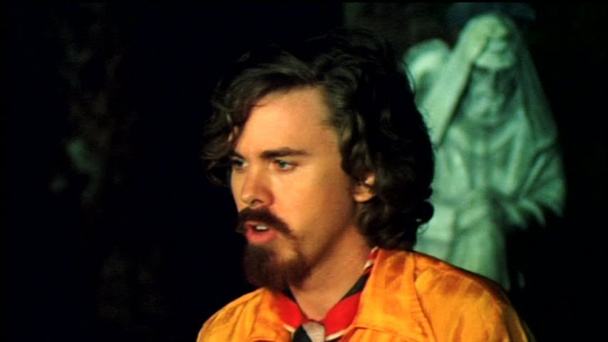
Alan Ormsby played Alan in Bob Clark Zombie Movie
Alan Ormsby is the most interesting person involved in this production and possibly the most underappreciated figure in early 1970s American horror.
He co-wrote the screenplay with Clark. He plays Alan, the theatrical director whose evening goes badly wrong. He created the zombie makeup. He was doing three distinct jobs on a 14-day shoot for fifty thousand dollars, and all three contributions matter to why the film works.
His performance as Alan is deliberately obnoxious in a way that requires commitment. Alan is theatrical, manipulative, and completely convinced that the people around him exist primarily for his amusement. He treats the island visit as another stage production in which he controls everyone's experience. The character is not sympathetic. He is, however, recognizable. Most people have encountered an Alan somewhere in their professional or personal lives.
The dark joke underneath the character is this. Alan spends the entire evening pretending to control death. He performs rituals. He gives the corpse a name. He stages the whole proceeding as a demonstration of his power.
Eventually death gets a turn. Alan has finally encountered performers who refuse to take direction.
After Children Shouldn't Play with Dead Things, Ormsby went on to co-write and co-direct Deranged in 1974, a grimly effective film about Ed Gein that introduced Tom Savini to horror audiences. He wrote Paul Schrader's Cat People remake in 1982 and My Bodyguard in 1980. A writer who started by digging up corpses on a Florida island ended up writing one of the more sensitive coming-of-age films of its decade. Hollywood contains multitudes.
The Homemade Zombies That Actually Work
The zombie makeup in this film is not sophisticated by any modern standard. It is also effective, which is a more interesting achievement than sophistication would have been.
Ormsby was working with a fraction of the resources that later makeup artists would have available. He did not have a large effects department or an elaborate budget for prosthetics. What he had was skill, ingenuity, and a clear understanding of what the film actually needed from its zombies.
The Encyclopedia of Horror concluded that given the budget and the number of personnel involved, the special effects are surprisingly effective. That assessment is accurate. These creatures look like something that has been in the ground for a while. Pale skin, damaged features, shadows doing significant work alongside the makeup itself. They emerge from the cemetery slowly, which gives each appearance weight rather than spectacle.
The roughness works with the film rather than against it. A slicker, more polished zombie effect would sit uncomfortably in a production that looks like it was made in a Florida cemetery on a tight schedule, because it was. The homemade quality of the makeup matches the homemade quality of everything else. The result feels consistent rather than mismatched.
George Romero Had Already Changed the Rules
Children Shouldn't Play with Dead Things arrived four years after George A. Romero's Night of the Living Dead transformed what a zombie movie could be.
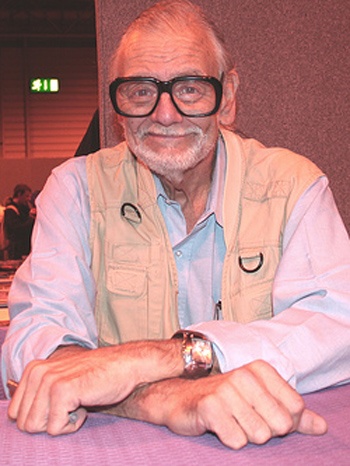
Night of the Living Dead Director George A. Romero
Before Romero, zombies in American film required elaborate mythological setups. Voodoo. Caribbean settings. Ancient curses. The zombie existed within a specific tradition that demanded a particular kind of story.
Romero stripped all of that away. The dead simply got up. No explanation was required beyond a brief gesture toward radiation from a Venus space probe. The monster was now available to any filmmaker with a cemetery, some makeup, and a group of willing performers. The barrier to entry had dropped to nearly nothing.
That was specifically useful to independent filmmakers working in Florida on small budgets. Children Shouldn't Play with Dead Things belongs to the first wave of independent horror that Romero's film made possible. It is not a copy of Night of the Living Dead. Its tone is darker in some ways and more deliberately funny in others. But it could not exist in the form it does without Romero having demonstrated that the dead could rise from an American cemetery without elaborate mythology attached.
Why Use a Theater Troupe as the Victims?
This is the detail that separates Children Shouldn't Play with Dead Things from a standard low-budget zombie picture.
The characters are performers. Their leader is a director. They have traveled to the island partly because Alan enjoys manipulating them. They participate in a fake ceremony. Everyone is pretending throughout the evening's first half.
Then something real happens.
There is a strange theatrical logic running through the movie. Alan believes he is directing the evening the same way he directs his actors. He controls the staging, the pacing, and the emotional responses of everyone around him. The ritual is another production. The cemetery is another venue. The corpse is another prop.
Once the dead begin to rise, Alan discovers what happens when the production stops following the director's notes. The zombies do not respond to his theatrical authority. They do not care about his performance. They are, in a sense, the one audience Alan has ever encountered that cannot be manipulated.
That gives the movie a specific and satisfying shape beneath its horror surface. The man who spent the evening playing at controlling death meets death operating by its own logic entirely.
The Cemetery Is the Real Star of the Movie
Old cemeteries were already well established in horror imagery by 1972. Children Shouldn't Play with Dead Things does something smarter than simply using a cemetery as a backdrop. It stays in one long enough that the location develops its own presence.
The movie spends a significant amount of time among the graves before anything overtly supernatural occurs. Characters wander. Alan performs. The troupe reacts to Alan. The cemetery is always there in the background, patient and indifferent to the theatrical production being staged in front of it.
That patience is part of what makes the eventual zombie emergence work as well as it does. The audience has been in this space long enough to have developed a relationship with it. When the ground starts producing its residents, it feels like a response to everything that has happened in this particular location rather than a generic horror event.
The movie also does something that effective horror often does with its setting. It gives the characters multiple opportunities to leave and finds reasons for them to remain. The audience knows the title. The audience knows what is coming. Watching the characters choose, again and again, to stay in exactly the wrong place is its own particular form of suspense.
That Incredible Title
Children Shouldn't Play with Dead Things.
Take a moment with that title. It is strange and funny and creepy and almost impossible to forget. It sounds like a parental warning delivered by someone who has already seen what happens when you ignore it. It sounds like the punchline to a joke nobody has told yet. It sounds like exactly the kind of movie you might watch at midnight if the right person recommended it.
In 1972, a small horror film without major stars needed something that could grab attention on a newspaper listing or a theater marquee without requiring any further explanation. This title managed that and then some. Anyone who read it on a marquee immediately understood approximately what the movie was about and had a reasonable guess about whether they wanted to see it.
The title also establishes the film's tone before a single frame plays. There is dark humor in it. There is a suggestion that the events to follow could have been avoided if someone had simply exercised basic judgment. The title is the movie in miniature. Everything it promises, the film delivers.
The film was released regionally in May 1972 as part of a double feature with The Dunwich Horror in Mobile, Alabama and Pensacola, Florida. It was later distributed under alternate titles including Revenge of the Living Dead, Things from the Dead, and Zreaks, which is a title that suggests someone had a very different idea about what kind of movie this was.
Bob Clark Was Just Getting Started
Clark did not leave horror behind after this film. He went directly deeper into it.
The same year he completed Children Shouldn't Play with Dead Things, Clark and Ormsby shot Deathdream, also known as Dead of Night. Ormsby wrote the screenplay. It is a Vietnam-era retelling of the classic short story The Monkey's Paw, in which a soldier killed in the war is wished back home by his mother. What comes home is not quite what she wished for. Deathdream is a considerably more controlled and emotionally serious film than Children Shouldn't Play with Dead Things, and it represents a significant step forward in Clark's filmmaking in the same year as his previous picture.
Clark was learning quickly. The rough edges of the zombie movie were already being smoothed into something more precise by the time the next film was finished.
From Zombies to Black Christmas
In 1974, Bob Clark directed Black Christmas, and the conversation about his career changed permanently.
Shot in Toronto on a budget of approximately 686,000 dollars, Black Christmas follows a group of sorority sisters being stalked and murdered by a killer hiding in the attic of their house over Christmas vacation. It stars Olivia Hussey, Keir Dullea, Margot Kidder, and John Saxon. It is now recognized as one of the earliest and most influential slasher films ever made.
The distance between Children Shouldn't Play with Dead Things and Black Christmas is remarkable for two years of work. The handling of suspense is precise. The confined location is used with intelligence. The unseen killer, glimpsed only through point-of-view shots that place the audience behind his eyes, generates dread that the Florida zombie movie was reaching toward but could not quite achieve at its budget and experience level.
There is also a famous footnote attached to Black Christmas. Clark reportedly described to John Carpenter his idea for a sequel in which the killer returns to the same town on Halloween night. Carpenter went away and made Halloween instead. Whether that story is entirely accurate, it captures something true about the relationship between the two films and the two directors.
From a fifty-thousand-dollar zombie picture made with college friends to a film that helped establish the template for an entire genre. Two years. Same director.
Then Came Porky’s
By 1981, Clark had directed Porky's.
If you have been following the chronology of his career and you find this surprising, you are responding correctly. Porky's is a raucous teenage comedy set in 1950s Florida. It grossed over 100 million dollars worldwide and became one of the most commercially successful Canadian films in history. It has essentially nothing to do with zombies, Vietnam allegories, or slasher films.
Clark won a Genie Award for Best Director that year. He was also nominated for a Golden Raspberry for Worst Director the same year. That particular combination tells you something about the kind of filmmaker he was. He made the movies he wanted to make, and those movies did not always resemble each other.
How Did the Zombie Guy End Up Making A Christmas Story?
In 1983, Bob Clark directed A Christmas Story, based on the semi-autobiographical stories of humorist Jean Shepherd. It stars Melinda Dillon, Darren McGavin, and Peter Billingsley as Ralphie Parker. It was shot in Cleveland and Toronto. It grossed 19 million dollars against a four-million-dollar budget and became a modest success that nobody quite predicted would still be playing on television forty years later.
The director who once had corpses crawling out of Florida graves was filming a kid in pink bunny pajamas.
The contrast is legitimately funny. It is also less complete a break than it looks. Clark had a consistent interest in specific, contained little worlds with strong atmospheres and characters who feel like they belong to their particular setting. The Florida island cemetery has that quality. The Toronto sorority house has it. Ralphie's house in Hammond, Indiana has it in a completely different register.
The budgets changed. The subject matter changed. The interest in building a world that feels lived-in and specific did not.
Ralphie, the Leg Lamp and a Cemetery Full of Zombies
A Christmas Story became an annual television event. TBS and TNT have aired it for twenty-four consecutive hours every Christmas Eve and Christmas Day since 1997. The leg lamp is sold as merchandise. Ralphie's house in Cleveland operates as a museum. Lines from the film enter Christmas conversations the way lines from certain movies enter the permanent vocabulary of the people who love them.
Children Shouldn't Play with Dead Things survived in a completely different corner of American pop culture. Late-night television. Video store shelves. Horror collector conventions. Cult film festivals. The audience for it has always been smaller and more specific and considerably more likely to own a copy on multiple formats.
Two pieces of American pop culture. Both came from the same director. One runs on basic cable every December. The other gets discussed by people who find zombie cinema from the post-Romero independent era interesting and want to trace the career of a filmmaker who turned out to be more varied than his most famous work would suggest.
Is Children Shouldn’t Play with Dead Things Still Worth Watching?
The Bob Clark zombie movie holds up. Yes, with honest expectations.
It is a low-budget independent horror film made in 14 days in Florida in 1972 with a cast of college friends and a zombie makeup artist working without a significant effects budget. It looks exactly like that. Some performances run broad. The pacing in the first two-thirds is deliberate in ways that require patience from viewers accustomed to faster modern horror.
Alan is irritating, which is partly intentional and partly a limitation of the performance. He is supposed to be obnoxious. He is thoroughly obnoxious. The line between deliberate characterization and an actor going too far in one direction is occasionally difficult to locate.
But the cemetery sequence in the film's final third delivers what the title promises. The zombies emerge slowly and with real atmospheric effect. The island setting becomes oppressive. And the image of the closing credits running silently over the zombies preparing a sailboat to leave the island is strange and surreal and oddly memorable in a way that lingers past the film itself.
For viewers who enjoy early independent horror, practical makeup, post-Romero zombie history, and the particular texture of low-budget regional filmmaking, the rough edges are part of the attraction rather than a problem to be tolerated.
Children Shouldn’t Play With Dead Things (Blu-ray)
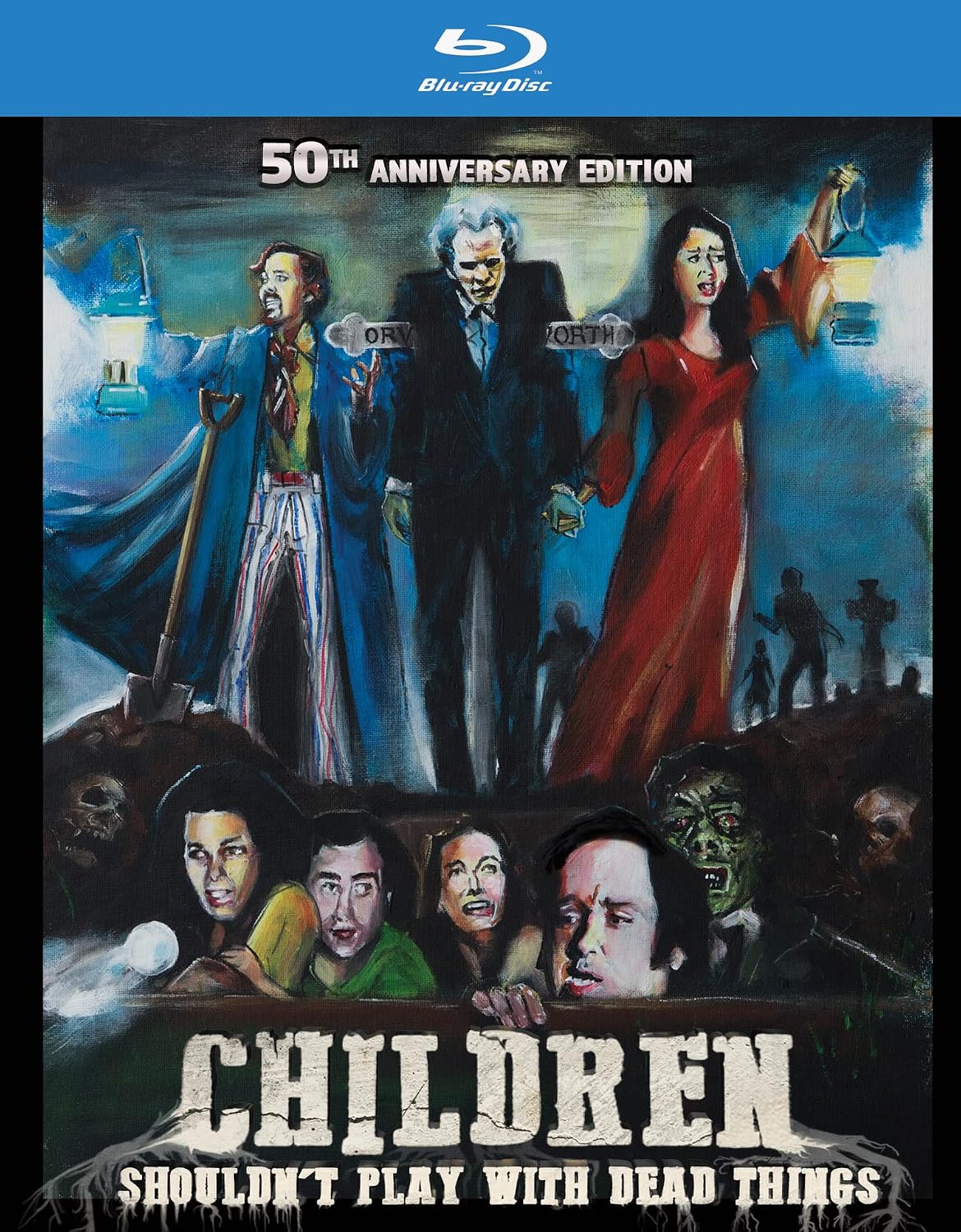
Children Shouldn't Play With Dead Things Blu-ray for fans of Bob Clark's early horror films
Product Description:
If you've just discovered the Bob Clark zombie movie that came years before A Christmas Story, this feature-packed Blu-ray is the perfect addition to your horror collection. Directed by Bob Clark and co-written by Alan Ormsby, Children Shouldn't Play With Dead Things blends dark humor, low-budget creativity, and memorable zombie effects into one of the most influential independent horror films of the early 1970s.
Key Features:
• Cult horror classic directed by Bob Clark
• Includes the 90-minute documentary Dreaming of Death: Bob Clark's Horror Films
• Audio commentary featuring Alan Ormsby and cast members
• Interviews, Q&A sessions, tribute to Bob Clark, photo galleries, trailers, radio spots, and collectible booklet
• Essential release for fans of independent horror, zombie movies, and Bob Clark's career
Why This Works:
After reading about the Bob Clark zombie movie, watching the film alongside its extensive bonus features gives you a deeper appreciation for how an ambitious low-budget production helped launch the career of a director who would later create classics like Black Christmas, Porky's, and A Christmas Story. The documentary and commentary make this one of the best editions available for classic horror fans.
Buy on Amazon
Final Thoughts on the Bob Clark Zombie Movie
Long before Ralphie wanted his Red Ryder BB gun, Bob Clark was in Florida making a movie about a theater troupe too arrogant to leave a cemetery when the cemetery gave them several clear opportunities to do so.
This Bob Clark zombie movie did not have much money. It did not have elaborate effects or major stars. What it had was an unforgettable title, a cemetery full of patient residents, some effective homemade zombie makeup, and filmmakers willing to see how much horror they could squeeze out of fifty thousand dollars and fourteen days.
Alan Ormsby went on to write Cat People and My Bodyguard. Bob Clark went on to Black Christmas, Porky's, and A Christmas Story. The zombie movie that started both of those careers is still out there, still carrying its impossible title, still waiting on its island for the right audience to arrive.
Eleven years after the dead walked in Florida, Clark gave America one of its most enduring Christmas movies.
That may be the strangest twist in the entire picture.
ML Lamp is the owner of Kilroy Was Here. After his 20 years of working in Las Vegas in the entertainment promotions field, Mr. Lamp retired in 2002 from his job to pursue his passion for collectibles. Now as a guest speaker and author he’s living the dream, and sharing his warmth with You.