AtmosFX Halloween Projector Kit: A Wicked Window Illusion Without Building a Prop
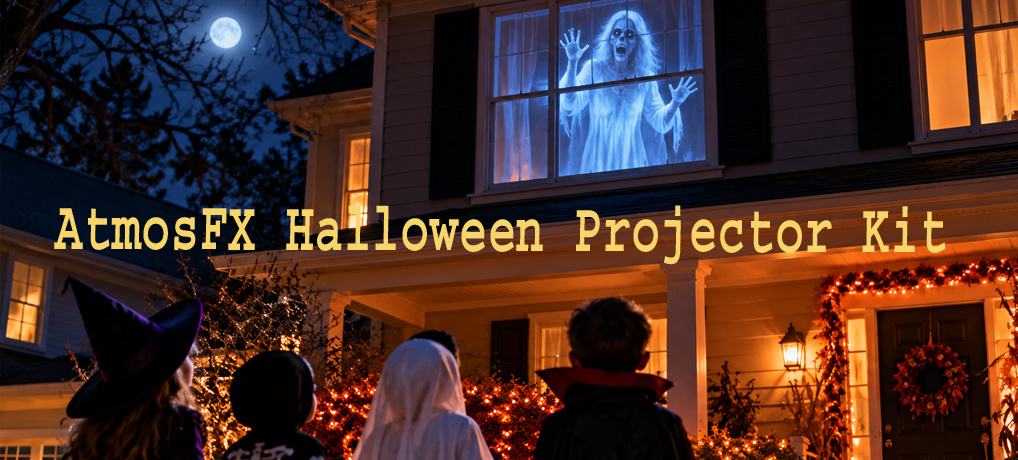
An AtmosFX Halloween projector can turn an ordinary window into a moving Halloween scene without building a large physical prop.
An AtmosFX Halloween projector setup turns a plain window or doorway into something that looks alive after dark. Instead of building a prop by hand, buyers get a projector, a set of digital scenes, and a screen material. Together they are designed to catch the image just right. Neighbors walking past see moving ghosts, singing jack-o-lanterns, or lurking monsters where an ordinary window used to be. This guide walks through what an AtmosFX Halloween projector setup actually includes, where it works best, and what buyers should check before ordering one.
What Is an AtmosFX Halloween Projector Setup?
An AtmosFX Halloween projector setup combines three separate pieces working together. The projector casts a digital video file onto a surface. The digital animation itself is a looping video scene, often featuring a ghost, monster, or other Halloween character moving in place. The translucent screen material catches that projected light in a way an ordinary window or wall cannot. A normal window is either too clear or too reflective to hold a clean image.
This combination creates what the company calls a Hollusion effect in many setups. The background of the video fades into darkness against the material, leaving only the moving figure visible. From outside, at the right distance and in the right lighting, the character appears to be floating inside the space. It looks nothing like a video playing on a screen. That illusion is the entire point of the setup, and it depends on all three pieces working together correctly.
For Other Great Halloween Ideas Click Here
What the Kit Includes
Kit contents vary considerably between AtmosFX bundles, so buyers should check the exact list before ordering rather than assuming every package includes a projector. Some kits, like the AtmosKIT HD Halloween, bundle a ViewSonic M2e projector rated at 1,000 lumens. That kit also includes 12 Halloween decorations and Window Projection Material XL measuring 5.5 by 9 feet. Other kits, including the AtmosKIT Plus Halloween, include a different ViewSonic M1+ projector with a smaller 4 by 6 foot screen instead. A third option, the AtmosKIT Autoplay GO, uses a battery powered ViewSonic M1X projector with a built in on-timer. The display runs automatically each night without anyone needing to switch it on by hand.
Most bundled projectors also include a remote control, a tripod mount, and some form of wireless connectivity for streaming content from a phone or tablet. A 4 gigabyte USB drive typically ships preloaded with the included decorations. Many kits also throw in a discount voucher toward purchasing additional scenes from the wider AtmosFX library later on.
The tripod mount deserves special mention, since it solves a common problem for anyone decorating a window that sits above table height. Rather than stacking boxes to reach the right angle, a projector on a standard photography tripod can be raised, lowered, and angled precisely. It can then be tucked behind a curtain or piece of furniture, so guests see only the finished display rather than the equipment producing it.
Buyers who already own a projector can skip the bundled hardware entirely and purchase just the digital decorations and screen material separately. This route works well for anyone with a home theater projector sitting unused most of the year. AtmosFX decorations play from a standard USB drive or SD card on most projectors regardless of brand. Verifying exact screen dimensions, projector brightness, and which decorations are included matters most here. Marketing photos across different kits can look nearly identical despite real differences in what actually ships in the box.
Window Projection
Windows remain one of the easiest and most popular places to set up this kind of display. A window already provides a built in frame and a fixed viewing distance from the street. It also faces outward toward exactly the audience a Halloween display is meant for in the first place. Attaching Window Projection Material to the inside of the glass is often the whole job. From there, positioning the projector on a table or tripod inside the room finishes the setup.
Window displays typically show a character from about the knees or waist upward rather than the full figure. Most window projection modes are simply built around that framing. That framing works well for this specific location. A passerby on a sidewalk naturally looks up at a window rather than down toward the ground. The cropped view feels intentional rather than incomplete.
Doorway and Indoor Projection
Doorways and other indoor locations open up a different set of possibilities that windows cannot match. The surrounding walls provide much deeper darkness to work with than a window ever can. A doorway or archway projection typically shows a character's full body, feet included. The material stretches from top to bottom rather than stopping partway down. This works especially well with Hollusion Projection Material, a gray, mesh like fabric. It is designed specifically to blend into darkness so the background disappears and only the moving figure remains visible.
Some AtmosFX decoration collections even include a virtual door as part of the animation itself. The projected door appears to open and close as part of the scene. The Trick 'r Treat Decoration Collection and the Night Stalkers Decoration Collection both use this approach. The doorway itself becomes part of the story rather than just a frame around it. Placing this kind of projection works best in a few specific spots. Try the end of a dark hallway, an unused doorway guests will not walk through, or the top of a staircase. Real depth and shadow around the material help sell the illusion.
Ghosts Versus Monsters Versus Jack-o’-Lanterns
Halloween decoration libraries generally split into a few broad categories, and understanding the differences helps buyers pick scenes that fit their setup. Ghost focused collections, often built around Hollusion mode, tend to work best in dark hallways, doorways, and shadowy yard corners. The transparent background matters to this kind of effect. Monster and creature collections cover a wider range, including zombies, werewolves, witches, and other classic Halloween characters. Many of them include both window and full body display modes.
Jack-o-lantern and pumpkin focused decorations work differently from either of these. Rather than projecting onto fabric, these scenes are designed to project directly onto real, physical pumpkins. The projector usually sits just two to three feet away. A blank carved or uncarved pumpkin becomes a singing or talking face without any actual carving required. This category eliminates the mess of pumpkin carving entirely while still delivering an animated jack-o-lantern face on Halloween night. Setups with three pumpkins arranged in a row tend to work particularly well. The format allows a small group of faces to sing or converse with each other rather than performing in isolation.
How Dark Does It Need to Be?
Ambient light is the single biggest factor determining whether any of these displays actually work. Projected images rely entirely on contrast between the light hitting the screen and the darkness surrounding it. A brightly lit porch, a streetlight aimed at the display, or plain daylight will wash out even a strong projector. Industry guidance for installers suggests at least 1,800 lumens of projector brightness for this kind of display. Even bundled kits in the 1,000 lumen range depend heavily on a properly darkened setup to look convincing.
Placement plays into this just as much as raw brightness does. Positioning the projector so no direct light source falls on the projection material matters enormously. Turning off or redirecting porch lights that would otherwise wash out the image often matters more than a brighter projector. A dim projector in a dark space will usually outperform a bright projector fighting against ambient light it cannot overcome.
Neighbors deserve some consideration in this planning as well. A projector aimed at a window display can accidentally point stray light directly into a neighboring house if the angle is not checked carefully beforehand. A quick walk around the yard after dark helps catch this kind of problem early. Checking the view from a neighbor's windows and from the street can prevent an unwelcome surprise for someone else on the block. This small step costs nothing but a few minutes and can save an awkward conversation later in the season.
How Much Room Does the Projector Need?
Throw distance is the space needed between the projector and the screen to fill it correctly. It varies by projector model and matters enormously for planning a setup before buying. Projectors are generally described as short throw or long throw. Most AtmosFX kits use short throw models for one specific reason. They can sit close to a window or doorway rather than needing a large empty room behind them.
A projector's throw ratio describes this relationship precisely. A common ratio among bundled AtmosFX projectors is roughly 1.2 to 1. That means the projector needs to sit about 1.2 feet from the screen for every 1 foot of image width desired. Buyers should measure the actual space available behind their chosen window or doorway before ordering. A room that is too shallow will force an unusably small image no matter how good the projector itself is.
Most bundled projectors include some form of digital keystone correction. This feature adjusts a distorted, trapezoid shaped image back into a proper rectangle when the projector cannot sit perfectly level with the screen. This matters most in tight indoor spaces where the projector has to sit slightly off center or at an angle to fit the available room. It can rescue a setup that would otherwise look crooked or stretched on one side.
Is the Screen Worth Buying?
Proper AtmosFX branded screen material generally outperforms improvised household substitutes, though the gap depends heavily on which substitute a buyer tries. A plain white bedsheet or shower curtain can work in a pinch. These materials often let too much light pass through. Anyone outside can see straight through the fabric into a lit room, undermining the entire illusion.
Purpose built materials solve this more reliably. Window Projection Material is a 4 by 6 foot sheet of nylon. It is designed to hold an image while staying reasonably difficult to see through from outside. Hollusion Projection Material takes a different approach. Its gray, semi transparent mesh is built specifically to disappear in low light. A projected character appears to float with no visible background at all. Some experienced decorators go a step further and order gray rear projection fabric from specialty retailers. They trade a higher price for noticeably better contrast than the included window material offers. This tradeoff matters most for anyone decorating a window facing a well lit street. Extra contrast can be the difference between a crisp, readable image and a washed out blur passersby barely notice.
Where This Works Best
This kind of setup performs best in a handful of specific situations. Buyers who plan ahead will see far better results than those who improvise on the night itself. Windows facing a street or sidewalk suit the format well, as do porches with controllable lighting. Garages left partway open, indoor Halloween parties, and small home haunts built around one dramatic reveal all work too. Each of these locations shares the same underlying requirement, a controllable, dark background against which the projected image can stand out. A location that cannot offer that darkness will always struggle to deliver the effect, no matter how visually interesting it might otherwise be.
Where It Does Not Work Well
The format struggles in a different set of conditions that buyers should watch for before committing to a display location. Brightly lit areas near streetlights or motion activated security lighting tend to wash out even a strong projector. Daylight makes any projection essentially invisible regardless of brightness. Poor viewing angles cause problems as well. A screen positioned so passersby view it from a steep side angle rather than roughly head on will show a distorted, less convincing image. Inadequate throw distance rounds out the common failure points. A projector crammed into too small a space simply cannot fill the screen the way the same projector would from proper distance.
Is an AtmosFX Halloween Projector Worth It?
Whether an AtmosFX Halloween projector setup is worth buying depends heavily on how a household already approaches Halloween decorating. Anyone building a themed home haunt gets clear value from the format. So does anyone hosting an annual Halloween party or simply wanting a display that draws real attention. The same projector and screen material can be reused every year with an entirely different scene. Nothing gets thrown away like a worn out inflatable would be.
Buyers who already own a decent home projector get the best value of all. They can skip the hardware cost entirely and purchase only decorations and screen material. For everyone else, choosing a bundled kit that matches the intended location makes all the difference. A window kit suits street facing displays, while a Hollusion kit suits doorways and hallways. Matching the two correctly separates an impressive centerpiece from a projector nobody can quite see.
Cost also factors heavily into whether this format makes sense for a given household. A full projector kit represents a larger upfront purchase than a bag of plastic yard skeletons. But the projector and screen material carry over every year, and new decoration collections cost far less than a new physical prop. A household that decorates heavily every October, rather than setting out the same tired inflatable and forgetting about it, will likely recoup that upfront cost. Reduced spending on disposable decorations usually covers it within a couple of seasons. Every season after that becomes essentially free beyond the cost of new scenes.
AtmosFX Digital Decoration Kit
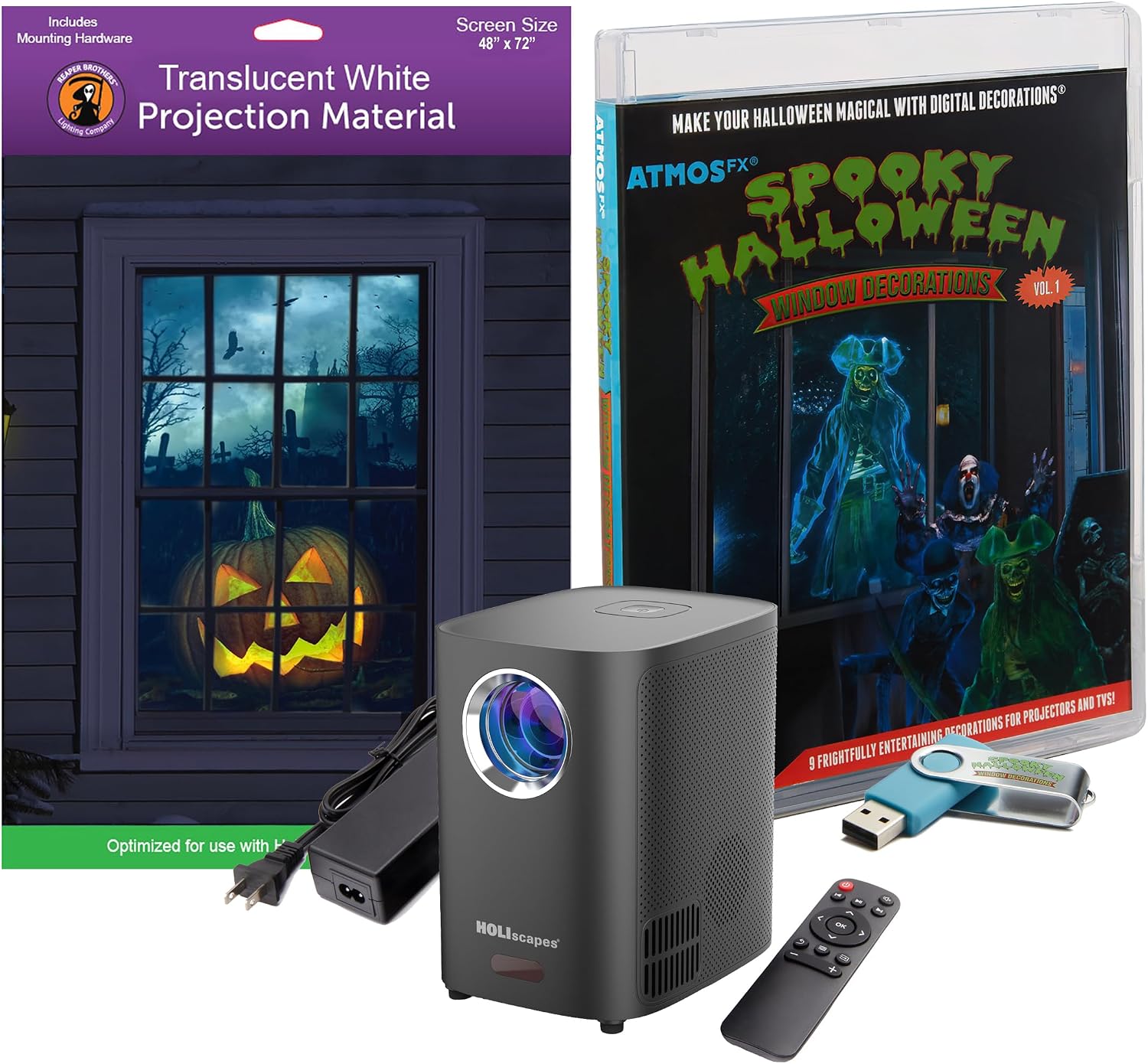
AtmosFX Halloween Projector Kit for creating animated ghosts, zombies, monsters, and other Halloween displays
Product Description:
The AtmosFX Halloween Projector Kit gives you the basic equipment needed to turn an ordinary window or doorway into an animated Halloween display. The kit combines a 1280 x 720 LED projector with a large translucent projection screen and nine different Halloween scenes, letting ghosts, zombies, creepy clowns, skeletons, and other creatures seemingly appear inside your home.
Key Features:
• 1280 x 720 LED projector with sound, remote control, and wide-angle lens
• Includes a 48" x 72" translucent white projection screen for a door or window
• Includes 3M mounting hardware for installing the projection material
• AtmosFX USB stick contains nine different Halloween scenes
• Scenes include selections from Paranormal Passage, Ghostly Apparitions, Zombie Invasion, Creepy Clowns, Night Stalkers, and more
Why This Works:
The secret to an effective AtmosFX Halloween Projector Kit display is making the projected character look like it belongs in the space rather than simply showing a movie on a wall. Place the translucent material across a darkened window or doorway, position the projector behind it, and the animation can appear to float inside the opening. It's an easy way to create a convincing Halloween illusion without building a permanent prop or turning your entire yard into a commercial-style haunted attraction.
Buy on Amazon

ML Lamp is the owner of Kilroy Was Here. After his 20 years of working in Las Vegas in the entertainment promotions field, Mr. Lamp retired in 2002 from his job to pursue his passion for collectibles. Now as a guest speaker and author he’s living the dream, and sharing his warmth with You.