😈 Late Night with the Devil Review: The Halloween Broadcast That Went Horribly Wrong
My Rating: ⭐ ⭐ ⭐ ⭐ ☆ 4.7/5
Imagine turning on late night television on Halloween night in 1977. There is a smiling host behind a desk, a band, a sidekick, and a studio audience ready to laugh. Everything looks familiar. Then something happens that absolutely should not be happening on live television. This Late Night with the Devil review looks at one of the cleverest horror films of recent years, a possession story disguised as a lost episode of a 1970s talk show. It is spooky, funny, and steeped in old television nostalgia.
Late Night with the Devil Review: Like Something Found on an Old VHS Tape
Imagine turning on late night television on Halloween night in 1977.
There is a smiling host behind a desk.
A band.
A sidekick.
An audience.
A few unusual guests booked to improve the ratings.
Everything looks familiar.
Then something happens that absolutely should not be happening on live television.
That is the wonderfully simple setup behind Late Night with the Devil.
The film was written, directed, and edited by Australian brothers Colin and Cameron Cairnes. It premiered at the South by Southwest festival in March 2023 and reached American theaters through IFC Films on March 22, 2024. It later arrived on the Shudder streaming service.
The Cairnes brothers have said that late night television in the 1970s and 1980s felt a little dangerous, like a window into a strange adult world. They wanted to combine that live broadcast energy with the supernatural. The result feels like something you found on a dusty old VHS tape at a yard sale.
Welcome to Night Owls with Jack Delroy
David Dastmalchian plays Jack Delroy, host of the fictional late night talk show Night Owls with Jack Delroy.
Jack has spent years trying to compete with Johnny Carson.
He is successful.
Just not successful enough.
That distinction becomes very important.
A short documentary style opening, narrated by veteran actor Michael Ironside, sets up Jack's career, his ratings struggles, and a personal tragedy that has shaken him. By Halloween night 1977, Night Owls is in its sixth season and badly in need of a boost.
Jack needs ratings, and his producers have assembled exactly the kind of television lineup guaranteed to attract attention.
Unfortunately, they may have attracted something else too.
David Dastmalchian Finally Gets the Show to Himself
You have probably seen David Dastmalchian even if you do not immediately recognize the name.
He has appeared in movies including The Dark Knight, Prisoners, Ant-Man, The Suicide Squad, Dune, and Oppenheimer.
Usually he is the fascinating character actor standing somewhere beside the star.
Here, he is the star.
There is a great story behind his casting. The Cairnes brothers offered him the part after reading an article he wrote for Fangoria magazine about regional TV horror hosts. They sent him the script with a lookbook designed to look like a 1970s TV Guide. He was hooked.
Jack Delroy may be the role that proves just how good Dastmalchian can be when an entire movie rests on his shoulders. He went on to win the Fangoria Chainsaw Award for Best Lead Performance.
Jack Delroy Really Wants Those Ratings
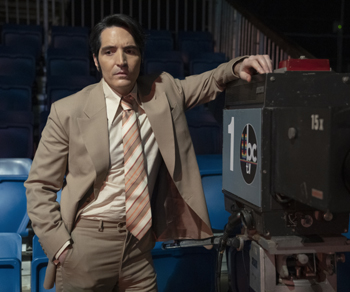
One of the smartest things about the movie is that Jack is not simply an innocent television host trapped in a supernatural situation.
He is ambitious.
He wants success.
He wants Carson's audience.
And television ratings have a way of encouraging people to keep going when common sense is screaming:
CUT TO COMMERCIAL.
The increasingly uncomfortable question becomes how far Jack is willing to push his Halloween broadcast to keep America watching.
Dastmalchian plays him with a perfect mix of charm and desperation. One critic praised how he found the right tone between smarmy and likable that defined so much of 1970s culture. That balance is exactly right.
The 1970s Television Look Is Half the Fun
This movie would not work nearly as well if the filmmakers simply put everyone on a modern television set.
The wood paneling.
The brown and orange colors.
The desk.
The curtains.
The studio audience.
The band.
The graphics.
The clothing.
Everything feels like it belongs to another era of television.
Surprisingly, the movie was shot in Melbourne, Australia, not in a New York television studio. You would never guess it. The production design is so convincing that the set could pass for a real 1977 broadcast.
For anyone who remembers late night TV from the 1970s, there is an extra layer of fun in watching the filmmakers recreate it.
Halloween Night 1977 Was the Perfect Setting
The broadcast takes place on October 31, 1977.
That gives Jack the perfect excuse to book guests dealing with the paranormal.
Psychics.
Skeptics.
Supernatural demonstrations.
And eventually something considerably more dangerous.
The late 1970s were also the height of America's fascination with the occult. The Exorcist was still fresh in people's minds, and talk shows loved booking psychics and paranormal experts. Jack's Halloween special fits right into that world.
It is supposed to be spooky Halloween entertainment.
At least that is what everyone tells themselves.
Christou Gets the Evening Started
One of Jack's guests is psychic Christou, played by Fayssal Bazzi.
At first his appearance feels exactly like the sort of slightly cheesy paranormal segment that might have appeared on a real 1970s talk show. He reads the audience. He makes vague predictions. He plays to the crowd.
The audience watches.
Jack smiles.
The cameras keep rolling.
Then the atmosphere begins to change.
Carmichael Haig Doesn’t Believe Any of It
Ian Bliss plays Carmichael Haig, a former magician turned professional skeptic.
He has an explanation for everything.
Psychics?
Tricks.
Ghosts?
Nonsense.
Supernatural phenomena?
There is always another explanation.
The character has a real world inspiration. Haig closely resembles James Randi, the famous magician who spent decades debunking psychics. Randi even had a heated on air clash with Australian talk show host Don Lane.
Putting an aggressive skeptic beside people claiming genuine paranormal experiences gives the television show exactly the conflict Jack wants.
It also gives the movie one of its most entertaining characters.
Then Dr. June Ross-Mitchell Brings Lilly
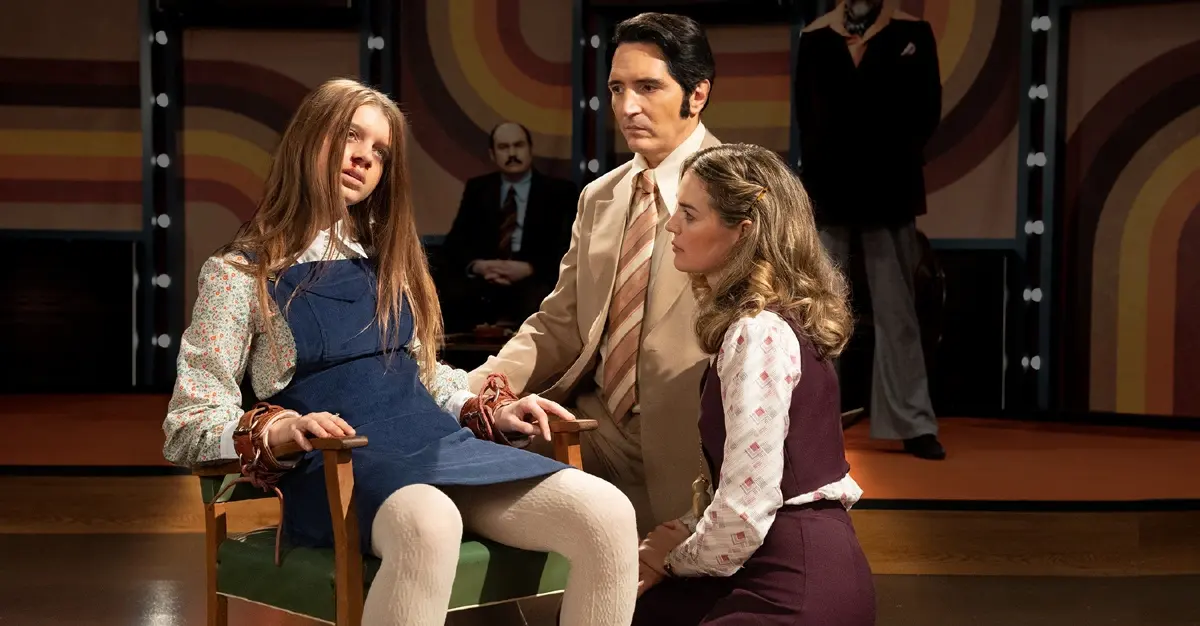
Things become considerably more serious when parapsychologist Dr. June Ross-Mitchell appears with a young girl named Lilly. June is played by Laura Gordon, who brings warmth and conviction to the role.
Lilly is supposedly the sole survivor of a cult.
June believes something may still be attached to her.
Jack sees something else:
great television.
That decision tells you quite a bit about Jack Delroy.
Ingrid Torelli Makes Lilly Extremely Uncomfortable to Watch
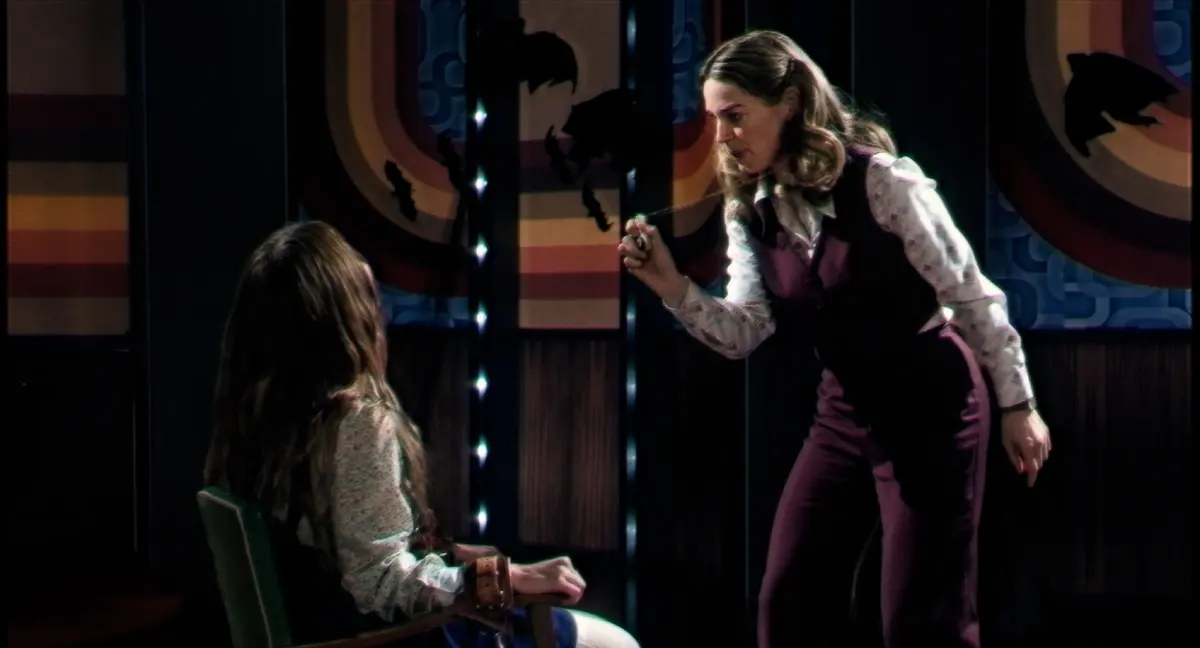
Ingrid Torelli does not need elaborate effects to make Lilly unsettling.
Sometimes she simply sits there.
Sometimes she smiles.
And somehow that smile can make the entire television studio feel wrong.
The performance works because Torelli does not play every moment at maximum intensity.
Lilly can appear strangely ordinary right up until she does not.
It is a remarkably controlled performance from a young actor. Torelli earned nominations from both the AACTA Awards and the Australian Film Critics Association for the role.
The Studio Audience Makes Everything Better
The live audience is another important ingredient.
We are not watching these events happen in an abandoned house.
There are ordinary people sitting a few feet away.
They laugh.
They applaud.
They become uncomfortable.
And they keep watching.
Just like us.
That makes the television studio setting much more effective than simply placing the same supernatural story in another haunted house.
Is This Found Footage?
Sort of.
The movie presents itself as surviving material from the infamous Halloween broadcast, along with behind the scenes footage that was never meant to air.
That gives filmmakers Cameron and Colin Cairnes freedom to move between what supposedly aired on television and moments viewers were not originally meant to see.
Critics have connected it to the newer analog horror style, and to the famous 1992 BBC hoax special Ghostwatch, which convinced many British viewers they were watching a real haunting.
It is found footage without looking like somebody spent 90 minutes running through the woods with a shaky camera.
The Commercial Breaks May Be More Important Than the Show
One of my favorite ideas in Late Night with the Devil is what happens when the broadcast supposedly goes to commercial.
That is when the smiles can disappear.
Behind the scenes, Jack becomes less like a television personality and more like a man desperately trying to keep his show under control. His producer, Leo, played by Josh Quong Tart, is right beside him as the night spins further out of hand.
The difference between Jack Delroy the host and Jack Delroy the man becomes increasingly important.
This Movie Understands Old Television
The filmmakers clearly understand that recreating old television is not simply about making the picture look fuzzy.
It is rhythm.
Presentation.
Camera placement.
Performers knowing when they are live.
A host filling dead air.
A band waiting for its cue.
A producer worrying about the clock.
Jack's loyal sidekick, Gus McConnell, played by Rhys Auteri, adds to the authenticity. He laughs at Jack's jokes and fills the silences, just like the classic late night second bananas.
That attention to detail is what makes Night Owls feel like a show that might actually have existed.
Johnny Carson’s Shadow Hangs Over the Whole Thing
Jack's problem is not that nobody watches him.
His problem is that more people watch Johnny Carson.
For a fictional late night host in 1977, that is a believable obsession.
Carson dominated American late night television for three decades on The Tonight Show. Late Night with the Devil uses that real television history to make Jack's fictional career feel surprisingly authentic.
He does not merely want a successful show.
He wants to be number one.
How Much Would You Risk for Ratings?
Underneath the possession and paranormal activity is a very human horror story.
Ambition.
Jack has spent years chasing television success.
So when things begin going wrong, stopping the show is not necessarily his first instinct.
Maybe the next segment will fix everything.
Maybe the audience will love it.
Maybe the ratings will finally beat Carson.
Or maybe somebody should have turned off the cameras ten minutes ago.
One critic called the film a potent examination of the price of success. That is exactly what lingers after the credits.
Don’t Read About the Broadcast Before Watching It
This is absolutely a movie where knowing too much hurts the experience.
Do not search for what happens to Lilly.
Do not look up explanations of the final act.
Do not watch clips of the supernatural sequences.
And do not read somebody else's detailed breakdown before seeing it.
Just turn on Night Owls and watch the broadcast unfold.
Kilroy is not spoiling it for you.
Late Night with the Devil Isn’t Constantly Scary
This is not a nonstop jump scare movie.
It takes its time establishing the television show and letting us meet the guests.
That is important.
The more ordinary Night Owls feels, the more effective it becomes when the broadcast starts slipping somewhere it should not.
When the horror arrives, the film mixes practical effects, including puppetry, with digital work. Some viewers also noticed a small controversy. A few brief interstitial images were made with AI tools, which the directors acknowledged. They are a tiny part of the film, but they did spark debate when it was released.
The movie wants you comfortable in your chair before it starts messing with you.
Why Late Night with the Devil Works
The premise is clever, but a clever premise only gets a movie so far.
What makes this work is commitment.
David Dastmalchian commits to Jack Delroy.
The actors commit to behaving like television personalities and guests from 1977.
The filmmakers commit to the look and rhythm of the broadcast.
For most of the movie, nobody winks at the audience and says:
Look how clever our retro horror movie is.
They simply let us watch the show.
Does Late Night with the Devil Live Up to the Hype?
For the most part, yes.
The hype was real. Stephen King saw an early screener and urged people to watch it, calling it brilliant. Critics agreed, giving it a very strong Rotten Tomatoes score. It opened to the best debut in IFC Films history at the time and grossed about $16.7 million worldwide.
There was even a perfectly spooky box office coincidence. Reports noted the film earned an estimated $666,666 on its first Sunday.
It is different enough to stand apart from the endless supply of possession movies and found footage horror.
The retro television setting gives it personality.
David Dastmalchian gives it a strong center.
And the Halloween broadcast provides a perfect excuse for increasingly dangerous paranormal television.
It is not frightening every second.
It does not need to be.
Sometimes simply waiting for the next guest to sit down is enough.
Who Should Watch Late Night with the Devil?
Watch it if you enjoy supernatural horror, possession movies, found footage, and 1970s nostalgia. It also suits fans of old television, Halloween movies, slow building dread, and horror stories built around one increasingly terrible evening.
It is especially fun for anyone fascinated by the days when practically the entire country could be watching the same television program at the same time.
Collectors will love one extra detail. In October 2024, the film was released on a limited glow in the dark VHS tape, reported as the first commercially released glow in the dark VHS. It is a perfect shelf piece for a movie that celebrates old media.
Final Thoughts 4.7/5
This one earns a 4.7 out of 5 from Kilroy. Wrapping up this Late Night with the Devil review, the film is a sharp, stylish, and genuinely unsettling Halloween treat.
Late Night with the Devil takes something wonderfully familiar, an old fashioned late night talk show, and slowly turns it into something that should never have been broadcast.
David Dastmalchian is exactly the right Jack Delroy. He is charming enough that you understand why people watch him, ambitious enough that you begin questioning his decisions, and desperate enough to keep the cameras rolling.
The retro setting is not just decoration.
It is the movie.
For one Halloween night in 1977, Night Owls finally gets the television event Jack Delroy has been chasing.
He probably should have settled for second place.
If your Halloween guest claims to have a demon inside her, maybe don't wait until after the commercial break to reconsider the booking.