🎤 Love Loaded Review: Torch Songs, Secrets, and a Gunshot in 1958 Los Angeles
My Rating: ⭐ ⭐ ☆ ☆ ☆ 2.4/5
A smoky nightclub in 1958 Los Angeles.
A torch singer with a voice that stops the room.
An old flame walking back through the door.
And one gunshot that changes everything.
Welcome to our Love Loaded Review. This 2026 noir mystery from writer and director Jan Miller Corran takes us back to the era of fedoras, cigarette smoke, and dangerous love.
This Love Loaded Review is spoiler free. I will cover the setup, the cast, the music, and what works and what does not. I will not tell you who pulled the trigger.
Love Loaded Review: A Noir Torch Song That Hits Some Sour Notes
I have a soft spot for old crime pictures.
The shadows. The snappy dialogue. The singer in the slinky gown who knows more than she is telling. Those movies still hold up on a rainy night.
So when I heard about a new film built in that old style, I was all in.
Love Loaded clearly loves the 1940s and 1950s. The costumes, the club, and the songs all show real care.
It also does something those old movies never could. It puts a romance between two women at the center of a classic noir mystery.
That is a bold and interesting choice. I wish the rest of the movie matched it.
The pacing drags, the suspense fades, and the whole thing plays more like a soap opera than a crime thriller. There is a good movie in here. It just gets buried under too much talk.
Story Setup: Trouble at Club Figaro
It is October 1958 in downtown Los Angeles.
Dr. Jack Scanlon owns Club Figaro. His wife, Didi, is the star attraction. She sings torch songs for the well dressed crowd, and she is the reason most of them come through the door.
The marriage is not exactly happy. Both of them carry secrets, and Didi has a past that makes Jack nervous.
Then April Davis comes back to town.
April is Didi’s lost love. Her return stirs up old feelings and old secrets that nobody wanted dug up.
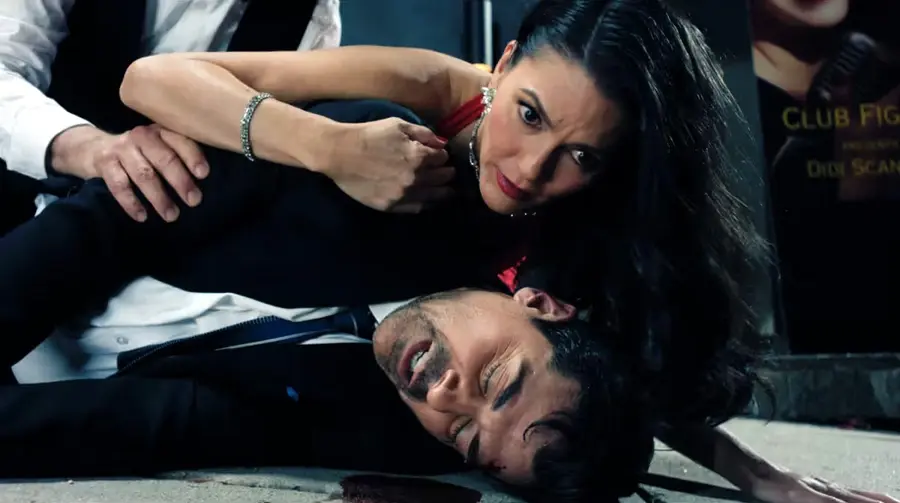
That same night, someone takes a shot at Jack outside the club.
Suddenly, everybody is a suspect. A gangster has revenge on his mind. Some of Jack’s colleagues want him gone. And plenty of people have reasons to hold a grudge.
Two detectives, McBride and Green, start digging. The question is simple. Who wanted Jack Scanlon dead?
I am not answering that one.
The Cast: A Club Full of Suspects
The cast mixes soap opera veterans, TV regulars, and a few familiar faces.
- Monica Young as Didi Scanlon. Her credits include Days of Our Lives and Modern Family. She is also a producer on the film.
- Adam Huss as Jack Scanlon. He has appeared on General Hospital.
- Erin Chambers as April Davis. Her credits include Shameless and Scandal.
- Max Adler as Detective Lance Green. He is best known as Dave Karofsky on Glee.
- Thomas Hobson as Detective McBride.
- Rich Ceraulo Ko as Bill Smith.
- Emily Goss as Molly Goodrich.
- Chase Bennett as Gary Goodrich.
- Tim Heurlin as Dr. Richard Lawrence.
- Tom Katsis as Marco Ponzetti.
- Carly Zelner as Celia Noonan.
- Adam Bucci as Alex Storm. Holiday horror fans may know him from The Naughty List of Mr. Scrooge.
- Scott Thomas Reynolds as Skip Stein.
- Karen Margaret Cole as Gretchen.
Constance Brenneman and Bruce Clifford also appear in the cast.
Monica Young Owns the Stage
Monica Young is the best reason to watch this movie.
As Didi Scanlon, she has the look, the attitude, and most of all, the voice. When she steps up to that microphone, the whole film comes alive.
Her musical numbers are the highlight. She sells every song with real feeling, and she makes you believe Didi could pack a club night after night.
Off the stage, she is just as strong. Didi is tough on the outside and wounded underneath. Young plays both sides well.
She also helped produce the film, which tells you how much she believed in it. That commitment shows in every scene she is in.
If you are a fan of classic movie singers, keep an eye on her.
Behind the Scenes: Jan Miller Corran’s Noir
Jan Miller Corran wrote, directed, and produced Love Loaded.
Her earlier films include Snapshots, Concerto for Abigail, The Last Word, and Along Came Wanda. Her work centers on women’s lives and love stories, often between women.
She founded the production company Three Women in a Box. It focuses on women centered and LGBTQ+ friendly independent features and shorts.
Love Loaded takes her into film noir territory. She raised part of the budget through a crowdfunding campaign. In that campaign, she called it a film noir type whodunnit set in 1958.
She also wrote that she believed it would be her last film. If that holds, she went out swinging for something ambitious.
Kanoa Wolfe-Doblin composed the score. The movie runs 98 minutes.
Buffalo 8 released it on digital platforms across North America on November 13, 2026. The film has already picked up festival recognition along the way.
The Music: Torch Songs at the Figaro
The music is the beating heart of Love Loaded.
The nightclub numbers feel right for the era. They are smoky, slow, and full of longing. Exactly what you want from a torch singer in a 1950s club.
The vocal performances are terrific. Every time the film heads back to the stage, my interest picked right back up.
The soundtrack does a lot of heavy lifting. It sets the mood better than some of the dialogue does.
Honestly, I would buy this soundtrack on vinyl. Fifties vocal records have always been a staple in the collecting world, and these songs would fit right in.
If the whole movie moved like its musical numbers, we would be talking about a much higher score.
The Noir Tradition, With a Twist
Film noir has a long history.
The classic noir era ran through the 1940s and 1950s. Those movies loved shadowy streets, hard boiled detectives, femme fatales, and crimes born from love and greed.
Love Loaded works hard to recreate that world. The crime mystery, the romantic intrigue, and the nightclub setting all come straight from that playbook.
Then it flips the script.
In the old days, a love story between two women could never sit at the center of a studio crime picture. The rules of the time simply would not allow it.
Hollywood studios followed the Production Code, often called the Hays Code, from 1934 to 1968. It banned any hint of homosexuality on screen, lumping it in with what it called sex perversion.
So a real 1958 noir could never have told this story openly. That gives Love Loaded a sense of setting the record straight.
Love Loaded puts exactly that story front and center. The relationship between Didi and April gives the familiar noir formula a whole new angle.
I appreciated that. It feels like the movie the old studios could have made if they had been brave enough.
It is the most original idea in the film, and it deserves credit.
Didi, Jack, and April
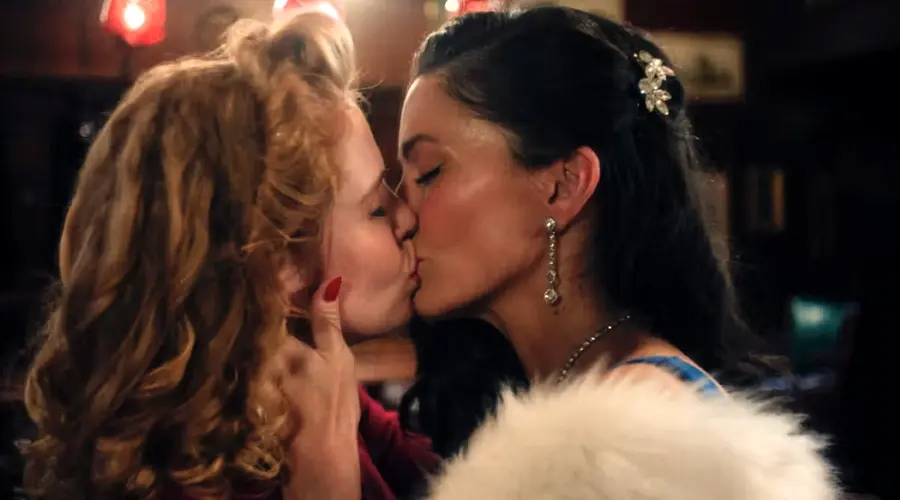
At its core, this is a love triangle wrapped in a mystery.
Didi and Jack share a club and a marriage, but not much trust. Their relationship is complicated, and both of them seem to know the other is hiding something.
Then April returns, and every buried feeling comes back to the surface.
April is the one who got away. Her return forces Didi to face the life she chose and the one she gave up.
Jack is a man who senses he is losing control of his marriage, his club, and maybe his life.
That setup has all the makings of great noir. Love, jealousy, and a gun in the room are a classic recipe for trouble.
The triangle is the most interesting part of the drama. When the movie focuses on these three people, it works.
The trouble is how often the film wanders away from them into side stories that go nowhere.
The Detectives on the Case
Every noir needs a detective, and this one has two.
Max Adler and Thomas Hobson play Detectives Green and McBride. They work the case and question the long list of people who might want Jack gone.
It is fun to see Adler in a period role. Glee fans will remember him as a high school bully, so a 1950s cop is a real change of pace.
The detective scenes give the movie its whodunit structure. Each new suspect brings a new motive, and that keeps you guessing for a while.
I just wanted the investigation to move faster. A good noir detective story should feel like a clock ticking. This one feels more like a long conversation.
Costumes and Production Design
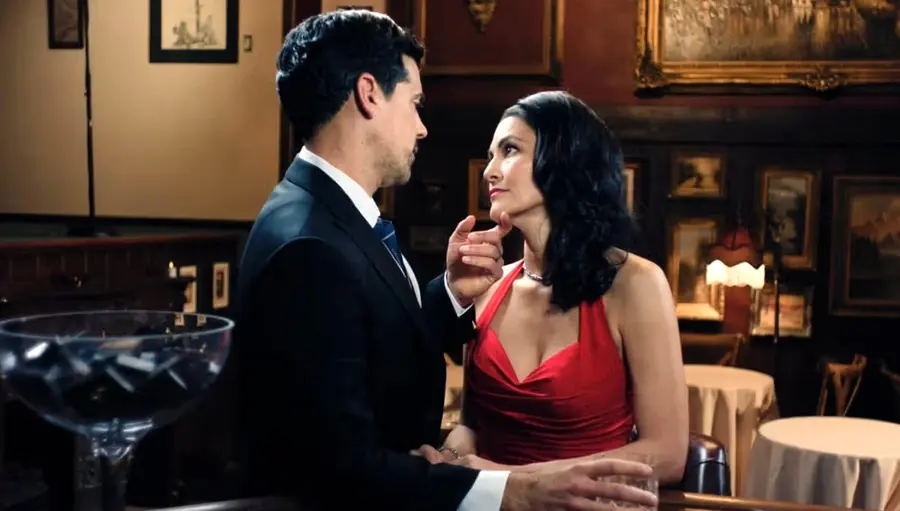
The period wardrobe is a treat.
The gowns, the suits, the hats, and the hairstyles all look like they stepped out of a 1958 photo album. Somebody clearly sweated the details.
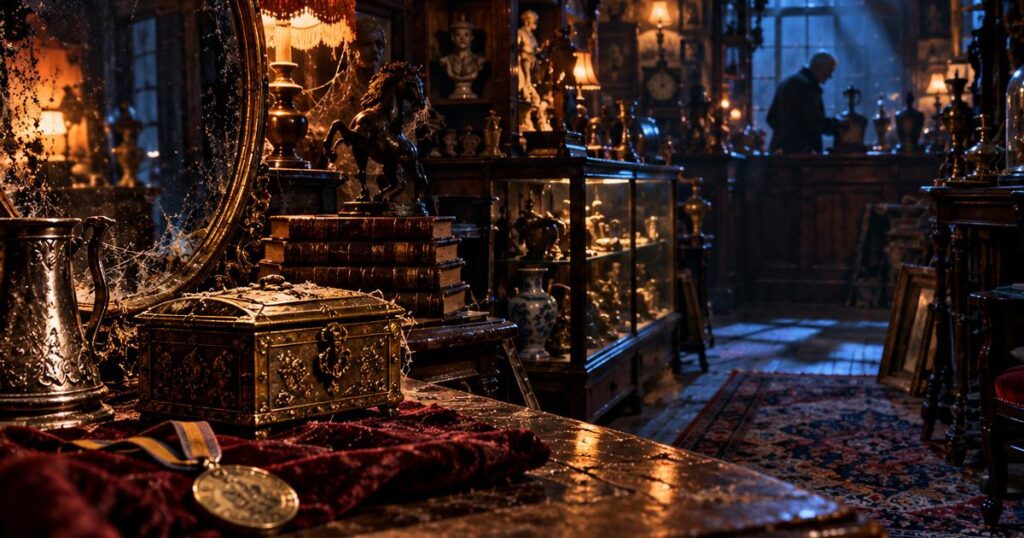
The club itself has the right glamour. You can almost smell the cigarette smoke and the cheap perfume.
For a small independent production, the effort here is impressive. Recreating the 1950s is not cheap, and this team stretched every dollar.
That said, the illusion does not hold up everywhere. More on that below.
Where It Stumbles
Now for the sour notes.
The pacing is slow. The conversations and secondary storylines could have been cut down substantially. Too many scenes repeat what we already know.
At 98 minutes, it feels longer than it is.
The acting is uneven. Monica Young is strong, but the supporting performances are less consistently convincing. Some scenes land, and others feel stiff.
The suspense never takes hold. The shooting should hang over every scene like a storm cloud. Instead, the danger fades, and I rarely felt anyone was truly at risk.
The tone leans melodramatic. It plays more like a soap opera than a traditional crime thriller. The big emotions often push the mystery to the side.
The period authenticity is uneven too. Several locations resemble theatrical sets rather than convincing places from the 1950s.
Once you notice that stage feel, it is hard to shake. It keeps reminding you that you are watching a recreation.
A Southwest Iowa Point of View
Out here in Southwest Iowa, 1958 is not ancient history.
Plenty of folks around here remember the supper clubs, the dance halls, and the Saturday nights when the whole town dressed up.
Ask an older neighbor about the singers who came through on tour. You will get a story, and probably a good one.
That is why a movie like Love Loaded has a natural pull for me. It taps into a world many of our parents and grandparents lived in.
It also reminds me that people back then had secrets too. Not every love story got told out loud, especially in a small town.
The film gives one of those untold stories a voice. I just wish it had told it with a little more speed and a lot more suspense.
Is Love Loaded Worth Watching?
That depends on what you came for.
If you love classic film noir and the music of that era, there is plenty here to enjoy.
If you are a Monica Young fan, her performance and her songs make it worth a look.
If you want to see a fresh take on a familiar genre, the relationship at the center of the story is something new.
If you want a tight, tense crime thriller, you will probably be disappointed. The mystery moves slowly and rarely builds real danger.
If melodrama makes you roll your eyes, consider yourself warned.
If you are curious about independent filmmakers working outside the studio system, this is a good example of passion on a budget.
My advice? Pour a drink, dim the lights, and enjoy the music. Let the mystery take its time.
The Kilroy Verdict on Love Loaded
Love Loaded has style, heart, and a terrific lead.
Monica Young carries the movie with her voice and her presence. The costumes and the soundtrack bring 1958 back to life. The love story between two women gives noir something it never had before.
But a noir mystery needs tension, and this one lets it slip away. Long conversations, uneven acting, and a soap opera tone keep it from catching fire.
I admire what Jan Miller Corran was going for. She aimed high and brought a fresh idea to an old genre.
With tighter editing and more suspense, this could have been a real gem.
Final Thoughts 2.4/5
This one earns a 2.4 out of 5 from Kilroy. Wrapping up this Love Loaded Review, I give real credit to Monica Young, the music, the period costumes, and a bold new spin on noir. The mystery itself never quite fires.
“Monica Young smolders as a torch singer in this stylish throwback to 1950s noir.”
ML Lamp, Kilroy Was Here Shop
Come for the torch songs, stay for the gowns, and bring a little patience for the mystery.
In this club, the singer hits every note. The script just keeps missing its cue.