🪢 Deadly Virtues Review: A Brutal Home-Invasion Thriller You Probably Missed
My Rating: ⭐ ⭐ ⭐ ⭐ ☆ 4.2/5
Some home invasion movies are about escaping the people who broke into your house. Deadly Virtues: Love.Honour.Obey. has something considerably nastier in mind. This Deadly Virtues review looks at a small, deeply uncomfortable 2014 thriller from Dutch director Ate de Jong. It traps a married couple in their own home with a calm, unpredictable intruder, then slowly turns their secrets against them. It is not an easy watch, but it is one of the stranger home invasion films you have probably never heard of.
Deadly Virtues Review: Definitely Not a Comfortable Movie
Tom and Alison are spending what should be an ordinary night at home when a stranger named Aaron enters their house and takes control.
But Aaron is not interested in stealing the television.
He intends to stay for the weekend.
And before he leaves, he is going to learn quite a bit about the couple whose home he has invaded.
Deadly Virtues is a British and Dutch production. It had its world premiere at the Imagine Film Festival in Amsterdam on April 11, 2014. It later screened at FrightFest in London before reaching home video in several countries. In the United Kingdom, it was released on September 28, 2015.
The film runs about 87 minutes and was written by Mark Rogers. It was produced in part through Raindance, the independent film organization founded by Elliot Grove, who is also credited as a producer.
This Deadly Virtues review stays spoiler free. The film depends heavily on surprises, and the less you know about where it goes, the better it works.
Meet Aaron, the Houseguest From Hell
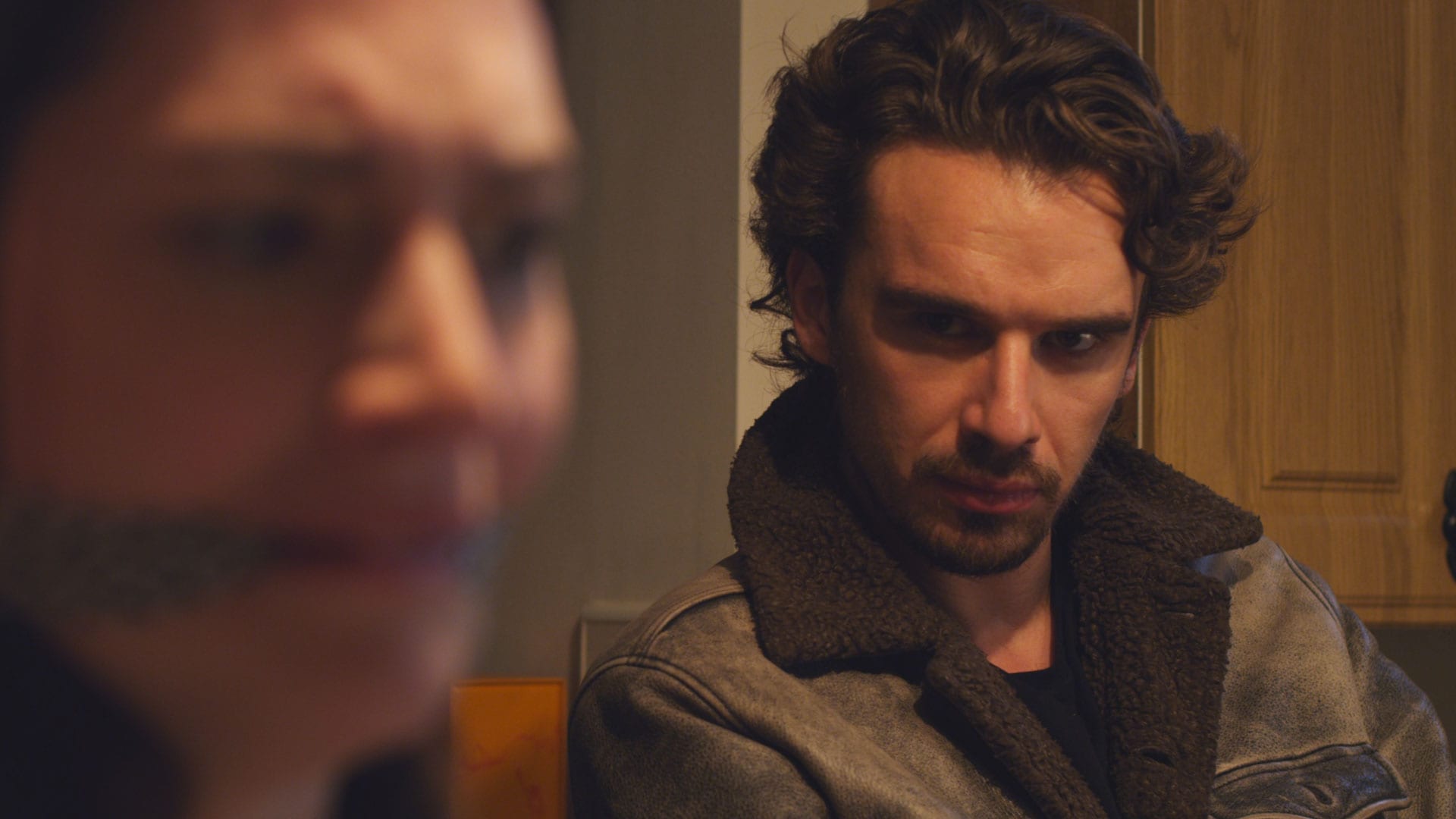
Edward Akrout plays Aaron, and much of the movie depends on him.
Aaron is calm when you expect him to be angry. He is disturbingly polite when you expect him to be violent. He asks questions, listens closely, and seems genuinely curious about the people he has trapped.
That unpredictability makes him considerably more unsettling than a screaming masked killer. You never quite know which version of Aaron is about to walk into the room.
Akrout plays him with quiet confidence. He rarely raises his voice. He moves through the house as if it belongs to him. That calm is what keeps the audience on edge.
The biggest question is not simply what Aaron is going to do.
It is why he is doing it.
Tom and Alison Aren’t Having a Very Good Weekend
Matt Barber plays Tom, while Megan Maczko plays his wife, Alison. Some viewers may recognize Barber from his later role as Atticus Aldridge on Downton Abbey.
At first they appear to be an ordinary married couple who happened to become victims of the wrong man. They live in a nice suburban home. Their life looks comfortable and settled.
Then Aaron starts digging.
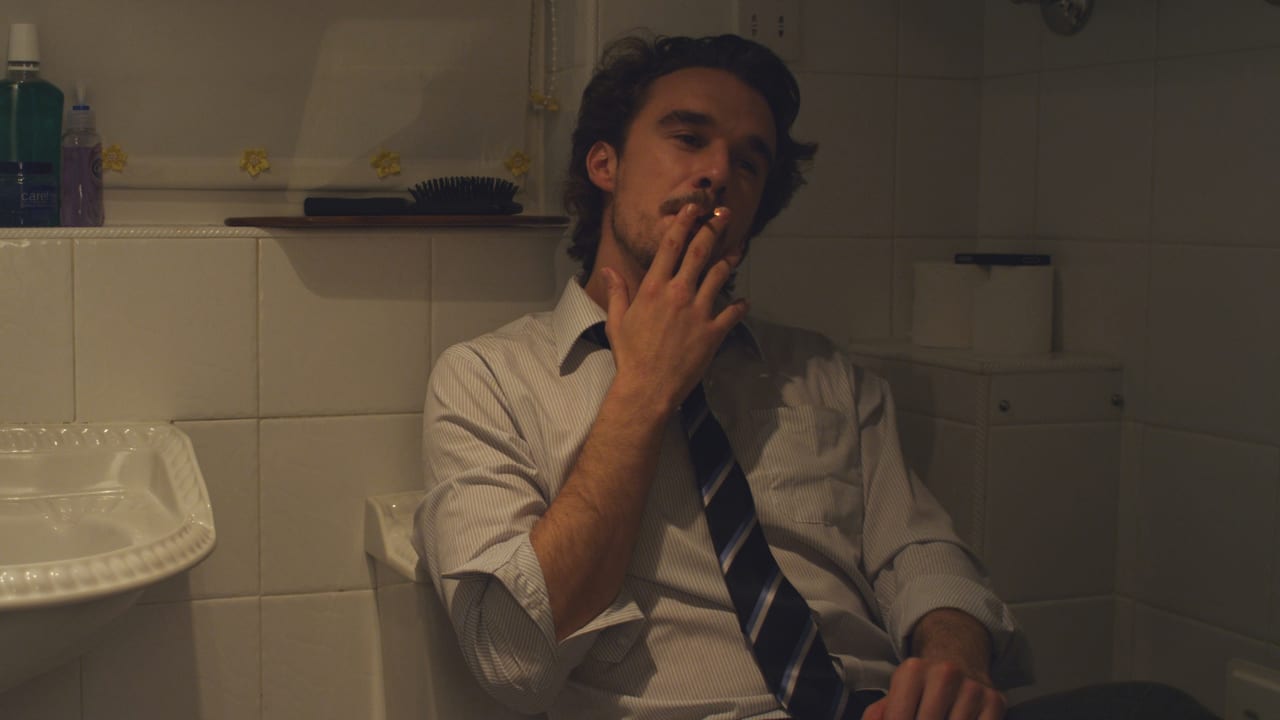
He separates them almost immediately. Tom is bound and kept in the bathroom. Alison is held elsewhere in the house, often in elaborate rope bindings.
The longer Aaron remains inside their home, the more uncomfortable questions begin appearing about the marriage itself. What do these two really know about each other? What happens behind their closed doors when no stranger is watching?
And suddenly Deadly Virtues is not merely about an intruder anymore.
Megan Maczko Has the Hardest Job in the Movie
Alison spends much of the film trapped between fear, humiliation, anger, confusion, and a growing understanding of what is happening around her.
Megan Maczko has to carry a tremendous amount of the movie. Many of her scenes are played opposite Akrout alone. She has to show terror, defiance, curiosity, and doubt, often in the same conversation.
Without a convincing performance from her, the entire thing could easily have collapsed into nothing more than shock value.
Instead, Alison gradually becomes the character we are watching most closely. Her reactions guide the audience. When she starts to question things, so do we.
It is a brave, demanding performance in a role that many actors would have turned down. Maczko commits fully, and that commitment is a big reason the film works as well as it does.
The Rope Isn’t Just Decoration
Bondage and elaborate rope work play a major visual and psychological role in Deadly Virtues.
The movie incorporates shibari, the Japanese style of artistic rope bondage often linked with kinbaku, into Aaron's method of controlling Alison and Tom. Early in the story, Alison is bound in an intricate rope tie and suspended in the kitchen.
It makes for some striking imagery. The ropes are precise and almost decorative, which makes them even more disturbing. They show Aaron as someone who plans carefully and takes his time.
Viewers should know going in that the movie deliberately mixes sexuality, control, violence, and humiliation. The rope work is part of that mix. It is meant to make the audience uneasy, and it succeeds.
This is definitely not horror for everybody.
The Scariest Part Is How Calm Aaron Can Be
Aaron does not spend 87 minutes running around the house screaming.
That is what makes him interesting.
Sometimes he behaves almost like a host, despite being the man who invaded someone else's home. He talks. He asks Alison about her life and her marriage as if they are simply getting to know each other.
At other times, the threat of sudden violence hangs over practically every conversation. A polite question can turn cruel in an instant.
The movie understands that waiting for something terrible to happen can be worse than watching it happen. Long, quiet scenes build tension better than any jump scare could.
This House Becomes a Prison
Most of the movie takes place inside one home.
That limited setting works in its favor.
Rooms that should represent safety and normal domestic life gradually become places of confinement. The kitchen becomes a place of bondage. The bathroom becomes a cell.
The bathroom, bedroom, and kitchen do not change.
Our understanding of them does.
By keeping the story confined, director Ate de Jong makes the audience feel stuck in the house right alongside the characters. There is nowhere to escape, and no one coming to help. Over a single weekend, an ordinary home becomes a pressure cooker.
Wait, the Director Made Drop Dead Fred?
Here is one piece of trivia you probably would not guess while watching Deadly Virtues.
Director Ate de Jong also directed Drop Dead Fred.
Yes.
The 1991 comedy with Rik Mayall and Phoebe Cates.
Going from a wacky comedy about an imaginary friend to a brutal home invasion thriller is one heck of a career turn.
De Jong was born in the Netherlands in 1953. He built a long career in Dutch cinema and made a few trips into English language filmmaking along the way. Deadly Virtues shows him working in an entirely different world from Drop Dead Fred.
It also makes Deadly Virtues more interesting as a forgotten movie. De Jong proves he can handle very dark material when given the chance.
This Isn’t Just Torture for the Sake of Torture
There is violence in Deadly Virtues, and some of it is difficult to watch. Tom, in particular, suffers badly while trapped in the bathroom.
But the movie becomes more interesting when Aaron starts exposing cracks in Tom and Alison's marriage.
Secrets matter.
Trust matters.
Power matters.
And the title starts looking considerably less innocent as the weekend continues. Love, honour, and obey are words from traditional wedding vows. In this story, each one takes on a darker meaning. Love. Honour. Obey. becomes less a promise and more a test.
The Movie Keeps Changing the Question
At first you are wondering:
Who is Aaron?
Then:
Why did he choose these people?
Eventually another question becomes more important:
Exactly who should we be afraid of?
That is where Deadly Virtues separates itself from a basic home invasion movie. It keeps shifting the ground under the viewer. What looks like a simple story of predator and prey turns into something messier.
The less said about where it ultimately goes, the better.
Three Actors Have to Carry Almost Everything
This is not a movie packed with famous faces and dozens of characters.
Edward Akrout, Megan Maczko, and Matt Barber carry nearly the entire story. A few other actors appear briefly, including Helen Bradbury and a small cameo by Sadie Frost.
That makes the performances especially important.
Akrout needs to remain threatening without turning Aaron into a cartoon villain. Maczko has to make Alison's changing emotional state believable. Barber has a different but equally uncomfortable job as Tom, spending much of the film confined and suffering.
For such a small movie, that is a lot resting on three people. All three rise to the challenge.
Deadly Virtues Is More Psychological Thriller Than Slasher
Anyone expecting a masked killer piling up bodies may be surprised.
Deadly Virtues is much closer to a psychological home invasion thriller. It has more in common with films like Michael Haneke's Funny Games than with a typical slasher.
The violence matters, but so do manipulation, intimidation, sexual tension, secrets, and shifting control.
That is also why the movie can remain uncomfortable even when nobody is being physically attacked. The mind games are often worse than the blows.
Don’t Read the Ending Before Watching It
This is one of those movies where searching for too much information beforehand can hurt the experience.
Don't.
The movie is only about 87 minutes long.
Go into it knowing the basic premise and let Aaron's weekend unfold.
The ending has divided viewers. Some find it bold and surprising. Others feel it goes too far. Whether you love where the story goes or hate it, the film is much more effective when you do not know what is coming.
Why Deadly Virtues Became a Sleeper
 Deadly Virtues never had a huge marketing campaign or an instantly recognizable horror villain that keeps a movie circulating for decades.
Its uncomfortable subject matter does not exactly make it an easy recommendation either. Critics were split. Some praised it as lean and surprising. Others felt its ambitions outran its execution.
But those are also reasons it is worth rediscovering. The film has slowly found new viewers on streaming. In fact, it has even turned up among the most watched films on Prime Video in the United Kingdom.
This is the kind of strange little movie that somebody finds years later and asks:
How did I never hear about this?
That is exactly the kind of movie Kilroy likes digging up.
Does Deadly Virtues Still Work Today?
For the right audience, yes.
The movie is disturbing, deliberately provocative, and occasionally difficult to watch.
Some viewers will object to how it uses bondage, sexual violence, and manipulation. Others will find that discomfort central to what the movie is trying to accomplish.
The performances still hold up well. The confined setting still creates real tension. The questions the film raises about marriage, trust, and control still feel relevant.
Either way, this is not something you are likely to mistake for safe, mass market horror.
Who Should Watch Deadly Virtues?
Watch Deadly Virtues if you like home invasion thrillers, psychological horror, and movies built around a small cast. It also suits viewers who enjoy morally uncomfortable stories and plots that keep changing as secrets are revealed.
Fans of tense, single location thrillers will find a lot to discuss here. So will viewers who like films that leave them arguing about the ending.
Skip it if sexualized violence, bondage, torture, or coercion are deal breakers. The film is intended strictly for adults, and it carried an R18+ rating in Australia.
This one earns that warning.
Final Thoughts 4.2/5
This one earns a 4.2 out of 5 from Kilroy. Wrapping up this Deadly Virtues review, the film is a bold, unsettling thriller that refuses to play it safe.
Deadly Virtues: Love.Honour.Obey. starts with a familiar horror setup:
A stranger enters a couple's home.
Then it spends the rest of the movie making that setup increasingly strange.
Edward Akrout gives Aaron exactly the unnerving calm the character needs. Megan Maczko turns Alison into much more than another helpless home invasion victim.
It is nasty.
It is uncomfortable.
And it definitely is not going to work for everyone.
But if you are looking for one of those overlooked thrillers that makes you wonder what you have gotten yourself into, this one qualifies.
The front door may be locked, but in Deadly Virtues, what's already inside the house may be the bigger problem.