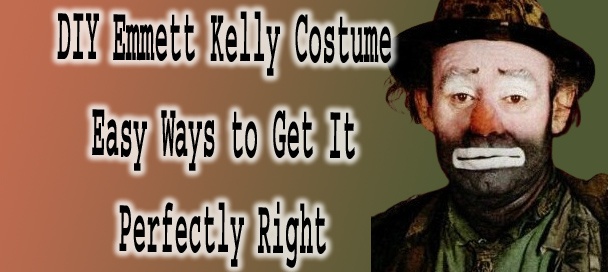
🎪 DIY Emmett Kelly Hobo Clown Costume: Easy Ways to Get It Perfectly Right
He Swept the Spotlight. He Never Caught It. That Was Always the Point.
There is a moment in the history of American circus performance that belongs entirely to one man and one character. It has never been replicated in the decades since, because what Emmett Kelly did with Weary Willie was not a clown act in the conventional sense. It was something considerably more rare and considerably more human. Kelly would enter the ring during another act, a trapeze performance or an acrobatic display, and find a spotlight on the sawdust floor. He would take his broom and try to sweep the spotlight into a smaller and smaller circle. He pursued it with the patient dignity of someone given a task and determined to finish it. Then the spotlight shrank to a tiny point and vanished. Then he would shuffle off into the darkness. The audience laughed and then stopped laughing and then did not entirely know what they felt, which was exactly what Emmett Kelly intended and exactly what great art always does.
Emmett Leo Kelly was born in Sedan, Kansas in 1898. He spent his early career as a trapeze artist and aerial performer before developing the Weary Willie character in the 1930s. Kelly drew directly from the hobos and wandering men of the Great Depression who had become a defining visual presence in American life. The men who rode freight trains between cities looking for work, who wore whatever they could find and carried whatever they owned and maintained whatever dignity they could assemble from the materials available, were not figures of comedy to the people who lived through that era. They were neighbors and fathers and brothers who had been displaced by economic catastrophe and were doing what they could to survive with what they had. Kelly took that image and placed it in the circus ring and asked American audiences to laugh at it and feel something simultaneously and the combination produced one of the most artistically significant clown characters in the history of the form.
Emmett Kelly is one of the most famous clowns in American history. Weary Willie is one of the most recognizable clown characters ever created rooted in the hobos of the Great Depression and carrying that historical weight through every performance Kelly gave until his death in 1979. He performed with Ringling Brothers and Barnum and Bailey Circus from 1942 through 1956 and became the most celebrated clown in American circus history during that period, appearing on the cover of Life magazine and becoming a genuine cultural phenomenon at a moment when the circus was still one of the primary entertainment institutions in American life. The Weary Willie character outlasted Kelly himself and continues to be recognized immediately by anyone who encounters it because the combination of the sad painted face and the tattered clothing and the quiet dignity of the performance created something that transcends its era entirely.
The DIY Emmett Kelly Hobo Clown Costume works because every element of it can be built from materials found in thrift stores, grandparents' closets, and because constructing the clothing is a creative project that rewards the time invested with a result that looks extraordinary precisely because it seems to have required no effort at all. The aged and distressed clothing that makes Weary Willie instantly recognizable is the product of deliberate craft work applied to make garments look like they have never been the product of craft work, which is both the joke and the genuine artistic challenge of this costume.
Pairing this with the DIY Carol Burnett Cleaning Lady Costume is one of the most inspired costume pairings in this entire catalog because both characters draw from the same tradition of finding comedy and dignity in the working class experience of people who clean things for a living and are never quite given credit for the work. Weary Willie swept spotlights. Carol Burnett's cleaning lady mopped floors. Together they tell a complete story about American comedy's most generous and most overlooked tradition.
👗 Step 1: Create the Base
The foundation of the DIY Emmett Kelly Hobo Clown Costume is a layered ensemble of clothing that appears to have been accumulated over decades from sources that include other clothing and it requires a specific approach to both sourcing and construction that is unlike any other base layer in this catalog. You are not looking for the right garment. You are looking for the wrong garment, made more wrong through deliberate craft work, until it achieves the specific quality of Weary Willie's accumulated textile biography.
The green shirt is the base layer and it should be a plain work shirt or dress shirt in a muted olive or army green, the kind of shirt that reads as having been somebody's good shirt at some point in its history and has been working its way downward through the garment hierarchy ever since. Thrift stores are the correct and only sourcing destination for this piece and a slightly faded, slightly worn green shirt in any shade that reads as green rather than any other color is the correct starting point. The fit should be slightly large because Weary Willie's clothing was always clothing that belonged to someone else originally or was bought when the wearer was a different size or simply never fit correctly because correct fit was not the primary consideration when the acquisition was made.
The oversized worn-out jacket is the anchor piece of the entire costume and it requires the most significant distressing work of any element in the ensemble. You are looking for a suit jacket or sport coat in a dark color, brown, grey, black, or any combination thereof, in the largest size available at the thrift store, because Weary Willie's jacket was clearly several sizes too large and the excess fabric at the shoulders and the sleeves and through the body was as much a part of the character's visual language as anything else he wore. The jacket should be in the worst condition the thrift store has available, which is saying something because thrift stores carry jackets in genuinely terrible condition on a regular basis and the one you want is the one that has been passed over by every other shopper for reasons that make it exactly right for this purpose.
The oversized worn out pants should match or approximately match the jacket in a similarly distressed dark color, again in the largest available size, with the waist taken in just enough to stay up with the red suspenders rather than tailored to fit correctly through the seat and the leg. The excess fabric should pool slightly at the ankle and bunch at the knee and generally behave in the way that pants behave when they belong to someone considerably larger than the person currently wearing them which is exactly the correct effect.
The red suspenders are the one element of the base that should be visible and functional and in good enough condition to read as red rather than as whatever color they used to be. They do the practical work of keeping the oversized pants in place and the visual work of adding the one element of deliberate color to an otherwise muted and faded ensemble. Thrift stores carry suspenders regularly and a pair of wide clip on suspenders in red is both period accurate and widely available.
The necktie tied around the neck but not through the shirt collar is one of the most specific and recognizable details of the Weary Willie costume, and it requires a word of explanation. The tie is not worn conventionally. It is simply tied loosely around the neck under the shirt collar the tie of someone who understood that a tie was a formal accessory and tried to include one in his wardrobe without entirely understanding or caring about the conventional method of wearing it. A worn and slightly stained necktie in any pattern or color from the thrift store rack, tied in a loose knot directly around the neck with the collar of the shirt left open beneath it, achieves the correct effect immediately.
Find other Easy DIY Costume Ideas Here
🧵 Step 2: Add the Details
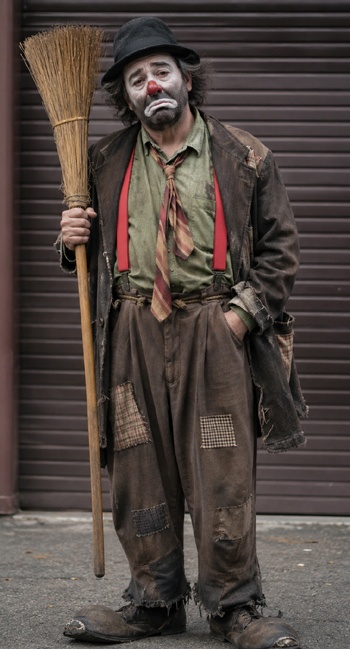
The details section of the DIY Emmett Kelly Hobo Clown Costume is where the clothing construction earns its place as the most technically interesting element of any article in this catalog, because the specific quality of Weary Willie's clothing, the accumulated layered rags that covered without exposing, the patches over patches over original fabric, the fraying that suggested ongoing dissolution rather than sudden damage, is the product of deliberate craft work applied to make garments look like the opposite of craft work.
The distressing technique begins with sandpaper and it should be applied liberally and without mercy to every surface of the jacket and the pants that would naturally show wear through extended use. The elbows and the cuffs of the jacket, the knees and the seat and the cuffs of the pants, the collar points of the shirt, all of these areas should be worked with medium grit sandpaper using circular motions until the fabric surface begins to pill and thin and the weave becomes visible beneath the surface finish. The goal is not to create holes but to create the texture of fabric that has been worn continuously for years against other surfaces and has thinned accordingly without quite giving way.
A cheese grater applied to flat fabric surfaces creates a rougher more uneven texture than sandpaper and is particularly effective on the thicker fabric of a wool or wool blend jacket where sandpaper alone produces insufficient surface distress. Work the cheese grater across the fabric in varying directions rather than consistently in one direction to produce the random uneven texture of genuine wear rather than the consistent texture of deliberate distressing.
Tea or strong coffee applied with a sponge and allowed to dry completely produces the general grime quality that reads as accumulated environmental exposure rather than deliberate staining. Apply it unevenly, heavier in the areas that would collect dirt naturally, the lower edges of the jacket and the pants, the cuffs, the collar, and lighter in the areas that would be partially protected by the body beneath. Allow each application to dry completely before applying another layer because building the color gradually produces a more convincing result than a single heavy application.
A thin bleach solution applied with a sponge in random areas creates the uneven fading that comes from exposure to sun and weather over extended periods. Apply it sparingly and randomly rather than systematically because Weary Willie's fading was not consistent and the randomness of the bleaching is what makes it read as genuine rather than manufactured.
The patches are the detail that most completely communicates the specific layered quality of Weary Willie's clothing and they should be applied with deliberate attention to the logic of genuine repair. A real patch covers a hole or a thin area and is sewn with whatever thread and fabric was available at the time the repair was made. Cut patches from other thrift store garments in contrasting colors and fabrics, denim over wool, flannel over cotton, corduroy over anything, and sew or fabric glue them over the most distressed areas of the jacket and the pants. Apply a second patch over the first in some areas and allow the edges of all patches to fray naturally by cutting small notches into the patch edge and pulling individual threads outward. The accumulated patch work should suggest a garment that has been repaired so many times that the repairs themselves have become the primary structural element of the piece.
Fraying at every hem and cuff is achieved by cutting small notches into the hem allowance at half inch intervals and then pulling the threads that run perpendicular to the cut outward and away from the fabric. This produces the specific unraveling quality of a hem that has lost its structural integrity through extended wear and has been coming apart gradually for some time. Apply this technique to every visible hem on both the jacket and the pants and to the collar points of the shirt for the complete Weary Willie effect.
The worn hat should be a derby or bowler style in black or very dark brown, the kind of hat that was once a respectable piece of headwear and has been through considerable experience since. Thrift stores occasionally carry derby hats and theatrical costume suppliers carry them reliably. The hat should be slightly misshapen, the brim bent in at least one place and the crown dented rather than perfectly formed. Achieve this by wetting the hat slightly and reshaping it with your hands, holding the new shape while it dries, and then applying the same sandpaper and tea distressing technique used on the clothing to the hat's surface.
The broom is the prop that most directly connects the costume to Emmett Kelly's most famous performance bit and it should be a real broom rather than a prop, worn and bristle reduced from use, the kind of broom that has been sweeping things for a very long time and is not entirely sure how many bristles it started with. A thrift store broom in whatever condition is available is both the most authentic and the most practical option and a broom that has clearly seen better days is more accurate than a new one regardless of any additional distressing applied to it.
The cigar is the optional prop that adds a specific period detail to the character and it should be unlit, carried rather than smoked, the cigar of someone who found it or was given it and is saving it for a special occasion that has not quite arrived yet. A prop cigar from a costume supplier or an unlit real cigar carried throughout the evening is both accurate and socially practical.
💄 Step 3: Makeup & Hair
The makeup for the DIY Emmett Kelly Hobo Clown Costume is the most historically specific and the most technically detailed in this entire catalog and it deserves the full attention it requires because the Weary Willie face is a precisely constructed emotional portrait rather than a generic clown application and getting it right is the difference between a convincing Emmett Kelly and a man in old clothes with face paint.
A clown makeup kit is the correct product investment for this costume because it provides the specific white greasepaint base and the colored greasepaint accents that the Weary Willie face requires and that drugstore cosmetics cannot replicate in terms of opacity, staying power, and blendability. Set the white base with a generous application of translucent setting powder pressed firmly into the greasepaint to prevent smearing and to create the matte finish that the character's face requires.
The extended white lip area is the most distinctive and most specific element of the Weary Willie face and it requires a specific technique to achieve correctly. The Weary Willie mouth is painted to extend well beyond the lip line in a downward curve at the corners, creating the specific sad clown mouth that is both the character's most immediately recognizable feature and the most technically challenging element of the entire makeup application. Using a small pointed brush loaded with white greasepaint, extend the white of the base outward from the corners of the mouth in a downward curve, following a line that drops approximately an inch below the lip corner on each side. The extended area should be smooth and even and should blend seamlessly into the surrounding white base without a visible edge. This extended white lip area is what creates the permanent sad expression that defined Weary Willie's face regardless of what Emmett Kelly's actual expression was beneath the paint.
The black detailing is applied over the white base to create both the sad mouth definition and the stubble beard effect that was central to the Weary Willie character. Using a fine pointed brush loaded with black greasepaint, draw the downturned mouth line along the lower edge of the extended white lip area, following the curve established in the white extension. The black line should be clean and precise at the center and slightly softer at the outer edges where it meets the surrounding white. Fill the lower lip area with a dark color, deep red or dark brown rather than black, to suggest natural lip color visible beneath the painted face.
The stubble beard effect is achieved by stippling black or very dark grey greasepaint over the lower half of the face, the chin, the jaw, the upper lip area outside the painted mouth, using a natural sponge or a stipple sponge that creates a random dotted pattern rather than a smooth application. Press the sponge loaded with a small amount of dark greasepaint against the skin and lift rather than dragging or sweeping, repeating across the entire stubble area until the coverage reads as a several day beard growth rather than a painted effect. Build the stippling gradually in layers, allowing each layer to dry slightly before applying the next, and concentrate the density at the center of the chin and the upper lip where beard growth is typically heaviest.
The red clown nose is the one element of the Weary Willie face that requires no technique beyond acquisition and application. A round red clown nose from any costume supplier, attached with the elastic band provided or with a small amount of spirit gum for a more secure fit, completes the face and provides the one element of conventional clown identification in an otherwise unconventional clown face. The red nose against the white and black and grey of the rest of the face reads immediately as clown while everything else about the face reads as something more complicated and more human than conventional clown makeup typically achieves.
The hair beneath the hat should be slightly wild and slightly unkempt, the hair of someone for whom a mirror is an infrequent luxury. If your natural hair can be tousled and left in a state of controlled disorder it serves this costume perfectly. If a wig is required, a short dark wig that has been deliberately tousled and slightly matted with a small amount of hair wax produces the correct quality of neglected hair that reads correctly when the hat is removed or adjusted during the evening.
🎀 Step 4: Accessories
The accessories for the DIY Emmett Kelly Hobo Clown Costume are simple and each one earns its place through direct connection to the character's documented performance history and visual identity.
The broom is covered in the details section and remains the primary prop of the entire costume, connecting the wearer directly to Kelly's most famous performance bit. Carry it throughout the evening and use it occasionally to sweep at imaginary spotlights on the floor, particularly when standing under any actual circular light source, because that specific gesture is both historically accurate and one of the most immediately poignant and funny things anyone at a Halloween party is likely to see all evening.
The cigar carried unlit in the hand or tucked into the jacket breast pocket adds the specific period detail that completes the Depression era hobo visual vocabulary that Weary Willie was built from. It should be handled with the casual ownership of something that has been in this pocket for a while and may or may not ever be lit depending on how things go.
The worn hat worn slightly askew rather than level on the head adds the physical comedy element that Kelly used in performance, the hat that is always slightly wrong in its positioning, slightly too far back or slightly too far to one side, the hat of someone for whom correct hat placement has never been the primary concern.
🕺 Step 5: Movement and Presence
Emmett Kelly's physical performance as Weary Willie was one of the most specific and most studied in the history of American circus and the physical vocabulary he developed over decades of performance is both completely specific to the character and genuinely moving to observe and attempt to inhabit. He moved slowly. Always slowly. The walk of someone for whom hurrying has long since ceased to seem productive in any situation. The shoulders were slightly forward, the weight carried slightly low, the gait of accumulated weariness rather than performed sadness.
The essential gesture of the broom and the spotlight should be practiced before the evening begins because it requires a specific quality of patient focused attention to perform correctly. Find any circular light source on the floor, a lamp casting a circle of light, a spotlight, even the light from a phone screen, and begin sweeping toward it with the broom using slow deliberate strokes, narrowing the sweep gradually as though reducing the spotlight circle, maintaining the expression of someone engaged in important work, until the light source is covered or the sweep reaches its natural conclusion. Then look at the broom, look at where the light was, and shuffle slowly away. Do not smile. Do not acknowledge the audience. Simply move on to the next thing. That restraint is the entire performance and it is what made Emmett Kelly one of the great artists of the American circus.
The face should maintain the Weary Willie expression of patient dignity throughout the evening, not performed sadness and not comic exaggeration but the specific quality of someone who has seen considerable difficulty and has arrived at a philosophical acceptance of it that reads as both funny and genuinely moving simultaneously. It is a difficult expression to sustain because it requires genuine stillness and genuine presence rather than active performance, and it rewards the wearer who commits to it with reactions from people that go beyond the recognition response most Halloween costumes produce.
📸 Step 6: Capture the Moment
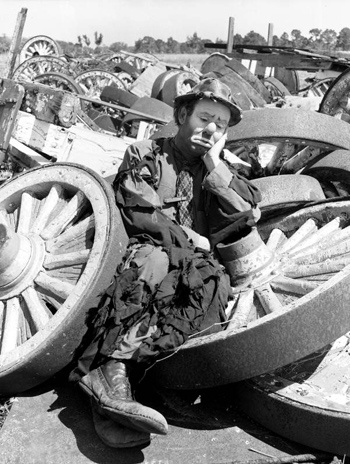
The visual language of Emmett Kelly's Weary Willie is black and white photography from the golden age of American circus, the specific grainy high contrast quality of mid twentieth century performance photography that captured the character in Life magazine and in circus promotional materials and in the documentary photography of the 1940s and 1950s that treated the circus as a genuine cultural institution worthy of serious visual attention.
A black and white edit is the correct photographic choice for this costume and it is worth committing to it completely rather than offering color alternatives because the Weary Willie face and the distressed clothing read with extraordinary power in black and white in a way that color photography cannot fully replicate. The contrast between the white greasepaint face and the dark distressed clothing, the red nose rendered as a mid grey, the black stubble stippling against the white base, all of these elements are designed for high contrast monochrome reproduction and the black and white photograph honors that design history directly.
Shoot in dramatic side lighting that creates genuine shadow on one side of the face and allows the white greasepaint to catch the light on the other, the specific quality of single source lighting that mid twentieth century circus photography used both practically and artistically. A single lamp positioned to the side and slightly above the subject with no fill light on the opposite side produces this quality immediately and the resulting shadow and highlight on the painted face is both period accurate and genuinely beautiful.
The spotlight sweeping photograph is the essential shot and it requires setting up a visible circle of light on the floor, which can be achieved with a flashlight or a desk lamp aimed downward, and photographing the broom in mid sweep toward it with the Weary Willie expression of patient focused attention fully present. Shot in black and white with dramatic side lighting this photograph is one of the most visually powerful images in the entire costume catalog and it is worth the ten minutes of setup required to capture it correctly.
🏆 Why Go DIY?
The DIY Emmett Kelly Hobo Clown Costume matters because Emmett Kelly matters and because what he did with Weary Willie over five decades of performance was something that the word clown does not entirely contain. He took the image of the dispossessed men of the Great Depression, the men who had lost everything and were wandering the country looking for whatever remained, and he placed that image in the center of the American circus ring and asked the audience to laugh and feel sad and recognize something true simultaneously. That is not a clown act. That is art of a specific and rare kind and it has never been surpassed in the American circus tradition.
The clothing construction required for this costume is itself a form of respect for the source material because Weary Willie's clothing was the product of a specific and deliberate artistic vision about what poverty looked like and what dignity looked like when they occupied the same garment simultaneously. Taking a thrift store jacket and a pair of oversized pants and transforming them through sandpaper and tea staining and patches and fraying into something that reads as Weary Willie's costume is a creative act that mirrors Kelly's own creative act of taking the image of Depression era hobos and transforming it into one of the most artistically significant characters in American performance history.
The spotlight-sweeping gesture is the final word on this costume, and it belongs in the wrap-up because it is both the character's most famous moment and his most human one. A man with a broom pursuing a circle of light that he can never quite catch, reducing it smaller and smaller until it disappears entirely, and then walking away into the darkness with the same patient dignity he arrived with. That image has been making American audiences laugh and then stop laughing and then feel something they cannot entirely name for nearly a century. It is available to anyone willing to put on the makeup and pick up the broom and walk slowly toward the light.
🕸️ Related Costumes to Try
DIY Vaudeville Villain Costume
DIY Mime Costume
DIY Scarecrow Costume
DIY Norman Bates Costume
🤡 Halloween Clown Makeup Kit for your DIY Emmett Kelly Hobo Clown Costume
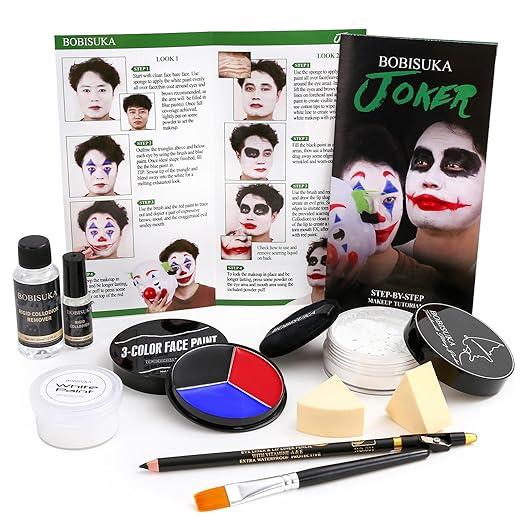
Complete clown makeup kit ideal for creating DIY Emmett Kelly Hobo Clown Costume.
Includes: White Face Paint (30g), Tri-color Palette (black, blue & red), Setting Powder with Puff, Flat Brush, 2 Sponge Applicators, Black Liner Pencil, Scarring Liquid with Remover. Step-by-step instructions included!
Safe & Non-Toxic: Creamy, oil-based face paints made with skin-friendly cosmetic-grade ingredients. Blends easily and cleans off with makeup remover or olive oil. Safe for both adults and kids.
Perfect for Halloween: DIY Emmett Kelly Hobo Clown Costume, circus-themed parties, cosplay events, haunted house actors, or theatrical makeup. A must-have for bold, expressive DIY Clown Costume designs.
Further Reading & Resources
📖 Read: Emmett Kelly Sr. Biography – world famous tramp clown
🔍 More: Emmett Kelly - Wikipedia