Let’s Scare Jessica to Death: The Creepy 1971 Horror Movie That Gets Under Your Skin
My Rating: ⭐ ⭐ ⭐ ⭐ ☆ 4.4 / 5
This review is about a 1971 horror film that still unsettles viewers more than fifty years after its original theatrical release date. Made on a shoestring budget of just 250,000 dollars, it never leaned on gore or cheap jump scares to get under an audience’s skin. Instead, director John Hancock built a quiet, dreamlike sense of dread that many bigger budget horror films have never quite matched. Let’s look at Let’s Scare Jessica to Death traces the plot and the craft behind it. It also covers why the film eventually found the cult audience it always deserved.
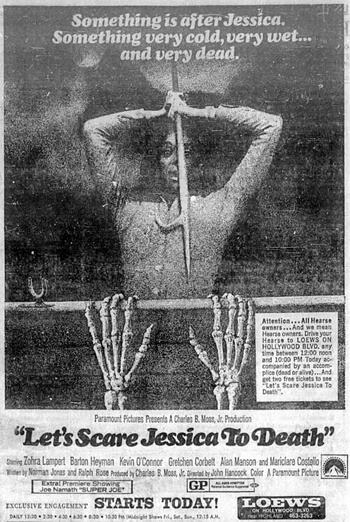
The film carried a GP rating on its original theatrical release, a designation that would later evolve into today’s PG rating. Paramount Pictures distributed it nationally under the small, independent Jessica Company production banner.
A Fresh Start in the Connecticut Countryside
Jessica, played by Zohra Lampert, has just been released from a psychiatric institution after a six month stay following a nervous breakdown. Her husband Duncan, a former bassist with the Philharmonic, has spent their savings on an old farmhouse and orchard in rural Connecticut. The couple travels there in a hearse, accompanied by their friend Woody, hoping the quiet countryside will help Jessica finish healing.
That hope quickly starts to unravel. A brief stop at a local graveyard leaves Jessica visibly shaken, after she glimpses a young woman who seems to vanish moments later. The trio soon learns from a local antique dealer, Sam Dorker, that a woman drowned in a nearby cove back in 1880. It happened on what would have been her wedding day. Locals in the small, insular town believe the property has been haunted ever since that tragedy occurred.
The Stranger Already Living in the House
Arriving at the farmhouse, the group finds a young woman named Emily already squatting inside. Rather than sending her away, they invite her to stay, and her presence immediately shifts the mood of the entire household. Emily is warm, a little strange, and quietly magnetic. She draws both Duncan and Woody’s growing attention in ways that leave Jessica increasingly uneasy and left out.
While exploring the attic, Jessica finds an old, sepia toned photograph tucked away among the house’s forgotten belongings. It shows a red haired woman in a white wedding dress, her features an unmistakable match for Emily’s. The discovery collapses past and present into a single uncanny image. Jessica can never quite shake that unsettling feeling afterward, no matter how hard she tries.
Is Jessica Seeing Something Real?
This slow, deliberate approach separates the film sharply from the louder, more explicit horror that dominated much of the decade that followed it. The film’s greatest strength lies in how carefully it withholds certainty from both Jessica and the audience watching her. Jessica begins hearing voices and glimpsing figures that no one else seems to notice. Among them is a ghostly girl who resembles Emily and repeatedly tries to drown her in the lake.
Because Jessica has a documented history of mental illness, every strange event carries a built in excuse. Is she witnessing something supernatural, or is her mind simply breaking down again exactly as everyone around her quietly assumes? Hancock never tips his hand early, and that refusal to reassure the audience is precisely what makes the film linger long after it ends.
The ending pushes that ambiguity as far as it can go. In the boat, a hand reaches up out of the water and grabs the side. Jessica stabs at it repeatedly with a pole hook before the figure sinks away. As the body floats to the surface, she realizes it was Duncan all along, not some supernatural attacker. In a closing voiceover, Jessica admits she can no longer tell madness from sanity. The film ends without ever resolving which one has actually taken hold of her.
Very little separates a plausible haunting from a plausible mental relapse throughout the film’s entire 89 minute runtime. Small details accumulate instead of building toward one big reveal. That photograph, a strange scar shared by several local men, and a boat that will not carry Jessica away all add up together.
The scars deserve particular attention here. Jessica gradually notices the same jagged mark appearing on nearly every single man in the small, close knit town. Each encounter adds another glimpse of that shared wound, without any character ever explaining its origin outright. The film lets this detail sit and accumulate dread entirely on its own terms. It trusts the audience to draw uncomfortable conclusions rather than spelling anything out through clumsy dialogue.
Events escalate sharply as the film moves toward its ending. Jessica flees into the orchard and finds Woody already dead, his throat cut. She races toward the lake ferry hoping to escape the property entirely, but the ferry operator refuses to take her across. Desperate and out of options, she steals a small rowboat and pushes out onto the dark, open water entirely alone. Each piece adds weight without ever fully confirming what is actually happening.
The Farmhouse Is Half the Movie
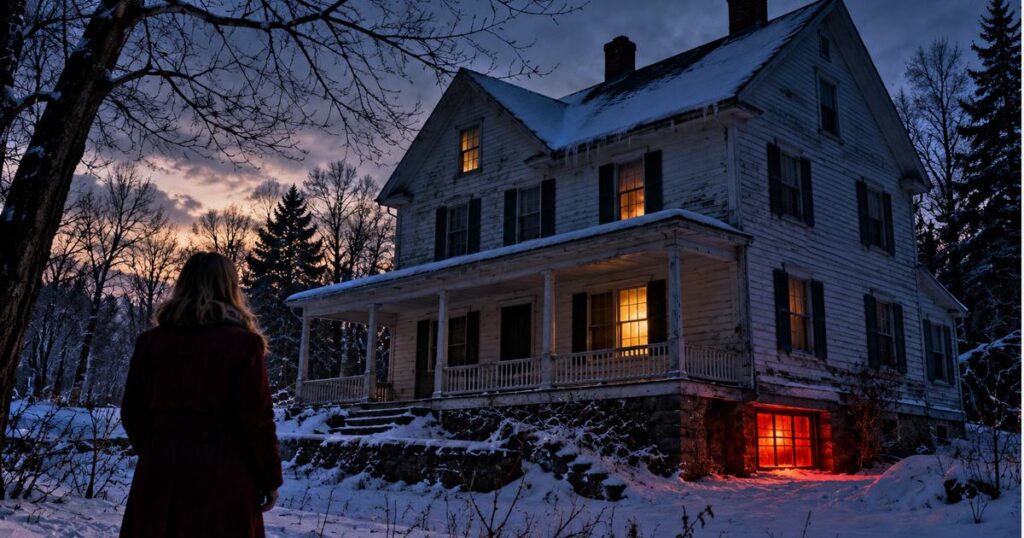
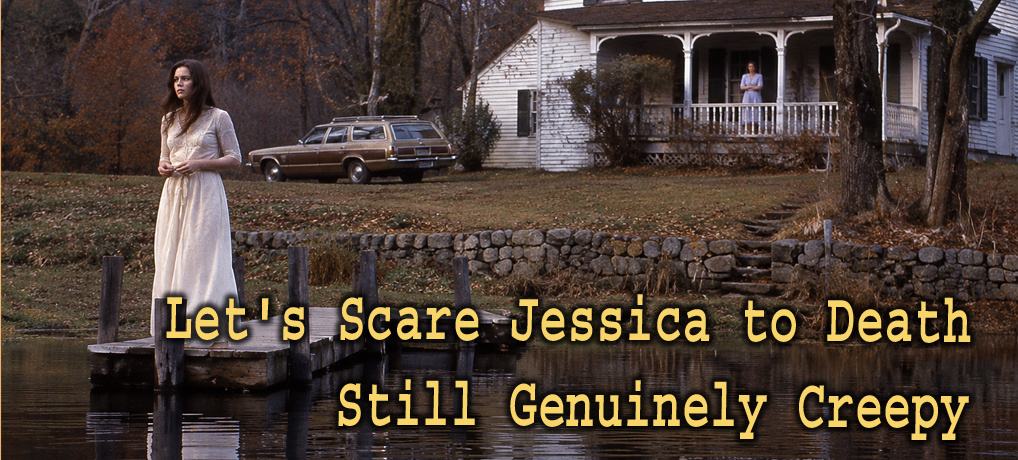
The isolated Connecticut farmhouse functions as more than just a backdrop for these events. Surrounded by orchards, a quiet lake, and a small unwelcoming town, the property feels cut off from any real help. That isolation sets in long before anything overtly frightening occurs. Sunlight floods most of the film’s key scenes throughout the story, which makes the slowly encroaching dread feel even stranger by comparison. Horror this unsettling usually hides in darkness rather than daylight.
Cinematographer Robert Baldwin shot much of the film in a fog drenched, gothic style despite that daylight setting. Even ordinary farmland takes on an eerie, disconnected quality as a result. The lake in particular becomes a recurring source of dread. Its still surface hides threats that neither the characters nor the audience can ever quite confirm are real.
A Vampire Movie That Barely Acts Like One
Let’s Scare Jessica to Death draws loosely, and uncredited on screen, from Carmilla. Sheridan Le Fanu’s 1872 novella about a female vampire predates Bram Stoker’s Dracula by a full 25 years. Yet the film almost never behaves like a conventional vampire picture. There is no cape, no coffin, and no clear villain baring fangs on camera.
Instead, vampirism functions here as an atmosphere and a suggestion rather than a plot mechanic. The strange scars shared by the town’s men hint at something feeding on the community over generations. Emily’s presence raises questions the film never answers directly. This restraint keeps the film feeling uncertain. It never locks into a familiar genre formula the audience can easily predict scene by scene from start to finish.
Jessica’s marriage to Duncan adds another layer of tension beneath the supernatural elements. Duncan gave up his career with the Philharmonic to buy this farm and start over. His patience with Jessica’s fragile state occasionally wears visibly thin. That underlying marital strain gives the film a grounded, believable human dimension that a purely supernatural story would otherwise lack entirely.
Zohra Lampert Holds the Movie Together
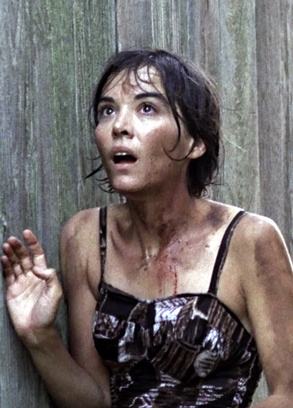
Zohra Lampert carries nearly every scene in the film, and her performance holds the entire project together. Jessica narrates much of the story in voiceover, giving the audience direct access to a mind that may or may not be trustworthy. Lampert plays fragility without ever tipping into melodrama, keeping Jessica sympathetic even as her grip on reality grows increasingly uncertain.
That narration matters enormously to how the film functions. Since almost everything is filtered through Jessica’s perspective, the audience has no more certainty than she does about what is actually happening around her. Lampert sells that uncertainty completely, making Jessica feel like a real, frightened person rather than a genre archetype waiting to be victimized.
Gretchen Corbett appears briefly as a hitchhiker whose sudden vanishing act near the graveyard sets Jessica’s paranoia in motion before the story even properly begins.
The supporting cast reinforces that same sense of doubt rather than undercutting it. Barton Heyman plays Duncan with a mix of affection and creeping irritation. He never quite commits to full belief or full dismissal of his wife’s fears. Kevin O’Connor’s Woody drifts even further toward Emily as the slow story progresses. This leaves Jessica feeling more isolated within her own household with each passing scene. Mariclare Costello plays Emily with a deliberately unreadable warmth. She is friendly enough to explain why the others welcome her so easily, yet distant enough to keep the audience unsure of her intentions.
John Hancock Lets the Audience Do Some of the Work
John Hancock was directing his first feature film with Let’s Scare Jessica to Death. His restraint throughout is remarkable for a first time director working with a tiny budget. Rather than relying on constant shocks, Hancock lets long stretches of quiet, ordinary activity sit uncomfortably next to brief, disturbing images.
Hancock had already worked in the industry before this directorial debut, having written the 1969 film Baby Blue Marine. He later directed Bang the Drum Slowly, a baseball drama that earned far more mainstream attention than his horror debut ever did. That range across such different genres speaks to a filmmaker more interested in character and tone than in any single fixed style of storytelling.
One of the film’s most memorable underwater scares was staged with almost no budget at all. Hancock and producer Charlie Moss reportedly rigged a concrete weighted dummy on a simple pulley system. They built it in a motel swimming pool the morning before filming the scene. That scrappy, low tech effect became one of the most talked about images in the finished film. It proved that Hancock’s instincts mattered more than any special effects budget ever could.
The Strange Sound of Jessica’s Fear
Composer Orville Stoeber gave the film a unusual sound for 1971 horror. Stoeber worked alongside synth pioneer Walter Sear, who had previously helped Robert Moog develop the Moog synthesizer. Together they layered melancholic piano and guitar with sinister electronic drones to build tension.
This made Let’s Scare Jessica to Death one of the earliest horror films to integrate synthesizer elements into its score. That came years before John Carpenter, Goblin, and other genre composers made electronic scoring a defining feature of horror cinema.
Stoeber also wrote and performed an original song for the film titled Stay Forever My Love. It gives the soundtrack a folk tinged warmth alongside its more sinister passages. That contrast between gentle, melodic songwriting and cold, buzzing drone work mirrors the film’s larger balancing act between ordinary domestic life and creeping dread. The result feels unsettling even today, blending a folk influenced gentleness with an underlying electronic dread that never quite lets the audience relax.
Why the Movie Found Its Audience Later
Let’s Scare Jessica to Death barely made a dent at the box office on release. It earned just 47,651 dollars in its opening week against its already modest budget, and the film largely disappeared from theaters without much fanfare.
Television broadcasts, drive in double features, and eventually home video kept the film alive over the following decades. It slowly built the kind of devoted following it never found on its initial run.
Critical response at the time of release was divided, and that split has never fully closed. Some contemporary reviewers dismissed the film as slow and unresolved, criticizing its refusal to deliver a clear payoff. Others recognized something more deliberate in that same restraint. Its unwillingness to explain away its horror set it apart from more straightforward genre fare of the period. Later critics and horror fans have largely sided with the second camp.
They treat the film’s ambiguity as a strength rather than a flaw worth apologizing for. Film historian Kim Newman has singled it out as his personal favorite horror film. He credits it with shocking him as a teenager, since it looked and felt so different from the horror movies he knew. That kind of passionate advocacy, repeated by critics and horror fans over the years, helped transform a commercial disappointment into a cult classic.
Scream Factory’s 2020 Blu-ray release cemented that reputation further. It packaged the film with a new commentary track featuring Hancock and Badalato, along with fresh interviews with Stoeber and Newman. This film once nearly vanished entirely after a poor theatrical run back in 1971. That kind of dedicated physical media treatment says a great deal about how far its reputation has traveled since then.
Let’s Scare Jessica to Death Blu-ray
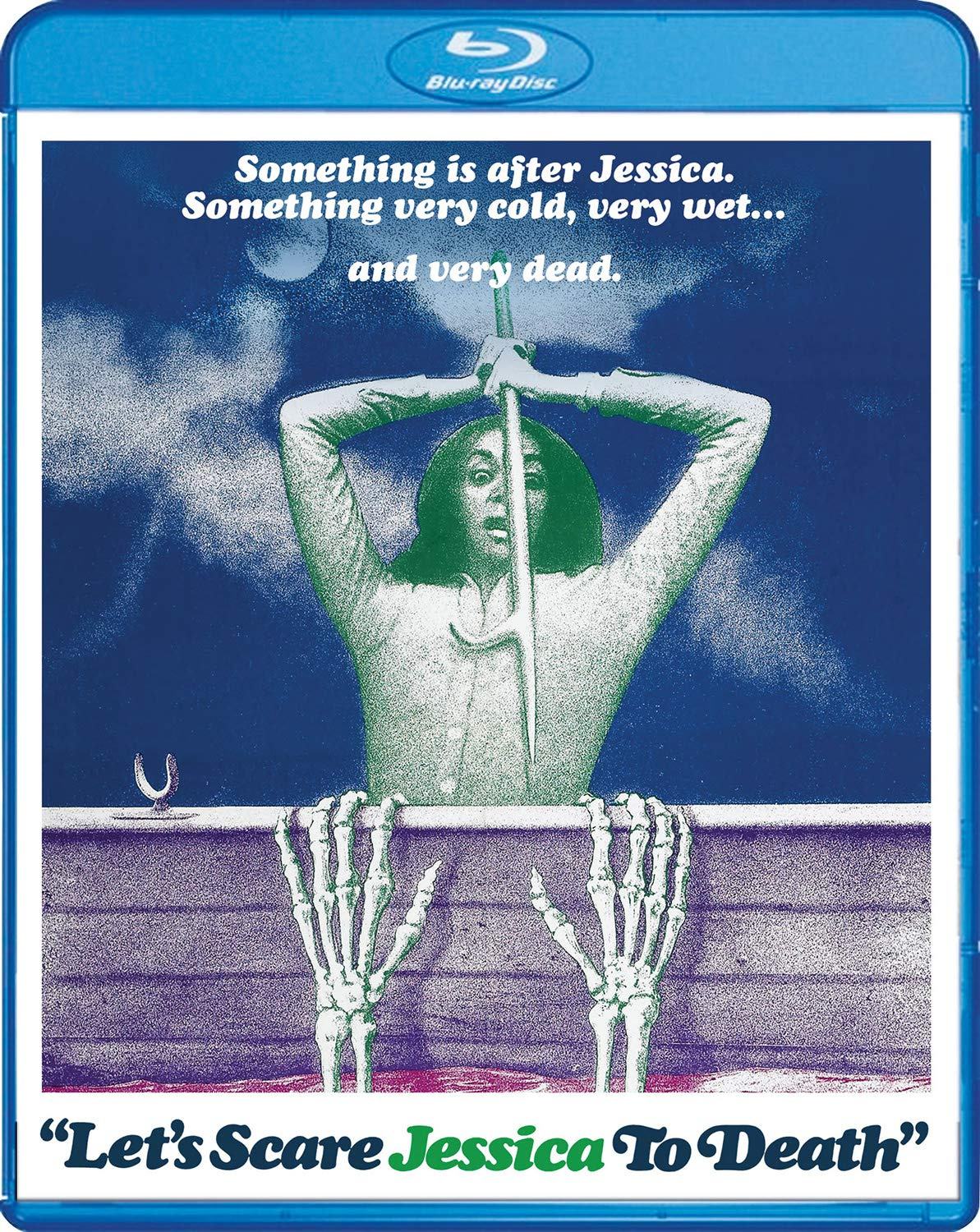
Product Description:
If our look at Let’s Scare Jessica to Death left you wondering whether Jessica is witnessing something supernatural or slowly losing her grip on reality, this Blu-ray is the perfect way to return to that isolated Connecticut farmhouse. Zohra Lampert stars as Jessica, who hopes a quiet move to the countryside will help her recover after being released from an institution. Instead, the farmhouse, nearby lake, strange townspeople, and mysterious Emily gradually turn her peaceful retreat into a nightmare.
Key Features:
• Classic 1971 psychological and supernatural horror film on Blu-ray
• Stars Zohra Lampert in the memorable lead performance as Jessica
• Audio commentary with director John Hancock and producer Bill Badalato
• Includes Scare Tactics: Reflections on a Seventies Horror Classic with film historian Kim Newman
• Features location retrospective, composer interview, theatrical trailer, TV and radio spots, and still gallery
Why This Works:
What makes Let’s Scare Jessica to Death so effective is that the movie rarely gives you firm ground to stand on. Jessica doesn’t completely trust what she sees, and neither can the audience. The film’s lonely New England locations, decaying farmhouse, dark lake, whispered voices, and uncertain supernatural threat create the kind of slow-building atmosphere that made early-1970s horror so distinctive. The commentary and location feature also make this Blu-ray especially worthwhile after reading about the movie.
Buy on Amazon
Is Let’s Scare Jessica to Death Worth Watching?
Let’s Scare Jessica to Death rewards patient viewers far more than fans looking for constant scares or a single clear cut monster to root against. Anyone drawn to slow burn horror in the tradition of Shirley Jackson’s The Haunting of Hill House will find much to appreciate here. So will fans of Henry James’s The Turn of the Screw.
Fans of the classic haunted house tradition will also appreciate how the film treats its farmhouse and land. The property functions as an active presence in the story, not simply a setting where scares happen to occur.
The film’s refusal to fully explain itself will frustrate viewers who want firm answers by the credits. That same refusal is exactly what has kept horror fans returning to it for more than fifty years. They still argue over what really happened to Jessica long after the film ends. Kilroy verdict, this one earns a strong recommendation for genre fans who value atmosphere and ambiguity over cheap spectacle. It remains one of the most quietly unnerving horror films to come out of the early 1970s.