Michael Parks Biography: Blacklisted, Rediscovered, and Unforgettable
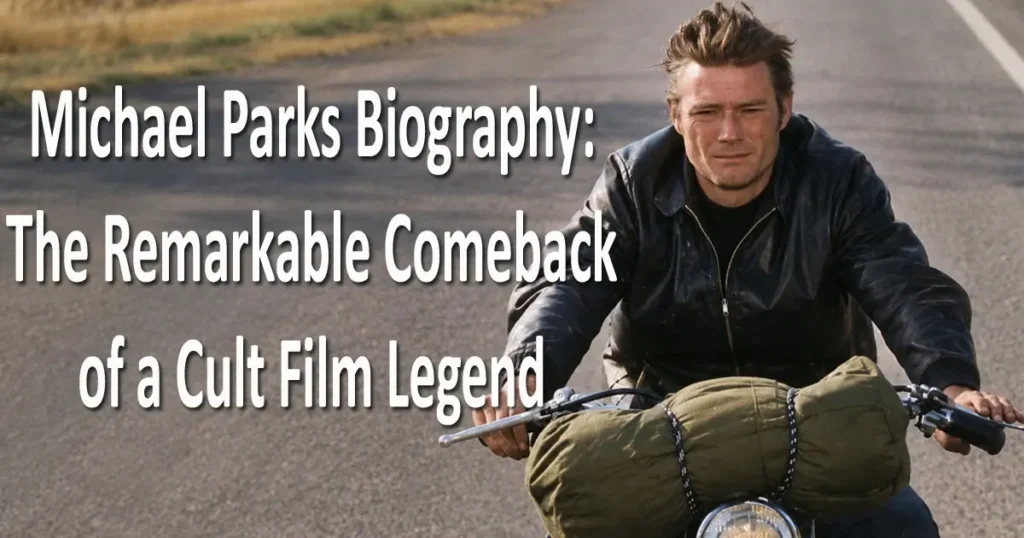
Michael Parks was one of the most fascinating and unconventional actors in American entertainment history, a performer whose career ran for nearly six decades and passed through several distinct lives. He emerged in the 1960s as a brooding young leading man hailed by some as the next great rebel star, faded from the Hollywood mainstream for many years, and then returned late in life as a cult figure revered by a new generation of filmmakers.
Michael Parks (April 24, 1940, to May 9, 2017) was an American actor and singer whose career spanned nearly six decades and more than one hundred film and television credits. He rose to fame in the 1960s as Adam in John Huston’s The Bible: In the Beginning and as the motorcycle-riding drifter Jim Bronson in the NBC series
Then Came Bronson, whose theme song he took into the Billboard Top 40. After years outside the Hollywood mainstream, he was rediscovered by David Lynch for Twin Peaks and became a favorite of Quentin Tarantino and Robert Rodriguez, playing Texas Ranger Earl McGraw in From Dusk Till Dawn, Kill Bill, and Grindhouse. He later starred in Kevin Smith’s Red State, which won him the Best Actor award at the Sitges Film Festival, and Tusk.
As a performer, Parks was defined by his stillness, his hypnotic voice, and his unpredictable, deeply internal style of acting. He could be gentle and soulful one moment and quietly terrifying the next, and he often disappeared so completely into his characters that audiences did not recognize him from one film to the next. Fellow actors and directors came to regard him as an actor’s actor, a performer whose craft was admired most by those who worked closest to him.
To the public, Parks was something of an enigma: a drifter, a singer, a counterculture icon, and a fiercely independent artist who refused to bend to the demands of the studio system. He endured because his talent was impossible to ignore, and because the filmmakers who grew up watching him made sure that his gifts were rediscovered and celebrated by a new audience.
In 1970, Michael Parks walked away from his own hit TV show after fighting its producers, and Hollywood shut its doors on him for years. Three decades later, the official Kill Bill websites were describing him as the man Quentin Tarantino often called the world’s greatest living actor. Few careers have ever traveled so far from exile to reverence.
👶 Early Life
Summary: Born Harry Samuel Parks in Corona, California, he drifted through jobs as a fruit picker, ditch digger, truck driver, and firefighter before turning to acting.
🏡 Birth and Family
Michael Parks was born Harry Samuel Parks on April 24, 1940, in Corona, California, to Harry Arthur Parks and Beatrice Adora Parks (née Dunwoody). He was one of five children and spent a restless youth moving around the American West with his family.
🚚 A Drifter’s Youth
As a teenager, Parks drifted from job to job, working as a fruit picker, a ditch digger, a truck driver, and a firefighter battling forest fires. The rough, itinerant life of those years shaped his outlook and gave him a firsthand understanding of the outsiders, wanderers, and working men he would later play on screen. He also married young, at just sixteen, a marriage that ended within two years.
🎭 Into Acting
Parks made his way into acting in Los Angeles at the end of the 1950s and began landing television roles at the start of the 1960s. With his brooding good looks, his intensity, and his naturalistic style, he quickly attracted attention, and some in Hollywood began comparing him to James Dean.
Explore the Biographies of Iconic Celebrities
While filming Red State, Michael Parks also recorded an album, The Red State Sessions (2011), more than forty years after his first records.
🎬 Film and TV Career
Summary: Parks went from 1960s leading roles in The Bible and Bus Riley’s Back in Town through lean years to a revival with Twin Peaks, Argo, and We Are What We Are.
📺 Early Television
Parks’s earliest work came in television anthologies and dramas. He appeared on Dick Powell’s Zane Grey Theater (1960 to 1961) and played the nephew of George MacMichael on The Real McCoys in 1961. In 1963 he guest starred as Cal Leonard on Perry Mason and as Hamish Browne on Wagon Train, and he also appeared on the legal drama Sam Benedict.
🎞️ Leading Man of the 1960s
In 1965 Parks moved into feature films as a leading man. In Wild Seed (1965), directed by Brian G. Hutton, he played Fargo, a young drifter who befriends a runaway girl on the road to California. In Bus Riley’s Back in Town (1965), directed by Harvey Hart from a screenplay originally written by William Inge, he played the title character, a young Navy veteran who returns to his small Kansas hometown and is pursued by a former girlfriend played by Ann-Margret.
🍎 The Bible: In the Beginning
Parks’s breakthrough came when John Huston cast him as Adam in the epic The Bible: In the Beginning… (1966), the lavish Dino De Laurentiis production that dramatized the first chapters of the Book of Genesis. Ulla Bergryd played Eve, while Huston himself played Noah, with George C. Scott as Abraham and Peter O’Toole in the role of the three angels. The film was one of the biggest box office successes of its year and gave Parks international exposure.
🎬 The Late 1960s
That same year he played Marco, a troubled young man drawn into a destructive relationship with his friend’s mother, played by Jennifer Jones, in Daniel Petrie’s British drama The Idol (1966). In Elliot Silverstein’s comedy The Happening (1967), he played Sureshot, one of a group of aimless young people who kidnap a retired gangster played by Anthony Quinn, with Faye Dunaway in her first film role. He also starred as Vincent McKay in the television Western Stranger on the Run (1967), directed by Don Siegel and starring Henry Fonda.
🌲 The Lean Years
After the end of Then Came Bronson, Parks found himself largely shut out of major Hollywood productions. He worked in independent and Canadian films during the 1970s, including Donald Shebib‘s Between Friends (1973), in which he played Tony. He returned to studio Westerns as Sheriff Noel Nye in Andrew V. McLaglen‘s The Last Hard Men (1976), starring Charlton Heston and James Coburn, and he played Lieutenant Savage in the family film Savannah Smiles (1982).
In 1986 Parks both directed and starred in The Return of Josey Wales (1986), a low-budget sequel to Clint Eastwood‘s The Outlaw Josey Wales (1976), taking on the title role of the vengeful former Confederate guerrilla. That same period, he returned to network television as Phillip Colby, a long-lost member of the wealthy Colby family, in the second season of the ABC prime-time soap The Colbys (1986 to 1987), a spinoff of Dynasty.
🌲 Twin Peaks
Parks’s career revival began with David Lynch‘s groundbreaking ABC mystery series Twin Peaks (1990 to 1991). In five episodes of the second season, he played Jean Renault, a menacing French-Canadian drug runner who seeks revenge on FBI Special Agent Dale Cooper, played by Kyle MacLachlan, for the deaths of his brothers. His chilling, softly spoken performance introduced him to a new generation of viewers and reminded the industry of his considerable talent. He continued working through the 1990s, appearing as police officers in the television films The China Lake Murders (1990) and Stranger by Night (1994).
🎥 Later Films
Parks worked steadily in the final decade of his life. He played Henry Craig in Andrew Dominik‘s The Assassination of Jesse James by the Coward Robert Ford (2007), starring Brad Pitt and Casey Affleck. In Ben Affleck‘s Academy Award winning thriller Argo (2012), he portrayed the legendary comic book artist Jack Kirby, whose concept art was used for the fake science fiction film at the center of the CIA’s rescue of American diplomats from Iran.
He played Doc Barrow, a small-town doctor who uncovers a family’s horrifying secret, in Jim Mickle‘s horror drama We Are What We Are (2013), and played Tom “Preacher” Parker opposite Mel Gibson in Jean-François Richet‘s crime thriller Blood Father (2016). His final completed films included Greater (2016) and The Queen of Hollywood Blvd., released after his death, in which he played Chet Fuller.
Kevin Smith produced a documentary about Parks’s life, Long Lonesome Highway: The Story of Michael Parks, named after his 1970 hit song and directed by Josh Roush, who had worked as Parks’s assistant.
🏍️ Then Came Bronson
Summary: As drifter Jim Bronson, Parks became television’s first easy rider, scored a Top 40 hit with the theme song, and clashed with producers in ways that hurt his career.
🛣️ Television’s First Easy Rider
In 1969 Parks took the lead role in the NBC adventure drama Then Came Bronson (1969 to 1970). He played Jim Bronson, a disillusioned San Francisco newspaperman who quits his job after the suicide of a close friend, played by Martin Sheen in the pilot, and sets off across America on his friend’s red Harley-Davidson Sportster in search of meaning. Arriving the same year as the film Easy Rider (1969), the show captured the restless, searching spirit of the counterculture.
🧭 A Show Built Around One Man
The series was unusual for network television of its era. Bronson was its only recurring character, and each week he drifted into a new town and became involved with the lives and problems of the people he met. Parks’s quiet, contemplative performance gave the show a gentle, philosophical tone that set it apart from the action-heavy dramas around it. The feature-length pilot, in which Bonnie Bedelia co-starred, was even released theatrically in some European countries.
🎶 Long Lonesome Highway
Parks sang the show’s closing theme, “Long Lonesome Highway,” and the song became a genuine hit. It reached number 20 on the Billboard Hot 100 and number 41 on the Hot Country Songs chart in 1970, and it climbed to number 11 in Canada. The song remained closely associated with Parks for the rest of his life.
⚔️ Clashes and Cancellation
Despite its loyal audience, Then Came Bronson lasted only one season of 26 episodes. Parks clashed with the producers, objecting in particular to their push to add more violence to the show. He later admitted that he could be difficult on the set, and he believed that his disputes with the producers led to an informal blacklisting in Hollywood that kept him out of major productions for years. The director of one of his 1970s films later described him as hard to work with as well, and that reputation followed him for much of his middle career.
💿 A Recording Career
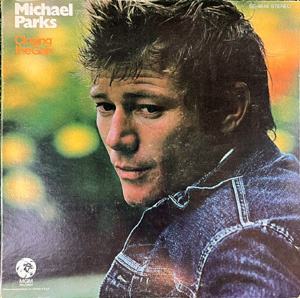
Parks’s success with the theme song launched a recording career. He released a series of albums on MGM Records, including Closing the Gap (1969), Long Lonesome Highway (1970), Blue (1970), and The Best of Michael Parks (1971), along with Lost & Found on Verve in 1970. His smooth, soulful baritone drew on country, folk, blues, and pop standards, and he continued recording later in life with albums such as You Don’t Know Me (1981) and Coolin’ Soup (1998).
🔫 Tarantino, Rodriguez, and the Texas Ranger
Summary: Parks played Texas Ranger Earl McGraw four times across From Dusk Till Dawn, Kill Bill, and Grindhouse, and transformed into the pimp Esteban Vihaio in Kill Bill: Volume 2.
🌵 From Dusk Till Dawn
Parks’s greatest late-career success began with From Dusk Till Dawn (1996), directed by Robert Rodriguez from a screenplay by Quentin Tarantino. He played Texas Ranger Earl McGraw, a laconic, wisecracking lawman who walks into a roadside liquor store in the film’s opening scene, unaware that the fugitive Gecko brothers, played by George Clooney and Tarantino, are hiding inside. Though his time on screen was brief, his drawling, scene-stealing performance made an enormous impression. He returned to the franchise in the direct-to-video prequel From Dusk Till Dawn 3: The Hangman’s Daughter (1999), playing the writer Ambrose Bierce.
⚔️ Kill Bill
Tarantino brought Earl McGraw back in Kill Bill: Volume 1 (2003), where the Ranger arrives at the scene of the wedding chapel massacre and quickly deduces that the killings were the work of professionals. Parks’s real-life son, James Parks, played McGraw’s son Edgar. In Kill Bill: Volume 2 (2004), Parks made a startling transformation to play an entirely different character, Esteban Vihaio, an elderly and genteel Mexican pimp who was a father figure to Bill and who gives Uma Thurman‘s Bride the information she needs to find him. Many viewers did not realize that the same actor played both roles.
🎬 Grindhouse and Django Unchained
Parks played Earl McGraw yet again in both halves of Tarantino and Rodriguez’s double feature Grindhouse (2007), appearing in Rodriguez’s zombie thriller Planet Terror and Tarantino’s car chase film Death Proof, once more with James Parks as his son. It was his fourth time playing the Texas Ranger. He later appeared in Tarantino’s Django Unchained (2012) in a small role as an employee of the LeQuint Dickey Mining Company.
⛪ Kevin Smith’s Red State and Tusk
Summary: Kevin Smith wrote Red State and Tusk for Parks, giving him two of the most powerful leading roles of his later career.
🔥 Red State
Director Kevin Smith was so devoted to Parks’s acting that he wrote two films specifically for him. In Red State (2011), Smith’s dark departure from comedy, Parks played Pastor Abin Cooper, the charismatic leader of a fundamentalist church who lures three teenage boys to his compound and holds them captive. Melissa Leo and John Goodman co-starred. Parks delivered a long, hypnotic sermon early in the film that showed both his magnetism and his menace, and many critics singled out his performance as the film’s greatest strength.
🦭 Tusk
Smith reunited with Parks for the horror comedy Tusk (2014), in which Parks played Howard Howe, a reclusive seafarer who lures a smug podcaster, played by Justin Long, to his remote mansion in Manitoba with the promise of fascinating stories, then begins a grotesque plan to transform him into a walrus. Parks’s mesmerizing storytelling made the bizarre premise unsettling, and the film became a cult favorite.
🤝 Smith’s Devotion
Smith repeatedly described Parks as the finest actor he had ever worked with and credited him with bringing out the best in him as a filmmaker. The collaboration gave Parks two of the most substantial leading roles of his later career.
❤️ Personal Life
Summary: Married five times, Parks endured the deaths of his second wife and his brother, and his son James Parks followed him into acting.
💍 Marriage to Louise Johnson
Parks married Louise Johnson in 1956, when he was just sixteen. The couple had a daughter and divorced in 1958.
💍 Marriage to Jan Moriarty
In 1964 Parks married Joanne “Jan” Moriarty. The marriage lasted only a few months before she died that same year from an apparent overdose, which was ruled a suicide. It was a devastating loss early in his career.
💍 Marriage to Carolyn Kay Carson
Parks married Carolyn Kay Carson in the late 1960s. Their son, James Parks, was born during the marriage and followed his father into acting, later appearing alongside him in several films. The couple divorced in 1977.
💍 Marriage to Frances Walker
Parks was married to Frances Alston Fenci Walker from 1987 to 1996. The marriage ended in divorce.
💍 Marriage to Oriana Parks
In 1997 Parks married Oriana, who remained his wife until his death twenty years later.
👨👦 Family Loss
Parks endured another tragedy in 1968, when his brother Jimmy drowned. When his son was born, he named him James in honor of his late brother.
🎵 A Lifelong Musician
Throughout his life, Parks regarded singing as an essential part of who he was. He recorded music across five decades and often brought his love of blues, jazz, and country standards to his work and friendships on film sets.
Michael Parks is one of only two actors to play two completely different characters across Quentin Tarantino’s Kill Bill films. The other is martial arts legend Gordon Liu.
🕊️ Later Years and Death
Summary: After a late-career renaissance that included a Sitges Best Actor award, Parks died in Los Angeles at 77 on May 9, 2017.
🌟 A Late Career Renaissance
Parks’s final decades were among the most rewarding of his career. After years on the margins of the industry, he found himself in demand by some of the most celebrated directors of the era, who had admired his work since their youth. The leading role in Red State brought him particular acclaim, including the Best Actor award at the Sitges Film Festival in Spain in 2011.
🎭 Final Roles
Parks continued working until shortly before his death, completing roles in Blood Father (2016) and Greater (2016), as well as The Queen of Hollywood Blvd. released after he died.
🕯️ Death
Michael Parks died on May 9, 2017, at the age of 77, in Los Angeles, California. His agent, Jane Schulman, confirmed his death, and no official cause was announced. Kevin Smith shared the news publicly, calling Parks the best actor he had ever known and the most incredible performer he had ever had the pleasure to watch, and Robert Rodriguez and other collaborators also paid tribute.
He was survived by his wife, Oriana; his son, James Parks; and his daughter. His death marked the passing of one of the most admired and mysterious character actors of his generation.
🏆 Legacy
🎭 The Actor’s Actor
Parks was revered by fellow professionals in a way that few actors ever are. Directors and performers spoke of his work with something close to awe, praising his ability to hold an audience with nothing more than his voice and his eyes. His influence was felt most deeply by the artists who worked with him, many of whom regarded him as a master of the craft.
🛣️ A Counterculture Icon
As Jim Bronson, Parks gave network television one of its first genuine portraits of the 1960s search for freedom and meaning. The image of the lone rider on the open road struck a chord with a generation, and for many viewers the show remains a touchstone of that era.
🔄 The Power of Rediscovery
Parks’s career stands as one of Hollywood’s great stories of rediscovery. His late-life renaissance showed how the admiration of one generation of artists can rescue the work of another, and it ensured that his talent was recognized by audiences who might never have known his name.
🏆 Michael Parks’s Place in American Entertainment
Their legacy is ultimately one of independence, mystery, and uncompromising artistry. Michael Parks lived as a drifter, a rebel, a singer, and an actor who refused to play by Hollywood‘s rules, and he paid a price for that independence. Yet his talent outlasted every setback, and in the end he found the recognition his gifts deserved. He leaves behind a body of work that ranges from 1960s counterculture to modern cult cinema, held together by a performer whose stillness and intensity remain unforgettable.
🗣️ Why He Still Matters
Michael Parks still matters because his career shows that real talent can outlast every setback. He went from 1960s rebel star to Hollywood outcast to cult legend, and the filmmakers who grew up admiring him gave him a second act most actors never get. New viewers keep finding him through Kill Bill, From Dusk Till Dawn, Twin Peaks, Red State, and Tusk, and they keep asking who that quietly mesmerizing actor is. His story reminds audiences that the most unforgettable performers are not always the most famous ones, and that true artistry has a way of being found again.