🎁 The Sears Wish Book: The Christmas Catalog Every Kid Waited For
Some years it showed up in August. Other years it landed in September, thick as a phone book and smelling of fresh ink. The Sears Wish Book did not just arrive at your house. It took over the house. For the next three months, that catalog lived on the coffee table, the kitchen counter and the floor beside your bed.
When the Sears Christmas Catalog Arrived
Ask anyone who grew up between the 1950s and the 1980s about the Wish Book, and watch their face change. They remember the weight of it first. Then they remember the cover, usually Santa, a tree or a room full of excited kids. Then they remember the fights over who got to read it first.
The timing was everything. The big Christmas catalogs from Sears, JCPenney and Montgomery Ward reached mailboxes weeks before Halloween. School had barely started. The leaves had not even turned. Yet one heavy book in the mailbox announced that the Christmas season had begun, at least for every kid in the house.
Before cable channels and online wish lists, this was how most families saw the whole world of toys in one place. Saturday morning commercials showed a few big items. The Sears Wish Book showed hundreds of them, page after page, with prices printed right underneath. Picture a kid in a small Iowa town in Americia, far from any big city toy department. For that kid, it was a walk through a toy wonderland.
The First Sears Christmas Book in 1933
Sears was already a mail order giant by 1933. Its general catalog, often called the Big Book, had sold everything from farm tools to entire houses for decades. A few holiday items had long been tucked into those pages. What Sears had never done was build a whole catalog around holiday gifts.
That changed in 1933, in the middle of the Great Depression. Sears and Roebuck released a separate Christmas Book catalog with 87 pages. About 25 of those pages were toys, and the other 62 held gifts for grown ups. Bank failures and bread lines filled the newspapers that year. The bright Christmas covers gave families something cheerful to look at instead.
The merchandise inside that first edition is a wonderful snapshot of the era. Shoppers could order a Mickey Mouse watch, Lionel electric trains and a doll called Miss Pigtails. There was a battery powered toy automobile, fruitcakes and a five pound box of chocolates. Strangest of all, the catalog offered live singing canaries.
It is easy to smile at a catalog that sold songbirds next to fruitcake. Yet that mix tells you exactly who the book was for. It served the whole family, from Grandma down to the youngest kid. That idea would carry the Sears Christmas catalog for the next sixty years.
15 Vintage Christmas Collectibles: Shocking Prices Revealed
When It Officially Became the Wish Book
Here is a fun twist. Sears did not invent the name Wish Book. Its customers did. Long before 1933, families called the big semiannual general catalog the Wish Book or the Book of Wishes. People in farm country paged through it and dreamed about things they hoped to own someday.
Once the Christmas Book appeared, the nickname slowly moved over to it. A catalog packed with toys and gifts was a much better fit for the word wish. For decades, families simply called the holiday edition the Wish Book. Sears, meanwhile, kept calling it the Christmas Book.
Finally, in 1968, the company caught up with its customers. Sears officially renamed the Christmas catalog The Wish Book. It was a rare case of a big corporation taking its branding straight from the people who used its product. The name fit so well that most people today never knew it had another one.
Straight to the Toy Pages
Every kid had a system, and almost every system started the same way. You skipped the grown up pages entirely. Nobody under twelve cared about power tools, bedspreads, luggage or curtains. Those pages were for parents, and they could wait.
The toys were gathered into their own big section. Finding it fast became a real skill. Older siblings knew roughly where it started. Younger ones learned quickly, because nobody wanted to waste reading time on bath towels. Once you hit the first page of dolls or trains, the real adventure began.
Those pages were packed. Board games sat next to chemistry sets. Baby dolls shared space with cap guns and cowboy outfits. There were bicycles, sleds, race car sets, play kitchens and model kits. In the color sections, everything seemed to glow. A kid could spend an entire rainy Saturday on twenty pages and still find something new.
Circles, Bent Corners and Christmas Lists
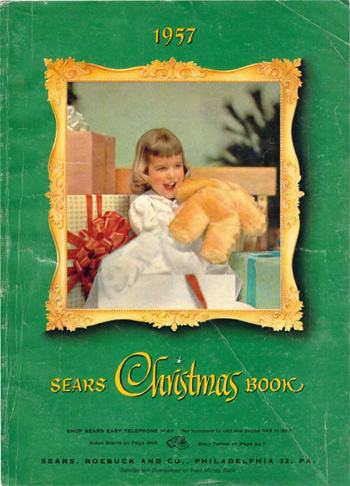
The Sears Wish Book was not just something you read. It was something you marked up. Kids grabbed pens, crayons and markers and went to work. A circle meant interest. Two circles meant real desire. A circle with an arrow and your name beside it meant you were not kidding around.
Folded page corners were the other great tool. A dog eared corner said, “Look here, Mom.” Some kids bent so many corners that the book looked like an accordion by December. Others used scraps of paper as bookmarks, each one labeled with a name and an item number.
In houses with several children, the catalog turned into shared territory. Brothers and sisters negotiated over pages. Initials appeared next to items to claim them. Some families passed the book to cousins and grandparents, who added marks of their own. By Thanksgiving, one Wish Book could hold the Christmas hopes of an entire extended family.
The smartest kids treated it like homework. They wrote out formal lists with page numbers and catalog numbers. That made life easier for Santa, and for the parents actually placing the order. In a very real sense, it was the paper ancestor of today’s online shopping cart.
Ordering From the Catalog
Circling a toy was only half the story. Somebody still had to buy it. In the catalog era, that meant filling out an order form by hand. Parents copied down item numbers, sizes, colors and prices, then added shipping and totaled everything up.
The finished order could go into the mail or be phoned in. Many towns also had a Sears catalog sales office close by. Sears began opening these offices in 1935 for towns too small to support a full store. Later, independent catalog merchants ran their own local Sears outlets as well.
That local catalog office was a quiet blessing for parents. It gave families a place in town to handle orders without a long trip to the city. Some retailers even let shoppers pick up holiday orders at the store, away from prying young eyes. For parents trying to keep Santa’s secrets, that was a real advantage.
Then came the waiting. Packages took time to arrive, and every day felt endless to a kid who suspected something was coming. Half the magic of the Wish Book was this long stretch of anticipation. The catalog gave months of dreaming before a single present appeared.
Back when the Sears Wish Book made Christmas dreams come alive, every child had a wish list. Keep that tradition going with our Free Printable Santa Letter Generator and send those Christmas wishes straight to Santa!
When 605 Pages of Christmas Came in the Mail
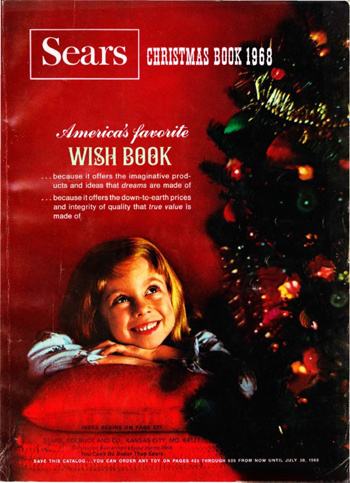
The 1968 edition shows just how far the Christmas catalog had come. That was the year Sears made the Wish Book name official. According to Sears history sources, the book ran 605 pages. Roughly 225 of them were devoted to toys, with about 380 pages of gifts for adults.
Compare that to the 87 pages of 1933. In thirty five years, the Christmas catalog had grown nearly seven times larger. The toy section alone was more than twice the size of the entire first edition. That growth followed the postwar baby boom, the spread of the suburbs and a booming American toy industry.
The 1968 book reflected its moment perfectly. Grown ups could find quilted robes and copper fondue pots. Kids could find electric football games and much more. A family could plan a whole Christmas morning from one book without ever leaving the living room.
The Wish Book kept growing after that. By 1992, the Sears Christmas catalog reached an all time high of 834 pages. It is hard to picture today, but that was one single catalog, mailed to homes all across the country.
Sears Wasn’t the Only Book in the House
For many families, the Sears Wish Book had company. Montgomery Ward and JCPenney sent out big Christmas catalogs of their own. Kids often called all of them wish books, no matter whose name was on the cover. A lucky household might have three on the coffee table at once.
Montgomery Ward had the longest history of all. The Chicago company launched its mail order business in 1872, years before Sears existed. Its holiday books were hefty too. The 1966 Ward Talk of the Town Christmas Catalog ran 484 pages.
Ward also gave the world a Christmas gift that outlived the company itself. In 1939, a Ward copywriter named Robert L. May wrote Rudolph the Red Nosed Reindeer as a free holiday booklet. Ward handed out about 2.4 million copies that first season. Every time you hear the song, you are hearing a piece of catalog history.
JCPenney joined the Christmas catalog race later. Its first Christmas catalog appeared in 1963. Penney’s grew into a serious rival, and its holiday book sold toys until 2004.
Competition was good news for kids. Three catalogs meant three chances to find the perfect toy. Some children cross referenced their lists, noting which store showed the better price or the bigger picture. Parents did the same, hunting for the best deal before placing an order.
The Toys We Wanted and Never Got
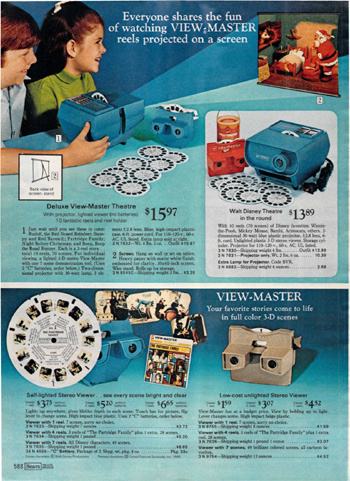
Every Wish Book reader has one. It is the toy you circled every single year and never found under the tree. Maybe it was a giant train layout. Maybe it was a dollhouse with working lights, a go kart or a full size pool table. Whatever it was, it cost far more than your parents planned to spend.
Those impossible items were part of the fun. The catalog let kids dream far beyond the family budget. Nobody really expected the motorized car or the professional telescope. Circling it anyway was a small act of hope, and maybe a clever negotiating tactic.
Each decade brought its own favorites. Lionel trains ruled the early years and stayed popular for generations. Barbie arrived in 1959 and quickly claimed her own pages. Later kids chased Hot Wheels, Atari game systems and Cabbage Patch Kids. Every generation can open an old Wish Book and point to the exact page where its childhood lives.
Then there were the gifts that did arrive, and they felt like small miracles. Seeing the exact toy from the page you nearly wore out proved the system worked. It made every circle and bent corner worth the effort.
When the Big Catalog Era Ended
The catalog world began to crack in the 1980s. Montgomery Ward shut down its 113 year old catalog business in 1985 to focus on its stores. Malls and discount chains had changed how Americans shopped. Driving to a store was easier than ever, and fewer families depended on mail order.
Sears followed in 1993. The company closed its catalog division and stopped publishing the big general catalog after nearly a century. That ended an era that began when rural families first ordered goods by mail. The Sears Wish Book survived the cut, but it began shrinking almost right away.
Sears had launched Wishbook.com by 1998 to reach internet shoppers. On paper, things got smaller. By 2005, the company was handing out a tiny Little Big Wish Book that measured about 2.5 inches square. Customers picked them up at Sears Auto Centers or found them tucked inside delivery boxes.
Sears tried a comeback in 2007 with a 188 page Wish Book, half of it toys. In 2009, the online edition became interactive, complete with Christmas music and pages you could turn on screen. Most reports say the regular Wish Book ended after 2011.
In 2017, Sears brought it back one last time. The new Wish Book was mainly digital, with a 120 page printed keepsake for its best customers. One year later, in October 2018, Sears Holdings filed for bankruptcy. The famous catalog has not returned since.
The competition faded too. Montgomery Ward closed its remaining stores in 2001. JCPenney ended its Big Book in 2009. The giant holiday catalog had become a piece of American history.
Rare Christmas Books Inspiring Guide for Collectors
Collecting a Vintage Sears Wish Book Today
Those old catalogs that once went out with the trash are now genuine collectibles. Toy collectors use them as reference guides. A Wish Book page can show which accessories came with a toy, how it was sold and what it cost new. For anyone dating or valuing vintage toys, that information is gold.
Nostalgia buyers want them too. Many people hunt for the edition from the year they turned seven or ten. Opening that exact book can bring back memories faster than any photo album.
Prices vary widely by year and condition. Recent online listings show early 1990s editions asking around $25. Copies from the 1970s often list near $80, while 1950s editions can ask $100 to $150 or more. Asking prices are not sold prices, so check completed sales before you buy or sell.
Condition matters a great deal. The things that made these books beloved also make them hard to find in nice shape. Look for torn or loose covers, missing pages and water damage. Pay special attention to the toy section, because many kids cut out pictures for their lists. A copy with a complete, uncut toy section is the one to grab.
Circles and crayon marks are a different story. Some buyers avoid marked copies. Others love them, because those marks are a real child’s Christmas wishes frozen in time. A marked catalog may not bring top dollar, but it often carries the best story.
If you want to browse before you buy, online archives can help. WishBookWeb, started in 2006, hosts high resolution scans of many vintage holiday catalogs from Sears and other stores. Duke University’s Rubenstein Library also holds a Sears catalog collection that includes wish books. Then keep an eye on estate sales, flea markets and antique shops, where old Wish Books still turn up.
Why the Sears Wish Book Still Means Christmas
Most of the toys from those catalogs are gone now. They broke, got outgrown or sold at garage sales long ago. Yet people still talk about the Sears Wish Book with real affection. That is because the catalog itself was the gift that came first.
It arrived months ahead of the holiday and gave kids something to do with all that waiting. It turned wishing into an activity with pens, page numbers and plans. Families gathered around it on the couch. Siblings fought over it. Grandparents studied the marked pages for hints.
No website or app quite matches that feeling. Online shopping is faster and easier, but nobody dog ears a screen. The Wish Book was entertainment in its own right, weeks before a single present appeared under the tree.
So if you spot an old Sears Wish Book at an estate sale or in a relative’s attic, take a minute with it. Flip past the bedspreads and the power tools. Head straight for the toy pages. You may find somebody’s circles waiting there, still hoping after all these years.