🔥 Collecting Match Safes: The Remarkable Pocket Treasures Most Collectors Overlook
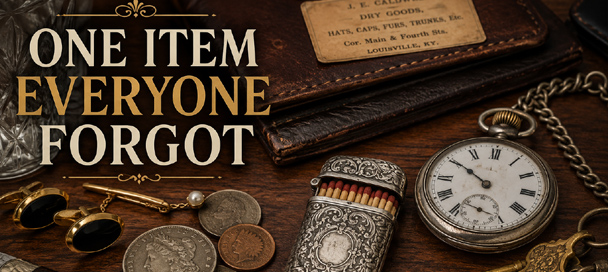
There is a category of antique that sits in plain sight at almost every antique mall, estate sale, and flea market in the country, gets picked up, turned over, set back down, and walked past by collectors who do not quite know what they are looking at. Small, hinged, often ornate, and almost always made of metal, match safes are one of the genuinely overlooked treasures of American and European material culture, and the collectors who do know what they are looking at tend to be very glad everyone else walked past.
Collecting match safes rewards exactly the kind of collector who enjoys knowing more than the room. The history is rich, the variety is extraordinary, the prices still reflect the category's relative obscurity, and the objects themselves are among the most beautifully made small things the nineteenth and early twentieth centuries produced. This guide to collecting match safes covers everything a new collector needs to get started and everything an experienced one needs to go deeper.
Collecting Match Safes Means Starting With One Small but Essential Question
The Little Case That Lit the World
A match safe is exactly what the name suggests and nothing more complicated than that. It is a small container, typically hinged or fitted with a sliding closure, designed to carry friction matches in a pocket, purse, or on a wall without allowing them to ignite accidentally. Most examples fit comfortably in the palm of a hand. Many are no larger than a modern cigarette lighter. A few are smaller still.
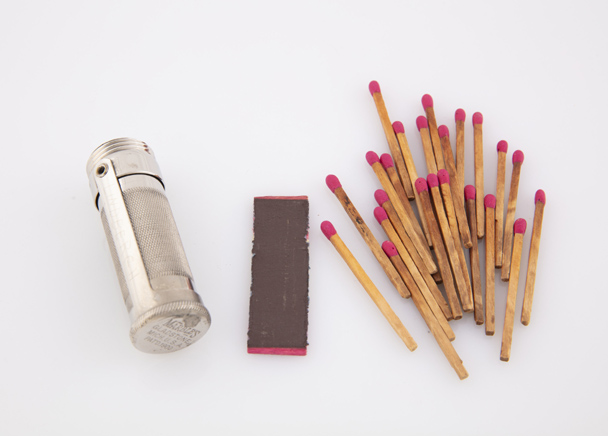
The typical pocket match safe opens with a spring hinge or a push-slide mechanism, holds a dozen or so matches in a small interior chamber, and often features a striker surface on the base or side for lighting matches without needing a separate surface. The exterior is where the design work lives, and that design work ranges from plain stamped tin to elaborately chased sterling silver to hand painted enamel to cast figural forms that look nothing like a container at all until you realize the boot, the skull, or the crouching frog is actually a hinged box with a compartment inside.
Why the Match Safe Existed at All
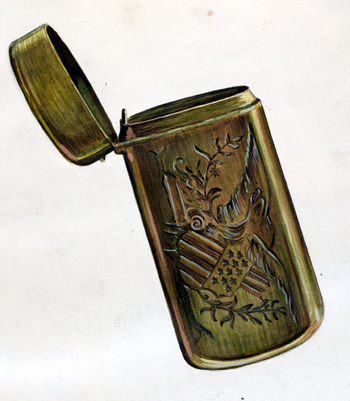
The match safe existed because friction matches, in the era before safety matches dominated the market, were genuinely dangerous objects to carry loose. Early friction matches, including the lucifer matches that became common in the 1830s and 1840s, could ignite from virtually any friction including the pressure and movement of a pocket full of miscellaneous objects. Men carrying loose matches in trouser pockets experienced ignitions that ranged from mildly alarming to seriously injurious. Fires attributed to loose matches in clothing were common enough to be regularly reported in newspapers of the era.
The match safe solved this problem with elegant simplicity. A tightly closed metal container prevented the matches inside from contacting other surfaces. The spring closure or friction fit of the lid meant the container would not open accidentally. The result was that a person could carry fire in their pocket with reasonable confidence that the fire would stay where it was put until it was actually needed, which in an era before electric lights, gas lighters, and disposable ignition was a need that arose dozens of times a day.
Collecting Vintage Ashtrays: Full of History and Advertising
A Golden Age That Vanished Overnight
How Matches Changed Everything
The friction match was one of the genuinely transformative inventions of the nineteenth century, and it is easy to underestimate just how transformative it was because its effects were so thoroughly absorbed into daily life within a generation of its introduction. Before the friction match, producing fire required flint, steel, tinder, and patience. The process was slow, unreliable in damp conditions, and genuinely inconvenient in ways that shaped everything from cooking schedules to the timing of social activities.
The friction match changed all of that. John Walker developed an early version in England around 1826, and within a decade matches had spread throughout Europe and North America and begun reshaping the rhythms of ordinary life in ways that are difficult to fully appreciate from the other side of electric lighting and gas stoves. Fire on demand was a genuinely new thing in human experience, and the immediate practical question it raised was how to carry these remarkable but unpredictable little sticks safely in a world that had not yet figured out how to make them behave.
The Rise of the Match Safe Industry
American and European manufacturers began producing match safes in significant numbers by the 1860s, and by the 1880s and 1890s the category had become one of the most varied and design-rich areas of the decorative arts applied to everyday objects. The market divided naturally along class lines. Working class match safes were made of stamped tin or aluminum, functional and inexpensive, produced by the millions and sold for pennies. Middle class examples were made of nickel silver, brass, or copper, often with embossed decoration. Upper class pieces were made of sterling silver or gold, frequently decorated with elaborate repousse work, engine turning, or enamel, and often purchased from the same jewelers and silversmiths who supplied other luxury goods.
Major American silver manufacturers including Gorham, Unger Brothers, and a number of smaller specialist firms produced match safes as a regular part of their catalog alongside calling card cases, coin purses, and other small personal accessories. The period from roughly 1880 to 1915 represents the golden age of collecting match safes in America, when the combination of sophisticated manufacturing techniques and a prosperous middle class produced an extraordinary range of designs.
The Disposable Lighter Killed the Category
The Zippo lighter was introduced in 1933. The disposable butane lighter arrived in mass market form in the 1970s. Between those two developments and the earlier arrival of safety matches, which could be struck safely on the side of their own box and did not require a separate safe container, the match safe went from a daily necessity to a redundant object within the space of a generation. Production slowed dramatically after 1915 and had essentially ceased as a significant commercial category by the 1930s.
What the disposable lighter created, without intending to, was a time capsule. Match safes produced between roughly 1860 and 1920 survived in attics, in estate sales, in the back drawers of sideboards and dressing tables, in the pockets of old coats hanging in closets, because nobody had a reason to throw them away and nobody quite thought of them as valuable enough to seek out and preserve deliberately.
They simply waited, which is how so many of them arrived in such good condition in the antique market of the twenty first century and why the collector who knows what to look for can still find genuine treasures at prices that have not yet caught up with the quality of the objects.
What Makes a Match Safe Collectible
Materials and What They Tell You
The material a match safe is made from tells you a great deal about who originally owned it, when it was made, and what it is likely worth today. Sterling silver examples, typically marked with maker's hallmarks and the standard sterling designation, represent the top of the market both historically and in the current collector market. These pieces were made for wealthy buyers, were often given as gifts, and were produced with the kind of craftsmanship that has allowed them to survive in excellent condition far more reliably than cheaper examples.
Nickel silver, sometimes called German silver despite containing no actual silver, was the primary material for mid-market match safes. It takes decoration well, resists tarnish better than sterling, and was used by many manufacturers to produce pieces that looked like silver without the cost. Brass and copper examples are common in the advertising match safe category, where durability and low cost mattered more than appearance. Tin examples are typically the most common and least expensive, often plain or with simple stamped decoration, and frequently found in advertising versions distributed as promotional items.
Celluloid match safes deserve special mention. Produced primarily in the 1880s through early 1900s, celluloid allowed manufacturers to produce pieces in colors and patterns impossible to achieve in metal, and the material was used to create some of the most visually distinctive match safes in the category. Celluloid is also one of the most fragile materials in the category, prone to warping, cracking, and discoloration with age, which makes well-preserved celluloid examples considerably more desirable than their metal counterparts of equivalent age and design.
Makers and Marks
American sterling match safes were produced by a relatively small number of major manufacturers whose marks are well documented and whose pieces are reliably identifiable. Gorham Manufacturing Company of Providence, Rhode Island, was one of the largest and most prolific, and Gorham match safes appear regularly in the collector market in a wide range of designs from plain engine-turned examples to elaborately decorated presentation pieces. Unger Brothers of Newark, New Jersey, produced some of the most sought after Art Nouveau sterling match safes in the American market, featuring the flowing naturalistic designs that define the style at its best.
Other significant American makers include Shiebler, Whiting, and various smaller regional silversmiths whose marks appear less frequently but whose pieces are no less desirable when they turn up. English silver match safes carry Birmingham or London hallmarks that allow precise dating to a specific year, a feature of the British hallmarking system that American collectors find particularly useful when trying to establish provenance. Pieces marked with a country of origin such as Germany or Austria were typically produced for the export market and often reflect different design sensibilities than American pieces of the same era.
Unmarked pieces present the most interesting challenges and occasionally the most interesting discoveries. Not all match safes were marked, particularly lower market examples and advertising pieces where the advertiser's name was the only identification that mattered. Experienced collectors develop an eye for construction quality, hinge style, and decoration technique that often allows reasonably confident attribution even in the absence of formal marks.
Advertising Match Safes
Advertising match safes are among the most popular subcategory within collecting match safes, and for good reason. In the decades before matchbooks became the standard promotional giveaway, companies across virtually every industry used match safes as advertising vehicles, distributing them to customers, salesmen, and business contacts with the company name, logo, or product image on the exterior. The result is a record of American commercial life in the late nineteenth and early twentieth centuries that is both visually rich and historically specific.
Beer and whiskey companies were among the most prolific producers of advertising match safes, and pieces from famous regional breweries and distilleries that no longer exist are particularly sought after by collectors who combine an interest in match safes with an interest in breweriana. Patent medicine companies, insurance firms, hardware manufacturers, farm equipment dealers, and hundreds of other businesses produced advertising match safes in both tin and metal versions. Some examples carry lithographed imagery of remarkable quality, essentially miniature posters for products and companies that have long since disappeared from the market.
The dual appeal of advertising match safes is one of the things that makes them particularly valuable in the current market. A match safe advertising a specific regional brewery appeals to match safe collectors and breweriana collectors simultaneously, which means two separate collecting communities competing for the same limited supply of surviving pieces. That dynamic consistently pushes values for strong advertising examples above what comparable non-advertising pieces would bring.
Collecting Las Vegas Souvenirs – Amazing Finds from Sin City’s Past
Railroad Match Safes
Railroad match safes occupy a specific and highly desirable corner of the market that benefits from the same dual-collector dynamic as advertising examples, but with an additional layer of institutional specificity that makes them particularly appealing to serious collectors. American railroads produced match safes for employee use, for distribution to preferred customers, and as promotional items, and these pieces typically carry the railroad's name, logo, or initials in a form that is unambiguous and easy to research.
The major trunk lines including the Pennsylvania Railroad, the New York Central, the Southern Pacific, and the Union Pacific all appear in the match safe record, and pieces from these railroads attract interest from the substantial community of railroad memorabilia collectors as well as from match safe specialists. Smaller regional lines and short line railroads appear less frequently, which makes their pieces rarer and often more valuable than pieces from the larger and better-documented major railroads. A match safe from a short line that operated for only a few decades in a specific region of the country may be the only surviving example of that railroad's promotional material, which gives it a historical significance well beyond its physical size.
Wall Mounts Versus Pocket Versions
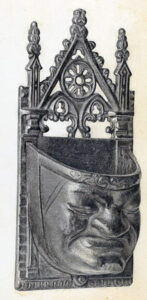
The wall mounted match holder is the close relative of the pocket match safe and shares the same history, the same era of production, and much of the same collector appeal. Where pocket match safes were designed to be carried on the person, wall mount versions were intended to hang in a specific location, typically near a stove, fireplace, or lamp, and hold a supply of matches accessible to anyone in the household who needed them.
Wall mount match holders tend to be larger than pocket versions and often more decorative, since they were meant to be seen rather than tucked in a pocket. Cast iron examples with painted surfaces are common and were produced in enormous variety, with designs ranging from simple utilitarian holders to elaborate figural pieces featuring animals, advertising imagery, and patriotic themes. Tin lithographed wall mount holders, often produced as advertising pieces, are particularly popular with collectors who focus on commercial art and graphic design.
Understanding the distinction between pocket match safes and wall mount holders matters for collectors both when buying and when describing pieces for sale. The two categories overlap in collector appeal but are distinct enough in form and function that mixing them up in a description is a reliable signal that a seller does not fully know what they have, which can work to an informed buyer's advantage.
The Designs That Stop People Cold
Every collecting category has a weird end of the market, and match safes have one of the best. Figural match safes, designed to look like something other than a box, represent the most immediately striking and often the most valuable pieces in the category. Manufacturers produced figural match safes in the forms of boots, shoes, pistols, skulls, animals of every description, human figures, vegetables, buildings, and objects so specific and obscure that identifying them sometimes requires genuine research. The figural match safe was the novelty item of its era, and the ingenuity that manufacturers brought to the challenge of hiding a functional hinged container inside an apparently solid three-dimensional object is genuinely impressive even by modern standards.
Political match safes are a subcategory that attracts collectors from multiple communities simultaneously. Presidential campaign match safes featuring candidate portraits or campaign slogans were produced for virtually every American presidential election from the 1880s through the early twentieth century. These pieces appeal to political memorabilia collectors, campaign button collectors, and match safe specialists all at once, which makes strong examples in good condition consistently valuable regardless of which candidate they supported.
The risque end of the market deserves its own acknowledgment. Victorian and Edwardian manufacturers produced match safes with imagery that pushed well against the boundaries of what the era's public morality officially permitted, and these pieces have attracted collector interest since the category first began to be seriously studied. Erotic and suggestive match safes appear regularly at auction and in specialized dealer inventories, and while they are not appropriate for every collection or every display context, they represent a genuine and historically significant part of the match safe record and command prices that reflect their appeal to a dedicated subset of the collecting community.
Where to Find Them and What to Pay
Where the Good Ones Hide
Collecting match safes rewards the same hunting patience that any small antique category requires, but the places where good examples turn up follow a reliable pattern. Antique malls are the most reliable consistent source, particularly larger operations with multiple dealers where the chances of finding a dealer who specializes in or simply has accumulated a good selection of small metal objects are higher. The key is learning to look at the small cases and trays that dealers use for pocket-sized items rather than scanning the larger display pieces at eye level.
Estate sales are among the best sources for match safes in excellent condition, precisely because match safes were so often tucked away and forgotten rather than used and worn out. A dressing table drawer, a small box in a closet, a coin tray on a nightstand. These are the places where match safes waited for decades without being disturbed, and estate sales are where those drawers and boxes finally get opened. Arriving early matters at estate sales, as small metal objects in good condition tend to disappear quickly once knowledgeable buyers are in the building.
Online marketplaces have expanded the reach of match safe collecting enormously, connecting buyers with sellers across the country and making it possible to build a focused collection without geographic limitation. The downside of online buying for match safes is that photographs rarely capture condition accurately enough to substitute for handling a piece in person, and condition matters considerably in this category. Established relationships with reputable dealers and a willingness to ask specific questions about condition before purchasing go a long way toward avoiding disappointment.
If you are in Southwest Iowa, stop by Kilroy Was Here in Shenandoah. We carry a rotating selection of small antiques and collectibles and are always happy to talk shop with collectors at any level of experience.
What to Expect to Pay
The match safe market is one of the genuinely pleasant surprises for anyone new to collecting match safes who approaches it without preconceptions. At the accessible end, common tin advertising match safes in average condition can be found for anywhere from a few dollars to twenty or thirty, depending on the advertiser and the graphic quality. Plain nickel silver or brass pocket match safes without unusual features or maker's marks typically run from twenty to seventy five dollars in good condition.
Sterling silver examples from known makers begin to get more interesting in terms of value. A plain engine-turned Gorham match safe in good condition might bring one hundred to two hundred dollars. A piece with more elaborate decoration, an identifiable pattern, or a desirable maker's mark will push higher. Unger Brothers Art Nouveau pieces in excellent condition regularly bring three hundred to six hundred dollars and more at auction. Railroad examples, strong advertising pieces, and political match safes command premiums that can push well past those ranges depending on the specific subject and the condition.
Figural match safes occupy their own pricing universe. A common cast metal animal figural in fair condition might bring fifty dollars. A rare sterling figural in excellent condition with a documented maker can bring several hundred to over a thousand dollars at a specialized auction. Condition is the single most important factor after rarity in determining where any individual piece lands within these ranges, and the spread between an excellent example and a comparable piece in poor condition can be dramatic.
How to Store and Display Match Safes
Storing Without Causing Damage
Sterling and silver-plated match safes require the same basic care as any silver object. Tarnish is inevitable but manageable. Anti-tarnish strips placed in storage containers slow the process significantly. Acid-free tissue or flannel silver storage bags prevent contact tarnish from other metals. Polishing should be done gently and infrequently, using a quality silver polish and a soft cloth, since repeated aggressive polishing eventually removes surface detail from embossed and repousse decoration.
Celluloid match safes require more specific attention. Celluloid is chemically unstable and should be stored in a cool, dry environment away from heat sources and direct light. It should not be stored in sealed airtight containers, as off-gassing from degrading celluloid can accelerate the deterioration of adjacent pieces. Celluloid pieces should be inspected regularly for signs of warping, discoloration, or the distinctive vinegar smell that indicates active degradation. A piece showing active degradation should be separated from the rest of a collection immediately.
Tin and base metal match safes are generally the most forgiving in storage but benefit from a light application of paste wax or Renaissance Wax to inhibit rust and surface oxidation on pieces where the original finish has been compromised. Mixed material pieces, such as metal match safes with celluloid or enamel panels, require attention to the needs of the most fragile material present rather than the most durable one.
Display Options That Work
The small size of match safes is one of their great advantages as a display collectible. A collection that would require a large room to display in a conventional format can be shown in a single shadow box or small curio cabinet, and the density of interesting objects in a confined space creates a visual effect that larger objects simply cannot match.
Shadow boxes with individual compartments work particularly well for displaying match safes with strong visual designs, allowing each piece to be seen without competing with its neighbors. Velvet lined shallow drawers in collector cabinets allow pieces to be stored flat while remaining fully visible, and the drawer format makes handling individual pieces easy without disturbing the rest of the collection. Glass fronted curio cabinets protect pieces from dust while keeping them accessible and visible.
Grouping by theme creates the most coherent and visually compelling displays. All advertising pieces together, all sterling silver examples in one section, all figural pieces grouped by subject. The flexibility of the category makes it easy to create displays that tell a story as well as showing objects, and a well-organized match safe display is one of the most effective conversation starters a collector can put on a wall or shelf.
Why Match Safes Still Matter
The match safe became obsolete more than a century ago and the problem it solved has been solved so thoroughly by subsequent technology that most people alive today have never needed to think about safely carrying friction matches. None of that reduces the interest of the objects themselves or the richness of what they represent as historical artifacts.
Every match safe is a small document of the era that produced it. A sterling Art Nouveau match safe from the 1890s carries information about aesthetic taste, manufacturing capability, the market for luxury small goods, and the daily habits of the people who bought and used it. An advertising tin from a regional brewery that closed in Prohibition carries the name and imagery of a business that no longer exists and might otherwise be entirely forgotten. A railroad match safe from a short line that operated for thirty years in a specific corner of the country preserves a piece of transportation history in an object small enough to hold between two fingers.
The match safe category also rewards the kind of collecting that is genuinely about knowing more than the market rather than simply spending more than the market. The collector who understands makers, materials, subjects, and condition can still find genuinely significant pieces at prices that have not caught up with the quality of the objects, which is a situation that becomes rarer every year in most collecting categories and remains available in this one precisely because the category has not yet attracted the mainstream attention it deserves.
That is the quiet promise of collecting match safes. The objects are beautiful, the history is genuine, the variety is extraordinary, and the collectors who find their way into the category tend to stay for a very long time.
Further Reading and Resources
For collectors who want to go deeper into match safe history, identification, and valuation, the following resources are worth exploring.
📖 Antique Trader regularly features articles on match safes and related small antiques with current market pricing and identification guidance.
📖 LiveAuctioneers maintains a searchable archive of past auction results that provides one of the most reliable current market price references available for match safe collectors at every level.