🚬 Collecting Vintage Ashtrays: Full of History and Advertising
Not long ago, ashtrays were as common as coffee cups. They sat on kitchen tables, hotel nightstands, restaurant countertops, casino floors, office desks, and airplane armrests. Every bar had them. Every motel room had them. Every waiting room, diner, and department store had them. They were so ordinary that most people never gave them a second glance.
That ordinariness is exactly what makes collecting vintage ashtrays so rewarding today. Because ashtrays appeared everywhere, they were produced in an astonishing variety of styles, materials, and designs. Businesses used them as advertising vehicles. Hotels stamped their logos on them. Casinos handed them out by the thousands. Airlines offered them as in-flight amenities. What was once an afterthought has become a surprisingly rich category for collectors drawn to advertising art, travel nostalgia, Americana, and social history.
Why Vintage Ashtrays Became Collectible
The shift from everyday object to sought-after collectible happened gradually. As smoking declined and public attitudes changed, ashtrays began disappearing from daily life. Hotels stopped stocking them. Restaurants cleared them from tables. Offices packed them away. Suddenly, objects that had been produced by the millions were no longer being made, and the ones that survived began carrying a kind of nostalgic weight.
Collectors recognized that ashtrays were not simply smoking accessories. They were miniature billboards, souvenirs, and artifacts of a specific era in American commercial and social life. An ashtray from a famous Las Vegas casino tells a story about gambling culture and mid-century design. A diner ashtray with a hand-painted Route 66 logo captures something about road trip America that no photograph quite can. A hotel ashtray stamped with a property name that no longer exists preserves a small piece of hospitality history that would otherwise be lost entirely.
That combination of advertising art, travel history, and everyday nostalgia has made collecting vintage ashtrays a hobby that continues to attract new enthusiasts.
How Ashtrays Were Used
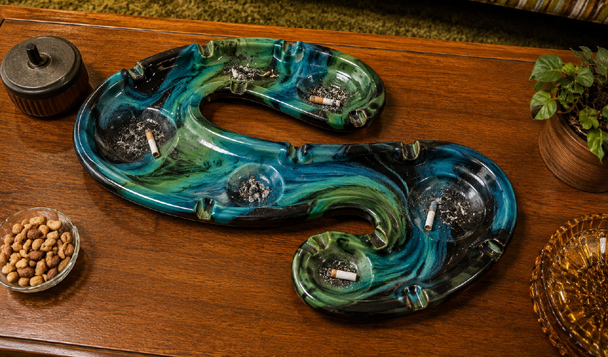
Understanding where ashtrays came from helps collectors appreciate the range of pieces available today.
In the home, ashtrays ranged from simple glass catch-alls to decorative ceramic pieces displayed on coffee tables and mantels. Entertaining guests often meant setting out matching sets, and manufacturers responded with elaborate designs meant to complement mid-century living room decor.
Hotels and motels produced ashtrays in enormous quantities, typically stamped or printed with the property name and sometimes the city and phone number. These pieces were both functional and promotional, meant to remind guests of where they had stayed and to serve as free advertising if a piece made its way home in a suitcase.
Casinos distributed ashtrays throughout their gaming floors, often featuring bold graphics, property logos, and the names of famous gaming destinations. Airlines once offered ashtrays built into armrests and seat backs, and some carriers produced branded pieces that are now prized by aviation collectors. Restaurants, bars, diners, roadside stops, and office buildings all contributed their own distinctive pieces to what is now a deep and varied collecting category.
Styles and Themes Collectors Look For
One of the appealing aspects of collecting vintage ashtrays is the ability to build a focused collection around a specific theme or to pursue a broad range of styles and eras.
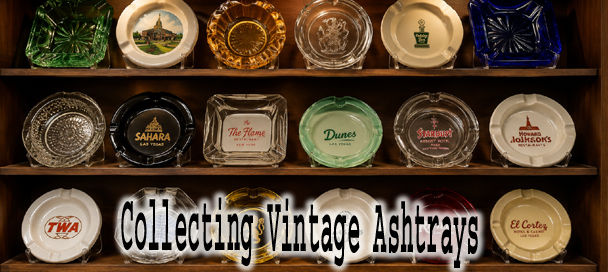
Casino ashtrays are among the most popular, particularly pieces from famous Las Vegas and Atlantic City properties. Hotel ashtrays attract collectors interested in travel and hospitality history. Restaurant and diner pieces often feature colorful advertising graphics that appeal to lovers of mid-century commercial art. Airline ashtrays draw aviation enthusiasts. Military ashtrays, produced for service clubs, bases, and ships, appeal to collectors of military memorabilia.
Souvenir ashtrays from tourist destinations, state fairs, and world expositions represent another popular category. Novelty designs shaped like animals, cars, musical instruments, and other objects attract collectors who appreciate the playful side of mid-century design. Advertising ashtrays featuring product logos, company names, and promotional graphics are particularly sought after by collectors who focus on commercial art and brand history.
Condition: What Truly Matters
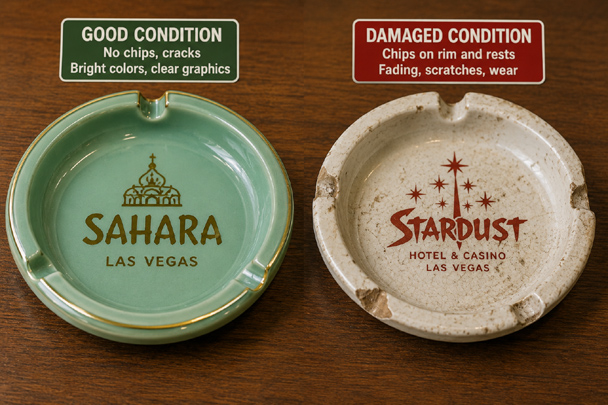
As with most collectibles, condition plays a central role in determining the desirability and value of vintage ashtrays.
Chips and cracks are the most serious condition issues, particularly on ceramic and glass pieces. Even a small chip on a rim or base can significantly reduce value, especially for pieces where the primary appeal is visual. Collectors should examine pieces carefully under good lighting and from multiple angles, since small chips are easy to miss at first glance.
Scratches matter most when they affect advertising graphics or decorative surfaces. Light surface scratches on plain glass or metal pieces may be acceptable, but scratches that obscure a logo, property name, or advertising image are far more problematic. Fading is a related concern, particularly for pieces with painted or printed graphics that have been exposed to light or heavy use over decades.
Missing elements such as removed stickers, worn-away gold trim, or damaged inset designs all affect desirability. Pieces in genuinely unused or near-mint condition command a premium, while heavily used pieces with significant wear are valued primarily for their rarity or subject matter rather than their physical condition.
Makers, Markings, and Identification
Many vintage ashtrays carry back stamps, maker’s marks, or country-of-origin markings that help collectors identify their age and origin.
American pottery manufacturers including Homer Laughlin, Hall China, and various smaller regional producers supplied ashtrays to hotels, restaurants, and institutions throughout the mid-twentieth century. European manufacturers, particularly from England, Germany, and Japan, produced large quantities of decorative and advertising pieces exported to the American market. Pieces marked “Made in Occupied Japan” date specifically to the post-World War II occupation period, making them identifiable to a narrow window of production.
Casino pieces are often easier to identify because they carry property names and sometimes dates or design elements tied to specific renovation eras. Hotel pieces can frequently be researched through historic hotel records and hospitality industry publications. Collector reference guides and online communities have developed substantial databases for identifying manufacturers and dating pieces based on markings, glaze styles, and design characteristics.
Understanding Value and Pricing
The value of vintage ashtrays varies widely depending on several intersecting factors.
Rarity is fundamental. A common hotel ashtray from a chain property that produced millions of identical pieces will always be worth less than a piece from a small independent property that closed decades ago. Age matters, with pre-World War II pieces generally commanding more attention than later production, though mid-century casino and airline pieces are notable exceptions.
Advertising appeal drives significant value in the current market. Pieces featuring bold graphics, well-known brand logos, or famous property names attract both ashtray collectors and collectors focused on the specific advertiser. A piece advertising a beloved regional diner chain may appeal to local history collectors who have never purchased an ashtray before.
Casino connections consistently push values higher, particularly for pieces from famous properties that have been demolished or dramatically renovated. Collector demand for Las Vegas memorabilia remains strong and shows no signs of fading.
Photographing Vintage Ashtrays for Display or Sale
Good photography is essential for both documenting a collection and presenting pieces for sale.
Shooting in natural light near a window tends to bring out colors and surface details more accurately than artificial lighting. A plain white or neutral gray background prevents distractions and keeps the focus on the piece itself. Photographing from multiple angles, including a straight-down overhead shot and a close-up of any markings or graphics, gives buyers and fellow collectors a complete picture of what the piece actually looks like.
For pieces with advertising graphics or logos, a close-up shot specifically highlighting that element is worth including. Condition issues such as chips, cracks, or scratches should be photographed clearly and honestly rather than hidden or minimized. Accurate documentation builds trust with buyers and protects sellers from disputes after a sale.
Display Ideas for Collectors
Displaying a collection of vintage ashtrays requires balancing visual appeal with practical organization.
Wall-mounted display shelves work well for smaller pieces and allow a collection to be viewed as a whole without requiring a large footprint. Glass-fronted display cabinets protect pieces from dust while keeping them visible. Grouping pieces by theme, such as all casino pieces together or all airline pieces in one section, creates a more coherent visual narrative and makes the collection easier to share with guests.
Some collectors build themed displays around a specific destination, assembling every piece connected to a particular city or resort area. Others organize by era, displaying pieces decade by decade to illustrate how design styles evolved over time. The flexibility of the category makes it easy to create displays that reflect personal interests and available space.
How to Describe Vintage Ashtrays Accurately
Whether listing a piece for sale or documenting a personal collection, accurate descriptions are essential.
A complete description should include the material, such as ceramic, glass, metal, or plastic. Measurements covering diameter, depth, and any significant height are helpful since photographs can be deceiving. Any maker’s marks, back stamps, or country-of-origin markings should be noted and transcribed exactly as they appear. Advertising graphics, property names, logos, and any text on the piece should be described in full.
Condition issues must be documented honestly and specifically. Saying a piece has “light wear” is less useful than noting “a small chip on the inner rim at the three o’clock position” or “minor fading to the gold trim on one side.” Known history, such as documentation that a piece came from a specific property or estate, adds value and should always be included when available.
Where to Find Vintage Ashtrays

Collecting vintage ashtrays rewards patience and persistence across a variety of sourcing channels.
Antique stores and antique malls remain reliable hunting grounds, particularly shops that specialize in mid-century Americana or advertising collectibles. Flea markets often yield interesting pieces at reasonable prices, especially from sellers who do not specialize in the category and may not recognize what they have. Estate sales are among the best sources, since ashtrays were frequently stored away and forgotten rather than discarded, meaning they often surface in excellent condition.
Online marketplaces have expanded the reach of collecting vintage ashtrays significantly, connecting buyers and sellers across the country. Auction houses that focus on advertising collectibles or casino memorabilia regularly feature notable pieces. Casino memorabilia shows and collector events offer the added benefit of connecting buyers directly with knowledgeable sellers and fellow enthusiasts.
And of course if you’re in Southwest Iowa, don’t forget to stop by Kilroy Was Here! We’ve got a growing collection of vintage ashtrays, and we’re always open to trades or just talking shop with fellow collectors.
Collecting Las Vegas and Casino Ashtrays
Among all the subcategories within collecting vintage ashtrays, casino pieces hold a special place.
Las Vegas ashtrays from properties like the Sands, the Desert Inn, the Dunes, and the original Flamingo carry the weight of an entire era of American popular culture. These pieces were produced during the Rat Pack years, the rise of corporate gaming, and the early days of themed resorts. They document a version of Las Vegas that no longer exists physically but lives on in the memories of those who experienced it and in the collections of those who were never there but feel its pull.
Casino ashtrays appeal to two overlapping collector communities. Ashtray collectors prize them for their bold graphics, varied designs, and connection to a specific chapter in American hospitality history. Las Vegas souvenir collectors seek them out as tangible connections to famous properties and golden-age gaming culture. That dual appeal keeps demand strong and makes well-preserved casino pieces consistently among the most sought-after items in the broader category.
If you are drawn to Las Vegas memorabilia more broadly, casino ashtrays make a natural starting point and a compelling centerpiece for a larger collection focused on the history of one of America’s most distinctive destinations.
Collecting Las Vegas Souvenirs – Amazing Finds from Sin City’s Past
Why Collecting Vintage Ashtrays Endures
Objects do not need to still be in everyday use to be worth preserving. In fact, the disappearance of ashtrays from daily life is precisely what gives the surviving pieces their power.
Every vintage ashtray is a small document of how people lived, traveled, worked, and were entertained during a specific moment in American history. A casino ashtray from a demolished Las Vegas property preserves a piece of a place that no longer exists. A hotel ashtray from a family roadside motel captures something about how Americans moved through the country before the interstate highway system changed everything. A diner ashtray with faded advertising art holds traces of a commercial culture that produced things meant to be beautiful even when they were purely functional.
Collecting vintage ashtrays is, at its core, collecting the overlooked. These were not considered art when they were made. They were not expected to survive. They were designed to be used, set on tables, filled, emptied, and forgotten. The fact that so many did survive, and that they carry so much information about the world they came from, is exactly what makes finding them and preserving them worthwhile.
That is why the hobby endures, and why new collectors continue to discover it long after the objects themselves have lost their original purpose.
Further Reading & Resources
📖 Read: Vintage Ashtrays Are Smoking Hot Collectibles
🔍 More: Uncovering the Hidden World of Ashtray Collecting