🍀 Collecting St. Patrick’s Day Postcards and Paper Ephemera Guide

Collecting St. Patrick’s Day Postcards occupies a modest but steady place within the broader field of holiday ephemera. These cards, most commonly produced between 1905 and the early 1920s, reflect the height of the postcard era in the United States and Europe. They were printed in large numbers, mailed in great quantities, and often preserved in albums assembled with care. Today they survive in varying condition, from well-handled mailed examples to unused cards that remain crisp more than a century later.
At first glance, the imagery is familiar. Shamrocks, harps, misty Irish landscapes, and idealized female figures representing Erin dominate the designs. Some cards present sentimental greetings in flowing script. Others lean toward humor, depicting comic Irish characters in the visual language of their time. Within Collecting St. Patrick’s Day Postcards, this range of imagery is not incidental. It reflects both the romantic and the caricatured views of Irish identity circulating in early twentieth-century print culture.
These postcards were not rare objects when new. They were inexpensive, accessible, and intended for brief seasonal exchange. Their survival owes more to the habits of album keeping than to any original perception of value. For collectors today, the interest lies in how these objects document design trends, printing methods, and social attitudes during the Golden Age of postcards.
🍀 Who Made St. Patrick’s Day Postcards and Why
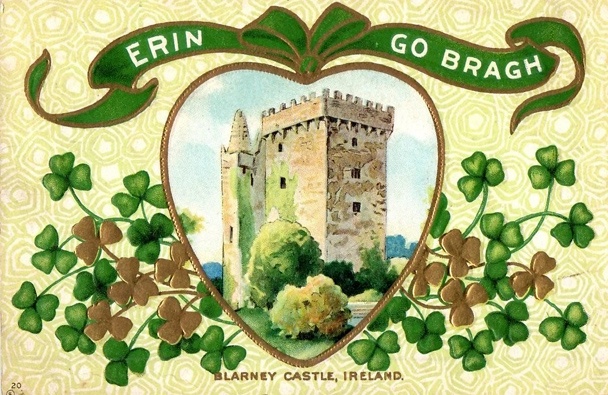
The most significant period for Collecting St. Patrick’s Day Postcards aligns with the broader postcard boom from roughly 1905 to 1915. During these years, German printers dominated high-quality color lithography. Many American publishers imported printed fronts from Germany and paired them with domestic postcard backs. Firms such as Raphael Tuck & Sons, International Art Publishing Company, and other regional publishers issued St. Patrick’s Day series as part of their annual holiday lines.
The purpose was straightforward. Postcards were both communication tools and small works of graphic art. Holidays provided recurring themes that could be refreshed each year with new designs. St. Patrick’s Day, already well established in American urban centers with strong Irish populations, offered publishers a ready market. Greeting cards for Christmas and Valentine’s Day were joined by themed postcards for March 17.
After the outbreak of the First World War, German imports declined sharply. American printers increased domestic production, though often with simpler embossing and flatter color palettes. For those engaged in Collecting St. Patrick’s Day Postcards, identifying prewar German printing versus later American production is a recurring point of study. Paper quality, depth of embossing, and richness of chromolithography often provide clues, though attribution is not always certain.
The cards were intended for brief seasonal exchange. Messages were typically short. A line of greeting, a wish for luck, perhaps a reference to family news. Postmarks from small towns and large cities alike show that these cards traveled widely. Their makers did not imagine them as long-term collectibles. They were products of a thriving print trade responding to consumer demand for affordable, attractive holiday correspondence.
🍀 What Makes Collecting St. Patrick’s Day Postcards Collectible?
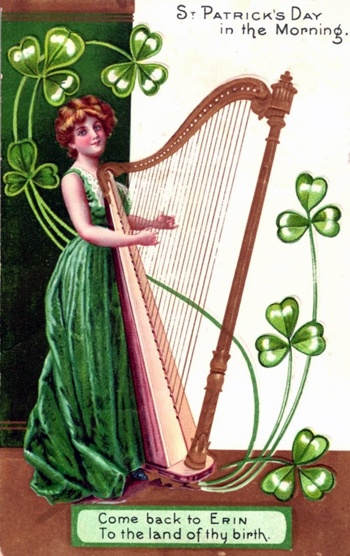 The appeal of Collecting St. Patrick’s Day Postcards rests on several interlocking factors. First is the era. Cards produced during the Golden Age benefit from advances in chromolithography and embossing that give them a visual richness often absent from later mid-century issues. Raised shamrocks, gilt accents, and layered color create a tactile presence that rewards close examination.
Second is subject matter. The holiday provides a defined thematic boundary. Within that boundary, however, there is variation. Romantic landscapes, religious references, nationalist symbolism, comic figures, and decorative motifs coexist. For some collectors, this diversity within a single holiday theme is precisely what sustains long-term interest.
Condition plays a central role. Postcards are fragile by nature. Corners soften. Surfaces scuff. Ink fades. Albums leave residue. In Collecting St. Patrick’s Day Postcards, collectors learn to distinguish between honest wear and structural damage. A lightly handled mailed card with a clear 1908 cancellation may carry as much interest as an unused example, depending on the collector’s focus.
Publisher identification also contributes. Certain firms developed recognizable design styles or series numbering systems. Embossed German imports often show precise registration and detailed shading. Domestic American issues may favor bolder outlines and flatter color fields. Within Collecting St. Patrick’s Day Postcards, comparison across publishers becomes part of the study.
Cultural context cannot be ignored. Some early cards include caricatured depictions of Irish figures that reflect the humor and stereotypes of the period. Others present an idealized vision of Ireland, filled with soft-focus cottages and symbolic harps. Collectors generally approach these images as historical documents. They provide insight into how Irish identity was marketed and perceived in early twentieth-century America.
🍀 Design and Materials
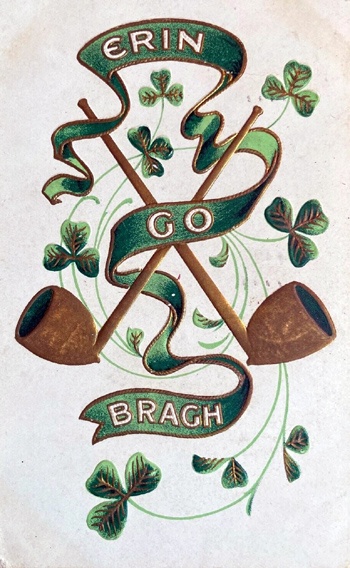
Standard dimensions for these postcards measure approximately 3½ by 5½ inches. Most are printed on medium-weight cardstock with a lightly coated front surface. Embossing, when present, raises selected design elements above the plane of the card. Shamrock clusters, banners, and decorative borders are frequent candidates for this treatment.
Chromolithography allowed for vibrant greens and golds. Metallic inks or applied gilt sometimes accent lettering. Over time, these finishes can dull, particularly if the cards were exposed to light or humidity. The tactile quality of embossed cards remains noticeable even after decades of storage. In Collecting St. Patrick’s Day Postcards, the condition of embossing is often examined under angled light to assess flattening or wear.
Back designs help establish production dates. Undivided backs, intended solely for the address, predate March 1907 in the United States. Divided backs, allowing space for both message and address, dominate thereafter. Most examples encountered in Collecting St. Patrick’s Day Postcards fall within the divided-back era, consistent with peak holiday production.
Printing origin influences material quality. German-printed cards frequently display dense, saturated color and sharp detail. American-printed cards of the wartime and immediate postwar period may appear slightly less refined, though still attractive. Variations in paper thickness and surface finish can sometimes be detected by touch alone.
Handwritten messages, fountain pen ink, and period stamps contribute additional layers. Ink may bleed slightly into paper fibers. Cancellations range from bold circular strikes to faint, partial impressions. While these elements were incidental at the time of mailing, they now serve as part of the physical record.
🍀 Who’s Collecting St. Patrick’s Day Postcards Today?
The contemporary audience for Collecting St. Patrick’s Day Postcards is varied but generally specialized. Some collectors focus broadly on holiday postcards, assembling representative examples from Christmas, Easter, Halloween, and St. Patrick’s Day. Others concentrate exclusively on Irish-themed material, extending beyond postcards to sheet music, trade cards, and paper advertising.
There are also collectors drawn to printing techniques. For them, embossed chromolithographic cards represent a high point in small-format commercial art. Within Collecting St. Patrick’s Day Postcards, such individuals may seek out the most technically accomplished examples rather than the most sentimental imagery.
Genealogical interest plays a role as well. A mailed card bearing a clear message and identifiable names can intersect with family history research. While this is not the primary focus of most collectors, it adds another dimension to the field.
Institutional archives occasionally include holiday postcards within broader ephemera holdings. Museums and libraries interested in print culture, immigration history, or graphic design may preserve representative examples. In private hands, however, the majority remain part of focused collections assembled over years of deliberate searching.
🍀 Where to Buy, Sell & Trade
Collectors typically encounter St. Patrick’s Day postcards in several settings. Postcard shows and paper ephemera fairs remain traditional venues. Dealers often organize stock by holiday, making it straightforward to compare examples side by side. Estate sales and antique shops yield occasional finds, though condition varies.
Online marketplaces have broadened access considerably. Sellers list individual cards or grouped lots, often with detailed photographs of front and back. For those engaged in Collecting St. Patrick’s Day Postcards, the ability to examine high-resolution images before purchase has changed how collections are built. At the same time, the absence of physical inspection requires careful attention to corner wear, surface scuffs, and back condition as represented in photographs.
Auctions, both general and specialized, sometimes include holiday postcard collections. These are usually offered as thematic groupings rather than single high-profile items. Collector forums and clubs also facilitate private trades, allowing individuals to refine their focus areas.
In practice, most examples remain accessible. They surface steadily rather than dramatically. For collectors committed to Collecting St. Patrick’s Day Postcards, patience and familiarity with design variations matter more than speed. Over time, representative examples from the key production years can be assembled through steady, informed acquisition.
And for those traveling through Southwest Iowa, Kilroy Was Here occasionally includes vintage holiday postcards within its seasonal displays, allowing collectors to examine and trade paper ephemera in person rather than solely through photographs.
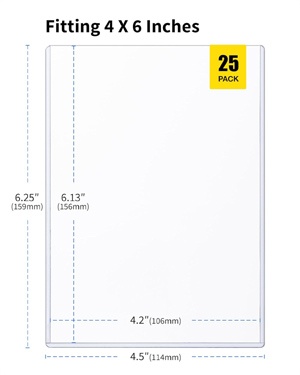
4x6 Top Loader Sleeves – Rigid Postcard Protectors (25 Pack)
Product Description:
These 4x6 rigid top loaders provide clear, structured protection for postcards, photographs, and paper ephemera. Designed to safeguard standard 4 x 6-inch materials, they offer visible display while helping prevent bending, surface abrasion, and edge wear.
Protection & Construction:
• Crystal-clear finish allows full visibility of postcard artwork and postal markings.
• Rigid PVC construction supports flat storage and careful handling.
• Semi-rigid structure resists bending while maintaining clarity.
• Sized to accommodate standard 4x6 postcards, photographs, and printed ephemera.
Collector Applications:
Ideal for organizing vintage St. Patrick’s Day postcards, seasonal greeting cards, exhibition pieces, and mailed historical examples. These sleeves help stabilize embossed surfaces and protect corners during storage or display.
Pack Quantity:
Includes 25 rigid 4x6 top loaders for structured collection management.