🎬 Best World War II Comedy Movies
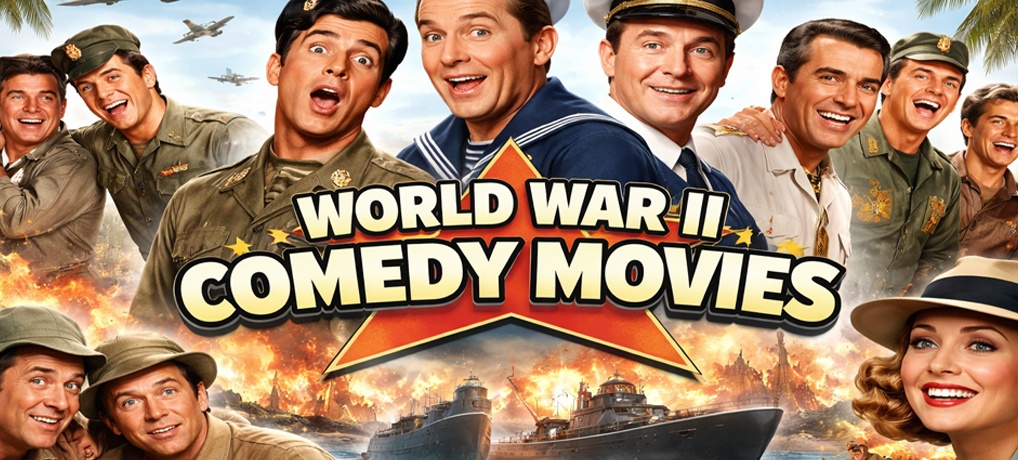
promotional collage representing World War II Comedy Movies across film and television
World War II Comedy Movies have long offered a balance of humor and history that makes them easy to revisit during relaxed summer viewing. The setting may be rooted in a serious period, yet these films often move with a light rhythm that suits warm evenings and casual watching. From early classics like At War with the Army from 1950 starring Dean Martin and Jerry Lewis, to broader productions such as Kelly’s Heroes from 1970 with Clint Eastwood and Donald Sutherland, the range is wide and inviting. Even modern audiences find that these stories hold up because the humor relies on timing, character, and simple human situations rather than trends.
World War II Comedy Movies refer to a category of film and television productions that used humor within wartime settings to present military life, social conditions, and human behavior during a global conflict. These productions often combined scripted narrative, performance routines, and musical elements to provide accessible entertainment during and after the war years. They were created to balance public morale with storytelling, offering audiences a way to engage with serious themes through controlled humor. Within film history, they represent a distinct approach to depicting conflict without direct emphasis on combat realism.
😂 Dean & Jerry Military Mischief
World War II comedy movies pack their routines with fast talk and slapstick gags. They keep everything light and fun. No heavy drama here. Just quick lines and wild falls.
Look at "At War with the Army" and "Jumping Jacks," both from 1952. Dean Martin and Jerry Lewis star as buddies in the military. Army life turns into total chaos. Their quirks fuel every laugh. One botched drill follows another.
Plot takes a back seat. The real draw is their clash. Martin plays it smooth and chill. He sings easy tunes and stays cool. Lewis? He's all over the place. Eyes bulge, arms flail, body twists in knots. That push-pull steals the show.
The films skip tight scripts. They flow loose, like a jazz tune or a big band number. Scenes burst out one after another. Feels fresh, almost like they're making it up on the spot. That's why crowds loved them back then. And folks still do. These tricks hold up. They dodge war's grim side with pure energy.
Discover more Celebrity Articles Here
🤣 Bud & Lou Go to War
Bud Abbott and Lou Costello stand out as the top shapers of World War II comedy movies. Their perfect timing hooked crowds right away. Think of their classic act. Abbott plays the sharp straight man. Costello acts like the goofy kid who trips over everything.
Take their 1941 hits. Buck Privates kicks it off. They stumble into the army by accident. Wild mix-ups follow, like dodging drills or botching inspections. Then In the Navy swaps boots for ships. Costello freaks at sea sickness routines. Keep 'Em Flying shifts to pilots. They wreck planes in silly chases.
Military life turns into pure chaos. Simple orders spark huge blunders. Exaggerated marches end in pratfalls. Costello's wide eyes and yelps sell the panic. Abbott's deadpan bossing keeps it tight. This back-and-forth builds a beat. Each gag lands on cue. Scenes fly by without a dull spot.
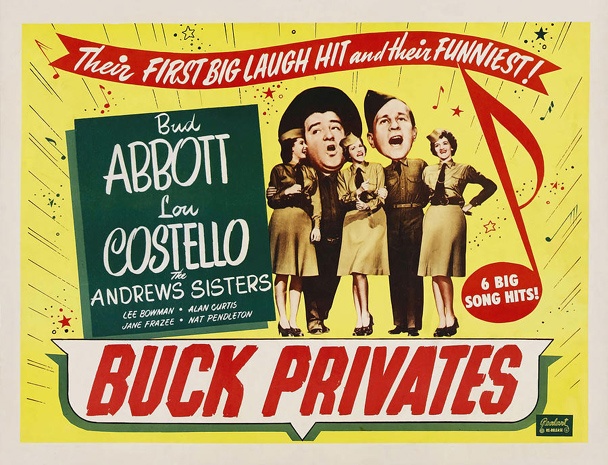
World War II comedy movies. Buck Privates
Music pops in too. The Andrews Sisters belt hits in Buck Privates. Their "Boogie Woogie Bugle Boy" fits the fun. Other films toss in swing dances and songs. Stars like Dick Powell join the mix in In the Navy. Shemp Howard adds rough laughs.
It all feels like a live variety show. Short skits, tunes, and acts blend smooth. Folks in 1941 ate it up. War news was grim. These World War II comedy movies offered quick laughs and pep talks. Lines snaked around theaters. They grossed millions fast. Costello later said their routines mirrored real army gripes, just amped up. That's why they clicked so hard.
🎖️ Bob Hope & Bing Crosby Wartime Laughs
Bob Hope and Bing Crosby paired up to shape comedy flicks during World War II. Their movies packed in songs and snappy back-and-forth chatter that kept folks laughing. Road to Morocco hit theaters in 1942. In it, the duo bumbles through desert trips, wild mix-ups, and jokes that poke fun at their own antics. They wink at the audience, like they know it's all a show. Road to Utopia came out in 1945. It stuck to that same road-trip chaos, full of goofy troubles and clever nods to movie tricks.
Bob Hope went solo in The Princess and the Pirate from 1944, teaming with Virginia Mayo. He plays a scaredy-cat hero dodging pirates and romance. The film keeps those quick gags and tune breaks, much like the Road pictures. All these stories skip heavy war talk. The fights and settings just frame the fun. Hope's timid charm clashes with Crosby's cool swagger, or Mayo's spark. Witty lines fly fast.
🤣 Hogan’s Heroes Style Camp Comedy
Television extended the reach of World War II Comedy Movies into weekly storytelling with familiar characters. Hogan’s Heroes presented a prisoner of war camp as a place of ongoing schemes and quiet rebellion, led by Bob Crane and supported by actors like Werner Klemperer.
Even within confined settings, World War II Comedy Movies found room for clever schemes and humor. Stalag 17 from 1953, with William Holden and Otto Preminger, while more grounded, still includes lighter moments that reveal how humor can exist alongside tension. These World War II comedy movies rely on planning, deception, and character interaction rather than action.
💰 Heist & Adventure War Comedies
Another type of World War II comedy movies dives into missions that mix real action with plenty of laughs. Take Kelly's Heroes from 1970. It stars Clint Eastwood as a sharp Army sergeant, Telly Savalas as a tough-talking leader with a bald head and cigar, and Donald Sutherland as a quirky tank driver. The plot kicks off when these GIs learn about a fortune in Nazi gold stashed behind enemy lines in France. They hatch a wild plan to steal it, dodging patrols and blasting through battles with tanks rumbling across open fields. The film ramps up the excitement with chases and shootouts, but goofy one-liners and oddball characters keep it fun and light.
Then there's What Did You Do in the War, Daddy? released in 1966. Directed by Blake Edwards, it stars James Coburn as a straight-laced sergeant leading troops into a sleepy Italian village. The locals surrender right away to save their town and wine harvest. Soon, the soldiers join fiestas, flirt with girls, and forget the war amid pasta feasts and soccer games. Military goals turn into silly side quests, like staging fake battles for show.
Both movies crank up the adventure by showing vast countrysides, rolling hills, dusty roads, and speedy convoys. They pull you in with big action scenes yet stay easy to watch, full of charm that pokes fun at soldier life without getting too dark. Fans love how these flicks capture the chaos of war through a buddy-comedy vibe, making history feel like a rollicking road trip.
🎭 Smart & Satirical War Comedy
World War II comedy movies often turned to satire for laughs. They poked fun at the heavy fears and chaos of those years. Directors used jokes to spotlight real dangers without scaring folks off.
Take The Great Dictator from 1940. Charlie Chaplin wrote, directed, and starred in it. He plays a Jewish barber who looks just like the tyrant Adenoid Hynkel. Chaplin based Hynkel on Adolf Hitler. The film jabs at fascism head-on. Remember the scene where Hynkel juggles a big balloon globe? It shows his mad dreams of world rule. Chaplin made this risky move before the U.S. joined the war. The movie pulled in big crowds and won praise for its gutsy humor.
Then there's To Be or Not to Be, out in 1942. Carole Lombard and Jack Benny lead the cast. They play actors stuck in Nazi-held Warsaw. The plot spins around wild disguises and whoops of wrong identities. Benny's character quotes Hamlet to fool a Nazi bigwig. "To be or not to be" becomes a sly resistance tool. Ernst Lubitsch directed it with his touch of style. The film mixes stage antics with the grim truth of occupation. It faced backlash at first for joking about Nazis. But it endures as a sharp take on fighting back through wit.
Catch-22 came later, in 1970. Alan Arkin stars as Captain Yossarian. Mike Nichols directed this take on Joseph Heller's book. The laughs turn black and bitter. Soldiers face endless flights and dumb rules. One pilot paints "Help" on his plane. Another rule says you stay safe by flying more missions. The movie nails war's plain madness. It hit screens after Vietnam heated up. Fans call it a key anti-war flick.
These World War II comedy movies prove comedy can cut deep. They let people laugh at terror. Satire helped process the war's mess. Viewers left theaters thinking, not just giggling.
🎬 Cary Grant & Classic Hollywood Charm
In more polished productions, World War II Comedy Movies carried a sense of charm through actors like Cary Grant. Mr. Lucky from 1943 and Once Upon a Honeymoon from 1942 show a smoother style, where romance and wit take the lead. Grant’s delivery is measured, allowing humor to emerge through timing and expression rather than exaggeration. These films maintain a lighter tone without losing their connection to the setting.
🎺 Musical & Lighthearted Wartime Fun
Music stole the show in some World War II comedy movies. It toned down the grim war scenes. Folks at home and troops overseas craved that lift. Hollywood knew it. They cranked out films to boost morale.
Look at This Is the Army from 1943. Soldiers filled the cast. They belted out tunes and danced in uniform. Then there's Yankee Doodle Dandy from 1942. James Cagney stars as songwriter George M. Cohan. He taps and sings with fire. Both movies weave in strong patriotic vibes. Songs praise America and the fight.
The flow works like this. Scenes tell the tale. Then boom, a song breaks in. Dance follows. Back to talk. This back-and-forth sets a even beat. It holds the fun mood tight. No big dips into gloom.
These World War II comedy movies shine light on acts over plot twists. Stars grab the spotlight with steps and belts. That echoes old-school fun from vaudeville days. Big revues ruled then. Crowds loved the flash. War times just amped it up for unity.
🎬 Jack Lemmon, Tony Curtis & Later-Era Comedy
Styles in World War II comedy movies shifted over time. They picked up a wider scope and snappier rhythm. Take Operation Petticoat in 1959. Cary Grant leads as a submarine captain. Tony Curtis joins as his quirky exec officer. The laughs come from chaos inside a sub. Pink paint covers the hull from stolen ladies' undies. That color pops on screen. Quick cuts and chases amp up the fun. It all fits the light mood.
Then there's Don't Go Near the Water from 1957. Glenn Ford stars as a Navy press guy. Jack Lemmon shines as his sidekick. They dodge mishaps on a Pacific isle. No heavy battles here. Just easy-going jabs at base life. Press duties turn silly. Rumors fly. Pranks pile up.
Both World War II comedy movies step away from stiff war tales. They race ahead with zippy edits. Gags land fast. Crowds ate them up back then. You see bits of today's sitcoms in them. Quick wit draws everyone in. No slow drags. Pure bounce.
🎯 Offbeat & Underrated WWII Comedies
Later films in the World War II comedy genre pushed boundaries. They brought in odd plots and surprise laughs that felt fresh. Take The Russians Are Coming, the Russians Are Coming from 1966. It shows a quiet coastal town in panic over a Soviet submarine that runs aground nearby. Folks from all walks of life scramble to respond. The movie mixes sharp satire on Cold War fears with deep looks at regular people. You see neighbors argue, bond, and grow amid the mess. This setup lets humor pop from real human quirks.
Then comes 1941, released in 1979. Steven Spielberg directed it. Stars like John Belushi and Dan Aykroyd steal scenes. The story spins out of control after Pearl Harbor. A Japanese sub lurks off the California coast. Panic hits Hollywood and beyond. Planes crash. Tanks roll through streets. Comedy builds from huge crowds, wild stunts, and over-the-top reactions. Belushi plays a hothead pilot. Aykroyd leads bumbling soldiers. Chaos rules every frame.
These picks highlight big changes in the genre. Early war comedies stuck to simple gags. New ones layered in satire and epic scale. They kept audiences hooked as tastes shifted through decades. Viewers got laughs plus smart takes on fear and folly.
🌟 Strong Female Leads & Scene Stealers
Stars like Carole Lombard proved WWII comedy films got a big lift from bold women. These movies aimed to cheer folks up during tough times. They mixed laughs with war hints. Lombard's role in To Be or Not to Be shines bright. Released in 1942, the film stars her as Maria Tura. She plays a stage actress in Nazi-held Poland. Her sharp wit and cool nerve steal scenes. She spars with husband Jack Benny's ham actor. That mix of jokes and guts drew crowds. Critics loved her spark.
Claudette Colbert steps up in So Proudly We Hail from 1943. She plays a nurse facing battle horrors. Her calm strength anchors the group. Real nurses inspired the tale. Colbert's warmth cuts through the stress. Fans saw her as tough yet real.
Ginger Rogers brings zip in The Major and the Minor, also 1942. She poses as a boy to dodge train fare. Her sly tricks spark fast fun. Paired with Ray Milland, she flips gender roles for laughs. Rogers dances through mix-ups with ease.
These women led charges early. These World War II comedy movies did not stick to men only. They grabbed spots front and center. That set the tone for more gals in the mix.
🏆 Why These World War II Comedy Movies Still Work
These World War II comedy movies continue to hold attention because they rely on timing, character, and clear storytelling. The humor does not depend on trends, which allows it to remain accessible across generations. By combining familiar human behavior with structured situations, they offer a steady form of entertainment that fits comfortably into any viewing schedule. The balance between lightness and context gives them a lasting place in film history.
Further Reading & Resources
📖 Read: World War II Comedy Movies - Ranker
🔍 Explore: List of World War II Comedy Movies - Wikipedia
ML Lamp is the owner of Kilroy Was Here. After his 20 years of working in Las Vegas in the entertainment promotions field, Mr. Lamp retired in 2002 from his job to pursue his passion for collectibles. Now as a guest speaker and author he’s living the dream, and sharing his warmth with You.