From Bullet Bras to Magic Fingers: A Mid-Century Motel
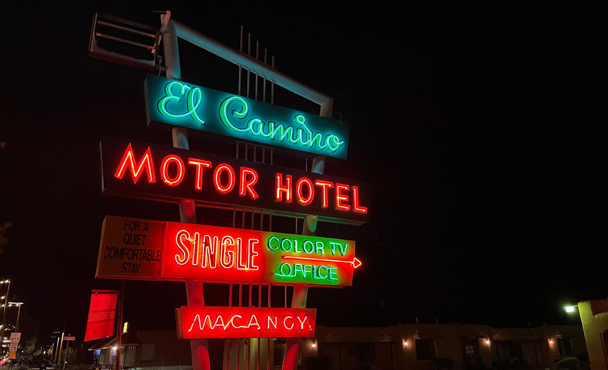
For travelers in the 1950s, 1960s, and 1970s, pulling into a motel parking lot was its own kind of thrill. The neon sign buzzed and flickered against a darkening sky. A metal key dangled from an oversized fob. The room ran you about twenty dollars a night, and inside waited a collection of items that felt completely ordinary then and almost alien now.
This was the mid-century motel. And it had a personality all its own.
Push open that door. Step inside. Look around. Because what you find in here tells the whole story of how Americans used to travel, sleep, and move through the world.
📺 Coin-Operated Television Sets
Pay-per-view did not start with cable. It started with a coin slot bolted to the side of a television set.
Budget motels in the 1950s and 1960s experimented with coin-operated TV systems that required guests to feed quarters into a box mounted near the set. Run out of coins mid-program and the screen went dark. It sounds maddening by today’s standards, but at the time it was a reasonable business arrangement. Motel owners got a little extra revenue. Guests decided for themselves whether an evening of television was worth the spend.
The technology was clunky. The picture quality was often poor. And yet travelers fed those quarters in night after night, because television was still new enough to feel like a privilege worth paying for.
🛏️ Magic Fingers
If you know, you know.
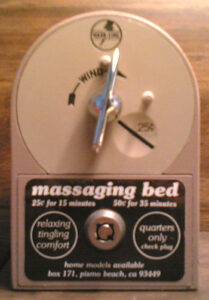
Magic Fingers was a vibrating bed system that turned up in motels across America starting in the early 1960s. A small machine bolted to the bed frame accepted coins and rewarded the guest with several minutes of low-frequency vibration, marketed as a relaxing massage experience. The company’s promotional materials leaned hard into the relaxation angle. Twenty-five cents bought you roughly fifteen minutes of buzzing mattress.
Did it actually relax anyone? Opinions varied wildly. Some travelers swore by it. Others found it more amusing than soothing. Either way, virtually everyone tried it at least once, and virtually everyone remembered it for years afterward.
Magic Fingers became one of those rare commercial gimmicks that crossed over into genuine cultural memory. It showed up in movies, in magazine jokes, in travel writing. It became shorthand for a certain kind of unpretentious American road trip experience. You were not staying at the Ritz. You were staying somewhere honest and a little weird and completely wonderful.
📞 Wake-Up Call Cards
Before the smartphone alarm and before the clock radio, there was a card on the nightstand and a real human being at the front desk.
Many motels provided small printed cards that guests could fill out with their requested wake-up time. You wrote down the hour, dropped the card at the desk, and trusted that someone would call your room in the morning. A telephone would ring. A voice would say good morning. That was the whole system.
It worked. People got up. Flights were caught.
There is something quietly lovely about that arrangement, a small transaction of trust between a traveler and a stranger, conducted entirely without technology.
✉️ Hotel Stationery
People wrote letters when they traveled. Real ones, on paper, with stamps.
Motels understood this and supplied the tools. A folder near the desk held a few sheets of letterhead, matching envelopes, and sometimes a postcard or two printed with a photograph of the property. Travelers used this stationery to check in with family back home, handle business correspondence on the road, or dash off a quick note to a friend.
The paper was usually thin. The motel name was printed across the top in a font that meant business. And somewhere out there, in attics and shoe-boxes across the country, those letters still exist.
🧵 Sewing Kits
A loose button was a genuine problem in an era when people dressed up to travel.
Men wore suits on airplanes. Women wore dresses and heels. Presenting yourself well was not optional, it was expected. So motels, especially those catering to business travelers, kept small sewing kits on hand. A few colors of thread, a couple of needles, a spare button or two. Nothing elaborate. Just enough to solve the problem so the day could continue.
The gesture said something about how lodging properties thought about their guests. You were not just renting a bed. You were a person with a full schedule and real needs, and the motel was there to help you manage both.
👞 Shoe Shine Cloths
Same logic, different problem.
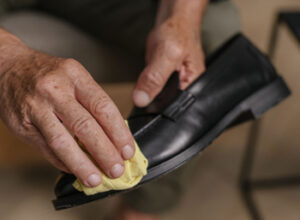
A scuffed shoe in a business meeting was a small catastrophe. Motels solved it with a folded cloth tucked into a paper sleeve, usually left near the bathroom or on the closet shelf. Basic polishing supplies. Sometimes a small tin of neutral paste. The kind of thing you used quickly in the morning light and then forgot about entirely until the next time you needed it.
These tiny amenities added up to something larger than their individual parts. They told a traveler, without words, that this place had thought about what you might need.
🚬 The Ashtray Bigger Than Your Dinner Plate
It was not hidden in a drawer. It was not tucked behind the television. It sat right there on the nightstand, front and center, a slab of glass or ceramic big enough to double as a serving dish.
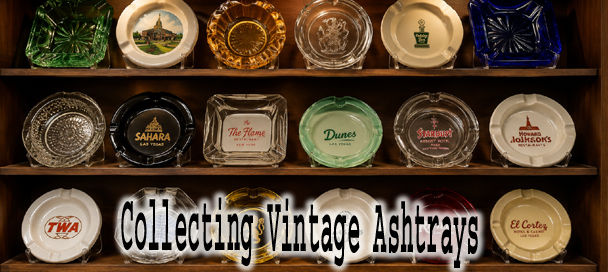
Smoking was woven into the fabric of mid-century American life. Motels supplied ashtrays that matched the decor, and many of them were genuinely handsome objects. Heavy, substantial, often sporting the motel’s name or logo in bold lettering. Some were shaped like wagon wheels or sunbursts. Others were simple thick-rimmed glass. All of them were big, because that was the style and that was the need.
Today those ashtrays turn up at flea markets and antique shops, and collectors snap them up fast. They have become one of the quickest ways to date a room, a photograph, or an era.
📚 Matchbooks and Local Advertising
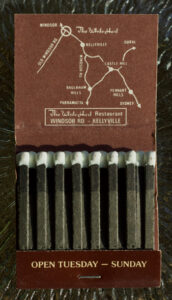
Before Yelp. Before Google Maps. Before the review aggregator and the algorithm.
There was the matchbook.
Motels kept racks of printed materials near the front desk and often scattered them through the rooms. Matchbooks from the diner next door. Brochures from the roadside attraction ten miles up the highway. Fold-out maps of the city. Restaurant guides with coupons clipped to the front cover.
Travelers gathered these materials the way people today gather recommendations from apps. You picked up what looked interesting, you stuffed it in your pocket, and you made decisions from there. The system was imperfect and charming and deeply local. Every stack of matchbooks told you exactly where you were.
📖 The Gideon Bible
Pull open the bedside drawer and there it is.
The Gideon Bible was such a fixture of American motel life that most travelers stopped noticing it. The Gideons International organization placed Bibles in hotel and motel rooms across the country for decades, and by the height of the roadside travel era, finding one was as expected as finding a pillow on the bed. Many properties still carry on the tradition today, but during the mid-century years it was simply understood. You checked in, you found your Bible, you went about your evening.
Nobody thought twice about it. That was the point.
🗝️ The Giant Motel Key Fob
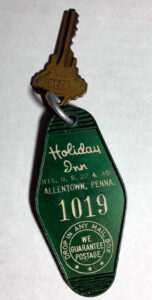
Nobody lost the key.
That was the whole point of the oversized plastic or wooden fob attached to every room key. You could not accidentally drop it in your pocket and walk off with it, or at least not without knowing it was there. The fob was too large, too present, too committed to being noticed.
Many of them carried the motel’s name, address, and room number. Some were shaped like shields or pennants. Others were simple rectangles with bold block lettering. All of them were a design solution to a real problem, and they worked beautifully.
Today they are prized collectibles. Turn up at an estate sale with a box of old motel keys and watch people reach for them first.
Why the Mid-Century Motel Disappeared
Technology solved the problems these objects were invented to address.
Coin-operated televisions became irrelevant when cable came standard. Wake-up call cards gave way to clock radios and then to smartphones. Stationery folded when email arrived. Smoking restrictions cleared the giant ashtrays from nightstands and eventually from rooms entirely. Chain hotels standardized their amenities across thousands of locations, smoothing out the quirks and regional personality that once made every motel feel specific to its place on the map.
Progress, mostly. But something was lost in the smoothing.
Collecting Mid-Century Motel Memorabilia Today
The objects survived even when the culture that produced them did not.
Collectors actively seek out matchbooks, room keys, ashtrays, postcards, stationery, brochures, and anything connected to Magic Fingers. Online marketplaces and antique shops do steady business in this material. Estate sales in older communities turn it up regularly.
And of course if you’re in Southwest Iowa, don’t forget to stop by Kilroy Was Here! We’ve got a growing collection of vintage items, and we’re always open to trades or just talking shop with fellow collectors.
- Matchbooks
- Room keys and key fobs
- Ashtrays
- Postcards and stationery
- Advertising brochures
- Magic Fingers
What draws people to it is not just nostalgia, though nostalgia is certainly part of it. It is the tangible connection to a specific American moment. These objects were handled by real travelers on real roads during a period when the country was actively in love with its own mobility. They carry that history in their weight and their wear.
Why the Mid-Century Motel Still Holds Us
The appeal is not really about the objects.
It is about the experience they point toward. Family vacations with the station wagon packed to the roof. Business trips down two-lane highways. Summer road trips with no itinerary and a tank full of gas. The particular freedom of a night in an unfamiliar room with a neon sign humming just outside the window.
The mid-century motel was not luxury. It was not trying to be. It was a clean room, a workable shower, and a small collection of thoughtful touches that said someone had considered what a tired traveler might need.
Magic Fingers and all.
A World Worth Remembering
From the Gideon Bible in the nightstand drawer to the giant key fob swinging from your hand, the mid-century motel room was a world unto itself. Ordinary then. Extraordinary now. For millions of Americans those rooms were simply where you slept on the way to somewhere else. Looking back, they were something more: a specific and unrepeatable chapter in the long story of how this country learned to move.
Further Reading & Resources
📖 Read: Mid-Century Motels on Historic Route 66