Sounds to Make You Shiver: The Creepy Halloween Record Disney Didn’t Make
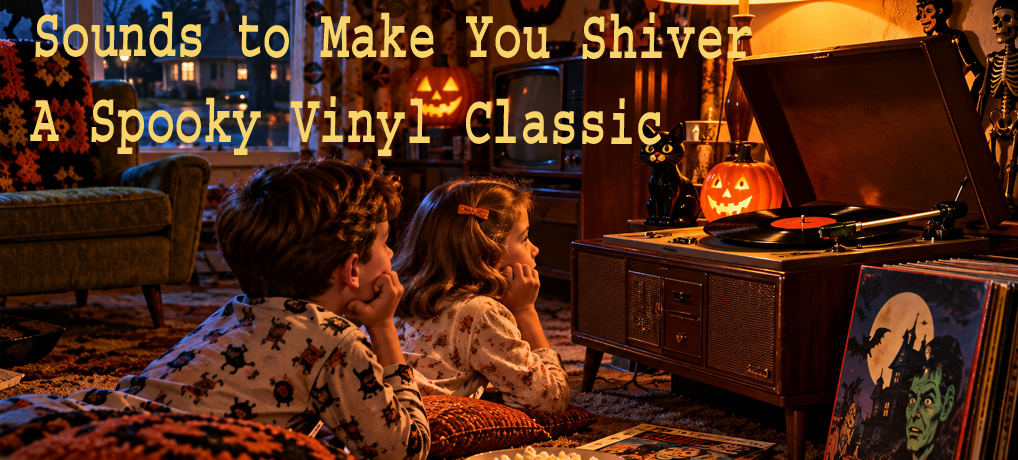
Sounds to Make You Shiver brought haunted-house noises and monster sounds into American living rooms in 1961.
My Rating: ⭐ ⭐ ⭐ ⭐ ⭐ 4.7 / 5
Sounds to Make You Shiver holds a real claim to being one of the earliest Halloween sound effects records ever pressed. It reached the American home market in 1961. Released in 1961 on the budget label Soma Records, it beat the far more famous Disney version to store shelves by three full years. Long before Halloween playlists and streaming apps existed, families reached for a record like this one. It filled a dark living room with screams, creaking doors, and monster growls. This look at Sounds to Make You Shiver traces where the record came from. It also covers what it actually sounds like and why it still matters to collectors today.
Halloween Night on a Turntable
Households in 1961 had no digital Halloween audio of any kind. There was no app, no streaming playlist, and no easy way to summon a haunted house atmosphere at the flip of a switch. A record like this filled a real gap. Parents planning a Halloween party, or a haunted house walkthrough in the garage, needed something they could drop a needle on and let run.
Radio drama had already trained an entire generation to expect real tension from sound alone. Programs like Lights Out and Inner Sanctum Mysteries spent the 1930s and 1940s proving a point. A creaking door or a distant scream, delivered without any visual accompaniment, could unsettle a listener sitting in a dark room. Sounds to Make You Shiver drew directly on that same tradition, just repackaged for a new decade and a new format.
Budget labels like Soma understood this gap well. Soma Records operated out of Minneapolis and specialized in inexpensive pressings sold through drugstores, variety stores, and discount racks rather than dedicated record shops. A record like Sounds to Make You Shiver did not need chart ambitions. It only needed to sound scary enough to justify its low price tag on a seasonal display rack in early October.
That practical goal shaped the whole release. Side one and side two split the experience into two very different listening formats. This gave buyers flexibility depending on how they planned to use the record at home. This dual structure paired one continuous narrative side with one collection of standalone effects. It would go on to become the standard template nearly every later Halloween sound effects record followed. A buyer might want a full spooky story to play during a party. Others wanted individual sounds to trigger at the front door for trick or treaters. This single LP tried to cover both uses at once.
 Discover More Record & Vinyl Information
Side One: A Night in a Haunted House
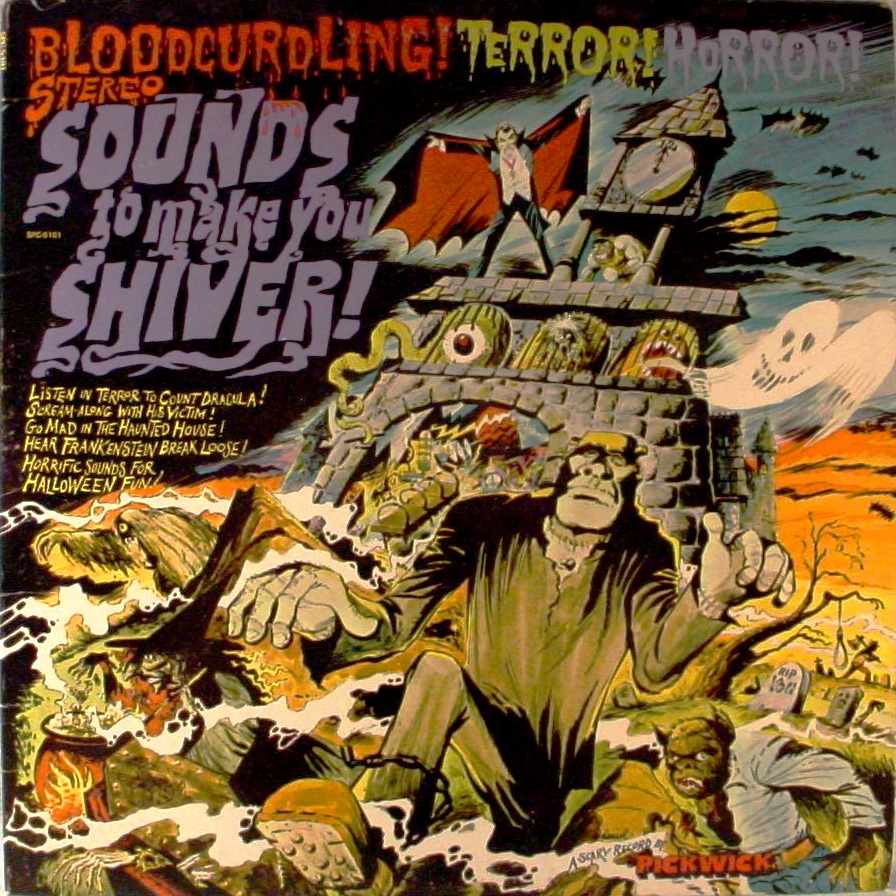
Ft Cover art of the 1961 Sounds to Make You Shiver Album
Side one of Sounds to Make You Shiver plays out as a continuous experience. It is framed as a walk through a haunted house from start to finish. Creaking doors give way to footsteps on old wooden stairs. Distant thunder rolls beneath low moans and sudden screams. The format mirrors what would later become a standard structure for this kind of record. It guides the listener through a single unbroken scene rather than presenting isolated sound clips.
This narrative approach asked more of the listener than a simple sound effects reel. Played in a dark room, side one worked almost like an old time radio drama stripped of dialogue. It relied entirely on sound design to build tension from one moment to the next. A listener has to actively imagine the hallway, the staircase, and the closed door behind which something is waiting. The record offers no visual cues and very little spoken narration to guide that imagination.
Side Two: Build Your Own Haunted House
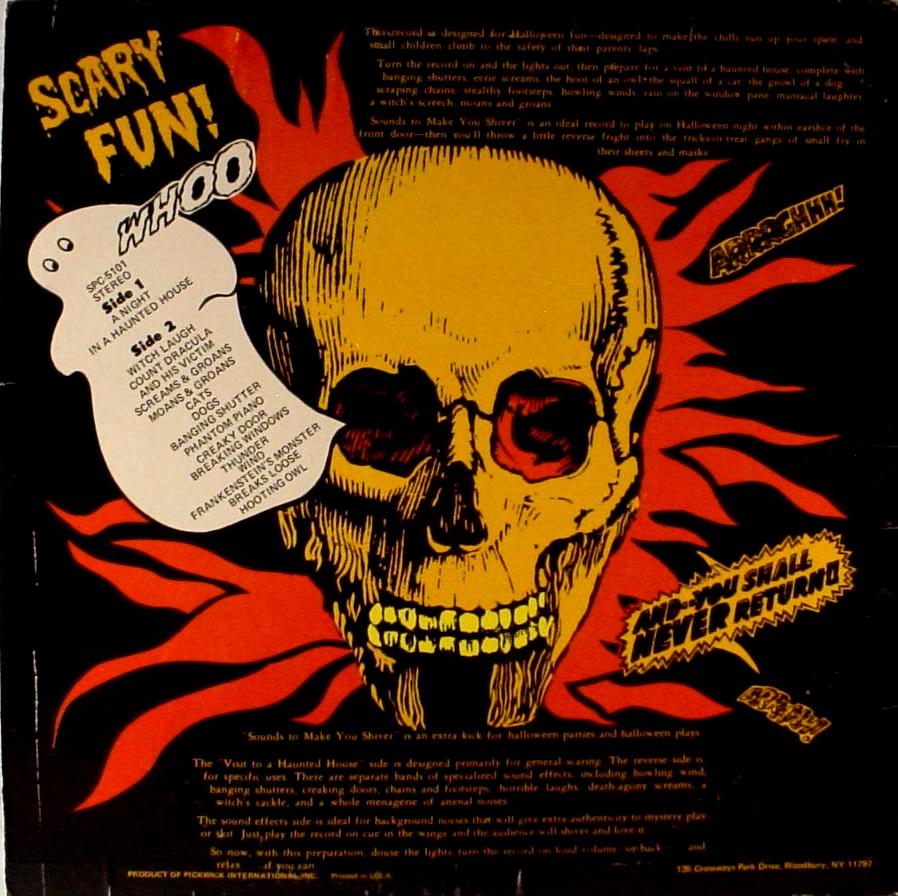
Back Cover Art of Sounds to Make You Shiver LP
Side two takes a completely different approach, breaking the experience apart into individual pieces a listener could use however they liked. Screams, monster growls, footsteps, slamming doors, and howling wind all appear as separate tracks rather than one continuous scene.
This side leaned heavily on electronic sound generation rather than recorded natural effects. Listeners and collectors have long noted that much of side two relies on a theremin, the eerie electronic instrument known for its wavering, otherworldly tone. Invented in the early 1920s, the theremin is played without any physical contact between the performer's hands and the instrument itself.
It produces a pitch that slides and wavers in a way no traditional instrument can easily match. Few other budget Halloween records of the era leaned on such an unusual instrument for their core monster sounds. That choice gives the monster and creature sounds a strange quality that natural recordings could not easily replicate. It separates this record from competitors that leaned more heavily on stock sound effects libraries pulled from film and radio archives.
The result was a do it yourself haunted house kit in audio form, decades before that phrase existed. A family could mix and match individual tracks from side two to build a custom soundscape. This worked far better for a front porch or garage display than the fixed narrative structure of side one.
Dracula, Frankenstein and the Monster Craze
Sounds to Make You Shiver arrived at an interesting moment in monster culture. Universal's classic horror films from the 1930s and 1940s had returned to television just a few years earlier. Screen Gems' Shock Theater package, a syndicated bundle of 52 Universal horror titles, hit local television stations starting in 1957. That package introduced Dracula, Frankenstein's monster, and the Wolf Man to an entirely new generation of young viewers. Most of them had never seen the films in a theater.
That renewed exposure fed directly into a growing monster kid subculture. Aurora began releasing its now famous monster model kits right around this same period. The line started with a Frankenstein's monster kit in 1961, the very same year this record hit stores. Famous Monsters of Filmland magazine had already built a dedicated readership among young horror fans since its 1958 debut. A year later, Bobby Pickett's novelty single Monster Mash would top the Billboard chart just before Halloween of 1962. That proved classic monster imagery had become mainstream rather than a niche late night television interest.
Sounds to Make You Shiver rode this same wave without needing name recognition from any specific film or character. Its cover and content leaned on generic monster imagery familiar to anyone who had absorbed even a little of this new wave of horror media. That made it an easy impulse purchase for parents shopping for Halloween supplies.
Home haunted house culture was also taking shape during this same period. Families began turning garages and front porches into small scale attractions for neighborhood trick or treaters. A record built to fill a room with screams and creaking doors fit naturally into that growing tradition. It gave amateur haunters an affordable way to add atmosphere without any technical skill required. A single needle drop could turn an ordinary garage into a convincing haunted corridor for the length of an entire side. That freed the family running the attraction to focus on costumes and props instead of manually producing sound effects by hand.
The Cover That Sold the Scare
Cover art played a huge role in selling records like this one from a store shelf. Sounds to Make You Shiver leaned hard into vivid, colorful monster illustration rather than a plain photograph or simple typography. The cover is credited to artist Stuart Kloner. It packs multiple monster figures into a single busy composition designed to catch a shopper's eye from several feet away.
This kind of cover mattered enormously for a budget label release. Without radio play or major advertising behind it, the record depended entirely on catching attention at the point of sale. A loud, colorful cover crowded with grinning monsters did exactly that job, standing out against quieter, more conservative album art nearby on the same rack.
Before Disney’s Haunted House Record
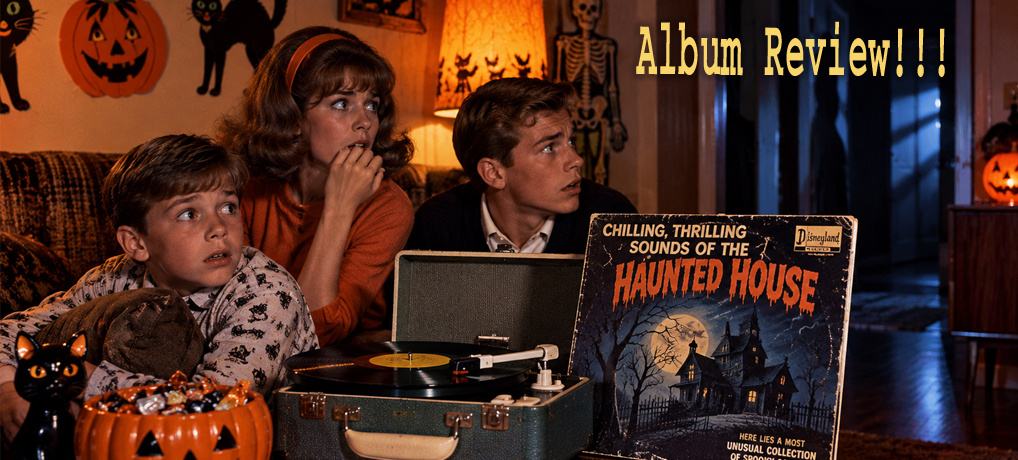
Sounds to Make You Shiver holds a clear date advantage over its more famous competitor. Disney did not release its own entry into this genre until 1964. Chilling, Thrilling Sounds of the Haunted House arrived a full three years after this record first appeared.
Disney's version went on to become the far more recognized name in Halloween sound effects records. The studio's marketing reach helped, along with the album's later certification as a gold record. Sounds to Make You Shiver never achieved that level of mainstream recognition. Its earlier release date still gives it historical weight among collectors who track the format's origins. Disney had the benefit of an established children's entertainment brand behind every release. Soma had to earn its shelf space purely on the strength of a loud cover and a low price tag. That makes its success in the budget record market even more notable.
Chilling, Thrilling Sounds of the Haunted House: Disney's Creepy Halloween Record
The Later Pickwick Edition
Soma Records did not survive as an independent label much past the mid 1960s. The company's distribution operation merged into Pickwick Records in 1967. Pickwick was a larger budget label that spent the following decade reissuing older catalog material under new packaging.
This merger explains a common source of confusion for collectors today. Pickwick frequently repackaged older recordings from labels it had absorbed. Cover art and printing dates were sometimes altered, with little connection to when the original recording was actually made. Copies of Sounds to Make You Shiver that surface with a 1974 date reflect this later Pickwick pressing. They are not a new recording from that year. The audio content on these later pressings typically matches the original 1961 Soma release closely, even though the packaging suggests a much later origin.
What Collectors Should Look For
Collectors chasing an original pressing should learn to spot the difference between these two eras of the same record. The earliest copies will carry the Soma Records label and matching catalog information directly on the record itself, not just on the cover. Later Pickwick copies typically swap in Pickwick's own label design on the record. They sometimes retain Kloner's original cover artwork, which can make quick identification tricky without checking the actual pressing. Sellers who cannot confirm which label appears on the actual disc, rather than just describing the cover, deserve some extra scrutiny from serious buyers.
Cover condition matters enormously given how much of this record's appeal rests on Kloner's artwork. Faded colors, heavy creasing, or a torn spine seam all reduce value significantly. The visual impact of the cover is a major part of what collectors are paying for. Buyers should also check the catalog number printed on the record label against any listing description. Mismatched or missing numbers can indicate a mislabeled reissue or a mismatched cover and disc pairing.
Vinyl condition deserves equally close attention. Surface noise and scratches interfere directly with a record built entirely around subtle sound design. A quiet creak or distant moan can be lost entirely beneath unwanted pops and crackle. A copy graded below Very Good on the standard collector scale may already have lost some quieter effects. Accumulated surface wear tends to bury the lower level sounds first. Buyers should also confirm which edition they are looking at. Soma and Pickwick pressings can carry noticeably different values among serious collectors despite containing largely the same audio.
Does Sounds to Make You Shiver Still Work?
The real test for any record like this is simple. Does it still work when played the old fashioned way, on an actual turntable, in a dark room, on Halloween night?
Sounds to Make You Shiver holds up better than many listeners might expect from a budget label release over sixty years old. Side one's continuous haunted house narrative still builds real tension when played straight through without interruption. This holds especially true for anyone unfamiliar with its specific sequence of sounds.
Side two's theremin heavy monster effects carry a strange, otherworldly quality that modern digitally generated sound effects rarely replicate. That analog electronic texture gives the record a character distinctly its own. It stands apart from both its natural sound competitors and anything produced with today's software tools.
Playing this record at a Halloween gathering today offers something a phone speaker simply cannot. The format demands a working turntable and a bit of patience. That extra effort pays off in a different listening experience than any modern playlist provides. There is also something fitting about hearing a sixty plus year old record crackle to life through an actual needle and cartridge. That adds a layer of authentic vintage texture a clean digital file could never reproduce.
Younger listeners who grew up entirely on digital audio often react to records like this one with surprise. The limitations of 1961 recording technology work in the record's favor rather than against it. The hiss, the mono mix, and the slightly uneven levels between tracks lend every scream and creak an unmistakably aged, analog character.
Final Rating
Sounds to Make You Shiver earns a strong recommendation for any collector of vintage Halloween ephemera or vinyl novelty records. Kilroy rating, 4.7 out of 5. Its early release date, its striking Kloner cover art, and its strange theremin driven second side all add up. This record offers real substance beneath its budget label origins. Pricing on the open market varies considerably based on edition, cover condition, and vinyl grade.
Patient shoppers willing to compare several listings will generally find better value than those buying the first copy they see. Anyone building a collection of vintage Halloween audio should track down a copy, whether an early Soma pressing or a later Pickwick reissue. Give it a proper spin on an actual turntable this October.
ML Lamp is the owner of Kilroy Was Here. After his 20 years of working in Las Vegas in the entertainment promotions field, Mr. Lamp retired in 2002 from his job to pursue his passion for collectibles. Now as a guest speaker and author he’s living the dream, and sharing his warmth with You.