The Legend of Hell House: The Sinister 1973 Haunted House Experiment
My Rating: ⭐ ⭐ ⭐ ⭐ ⭐ 4.6 / 5
The Legend of Hell House arrived quietly in theaters just six months before The Exorcist redefined horror for an entire new generation of moviegoers. Released in 1973 and directed by John Hough, the film combines old fashioned Gothic dread with distinctly modern scientific equipment. Cameras, microphones, and a physicist's homemade machine all play a role. This look at The Legend of Hell House covers its haunted house and its cast. It also covers why the film still holds a devoted following among horror fans decades later.
Welcome to the Mount Everest of Haunted Houses
Belasco House earns its dark nickname within the film's very opening minutes. Those who know its grim history describe it directly as the true Mount Everest of haunted houses. The mansion once belonged to Emeric Belasco, a six foot five inch sadist and murderer. His long reign inside the house ended when he suddenly vanished following a massacre on the property.
Actor Michael Gough, already a familiar face in British horror by this point in his career, appears uncredited as Emeric Belasco himself. His menace hangs over the entire film even in his limited direct screen time. The house Belasco left behind carries his violent legacy in every hallway and locked room. The new investigators cannot fully understand that legacy until they experience it firsthand.
Every previous investigation into Belasco House, without exception, has ended in death, injury, or lasting madness for everyone unlucky enough to be involved with it. That established, well documented reputation gives the film's central premise real weight from the very first opening scene onward. The audience understands exactly what kind of danger the new team faces before a single door creaks open.
The Millionaire Who Wants Proof of Life After Death
An aging, eccentric millionaire named Rudolph Deutsch funds the investigation at the center of the story. He hopes to finally settle a question that has occupied him for years. Deutsch wants definitive proof of survival after death, and he is willing to pay handsomely to get it.
Each expert on the team stands to earn 100,000 pounds for just a single week of work inside the house. That was an enormous sum in 1973, worth close to 1.5 million dollars today. That generous payout underlines just how seriously Deutsch really takes the entire question at hand. It also shows how confident the team must be, given how much historical risk comes attached to this assignment.
Roland Culver plays Deutsch as a frail, aging figure. His obsession with the afterlife question has clearly consumed much of his remaining time, energy, and considerable personal fortune. Peter Bowles appears alongside him as Hanley, Deutsch's assistant. Hanley handles the practical arrangements while his employer waits at a comfortable distance from the actual danger.
Scientist Versus Medium
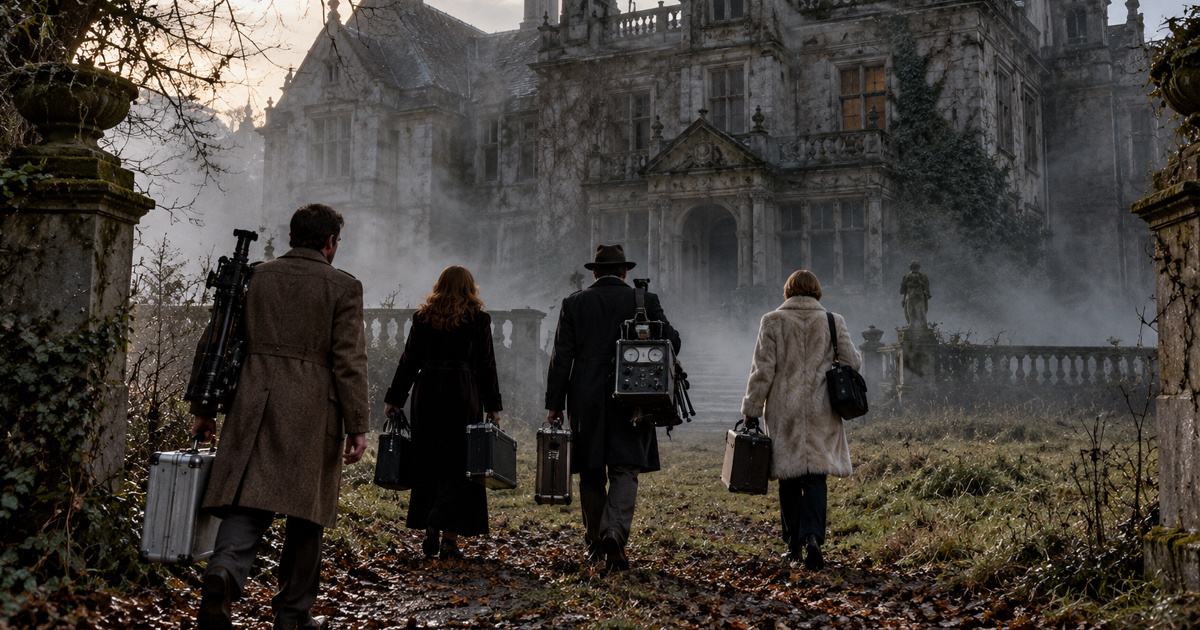
Physicist Dr. Lionel Barrett leads the entire investigation with a strictly scientific, methodical approach throughout. His toolkit includes cameras, microphones, and a device of his own design meant to detect and neutralize whatever energy might cause the house's reported phenomena. Barrett believes firmly that any haunting can ultimately be explained through pure physics rather than spirits. His unwavering confidence in that theory drives much of the film's central, sustained tension.
That confidence puts him directly at odds with the two mediums brought along specifically to cover the spiritual and psychic side of the investigation. Barrett dismisses all talk of ghosts and possession as superstition standing in the way of a real scientific answer. Events inside the house grow increasingly difficult to fully explain through instruments alone.
This conflict between rational skepticism and spiritual belief runs through nearly every scene the characters share together. Neither side fully wins the argument as the investigation unfolds. The film uses that unresolved tension to keep both the characters and the audience uncertain about where the story is actually headed next.
Gayle Hunnicutt plays Ann Barrett, the doctor's wife. She arrives at the house with far less preparation for what awaits her than the professional investigators around her. Ann quickly becomes one of the house's primary targets. Her judgment and behavior shift in ways that strain her marriage to a man convinced none of it can be truly real.
The team fulfills its basic contractual obligations within the first day or two of arriving at the house. Objects begin moving and disembodied voices start moaning through the empty rooms almost immediately, faster than any of them expected. Barrett records everything with his cameras and microphones, gathering what should already be more than enough evidence to collect their fees and leave. Instead, the team chooses to stay, determined to understand exactly what they are dealing with rather than simply documenting it and walking away.
Roddy McDowall Returns to the House That Nearly Killed Him
Roddy McDowall plays Ben Fischer, a professional medium with a very personal connection to Belasco House. Twenty years earlier, as a teenager, Fischer took part in an earlier investigation of the same property. That earlier attempt left every other participant dead, injured, or permanently damaged. Fischer alone walked away relatively intact from that earlier disaster. That hard won survival has left him guarded and reluctant to fully engage with the house a second time.
By the time this second investigation begins, McDowall's Fischer carries himself like a man who already paid this house's price once. He has no intention of paying it twice. He answers questions carefully and offers little unprompted information. He watches the rest of the team with the weary patience of someone who already knows how badly this can go.
McDowall plays Fischer with a deliberately withdrawn, watchful quality that separates him sharply from Florence's more open, hopeful energy. Fischer has clearly learned something painful from his first encounter with this house, even if he never fully explains what that lesson cost him. McDowall lets that history show through small, careful choices rather than heavy exposition.
Pamela Franklin as Florence Tanner
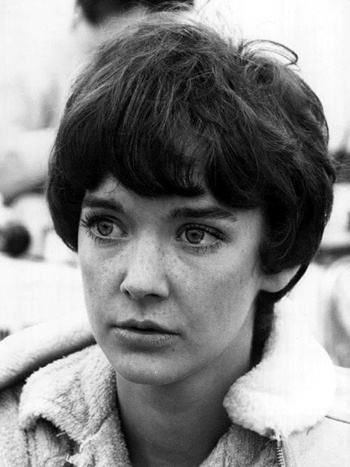
Pamela Franklin plays Florence Tanner, a young mental medium whose relationship with the house grows more personal and more dangerous as the investigation continues. Florence approaches the assignment with optimism. She believes she has made contact with the spirit of Belasco's son, Daniel. Helping his troubled soul find peace, she thinks, may resolve the house's violence altogether.
That belief pulls Florence deeper into the house's influence than any other character, and her arc becomes the emotional and spiritual center of the film. Franklin had already built a career playing complicated young women in films including The Innocents. She brings real conviction to Florence's growing entanglement with whatever actually inhabits Belasco House.
Florence's optimism sets her apart from every other character in the investigation. It stands in sharp contrast to the caution and hesitation shown by nearly everyone else on the team. That same optimism becomes both her greatest asset and her greatest vulnerability as the week progresses. Barrett approaches the house with detached scientific caution, and Fischer approaches it with hard earned wariness. Florence approaches it with an open heart, believing she can help a suffering spirit find peace. The house appears to recognize that openness almost immediately. It exploits her compassion far more directly, and far more cruelly, than it exploits anyone else's fear or lingering skepticism.
Franklin's performance carries the emotional weight of that vulnerability convincingly. Florence grows increasingly isolated from the rest of the group as her private connection to the house deepens. The other characters grow visibly concerned about how far she seems willing to go.
Machines Enter the Haunted House
The film distinguishes itself from older, more traditional ghost stories through its heavy reliance on period appropriate scientific equipment. Dr. Barrett arrives with cameras and recording devices, along with a custom built machine of his own personal design and construction. It is intended to reverse or neutralize the electromagnetic energy he believes causes the house's phenomena.
This combination of Gothic setting and modern investigative technology gives The Legend of Hell House a distinct feel. Earlier haunted house films leaned entirely on candlelight and superstition instead.
The film arrived at a moment when parapsychology and psychic research occupied a serious place in popular culture. They were not purely fringe entertainment topics at the time. Real laboratories at universities were studying claims of extrasensory perception during this same decade. The Legend of Hell House taps directly into that context, presenting Barrett's work as a plausible, methodical experiment rather than pure fantasy. Shaking tables, exploding glassware, and other practical effects unfold alongside blinking scientific instruments. That grounds the supernatural elements in a framework that feels, at least on the surface, like a legitimate experiment rather than a seance.
The film's unusual score reinforces that same tension between old and new. Composers Delia Derbyshire and Brian Hodgson were both associated with the BBC Radiophonic Workshop and known for pioneering early electronic music. Together they built an unsettling soundscape far removed from a traditional orchestral horror score.
Derbyshire was already known within electronic music circles for her uncredited realization of the original Doctor Who theme years earlier. She brought a experimental sensibility to Hell House that few horror productions of the period attempted. Her contributions here helped cement the film's reputation as something stylistically distinct from its more conventionally scored contemporaries.
The Legend of Hell House
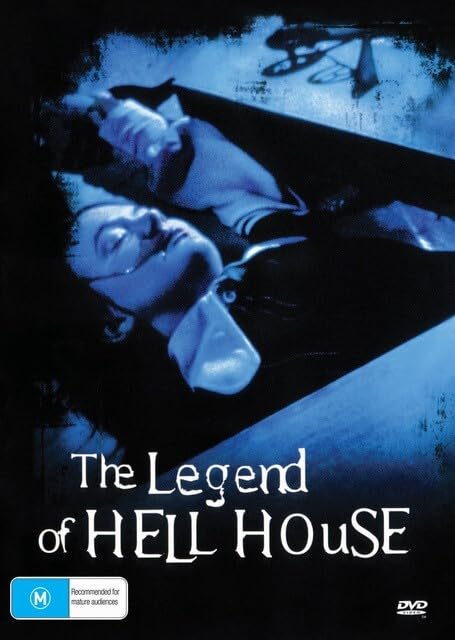
Product Description:
If our look at The Legend of Hell House has you ready to enter Belasco House yourself, this classic supernatural chiller delivers one of the most memorable haunted-mansion stories of the 1970s. Roddy McDowall leads a group of four investigators who enter the notorious house hoping to discover the truth behind its terrifying reputation.
The problem is that another investigative team has already tried, and the house destroyed them. Science, psychic phenomena, spiritualism, and supernatural terror collide as the new group discovers that whatever remains inside Hell House has no intention of quietly revealing its secrets.
Key Features:
• Classic 1970s supernatural haunted-house horror
• Stars Roddy McDowall as psychic investigator Benjamin Franklin Fischer
• Follows four investigators attempting to uncover the secrets of Hell House
• Blends scientific investigation, psychic phenomena, and supernatural horror
• An excellent addition for fans of atmospheric haunted-house and paranormal movies
Why This Works:
The Legend of Hell House takes the familiar haunted-house setup and turns it into a confrontation between science and the supernatural. Instead of simply running from ghosts, its investigators deliberately enter a mansion with a deadly history and try to explain what is happening. Belasco House gradually turns their confidence against them, making the movie a particularly nasty piece of early-1970s paranormal horror.
Buy on Amazon
Richard Matheson Adapts His Own Hell House
Richard Matheson adapted The Legend of Hell House from his own 1971 novel, Hell House. That gave him unusually direct control over how his story made the transition to the screen. The novel originally took place in Maine, and Matheson relocated the setting to England specifically for the film adaptation.
Matheson's long career already included work on classic Twilight Zone episodes and the novel I Am Legend. That gave him a reputation within the genre well before Hell House reached theaters. That track record gave the production real confidence in trusting the original author with his own adaptation.
That relocation was not the only significant change Matheson made while adapting his own material. The original novel leaned heavily into explicit sexual content as part of its portrayal of the house's corrupting influence. The film dials that element back considerably to fit a wider theatrical audience. Enough of that darker undercurrent still remains intact to get the point across.
Building Belasco House
Wykehurst Place, a Gothic revival mansion located in Bolney, West Sussex, provided the exterior shots used to represent Belasco House throughout the film. The building's imposing, gloomy architecture did much of the visual work required here. It easily sells Belasco House as a place capable of driving previous investigators to death or madness.
Interior sets built specifically for the production supplemented these real world exteriors. This let the filmmakers construct rooms and corridors precisely suited to the scares and practical effects the script required.
The production's modest overall budget shaped many of these choices, favoring practical, in camera effects over anything more elaborate. Doors that appear to move on their own and objects that fly across rooms all rely on careful rigging and timing. Shattering glassware works the same way, relying on rigging rather than expensive optical trickery. The filmmakers turned that budget limitation into a strength through careful planning. Director John Hough, working fresh off his previous film Twins of Evil, brought a confident visual style to these constructed spaces. He used shadow, framing, and careful pacing to build dread well before anything overtly supernatural occurs.
A Haunted House Movie Made for the 1970s
The Legend of Hell House feels distinctly like a product of the 1970s. It separates itself clearly from earlier decades of haunted house cinema in the process. Seances and traditional spiritualism sit alongside psychic research and laboratory grade scientific equipment. This reflects a broader cultural fascination with parapsychology that had taken hold throughout the decade.
Critics writing about the film decades later have pointed to its influence on later productions like Poltergeist. That film similarly grounds a supernatural threat in a recognizably domestic, technologically documented setting. The Legend of Hell House sits historically at a turning point in the genre. It arrived just months before The Exorcist and The Texas Chain Saw Massacre pushed horror in a more visceral, confrontational direction.
This blending of old superstition and new pseudoscientific investigation would go on to influence a wide range of haunted house films that followed. Later productions borrowed heavily from this same basic structure. A team of investigators, both skeptical and believing, gets trapped inside one dangerous location for a fixed period of time. That formula shows up in numerous haunted house films made since.
Is The Legend of Hell House Worth Watching?
The Legend of Hell House earns a strong, recommendation for fans of patient, atmosphere driven horror above all else. It rewards viewers willing to sit with ambiguity rather than easy answers. Anyone who enjoyed the slow dread of Lets Scare Jessica to Death will find familiar territory here. So will fans of The Other, filtered through a distinctly British Gothic sensibility and an unusual electronic score.
The film's PG rating feels notably lenient by modern standards, given some of the mild violence, brief nudity, and adult themes woven throughout the story. That permissive rating reflects the era it was released in. It also reflects the film's habit of handling darker content through suggestion rather than explicit depiction.
Kilroy verdict, 4.6 out of 5. The film's blend of scientific procedure and Gothic horror still feels fresh more than fifty years after its original release. Belasco House remains one of the more formidable haunted houses ever put on screen.
ML Lamp is the owner of Kilroy Was Here. After his 20 years of working in Las Vegas in the entertainment promotions field, Mr. Lamp retired in 2002 from his job to pursue his passion for collectibles. Now as a guest speaker and author he’s living the dream, and sharing his warmth with You.