🎬 Stacy Keach Biography: The Brilliant Shakespearean Who Became a Hard-Boiled Icon
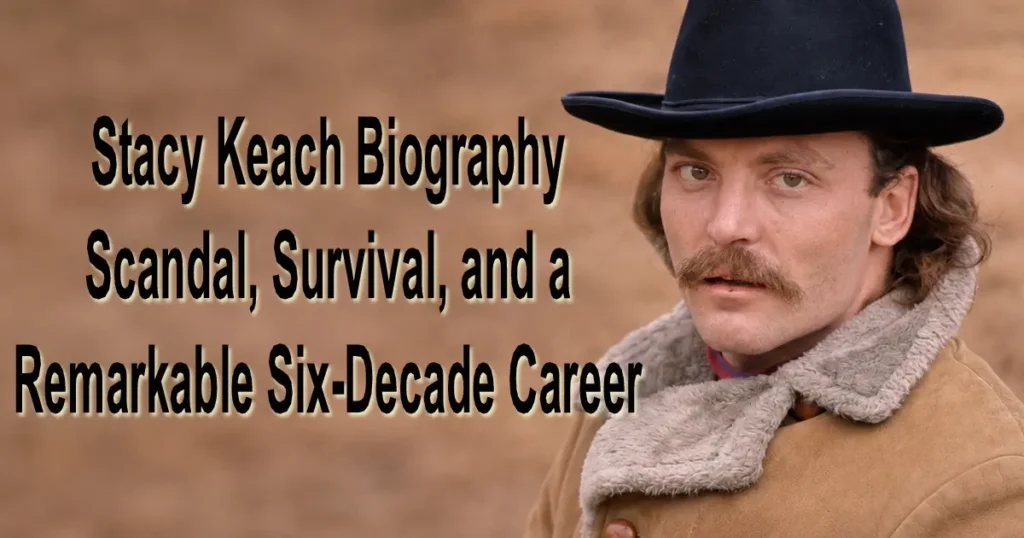
Stacy Keach was one of the most versatile and durable actors in American entertainment history, a performer whose career ran for more than six decades and moved freely between the classical stage, major Hollywood films, network television, and the recording booth. He began as one of the most celebrated young Shakespearean actors of his generation and went on to collect more than two hundred screen credits, working steadily from the counterculture era of the late 1960s well into the streaming age.
Stacy Keach (June 2, 1941, to November 10, 2026) was an American stage, film, and television actor whose career spanned more than six decades and over two hundred screen credits. Trained at UC Berkeley, the Yale School of Drama, and the London Academy of Music and Dramatic Art, he first rose to fame as one of the leading classical stage actors of his generation, celebrated for his Hamlet and his Tony nominated performance in Indians. He was best known to television audiences as the hard-boiled private detective Mike Hammer and won a Golden Globe for playing Ernest Hemingway.
As a performer, Keach was defined by a rare combination of physical toughness and intellectual depth. He could play brawlers, lawmen, soldiers, drifters, and villains with complete conviction, yet he brought to each of them the discipline and vocal command of a trained classical actor. His deep, resonant voice became an instrument in its own right, and his willingness to take on flawed, wounded, and morally complicated men gave his work an honesty that set him apart from more conventional leading men.
To the public, Keach was many things at once: a hard-boiled television detective, a respected man of the theater, a gruff and lovable sitcom father, and a voice heard in countless homes. He endured because he never stopped working, never stopped returning to the stage, and never lost the craftsman’s respect for the job of acting. His life included triumph, public disgrace, redemption, and late-career reinvention, and audiences came to see him as a survivor whose career reflected the full arc of a working actor’s life.
When Stacy Keach was locked inside Reading Prison in 1984, at the lowest point of his life, one visitor kept coming back. Malgosia Tomassi, a Polish-born actress and model, visited him often behind bars. Two years later they married, and she stayed by his side for forty years, right up until the day he died in their home in Poland.
👶 Early Life
Summary: Born in Savannah, Georgia, to a theatrical family and with a cleft lip that required many surgeries, Keach trained at UC Berkeley, Yale, and LAMDA before breaking through Off-Broadway in MacBird!.
🏡 Birth and Family
Walter Stacy Keach Jr. was born on June 2, 1941, in Savannah, Georgia. His mother, Mary Cain Keach (née Peckham), was an actress who also taught English in Savannah schools. His father, Walter Stacy Keach Sr., was a theater director, drama teacher, and actor who taught drama at Armstrong Junior College in Savannah and later built a long career of his own as a character actor and as the head of an industrial film company. Billed simply as Stacy Keach, the elder Keach would become familiar to television viewers as Carlson, the laboratory chief of CONTROL, on the comedy series Get Smart (1965 to 1970).
Stacy was the older of two sons. His younger brother, James Keach, born in 1947, would also become an actor and later a successful director and producer. The two brothers remained close collaborators throughout their lives.
🩺 Born With a Cleft Lip
Keach was born with a cleft lip and a partial cleft of the hard palate, a condition that required a long series of operations during his childhood. The surgeries left visible scarring, and as an adult he often wore a mustache to conceal it. The experience shaped him deeply. Rather than allowing it to limit his ambitions, he turned toward performance, and later in life he became an outspoken advocate for children born with the same condition.
🎓 Schooling and Training
After his father signed on as a contract player with Universal, the family relocated to Southern California, settling first in Pasadena and later in the San Fernando Valley. Keach attended Van Nuys High School, where he served as class president, and graduated in June 1959.
He went on to the University of California, Berkeley, where he earned two bachelor’s degrees in 1963, one in English and one in Dramatic Art. Between semesters he gained valuable experience performing with the Oregon Shakespeare Festival in Ashland, where he was first immersed in the classical repertoire that would define his early career.
Keach then won a place at the Yale School of Drama, earning his Master of Fine Arts degree in 1966. He also received a Fulbright Scholarship to study at the London Academy of Music and Dramatic Art, where he had the opportunity to meet Laurence Olivier, the actor he admired above all others and whose example inspired his own approach to Shakespeare.
🎭 First Professional Work
Early in his career Keach was billed as Stacy Keach Jr. to distinguish himself from his father. His professional breakthrough came almost immediately after Yale, when he was cast in the title role of MacBird!, Barbara Garson’s satirical political play that parodied Shakespeare’s Macbeth by casting a Lyndon B. Johnson figure as its scheming protagonist. The production opened Off-Broadway at the Village Gate in Greenwich Village in 1967 and made the young actor a talked-about new name in New York theater almost overnight.
Explore the Biographies of Iconic Celebrities
🎭 Broadway and Stage Career
Summary: Keach became one of America’s leading classical actors, earning acclaim for Hamlet, Indians, King Lear, Frost/Nixon, and decades of Shakespeare and Broadway work.
🌳 Shakespeare in the Park and Off-Broadway
During the late 1960s and early 1970s, Keach established himself as one of the leading classical actors in America. In 1967 he appeared Off-Broadway in a production that also marked the New York stage debut of a young Morgan Freeman. Freeman would later say that Keach taught him more about acting than anyone else, a remarkable tribute from one of the most respected actors of his own generation.
In 1968 Keach played Falstaff in Henry IV, Parts 1 and 2 at the Delacorte Theater in Central Park for producer Joseph Papp’s New York Shakespeare Festival. He returned to the Delacorte in 1969 in the title role of Ibsen’s Peer Gynt. In 1971 he played James Tyrone Jr. in an Off-Broadway revival of Eugene O’Neill’s Long Day’s Journey into Night, tackling one of the most demanding roles in the American dramatic canon.
🤠 Indians and Broadway
Keach made his Broadway debut in 1969 as Buffalo Bill Cody in Arthur Kopit’s Indians, an ambitious and unconventional play that used the story of Buffalo Bill’s Wild West show to examine America’s treatment of Native Americans. The production began at Arena Stage in Washington, D.C., before moving to Broadway. That same year he also played the villainous Edmund in a Broadway production of King Lear.
👑 Hamlet
Keach’s Hamlet became the defining achievement of his early stage career. He played the role at the Long Wharf Theatre in New Haven and at the Delacorte in Central Park in 1972, then again Off-Broadway in the 1972 to 1973 season. Clive Barnes of The New York Times wrote admiringly of the production and came to regard Keach as one of the great Hamlets of his era. Over the course of his career, Keach would play the Danish prince in three separate productions.
🎪 Later Stage Work
Keach never abandoned the theater, even at the height of his screen fame. In 1979 and 1980 he took over the role of the murderous playwright Sidney Bruhl in Ira Levin‘s Broadway thriller Deathtrap. In 1981 he headlined the national tour of the musical Barnum in the title role, and in 1988 he toured in Anthony Shaffer’s Sleuth.
In 1990 he played Richard III at the Folger Theatre in Washington, D.C. He returned to Broadway in 1992 in Solitary Confinement, a thriller in which he played six different roles. In 1993 he starred in Robert Schenkkan’s The Kentucky Cycle, a sweeping, Pulitzer Prize-winning epic of American history, first at the Kennedy Center and then on Broadway. In 1995 he played Macbeth at the Folger Shakespeare Festival.
In 2006 he took on King Lear at the Goodman Theatre in Chicago, and he later reprised the role at Sidney Harman Hall in Washington, D.C., in 2009. In 2008 he played Merlin in a staged concert presentation of Camelot with the New York Philharmonic, and from 2008 to 2009 he toured the country as Richard Nixon in Peter Morgan’s Frost/Nixon, a performance that drew wide praise.
From 2011 to 2012 he played the retired actor and Republican elder statesman Lyman Wyeth in Jon Robin Baitz’s Other Desert Cities, first Off-Broadway and then at the Booth Theatre on Broadway. In 2014 he returned to Falstaff in Washington, D.C., closing a circle that had begun in Central Park more than four decades earlier. He was also a founding member of L.A. Theatre Works, the company devoted to recorded and broadcast performances of plays.
While filming a boxing scene for Fat City (1972), Stacy Keach was accidentally knocked out for real, and director John Huston kept the footage in the finished film.
🎬 Film and TV Career
Summary: His screen career ranged from Fat City and The Long Riders to American History X, Nebraska, Titus, Prison Break, and Blue Bloods.
🎞️ Early Films of the Counterculture Era
Keach made his feature film debut in The Heart Is a Lonely Hunter (1968), directed by Robert Ellis Miller and adapted from Carson McCullers’s novel. He played Jake Blount, a hard-drinking drifter, opposite Alan Arkin as the deaf protagonist John Singer and a young Sondra Locke. The film introduced Keach as a striking screen presence with a gift for restless, troubled characters.
In 1970 he appeared in three very different films. In End of the Road (1970), directed by Aram Avakian and adapted from John Barth’s novel, he played Jacob Horner, an emotionally paralyzed young man drawn into a disturbing therapy, with James Earl Jones as his unorthodox doctor. In Robert Altman‘s surreal comedy Brewster McCloud (1970), starring Bud Cort as a young man who dreams of flying inside the Houston Astrodome, Keach was nearly unrecognizable under heavy makeup as Abraham Wright, a wealthy old miser. He also appeared in Jack Smight‘s The Traveling Executioner (1970).
In Doc (1971), directed by Frank Perry, Keach played the gunfighter Doc Holliday opposite Faye Dunaway as Kate Elder and Harris Yulin as Wyatt Earp. The film was a deliberately revisionist western that stripped the legend of the O.K. Corral of its heroic myth, and Keach played Holliday as a tubercular, world-weary man rather than a romantic gunslinger.
🥊 Fat City and 1972
The year 1972 was the high point of Keach’s film career. In John Huston‘s Fat City (1972), adapted from Leonard Gardner‘s novel, he played Billy Tully, a broken-down, over-the-hill boxer in Stockton, California, who encounters a promising young fighter played by Jeff Bridges. Susan Tyrrell co-starred as Tully’s alcoholic companion. The film was a bleak, compassionate portrait of men living on the margins, and Keach’s performance is widely regarded as the finest of his screen career. Critics praised it as one of the most authentic portraits of working-class despair in American film.
That same year he played Roy Fehler, an idealistic rookie Los Angeles police officer, opposite George C. Scott in Richard Fleischer’s The New Centurions (1972), adapted from Joseph Wambaugh’s novel, with Jane Alexander as his wife. The film followed the gradual erosion of Fehler’s marriage and ideals under the pressure of police work. He also reunited with Huston for a memorable cameo as the albino outlaw Bad Bob in The Life and Times of Judge Roy Bean (1972), starring Paul Newman.
✝️ Luther and the Mid 1970s
Keach played the Protestant reformer Martin Luther in Luther (1974), directed by Guy Green and adapted from John Osborne’s play for the American Film Theatre series, which brought celebrated stage works to the screen. In 1975 he took his first leading role in a television series as Lieutenant Ben Logan in the ABC police drama Caribe (1975), set in Miami and the Caribbean. In 1977 he played the criminal Barabbas in Franco Zeffirelli‘s acclaimed miniseries Jesus of Nazareth (1977), and he starred as Jim Naboth, an alcoholic former detective, in Michael Apted’s British crime thriller The Squeeze (1977).
🚬 Sergeant Stedenko and Comedy
Keach showed his comic side in Lou Adler‘s Up in Smoke (1978), the first feature film starring the stoner comedy team of Cheech Marin and Tommy Chong. He played Sergeant Stedenko, a humorless narcotics officer forever trying and failing to catch the duo. The film became a major box office success and a lasting cult classic, and Keach reprised Stedenko in Tommy Chong‘s Nice Dreams (1981).
🧠 The Ninth Configuration
In The Ninth Configuration (1980), written and directed by William Peter Blatty, author of The Exorcist, Keach played Colonel Vincent Kane, a Marine psychiatrist sent to run a remote castle housing mentally disturbed military personnel. Scott Wilson co-starred as an astronaut who refused to go to the moon. The film blended dark comedy, theology, and violence in an unusual way. It found only a modest audience on release but has since gained a devoted following.
🐎 The Long Riders
One of Keach’s most personal projects was The Long Riders (1980), directed by Walter Hill. Stacy and James Keach co-wrote the screenplay and served as executive producers, and the film’s central idea was to cast real-life acting brothers as the real-life outlaw brothers of the James-Younger Gang. Stacy played Frank James and James Keach played Jesse James, with David, Keith, and Robert Carradine as the Younger brothers, Dennis and Randy Quaid as the Miller brothers, and Christopher and Nicholas Guest as the Ford brothers. The film is admired for its period detail, its brutal Northfield, Minnesota, raid sequence, and Ry Cooder’s evocative score.
🚚 Roadgames and the Early 1980s
In the Australian thriller Roadgames (1981), directed by Richard Franklin, Keach played Patrick Quid, a talkative, poetry-quoting truck driver who becomes convinced that a fellow motorist is a serial killer. Jamie Lee Curtis co-starred as a hitchhiker. The film was openly influenced by Alfred Hitchcock‘s Rear Window (1954) and has grown in reputation as a clever genre piece. Keach also appeared in Butterfly (1982) with Pia Zadora, Jason Miller’s film adaptation of his own play That Championship Season (1982), and the Civil War miniseries The Blue and the Gray (1982), in which he played Jonas Steele. He also appeared in the miniseries Mistral’s Daughter (1984).
📖 Hemingway
Keach played Ernest Hemingway in the syndicated miniseries Hemingway (1988), which traced the writer’s life from his youth through his final years. The role suited him perfectly. He captured both Hemingway’s bravado and the insecurity and self-destruction beneath it, and the production stood among the most acclaimed television work of his career.
🌆 The 1990s
In the 1990s Keach moved comfortably into character roles. He voiced the businessman Carl Beaumont in the animated feature Batman: Mask of the Phantasm (1993). In John Carpenter’s Escape from L.A. (1996), he played Commander Mac Malloy opposite Kurt Russell‘s Snake Plissken. In Tony Kaye’s American History X (1998), he played Cameron Alexander, the calculating older white supremacist who recruits and manipulates young men, including Edward Norton‘s Derek Vinyard. It was a chilling performance in a film that remains one of the most discussed dramas about racism and redemption in American cinema.
😂 Titus
From 2000 to 2002 Keach co-starred in the Fox sitcom Titus (2000 to 2002), created by and starring comedian Christopher Titus and based on Titus’s own chaotic upbringing. Keach played Ken Titus, the hard-drinking, chain-smoking, repeatedly married father whose blunt and brutally honest life advice was the show’s comic engine. The role introduced him to a younger audience and showed how effective his gruff authority could be in comedy.
🔒 Prison Break
Keach played Warden Henry Pope in the Fox drama Prison Break (2005 to 2007), starring Wentworth Miller as an engineer who deliberately gets himself imprisoned to rescue his brother, played by Dominic Purcell, from death row. Pope was a decent, conflicted administrator who believed in rehabilitation, and Keach gave the character a humanity that made him one of the show’s most sympathetic authority figures.
🎙️ American Greed and Voice Work
Beginning in 2007, Keach became the narrator of CNBC’s true crime series American Greed (2007 to 2023), which examined fraud, embezzlement, and white collar crime. His commanding voice became the signature of the series for well over a decade. He also lent his voice to a wide range of animated work, including several characters on The Simpsons and the veteran flight instructor Skipper Riley in Disney’s Planes (2013) and Planes: Fire & Rescue (2014).
🎥 Late Career Films
Keach worked steadily in films during the 2000s and 2010s. He appeared in Oliver Stone‘s W. (2008), and he played Admiral Mark Turso in Tony Gilroy’s The Bourne Legacy (2012) opposite Jeremy Renner. In Alexander Payne‘s black and white comedy drama Nebraska (2013), he played Ed Pegram, an old acquaintance of Bruce Dern‘s elderly protagonist who sees a chance to profit from the man’s supposed sweepstakes fortune. It was a sharp, quietly menacing performance in a film nominated for Best Picture.
He played the grandfather of Chloë Grace Moretz‘s character in If I Stay (2014), delivering a gentle bedside monologue that many viewers found among the film’s most moving moments. He also played the crime boss Wallenquist in Robert Rodriguez and Frank Miller‘s Sin City: A Dame to Kill For (2014), appeared in Gold (2016) with Matthew McConaughey, and played the mob underboss Neil Dellacroce in Gotti (2018) opposite John Travolta. One of his final film appearances came in Noah Baumbach‘s Jay Kelly (2025), starring George Clooney.
📺 Late Career Television
Keach played the hardened former boxing trainer Pops Leary, father of a retired heavyweight champion, in the FX drama Lights Out (2011). He made recurring appearances as Archbishop Kevin Kearns, a senior Catholic churchman who often clashed with Tom Selleck‘s Police Commissioner Frank Reagan, on the CBS drama Blue Bloods (2016 to 2024). From 2017 to 2020 he was a series regular on the CBS sitcom Man with a Plan (2017 to 2020), playing Joe Burns, the opinionated father of Matt LeBlanc‘s character Adam. He also played the fugitive financier Robert Vesco on NBC’s The Blacklist.
🕵️ Mike Hammer
Summary: Keach defined Mickey Spillane’s private eye Mike Hammer on CBS, survived a 1984 cocaine arrest and prison sentence, and returned to the role for years afterward.
🎩 Bringing Spillane’s Detective to Television
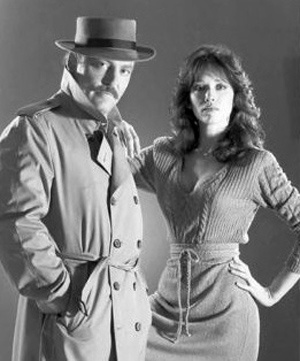
Keach’s most famous role was Mike Hammer, the hard-boiled New York private detective created by novelist Mickey Spillane in 1947. Working with producer Jay Bernstein, Keach first played Hammer in the CBS television movie Murder Me, Murder You (1983). Its success led directly to the CBS series Mickey Spillane’s Mike Hammer (1984 to 1987), which ran under that title and later as The New Mike Hammer.
Keach’s Hammer was tough, wisecracking, and sentimental under his rough exterior, a man who narrated his own cases in the clipped, world-weary voice of classic pulp fiction. In his trench coat and fedora, Keach became the definitive screen Hammer for an entire generation. Spillane himself became a friend and was pleased with Keach’s interpretation, and he insisted that Keach always wear the character’s trademark hat.
📚 A Boyhood Fascination
Keach had been drawn to the Hammer novels since boyhood. In his memoir he recalled that his mother disapproved of Spillane’s paperbacks, dismissing them as trash, but he kept returning to the violent, sensual world of the books. Playing Hammer was therefore something close to a childhood dream fulfilled.
⚖️ Arrest at Heathrow and Reading Prison
At the height of the show’s popularity, Keach’s career was interrupted by scandal. On April 4, 1984, he was arrested by customs officers at London’s Heathrow Airport for importing cocaine. He pleaded guilty and was sentenced to prison, serving six months at Reading Prison in England before being released early for good behavior. Keach later described the experience as the lowest point of his life.
Rather than hide from the episode, Keach spoke openly about his addiction after his release, including testimony in Washington about his drug problem, and he received public support from First Lady Nancy Reagan, whose campaign against drug abuse was then at its peak. The prison experience also marked a spiritual turning point in his life.
🔄 The Return of Mike Hammer
CBS stood by its star. Keach returned to the role in the television movie The Return of Mickey Spillane’s Mike Hammer (1986), and the series was relaunched as The New Mike Hammer (1986 to 1987). Several later television movies followed, including Mike Hammer: Murder Takes All (1989). A decade later he played the detective once more in the syndicated series Mike Hammer, Private Eye (1997 to 1998). In later years he also voiced Hammer in a series of audio dramas, keeping the character alive for a new generation of listeners.
Before his music ever turned up in Mike Hammer audio dramas, Stacy Keach sang backing vocals on Judy Collins’s hit recording of “Amazing Grace,” during the years the two were romantically involved.
❤️ Personal Life
Summary: Married four times, Keach spent forty years with Malgosia Tomassi, adopted two children, became a Polish citizen, converted to Catholicism, and advocated for children with cleft palates.
💍 Marriage to Kathryn Baker
Keach married his first wife, Kathryn Baker, in 1964. The marriage ended in divorce.
💍 Marriage to Marilyn Aiken
Keach was married to Marilyn Aiken from 1975 to 1979. The marriage ended in divorce.
💍 Marriage to Jill Donahue
Keach was married to Jill Donahue from 1981 to 1986. That marriage also ended in divorce.
💍 Marriage to Malgosia Tomassi
In 1986 Keach married Malgorzata “Malgosia” Tomassi, a Polish-born actress and model. Theirs became the defining partnership of his life, and the couple remained married for forty years, until his death. Together they adopted two children, a son named Shannon and a daughter named Karolina.
🇵🇱 Life in Poland
Through his wife, Keach developed a deep attachment to Poland. The couple maintained a family home in Magdalenka, outside Warsaw, and in 2015 Keach became a Polish citizen, holding dual American and Polish citizenship for the rest of his life.
👨👦 Brothers and Collaborators
Stacy and James Keach shared a close lifelong bond. Beyond co-writing and producing The Long Riders (1980), the brothers supported one another’s careers for decades. James went on to direct and produce films and television, most notably the Johnny Cash biopic Walk the Line (2005).
✝️ Faith
Keach converted to Roman Catholicism, a decision he credited to the friendship he formed with a priest during his imprisonment in England. His faith remained central to his life, and he and his wife later had the opportunity to meet Pope John Paul II.
📘 Memoir
In 2013 Keach published his autobiography, All in All: An Actor’s Life On and Off the Stage, a candid account of his childhood, his classical training, his film and television career, his addiction and imprisonment, and his marriages.
🤝 Philanthropy and Advocacy
Drawing on his own childhood experience, Keach served as honorary chairman of the Cleft Palate Foundation. He worked to raise awareness of cleft lip and palate and advocated for insurance companies to cover the reconstructive surgeries that children born with the condition need.
🫀 Health
In March 2009, while playing Richard Nixon in the touring production of Frost/Nixon at the Ahmanson Theatre in Los Angeles, Keach was hospitalized, an episode later reported as a mild stroke. In 2017, on the opening night of Pamplona at Chicago’s Goodman Theatre, a one-man play in which he portrayed Ernest Hemingway, he suffered a heart attack and underwent bypass surgery, and the run was canceled. He made a determined comeback, returning to the Goodman to perform the play in 2018. His heart condition, however, continued to trouble him in his final years.
Stacy Keach was originally hired to play the young priest Father Damien Karras in The Exorcist (1973), but director William Friedkin recast the part with Jason Miller. In an ironic twist, Miller later directed Keach in the film version of his own play, That Championship Season (1982).
🕊️ Later Years and Death
Summary: Honored with a Golden Globe, a Hollywood Walk of Fame star, and the American Theater Hall of Fame, Keach died of heart failure at 85 in Magdalenka, Poland, on November 10, 2026.
🏅 Honors and Recognition
Over the course of his career, Keach received many of the highest honors in American theater and television. He won Drama Desk Awards for MacBird! in 1967, Indians in 1970, Long Day’s Journey into Night in 1971, and Hamlet in 1973, and he received a further Drama Desk nomination for The Kentucky Cycle. He earned Obie Award recognition for MacBird! and Hamlet, and a Tony Award nomination for Best Actor in a Play in 1970 for his performance as Buffalo Bill in Indians.
For his screen work, the Kansas City Film Critics Circle named him Best Actor for Fat City (1972). He received a Golden Globe nomination for Mickey Spillane’s Mike Hammer (1984 to 1987), and for Hemingway (1988) he won the Golden Globe Award for Best Actor in a Miniseries or Television Film and received a Primetime Emmy Award nomination.
In Washington, D.C., he received Helen Hayes Awards for his performances in Frost/Nixon and King Lear. He was inducted into the American Theater Hall of Fame in 2015, and in 2019 he received both a star on the Hollywood Walk of Fame and the Mary Pickford Award from the International Press Academy’s Satellite Awards for his contributions to the entertainment industry.
🎭 Final Roles
Keach continued working well into his eighties. His final years included his long run on Man with a Plan, his recurring role on Blue Bloods, his narration of American Greed, his Hammer audio dramas, and a late film appearance in Jay Kelly (2025). For a performer who had been working professionally since the mid 1960s, his career was a testament to stamina and devotion to the craft.
🕯️ Death
Stacy Keach died on November 10, 2026, at the age of 85, at his family home in Magdalenka, Poland. His death was announced by his wife, Malgosia Tomassi Keach, who said that he had died peacefully of heart failure after a long and difficult battle with a serious heart condition. In her statement, she described him as a legendary actor loved by audiences around the world and as her beloved husband and companion and the heart of their family. She said he had fought his illness for a long time with extraordinary courage and strength, and that his unforgettable voice and generous love would remain with the family forever.
He was survived by his wife of forty years, Malgosia; his children, Shannon and Karolina; his grandchildren; and his brother, James Keach. His death marked the passing of one of the last great actors whose careers bridged the classical American stage of the 1960s and the modern era of film and television.
🏆 Legacy
🎭 The Classical Actor in Popular Entertainment
Keach represented a kind of actor that has become increasingly rare: a performer trained in Shakespeare and the great dramatic repertoire who carried that discipline into every medium he touched. Whether he was playing a pulp detective, a sitcom father, or a cartoon airplane, he brought the same vocal control, seriousness, and respect for text that he had learned on the classical stage. His career showed that popular entertainment and high art need not be separate worlds.
🧔 The Wounded Tough Guy
Many of Keach’s finest performances were portraits of strong men brought low by circumstance, addiction, age, or their own weaknesses. He was drawn to flawed characters, and he understood them from the inside. That empathy for broken men gave his tough guy roles an emotional depth that outlasted the genres they belonged to.
🔁 Redemption in Public
Keach’s willingness to speak honestly about his addiction and imprisonment, at a time when public figures rarely did so, made his story one of accountability and recovery. He rebuilt his career and his life in full view of the public, and his openness helped change the way audiences understood addiction among celebrities.
👨🏫 Mentor and Colleague
Keach’s influence extended to the actors who worked alongside him. Morgan Freeman’s lifelong gratitude for what Keach taught him is only the best-known example of the respect he earned from fellow performers. Generations of colleagues regarded him as a consummate professional who came prepared, served the material, and treated the work with seriousness.
🏆 Stacy Keach’s Place in American Entertainment
Their legacy is ultimately one of range, resilience, and devotion to the craft. Stacy Keach moved from Hamlet to Mike Hammer, from John Huston to Cheech and Chong, from Broadway to Poland, without ever losing his identity as a working actor first and foremost. He lived through acclaim, scandal, illness, and reinvention, and he met each chapter with candor and determination. In an industry that often rewards a single image, Keach built a career defined by variety and endurance, and he leaves behind a body of work that spans more than sixty years of American stage and screen history.
🗣️ Why He Still Matters
Stacy Keach still matters because his career shows how much a single actor can contain. He was Hamlet and Mike Hammer, a John Huston leading man and a Cheech and Chong foil, a Broadway veteran and the voice of true crime television. New audiences keep finding him through Fat City, Prison Break, and Nebraska, and each one shows them a different side of him. His honesty about addiction and prison, and the way he rebuilt his life afterward, still means something to anyone looking for a second chance. And at a time when many actors are known for one part, Keach is a reminder that a long and varied working life can be its own kind of greatness.