🦌 Prancer 1989 Review: The Midwestern Towns That Kept Prancer Alive
My Rating: ⭐ ⭐ ⭐ ☆ ☆ 3.2/5
An apple farm in winter. A little girl who still believes. A wounded reindeer hiding in the barn. A Main Street dressed for Christmas. And real Midwestern towns playing themselves.
Welcome to our Prancer 1989 review.
This Prancer 1989 review is spoiler free. I will cover the story setup, the cast, and the real Midwestern towns that brought this Christmas movie to life. Whether Prancer is truly Santa’s reindeer, and how the story ends, I will leave for you to discover.
Prancer 1989 Review: A Real Christmas Town, Not a Movie Set
Most Christmas movies build their small towns on a studio lot. Fake snow, fake storefronts, and extras pretending to be neighbors. Prancer did something different.
This is a genuine Midwestern Christmas movie. It was filmed around LaPorte and New Carlisle, Indiana, Three Oaks, Michigan, and Starved Rock State Park in Illinois. The production used real homes, farms, stores, streets, and local residents instead of building an artificial Christmas town.
That choice gives Prancer a feel that is hard to fake. When you watch it, you are looking at real Midwestern winter, real barns, and a real Main Street. For those of us who live in small towns in the heartland, it feels a lot like home.
And here is the best part. More than three decades later, the towns where it was filmed are still celebrating it. Prancer did not just visit these communities. It became part of them.
Note that there are other Prancer films out there. Prancer Returns came out in 2001, and Prancer: A Christmas Tale arrived in 2022. This review is all about the 1989 original.
Story Setup: A Girl and a Reindeer
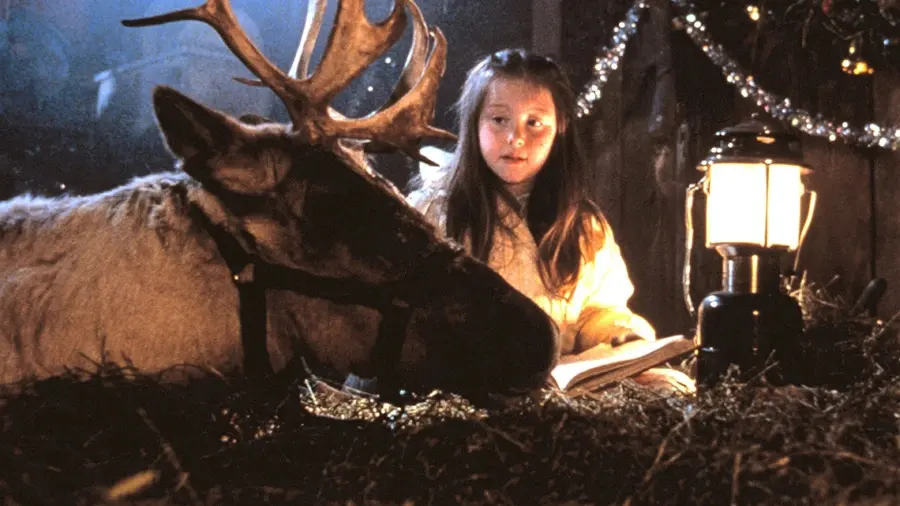
Jessica Riggs is an eight year old girl who lives on a struggling apple farm with her widowed father, John, and her older brother, Steve. Times are hard, and her father is worried about keeping the farm going.
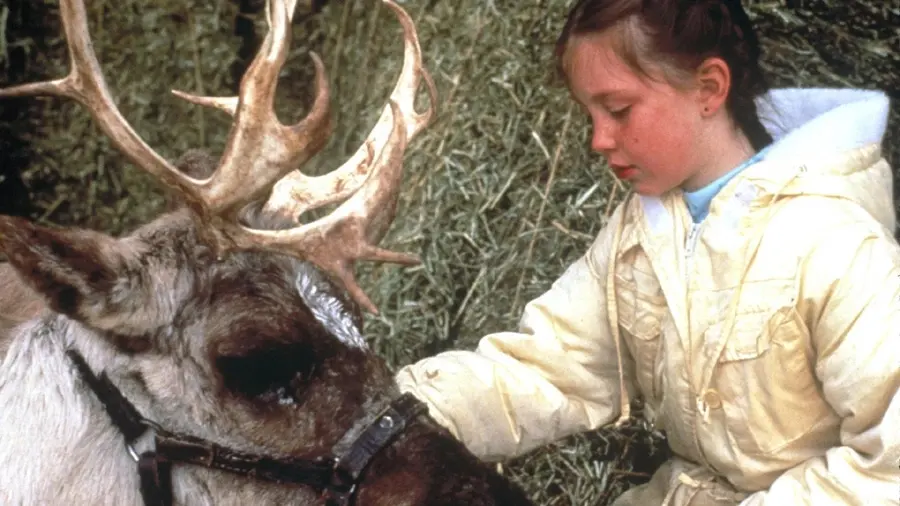
Jessica is a believer. She believes in Christmas, and she believes in Santa Claus. When she finds an injured reindeer while walking home from school, she becomes convinced it is Prancer from Santa’s team.
Determined to help, Jessica nurses the reindeer back to health in secret. She hides him from her father and works to get him well enough to rejoin Santa before Christmas Eve.
Keeping a reindeer secret in a small town is not easy. As word starts to spread, Jessica’s quest becomes bigger than she ever imagined.
That is as far as I will go. The heart of the movie is Jessica’s faith and the way it touches the people around her.
The Cast: Familiar Faces in a Small Town
- Rebecca Harrell plays Jessica Riggs, the young believer at the center of the story. Prancer was one of her first big roles.
- Sam Elliott plays John Riggs, Jessica’s hardworking father. He starred in Mask a few years earlier.
- Cloris Leachman plays Mrs. McFarland, the reclusive neighbor. She won an Oscar for The Last Picture Show.
- Abe Vigoda plays Dr. Orel Benton, the town veterinarian. He is famous as Tessio in The Godfather.
- Michael Constantine plays Mr. Stewart, the department store Santa. TV fans know him from Room 222.
- Rutanya Alda plays Aunt Sarah. She appeared in The Deer Hunter.
- John Joseph Duda plays Steve, Jessica’s older brother.
- Ariana Richards plays Carol Wetherby, Jessica’s friend. She later played Lex in Jurassic Park.
- Mark Rolston plays Herb Drier. Sci fi fans know him from Aliens.
Keep an eye out for a young Jesse Bradford in a small role, too. A young Johnny Galecki, the future star of The Big Bang Theory, plays Billy Quinn. And Prancer himself was played by a real reindeer named Boo. The music was composed by Maurice Jarre, the Oscar winner behind Lawrence of Arabia and Doctor Zhivago.
Sam Elliott brings his famous gravelly voice and quiet strength to the role of a father carrying a heavy load. Rebecca Harrell carries much of the film on her small shoulders, and Jessica’s stubborn belief is what drives the story forward.
The supporting cast is loaded with veteran character actors. Cloris Leachman, Abe Vigoda, and Michael Constantine give the town its color. And many of the faces you see in the background are not professional actors at all. They are real locals.
Why LaPorte? A Director Comes Home
The story of how Prancer ended up in the Midwest starts with its director, John D. Hancock.
Hancock is a native of LaPorte, Indiana. His family owned a fruit farm there, and he spent weekends on it while growing up. He also visited nearby Three Oaks with his grandfather.
When it came time to find a location, Hancock and producer Raffaella De Laurentiis first scouted Vermont and Canada. In the end, they chose LaPorte. Hancock felt the weather would be warmer there and knew the people would welcome the film crew.
Hancock has said he always had his family farm in mind, and he brought the producer there to see it. She agreed it was the best site.
He has called directing a movie where he grew up very satisfying. You can feel that personal connection in every frame.
The Director’s Family Farm
The Riggs family apple farm is not a set. It is the real Hancock family farm in LaPorte. The barn, the orchard, and the house you see on screen belonged to the director’s family.
Production designer Chester Kaczenski did dress the farm for the movie. He wallpapered and painted the farmhouse interior, built a shed, added stables in the barn, re-landscaped the property, and cleared a pond.
Other LaPorte locations included Hancock’s boyhood home, the home of former Admiral Stuart Ingersoll, Maple Lane Mall, and the pressroom of the Herald Argus newspaper. The elementary school scenes were filmed in Galena Township, Indiana.
For Mrs. McFarland’s grand old house, the production used the Old Republic mansion in nearby New Carlisle, Indiana. Only the exterior was filmed there. The interiors were built on sets inside a LaPorte warehouse.
Three Oaks: The Town on the Screen
The story is set in Three Oaks, Michigan, and that is where the town exteriors were filmed. The village sits just across the state line from LaPorte, near the southern tip of Lake Michigan.
Hancock has said he liked the railroad and the classic American Main Street there. It was the perfect picture of a small Christmas town.
Real Three Oaks businesses appear in the film, including Drier’s Meat Market, a shop Hancock remembered visiting with his grandfather. Scenes were also filmed at Bendix Woods.
Here is a fun bit of trivia. The fictional town was originally called Fall River. In the end, the movie simply used the real name, Three Oaks.
Borrowed Christmas Decorations
One of my favorite stories from the production is about the decorations.
Filming began in February 1989, well after the holidays were over. To keep that Christmas look, Three Oaks kept its Christmas decorations up. Even more decorations were borrowed from LaPorte.
Think about that for a moment. An entire town agreed to keep Christmas going into the winter months so a movie could be made there. That is small town hospitality at its finest.
The weather was a challenge, too. To protect the actors from the biting cold, some night scenes were shot in a warehouse where part of Main Street was recreated as a set.
Starved Rock and the Locals Who Became Movie Stars
Prancer also traveled to Illinois. The scenes at Antler’s Ridge were filmed at Devil’s Nose bluff in Starved Rock State Park, near Utica. It is a beautiful spot that many Midwesterners know well.
Back in Indiana and Michigan, Hancock let many local residents appear as extras, and some even got lines. Cast members and townspeople mingled after long shooting days. By many accounts, Sam Elliott was friendly with the locals and fit right in.
For a lot of folks in LaPorte and Three Oaks, Prancer was their one chance to be in a Hollywood movie. And they have never forgotten it.
Behind the Scenes: The Making of Prancer
Prancer was the first theatrical feature from Raffaella De Laurentiis’s company, Raffaella Productions. Greg Taylor wrote the screenplay. Misha Suslov handled cinematography, and Dennis M. O’Connor edited the film.
The budget was under $7 million. Principal photography began on February 3, 1989, and filming wrapped in April.
Orion Pictures released Prancer on November 17, 1989. It was rated G and runs 103 minutes. Before its release, the film was screened in twenty five cities to raise money for the Make-A-Wish Foundation.
Prancer went on to earn about $18.6 million at the box office. More importantly, it found a lasting home on TV and home video, where families have revisited it every holiday season since.
The Towns That Kept Prancer Alive
Here is what truly makes Prancer special. The towns where it was filmed have never let it go.
In December 2024, Three Oaks and LaPorte celebrated the film’s 35th anniversary with an event called PrancerPalooza. The festivities began in Three Oaks on December 14 and continued in LaPorte the next day.
Plans included a parade, film screenings, holiday treats from downtown businesses, and a life size stuffed reindeer for photos. A Walk of Fame honored locals who appeared in the film.
Rebecca Harrell, now known as Rebecca Harrell Tickell, returned for the celebration. Sam Elliott had planned to attend but had to cancel due to a professional commitment.
The Region of Three Oaks Museum also displayed a treasure from the film. It was the miniature replica of the village created for the movie’s final shot, a Santa’s eye view of Three Oaks.
Director John D. Hancock even took a ride through Three Oaks for a local public television program, visiting filming locations and sharing stories from the set.
Thirty five years later, these towns still claim Prancer as their own. That kind of pride is something you cannot buy with a Hollywood budget.
Prancer 1989 Filming Locations: Free Printable Guide
Want to see the real places behind the Christmas magic? I put together a free printable guide to the Prancer filming locations, so you can plan your own holiday trip.
The guide covers the four main filming areas. Those are Three Oaks, Michigan, LaPorte, Indiana, New Carlisle, Indiana, and Starved Rock State Park in Illinois.
Page one gives you an overview of each area and what was filmed there. You will find the Elm Street storefronts in Three Oaks, the Riggs family farm near LaPorte, Mrs. McFarland’s house in New Carlisle, and the Antler’s Ridge bluff at Starved Rock.
Page two is a location checklist with addresses and a box to check off each stop. There is even space at the bottom for your own Christmas trip notes.
A Few Tips Before You Go
- Several locations, including the Riggs family farm and Mrs. McFarland’s house, are private property. Please view them only from the road.
- Some businesses and buildings have changed since 1989, so verify what is there before you make the drive.
- Check road conditions and trail access, especially at Starved Rock during the winter months.
Download the free Prancer 1989 filming locations printable here.
A Southwest Iowa Point of View
Watching Prancer from here in Southwest Iowa, it is easy to feel a connection. These are towns a lot like ours. Main Streets with family businesses. Farms at the edge of town. Neighbors who show up when someone needs help.
Plenty of Iowa towns have their own Christmas traditions, from lighted parades to holiday open houses downtown. Seeing a Midwestern community dress up its streets for a movie feels like seeing our own hometown spirit on the big screen.
It also makes you wonder what it would be like if Hollywood came to one of our towns. Would we keep our decorations up into spring? Knowing how folks around here are, I bet we would.
Where It Stumbles
Prancer is not a perfect movie, and it lands at a 3.2 for a reason.
As a gentle family drama from 1989, its pace is slower than many modern holiday films. Viewers raised on fast moving Christmas comedies may find their attention drifting.
It also carries more sadness than some families might expect from a G rated Christmas movie. The struggling farm and a grieving father give it a heavier tone in places.
Still, those are not deal breakers. They are simply things to know before you settle in.
Is Prancer Worth Watching?
Yes, especially if you love the Midwest.
Watch it if you want a sincere, old fashioned Christmas story about faith and family. Watch it if you enjoy seeing real small towns instead of studio sets. Watch it if you grew up with it on TV and want to share it with a new generation.
It is also a fun one to watch with a map nearby. Spotting Three Oaks, LaPorte, and Starved Rock adds a whole extra layer of enjoyment.
Skip it if you want nonstop holiday laughs or flashy effects. Prancer is a quiet movie that asks you to slow down.
The Kilroy Verdict on Prancer
Prancer is a sweet, sincere Christmas movie with a heart rooted firmly in the Midwest. Its greatest strength is its authenticity. Real towns, a real farm, real decorations, and real neighbors make it feel unlike most holiday films.
Sam Elliott and Rebecca Harrell anchor the story, while a strong supporting cast fills out the town. And the story behind the movie, with Three Oaks and LaPorte embracing it for more than three decades, is just as heartwarming as the film itself.
It may not be a flawless classic, but it is a genuine one.
Final Thoughts 3.2/5
This one earns a 3.2 out of 5 from Kilroy. Wrapping up this Prancer 1989 review, what stands out most is how real it feels. This is a genuine Midwestern Christmas movie, filmed in LaPorte and New Carlisle, Indiana, Three Oaks, Michigan, and Starved Rock State Park in Illinois. The production used local homes, farms, stores, streets, and residents, and those towns have kept celebrating their connection ever since.
Prancer glows with real Midwestern small town Christmas charm, thanks to the towns that welcomed it home.
ML Lamp, Kilroy Was Here Shop
Santa may have needed his reindeer back, but Three Oaks and LaPorte never let Prancer go.