🎭 Basil Rathbone Biography: The Amazing Life of a Legend
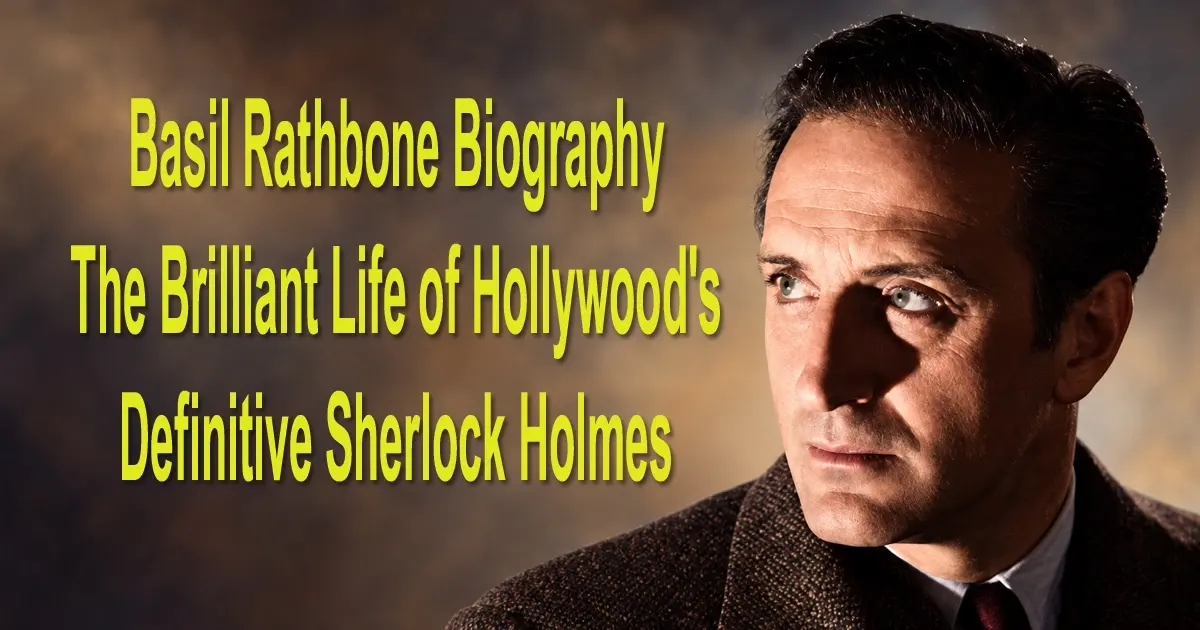
Basil Rathbone was one of the most distinguished actors of the twentieth century, a classically trained Shakespearean performer who became one of Hollywood‘s most recognizable stars. Born in South Africa and raised in England, he built a career that stretched from the English provincial stage in 1911 to the end of his life in 1967, encompassing the London and Broadway theaters, silent films, the golden age of the Hollywood studio system, radio, recordings, and early television.
Basil Rathbone (June 13, 1892, to July 21, 1967) was a South African born English actor of stage and screen, best known for playing Sherlock Holmes in fourteen Hollywood films from 1939 to 1946 opposite Nigel Bruce as Dr. Watson. He received two Academy Award nominations for Romeo and Juliet (1936) and If I Were King (1938) and won a Tony Award in 1948 for The Heiress. Renowned as an expert fencer, he remains one of the most recognizable actors of Hollywood’s golden age.
As a performer, Rathbone was defined by his intelligence, precision, and commanding presence. His lean, angular features, crisp diction, and elegant bearing made him the ideal screen villain of the 1930s, a smooth and dangerous opponent whose menace came from wit and composure rather than brute force. He was also a superb athlete and a skilled fencer, and his swordplay gave the great swashbucklers of the era some of their most thrilling moments.
To the public, Rathbone became the living embodiment of the world’s most famous detective. His portrayal of Sherlock Holmes defined the character for millions and remains, for many, the definitive version. Though he sometimes chafed against the role that overshadowed his wider artistry, his blend of classical training, physical grace, and incisive intelligence made him an enduring figure whose performances continue to captivate audiences generations later.
Nearly twenty years after his death, Basil Rathbone played Sherlock Holmes one last time. When Disney made The Great Mouse Detective in 1986, the filmmakers used an archival recording of Rathbone’s voice for a brief appearance by Holmes himself, the human detective whose Baker Street home the mouse hero lives beneath. It was a fitting farewell from the actor who had defined the role for generations.
👶 Early Life
Summary: Born in Johannesburg in 1892, Rathbone fled to England with his family as a child, attended Repton School, and began acting in 1911 with his cousin Frank Benson’s company.
🌍 Birth and Family
Basil Rathbone was born Philip St. John Basil Rathbone on June 13, 1892, in Johannesburg, in the South African Republic, now part of South Africa. His father, Edgar Philip Rathbone, was a mining engineer and a member of the prominent Rathbone family of Liverpool, a dynasty of merchants and philanthropists. His mother, Anna Barbara Rathbone (née George), was a violinist from Ireland. Basil was the great grandson of the noted Victorian philanthropist William Rathbone V. He had two older half brothers, Harold and Horace, and two younger siblings, Beatrice and John.
🚂 Flight to England
When Basil was three years old, the family was forced to flee South Africa. Following the Jameson Raid of 1895 and 1896, an unsuccessful British backed attack on the Boer republic, Edgar Rathbone was accused by the Boer authorities of being a British spy. The family escaped to England, where Basil was raised.
🏫 Repton School
From 1906 to 1910, Rathbone attended Repton School, a well known boarding school in Derbyshire. He excelled at sports and earned the nickname “Ratters” from his schoolmates. He also developed the love of theater that would shape his life.
📋 A Brief Career in Insurance
Rathbone’s father hoped his son would choose a conventional profession, and after leaving school Basil took a job as a clerk with the Liverpool and Globe Insurance Company to satisfy him. The office life did not suit him, and he soon turned to the stage.
🎭 First Steps on the Stage
Rathbone’s entry into the theater came through family. His cousin was Sir Frank Benson, one of the most famous Shakespearean actor managers in Britain, whose touring companies trained many of the leading actors of the era. On April 22, 1911, Rathbone made his professional stage debut at the Theatre Royal in Ipswich, Suffolk, playing Hortensio in The Taming of the Shrew with Benson’s No. 2 Company under the direction of Henry Herbert.
Explore the Biographies of Iconic Celebrities
🎖️ World War I Service
Summary: Rathbone served as a British Army intelligence officer, lost his younger brother in battle, and won the Military Cross for daring daylight patrols in 1918.
🪖 Enlistment
In 1915, Rathbone was called up through the Derby Scheme and joined the British Army as a private in the London Scottish Regiment, a unit that at various times also included three other future Hollywood stars: Claude Rains, Herbert Marshall, and Ronald Colman. After basic training in early 1916, he received a commission as a lieutenant in the 2/10th Battalion of the King’s Liverpool Regiment, known as the Liverpool Scottish.
🔍 Intelligence Officer
Rathbone served as an intelligence officer with the Liverpool Scottish on the Western Front, eventually attaining the rank of captain. During the war he also became a two time British Army fencing champion, a skill that would later become one of his greatest assets in Hollywood.
💔 The Death of His Brother
On June 4, 1918, Rathbone’s younger brother, John, a captain in the Dorsetshire Regiment, was killed in action near Arras. The loss devastated him. Letters he wrote to his family, published in 2012, revealed his grief and his fury at a death he could not undo. After John’s death, Rathbone appeared to lose all concern for his own safety at the front.
🌳 Daylight Patrols and the Military Cross
Rathbone persuaded his superiors to let him scout enemy positions in daylight rather than under cover of darkness, as was customary. For these dangerous missions he wore a special camouflage suit designed to resemble a tree, crowned with fresh foliage, with burnt cork darkening his face and hands. In September 1918 he was awarded the Military Cross for conspicuous daring and resourcefulness on patrol. Historians have speculated that his extraordinary bravery was driven by grief, guilt, or a desire for revenge after his brother’s death.
🎭 Broadway and Stage Career
Summary: A Shakespearean actor who became a Broadway star in the 1920s, Rathbone later won a Tony Award for his chilling performance in The Heiress.
📜 The Benson Years
With Frank Benson‘s company, Rathbone learned his craft in the Shakespearean repertory. In October 1912 he toured the United States with the company, playing roles including Paris in Romeo and Juliet, Fenton in The Merry Wives of Windsor, and Silvius in As You Like It. He made his London debut at the Savoy Theatre on July 9, 1914, as Finch in The Sin of David, and that December played the Dauphin in Henry V at the Shaftesbury Theatre. In 1915 he appeared with Benson at London’s Court Theatre as Lysander in A Midsummer Night’s Dream, and during these years he played Romeo for the first time.
🌹 Stratford and Peter Ibbetson
After the war, Rathbone returned to the stage at the 1919 Summer Festival in Stratford upon Avon with the New Shakespeare Company, playing Romeo, Cassius in Julius Caesar, Ferdinand in The Tempest, and Florizel in The Winter’s Tale. In February 1920 he scored a major success in the title role of Peter Ibbetson at the Savoy Theatre in London. He later said that Romeo was his favorite role, and throughout his life he insisted that he wished to be remembered for his work on the stage.
🗽 Broadway Stardom
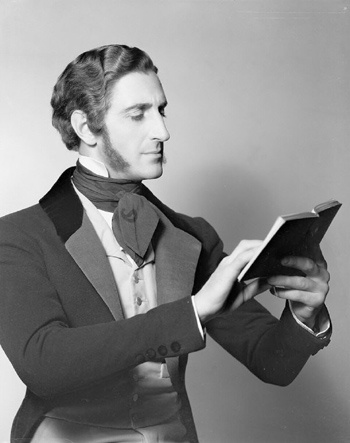
Rathbone made his Broadway debut in The Czarina at the Empire Theatre in 1922. In October 1923 he starred opposite Eva Le Gallienne in Ferenc Molnár‘s The Swan at the Cort Theatre, a performance that made him a Broadway star. Over the next decade he divided his time between London and New York, appearing in productions including The Grand Duchess and the Waiter, The Captive, and Julius Caesar, in which he played Cassius. In 1931 he appeared on stage with Ethel Barrymore in Melo, and in late 1934 he toured with Katharine Cornell, playing Romeo to her Juliet on Broadway.
🏆 The Heiress (1947)
After his years as a film star, Rathbone returned to Broadway in triumph. In 1947 he originated the role of Dr. Austin Sloper, the cold, domineering father who crushes his daughter’s hopes of love, in The Heiress, Ruth and Augustus Goetz’s adaptation of Henry James’s novel Washington Square. His chilling, beautifully controlled performance was one of the most acclaimed of his career.
🎭 Later Stage Work
Rathbone continued to work regularly on Broadway, appearing in The Gioconda Smile in 1950, S. N. Behrman’s Jane in 1952, and Hide and Seek in 1957. In 1959 he took over the role of Mr. Zuss, a godlike figure, in Archibald MacLeish’s Pulitzer Prize winning verse drama J.B., a modern retelling of the Book of Job, and received strong praise. In the 1960s he toured with a one man show, In and Out of Character, reciting poetry and Shakespeare and sharing stories from his life and career.
The famously sharp tongued stage actress Mrs. Patrick Campbell once described the lean, angular Rathbone as “two profiles pasted together.”
🎬 Film and TV Career
Summary: Rathbone appeared in more than seventy films, from David Copperfield and Son of Frankenstein to The Court Jester, and worked extensively in television and recordings.
🎞️ Silent Films
Rathbone began his film career in Britain in 1921, appearing in Innocent (1921) and The Fruitful Vine (1921). He played Joseph Surface in The School for Scandal (1923), an adaptation of Richard Brinsley Sheridan‘s comedy, and in Hollywood he appeared in silent pictures including The Masked Bride (1925) and The Great Deception (1926).
🔊 The Coming of Sound
Rathbone’s polished voice made him an ideal performer for the talkies. His sound debut came opposite Norma Shearer in The Last of Mrs. Cheyney (1929), directed by Sidney Franklin, in which he played Lord Arthur Dilling. It was his last romantic leading role. In The Bishop Murder Case (1930), he played the sophisticated amateur detective Philo Vance, a foreshadowing of the role that would later make him famous.
📚 David Copperfield (1935)
Rathbone found his niche in George Cukor‘s adaptation of Charles Dickens’s David Copperfield (1935). He played Edward Murdstone, the cold, cruel stepfather who torments young David, played by Freddie Bartholomew. The cast included W. C. Fields as Mr. Micawber. Rathbone’s icy performance was so effective that he reportedly found it painful to play scenes of cruelty toward the young actor.
🚂 Anna Karenina (1935)
In Clarence Brown’s Anna Karenina (1935), Rathbone played Karenin, the rigid, emotionally distant government official whose wife, played by Greta Garbo, falls in love with a dashing officer played by Fredric March. His performance brought dignity and coldness to the betrayed husband.
🌋 The Last Days of Pompeii (1935)
Rathbone played Pontius Pilate in RKO’s spectacle The Last Days of Pompeii (1935), directed by Ernest B. Schoedsack and starring Preston Foster as a blacksmith turned gladiator in the doomed Roman city.
⚜️ A Tale of Two Cities (1935)
In Jack Conway’s adaptation of Dickens’s A Tale of Two Cities (1935), starring Ronald Colman as Sydney Carton, Rathbone played the Marquis St. Evremonde, a heartless French aristocrat whose cruelty toward the poor embodies the injustices that spark the French Revolution.
🌹 Romeo and Juliet (1936)
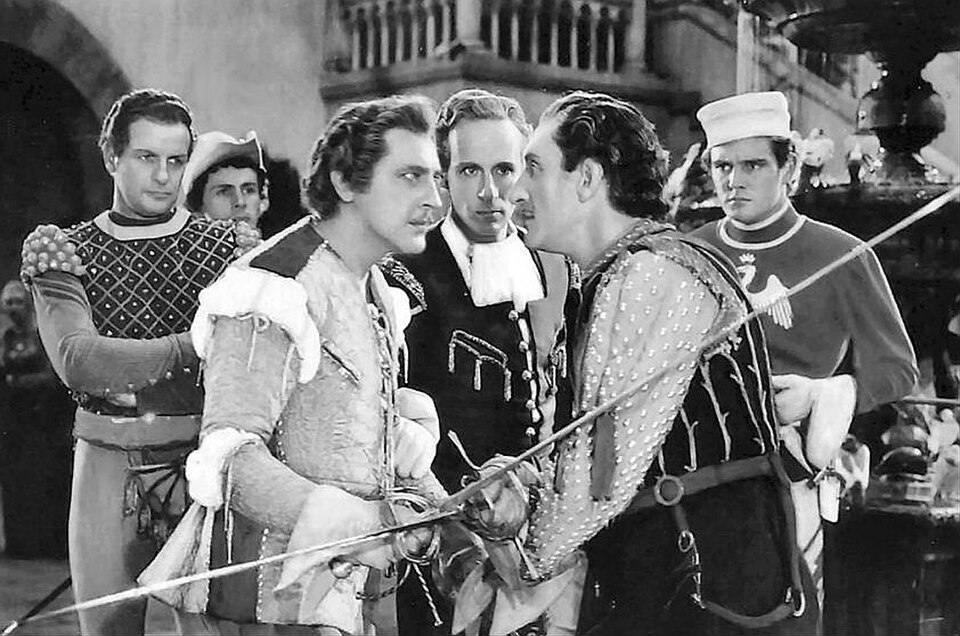
George Cukor’s lavish MGM production of Romeo and Juliet (1936) starred Norma Shearer and Leslie Howard as the star crossed lovers, with John Barrymore as Mercutio. Rathbone played Tybalt, the hot blooded swordsman of the Capulet family. His fierce, polished performance brought him his first Academy Award nomination for Best Supporting Actor.
🏜️ The Garden of Allah (1936)
In Richard Boleslawski’s early Technicolor romance The Garden of Allah (1936), starring Marlene Dietrich and Charles Boyer, Rathbone played Count Ferdinand Anteoni, a worldly aristocrat living in the Algerian desert.
🕵️ Love from a Stranger (1937) and Tovarich (1937)
Rathbone played Gerald Lovell, a charming husband who is secretly a murderer, opposite Ann Harding in Love from a Stranger (1937), based on a story by Agatha Christie. In Anatole Litvak’s comedy Tovarich (1937), starring Claudette Colbert and Charles Boyer as exiled Russian aristocrats working as servants in Paris, he played the Soviet commissar Dimitri Gorotchenko.
🐪 The Adventures of Marco Polo (1938)
Rathbone played Ahmed, a scheming adviser at the court of Kublai Khan, in Archie Mayo’s The Adventures of Marco Polo (1938), starring Gary Cooper as the Venetian explorer.
👑 If I Were King (1938)
In Frank Lloyd’s If I Were King (1938), starring Ronald Colman as the poet and rogue François Villon, Rathbone gave a witty, eccentric performance as the cunning and sardonic King Louis XI of France, almost unrecognizable beneath his makeup. The role earned him his second Academy Award nomination for Best Supporting Actor.
✈️ The Dawn Patrol (1938)
In Edmund Goulding’s World War I aviation drama The Dawn Patrol (1938), Rathbone played one of his few heroic roles of the decade. He was Major Brand, a Royal Flying Corps squadron commander in France in 1915 who is pushed to the edge of a breakdown by the guilt of sending young, inexperienced pilots to almost certain death. Errol Flynn and David Niven co-starred, with Flynn playing the pilot who succeeds Brand in command.
⚡ Son of Frankenstein (1939)
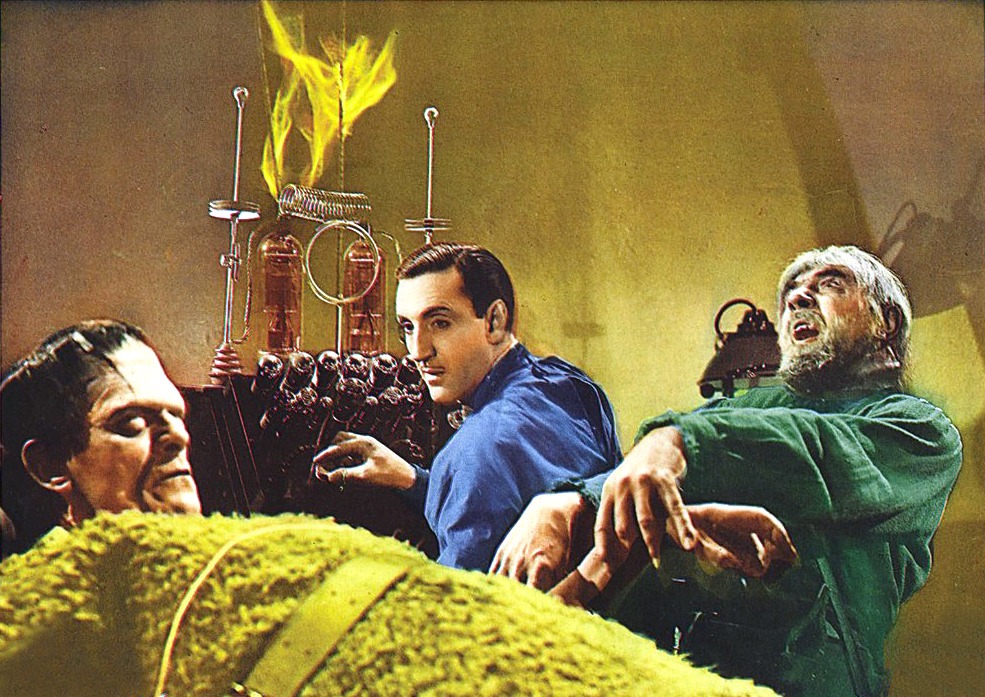
Rathbone starred in Rowland V. Lee’s Son of Frankenstein (1939), the third film in Universal‘s Frankenstein series, as Baron Wolf von Frankenstein, son of the monster’s creator, who returns to his ancestral village and becomes determined to vindicate his father’s work. Boris Karloff played the Monster for the last time, Bela Lugosi played the twisted blacksmith Ygor, and Lionel Atwill played the village police inspector.
🏰 Tower of London (1939)
Rathbone reunited with director Rowland V. Lee for Tower of London (1939), a dark historical drama in which he played Richard, Duke of Gloucester, the future King Richard III, who murders his way to the English throne. Boris Karloff played Mord, his bald, club footed executioner, and the young Vincent Price played the Duke of Clarence, who is drowned in a vat of wine.
🌙 The Mark of Zorro (1940)
In Rouben Mamoulian’s The Mark of Zorro (1940), Rathbone played Captain Esteban Pasquale, the arrogant military commander of Spanish California, opposite Tyrone Power as the masked avenger Zorro and Linda Darnell. Their climactic sword duel is often ranked among the finest in film history.
🎭 Films of the 1940s
Alongside his Sherlock Holmes series, Rathbone played villains and character roles in films including The Black Cat (1941), Crossroads (1942), the spy drama Above Suspicion (1943) with Joan Crawford and Fred MacMurray, and Mitchell Leisen’s period romance Frenchman’s Creek (1944), in which he played Lord Rockingham opposite Joan Fontaine. In 1949 he narrated “The Wind in the Willows” segment of Walt Disney’s animated feature The Adventures of Ichabod and Mr. Toad (1949).
😄 Comedy in the 1950s
In the 1950s, Rathbone happily poked fun at his villainous image. He played Lucio opposite Bob Hope in Casanova’s Big Night (1954) and Sir Ravenhurst, a scheming nobleman, opposite Danny Kaye in The Court Jester (1956). In Michael Curtiz’s We’re No Angels (1955), he played André Trochard, a greedy relative whom three escaped convicts, played by Humphrey Bogart, Peter Ustinov, and Aldo Ray, decide to dispatch. In John Ford‘s The Last Hurrah (1958), starring Spencer Tracy as an aging big city political boss, Rathbone played the cold banker Norman Cass Sr.
💀 Later Horror Films
In his final decade, Rathbone appeared in a series of horror and fantasy films. In The Black Sleep (1956), directed by Reginald Le Borg, he starred as Sir Joel Cadman, a surgeon performing illegal brain operations, with Bela Lugosi, Lon Chaney Jr., and John Carradine in the cast. He played the evil sorcerer Lodac in Bert I. Gordon’s The Magic Sword (1962).
In Roger Corman‘s anthology Tales of Terror (1962), he played Carmichael, a sinister hypnotist, opposite Vincent Price in the segment based on Poe’s “The Facts in the Case of M. Valdemar.” In Jacques Tourneur’s The Comedy of Terrors (1963), he played the landlord John F. Black, a man who refuses to stay dead, alongside Vincent Price, Peter Lorre, and Boris Karloff. It was the only film to unite all four of these horror legends.
📺 Television
Rathbone appeared frequently on television in the 1950s and 1960s. He played Marley’s Ghost opposite Fredric March‘s Scrooge in a 1954 musical version of A Christmas Carol on Shower of Stars, and in 1956 he starred as a singing Ebenezer Scrooge in The Stingiest Man in Town on The Alcoa Hour. He played the Chief Inquisitor in a 1957 television production of The Lark, about Joan of Arc, and Benjamin Disraeli in a 1961 Hallmark Hall of Fame production of Victoria Regina. He was also a panelist on the game show The Name’s the Same in 1954.
🎙️ Recordings
Rathbone’s rich, cultured voice made him a sought after recording artist. He recorded readings of Edgar Allan Poe’s stories and poems, Charles Dickens’s A Christmas Carol and Oliver Twist, and Clement C. Moore’s “A Visit from St. Nicholas,” and he narrated Prokofiev’s Peter and the Wolf with Leopold Stokowski conducting.
In the 1960s, Rathbone put the deerstalker cap back on for a series of television commercials for Getz Exterminators, appearing as Sherlock Holmes to promote the pest control company’s slogan that “Getz gets ’em.”
🔍 Sherlock Holmes
Summary: Starting with The Hound of the Baskervilles in 1939, Rathbone played Holmes in fourteen films and on radio, forming a legendary partnership with Nigel Bruce.
🐕 The Hound of the Baskervilles (1939)
In 1939, Twentieth Century Fox decided to film Sir Arthur Conan Doyle’s The Hound of the Baskervilles. According to Rathbone, the idea came up at a lunch at Lucey’s Restaurant in Hollywood, where producer Gene Markey immediately suggested Rathbone for the role of Holmes. Directed by Sidney Lanfield and set in Victorian England, The Hound of the Baskervilles (1939) starred Rathbone as Holmes and Nigel Bruce as his loyal companion Dr. John Watson, with Richard Greene as the endangered heir Sir Henry Baskerville. The film was a great success.
🎩 The Adventures of Sherlock Holmes (1939)
Fox quickly followed with The Adventures of Sherlock Holmes (1939), directed by Alfred L. Werker, in which Holmes matches wits with his archenemy, Professor Moriarty, played by George Zucco, who plots to steal the Crown Jewels. Ida Lupino co-starred. With its fog shrouded London atmosphere, the film is considered one of the finest Holmes adaptations ever made.
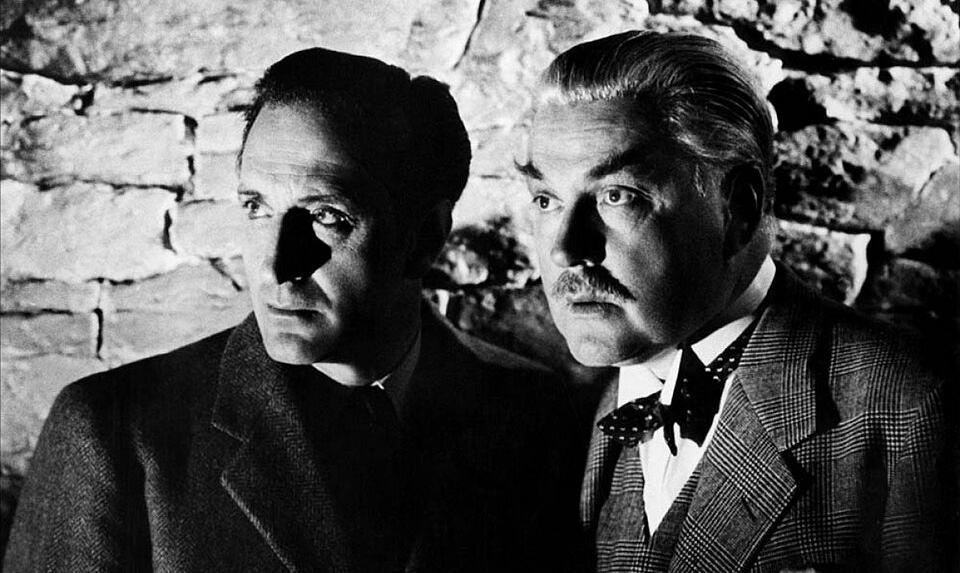
🎬 The Universal Series (1942 to 1946)
After Fox lost interest, Universal Pictures acquired the rights and produced twelve more Holmes films between 1942 and 1946, again starring Rathbone and Bruce. The Universal films updated the stories to the present day, and the first three involved World War II plots, with Holmes battling Nazi agents in Sherlock Holmes and the Voice of Terror (1942), Sherlock Holmes and the Secret Weapon (1942), and Sherlock Holmes in Washington (1943).
Most of the series was directed by Roy William Neill. Later installments included Sherlock Holmes Faces Death (1943), The Spider Woman (1943) with Gale Sondergaard, The Scarlet Claw (1944), The Pearl of Death (1944), The House of Fear (1945), The Woman in Green (1945), Pursuit to Algiers (1945), Terror by Night (1946), and Dressed to Kill (1946).
📻 The New Adventures of Sherlock Holmes
Beginning in October 1939, Rathbone and Bruce also played Holmes and Watson on the radio series The New Adventures of Sherlock Holmes. Rathbone continued in the radio role as long as the film series lasted. After the films ended in 1946, he left the program and was replaced by Tom Conway.
🤝 Rathbone and Nigel Bruce
The partnership between Rathbone and Nigel Bruce was one of the most famous pairings in film history. Bruce’s bumbling, affectionate Watson provided warm comic relief to Rathbone’s brilliant, incisive Holmes, and the two actors became close friends offscreen. In 1953 Rathbone returned to the role on Broadway in Sherlock Holmes, a play written by his wife, Ouida. Bruce was meant to play Watson again but was too ill, and he died on October 8, 1953, while the play was in rehearsals. The loss saddened Rathbone deeply, and the production closed after only three performances.
⛓️ Escaping the Deerstalker
Rathbone’s success as Holmes came at a price. The long series typecast him so thoroughly that audiences and producers struggled to see him as anyone else. Resenting this, he declined to renew his contract and returned to Broadway in the late 1940s to pursue more varied work. In later years, he made peace with the role, appearing as Holmes in comedy sketches on television, in a 1953 episode of the anthology series Suspense, and on a series of recordings of the Holmes stories, on which he voiced every character, including an affectionate impression of Nigel Bruce’s Watson.
🎬 Read more about Bela Lugosi in our exclusive bio.
⚔️ The Swordsman and the Swashbuckler Villain
Summary: A champion fencer, Rathbone fought some of cinema’s greatest sword duels against Errol Flynn and Tyrone Power and later parodied them opposite Danny Kaye.
🤺 A Champion Fencer
Rathbone was one of the finest swordsmen ever to work in Hollywood. A two time British Army fencing champion who listed fencing among his favorite pastimes, he brought genuine skill and athleticism to his screen duels. He also helped teach swordsmanship to younger stars, including Errol Flynn and Tyrone Power.
🏴☠️ Captain Blood (1935)
In Michael Curtiz’s Captain Blood (1935), the film that made Errol Flynn a star, Rathbone played Levasseur, a swaggering French pirate captain who becomes the uneasy partner and later the rival of Flynn’s Peter Blood. The two fought a famous duel on a rocky beach over Olivia de Havilland‘s character, and although Rathbone’s role was relatively small, his presence gave the film a formidable villain.
🏹 The Adventures of Robin Hood (1938)
Rathbone’s best remembered villain was Sir Guy of Gisbourne in The Adventures of Robin Hood (1938), directed by Michael Curtiz and William Keighley. Errol Flynn starred as Robin Hood, Olivia de Havilland as Maid Marian, and Claude Rains as the treacherous Prince John. Filmed in vivid Technicolor, the film climaxed with an elaborate duel between Robin and Sir Guy that ranged across the halls and staircases of Nottingham Castle, with giant shadows of the two fighters thrown across the walls. It remains one of the most celebrated sword fights ever filmed and a high point of the swashbuckling genre.
🗡️ Tower of London and The Mark of Zorro
Rathbone also fought memorable duels in Tower of London (1939) and The Mark of Zorro (1940). In the latter, his lightning fast fight against Tyrone Power was so convincing that many viewers believed Rathbone, as the more skilled fencer, could easily have won the fight had the script allowed it.
🃏 The Court Jester (1956)
In The Court Jester (1956), Rathbone gleefully parodied his own swashbuckling legacy in a comic duel with Danny Kaye, whose character switches between a master swordsman and a bumbling clown at the snap of a finger. The scene is one of the most beloved comic sword fights in film history.
❤️ Personal Life
Summary: Rathbone was married twice, had a son, Rodion, and an adopted daughter, Cynthia, and published his autobiography, In and Out of Character, in 1962.
💍 Marriage to Marion Foreman (1914 to 1926)
In 1914, Rathbone married the actress Ethel Marion Foreman. Their son, Rodion Rathbone, was born in July 1915. Rodion later became an actor and appeared in his father’s film Tower of London (1939). The marriage ended in divorce in 1926.
💍 Marriage to Ouida Bergère (1926 to 1967)
On April 18, 1926, Rathbone married the screenwriter Ouida Bergère, who had written screenplays for silent films. She gave up her own career to manage his business affairs, and the couple remained married for the rest of his life. Their marriage lasted more than forty one years.
👨👧 Children and Family
Rathbone and Ouida had a child who died in infancy in 1928. In 1939 they adopted a daughter, Cynthia, to whom Rathbone was a devoted father. The couple also helped raise Ouida’s niece. Rathbone was a first cousin once removed of Eleanor Rathbone, the pioneering British independent member of Parliament and social reformer.
🥂 Hollywood Society
During Rathbone’s Hollywood years, Ouida became famous for hosting lavish and expensive parties at the couple’s home, attended by many of the most prominent figures in the film industry. Her extravagant lifestyle placed financial pressure on Rathbone, and in his later years he accepted roles in low budget films and television game shows partly to support it.
📖 In and Out of Character (1962)
In 1962 Rathbone published his autobiography, In and Out of Character, recounting his childhood, his wartime service, his years in the theater, and his Hollywood career. The book gave its name to the one man show he toured with during the 1960s.
In 1926, Rathbone was arrested along with the entire cast of the Broadway play The Captive, which dealt with a woman who leaves her husband for another woman. The charges were dropped, but Rathbone was angered by the censorship, believing the subject deserved to be brought into the open.
🕊️ Later Years and Death
Summary: Honored with three Hollywood Walk of Fame stars, Rathbone died of a heart attack at his New York home on July 21, 1967, at the age of 75.
🏆 Honors and Recognition
Rathbone received two Academy Award nominations for Best Supporting Actor, for Romeo and Juliet (1936) and If I Were King (1938). In 1948 he shared the Tony Award for Best Actor in a Play for The Heiress with Henry Fonda, honored for Mister Roberts, and Paul Kelly, honored for Command Decision. He was awarded three stars on the Hollywood Walk of Fame, for his work in motion pictures, radio, and television, an honor shared by only a select group of performers.
🎬 Final Films
In his last years, Rathbone appeared in a string of low budget science fiction and horror films, including Voyage to the Prehistoric Planet (1965), Curtis Harrington’s Queen of Blood (1966), in which he played Dr. Farraday, the beach party comedy The Ghost in the Invisible Bikini (1966), and Hillbillys in a Haunted House (1967), alongside Lon Chaney Jr. and John Carradine. His final role was in the Mexican horror comedy Autopsia de un fantasma, released in 1968 after his death.
⚰️ Death
Basil Rathbone died on July 21, 1967, at the age of 75, at his home in New York City. The cause of death was a sudden heart attack. He was interred in a crypt in the Shrine of Memories Mausoleum at Ferncliff Cemetery in Hartsdale, New York. He was survived by his wife, Ouida, his son, Rodion, and his daughter, Cynthia.
🏆 Legacy
🔍 The Definitive Detective
For generations of audiences, Basil Rathbone was Sherlock Holmes. His sharp profile, piercing intelligence, and brisk, confident delivery matched the character described by Arthur Conan Doyle so perfectly that his portrayal became the standard against which every later actor would be measured. Even as new interpretations have appeared, his Holmes remains among the most beloved and recognizable in the history of the character.
🗡️ The Gentleman Villain
Rathbone elevated the screen villain into an art form. In an era of swashbucklers and costume dramas, he gave heroes like Errol Flynn and Tyrone Power worthy opponents, making evil elegant, witty, and genuinely dangerous. His influence can be seen in every polished, articulate screen antagonist who followed, from the suave villains of later adventure films to the cultured menace of modern blockbusters.
🎭 A Bridge Between Stage and Screen
Trained in the Shakespearean tradition of Frank Benson, Rathbone brought the discipline, diction, and physical command of the classical stage to the movies at a time when Hollywood was learning to talk. He belonged to a generation of British actors who helped shape the sound and style of the golden age of Hollywood, and he never lost his devotion to the theater that had formed him.
🎖️ Courage Beyond the Camera
Rathbone’s wartime service and his Military Cross remind audiences that the man behind the polished villains and the brilliant detective was also a genuine hero. His grief for his fallen brother and his daring patrols on the Western Front add a profound human dimension to the story of an actor so often seen as cool and composed.
🏆 Basil Rathbone’s Place in American Entertainment
Basil Rathbone stands among the great character stars of Hollywood’s golden age, an actor whose versatility ranged from Shakespeare and Dickens to swashbucklers, horror, comedy, and the most famous detective series in film history. His legacy is ultimately one of intelligence and elegance made unforgettable, of a classically trained artist who gave the screen its finest gentleman villains and its definitive Sherlock Holmes, and whose sharp profile and incisive voice remain woven into the fabric of popular culture more than half a century after his death.