🎬 Tyrone Power Biography: The Extraordinary Rise of Hollywood’s Beloved Star
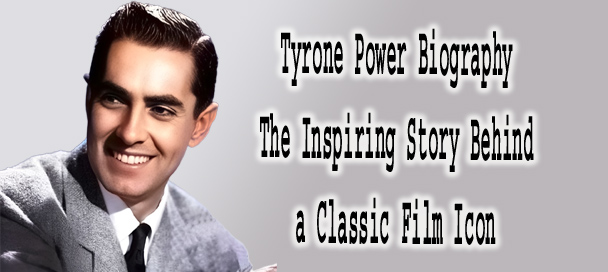
Tyrone Power stands among the defining leading men of Hollywood's Golden Age. With striking screen presence, polished performances, and remarkable versatility, he became one of the era's most recognizable stars. His work helped shape the image of the romantic adventure hero while proving equally effective in historical dramas, mysteries, and sophisticated character pieces.
Tyrone Power was one of Hollywood's defining leading men during the Golden Age of cinema. Best remembered for films including *The Mark of Zorro*, *Blood and Sand*, The Razor's Edge, Nightmare Alley, and Witness for the Prosecution, he became known for combining matinee-idol charm with increasingly complex dramatic performances. His career at 20th Century Fox helped shape the adventure film genre while leaving a lasting mark on classic American filmmaking.
At a time when the studio system produced some of cinema's most enduring classics, Power earned a reputation for combining charm with dramatic depth. Audiences embraced his effortless style, while filmmakers valued his ability to bring credibility and emotional weight to a wide range of roles. His performances reflected an uncommon balance of elegance, confidence, and sincerity that distinguished him from many of his contemporaries.
Power's influence extended well beyond the films themselves. He became an international symbol of classic Hollywood, representing the refinement and star power that defined the industry's most celebrated years. Decades after his career, his work continues to be admired by film historians and audiences who recognize him as one of the lasting icons of American cinema.
The greatest irony of Tyrone Power's career is that many critics now consider his darkest and most challenging performances, especially Nightmare Alley, to be his finest work, even though audiences initially expected him to remain the handsome adventure hero they had always admired.
👶 Early Life
Summary: Raised in a family with deep theatrical roots, Power developed an appreciation for acting while overcoming the challenge of living up to a famous family name.
Tyrone Power was born on May 5, 1914, in Cincinnati, Ohio. Acting was part of his family heritage. His father, Tyrone Power Sr., was a respected stage and screen performer, while his mother, Helen Emma Reaume, supported the family's theatrical lifestyle. He was named after his father, continuing a family tradition that stretched back through earlier generations of performers.
Growing up, Power experienced life both inside and outside the theater world. His father's career exposed him to touring productions and the demands of professional acting, giving him a firsthand look at the discipline required to succeed on stage. Although surrounded by the entertainment industry, his upbringing also included periods of ordinary family life away from the spotlight.
As a teenager, Power attended school while developing an interest in acting, encouraged by the example set within his own family. After his father's death, he became increasingly determined to pursue the profession himself. His early years were marked by the challenge of living up to a well-known family name while proving his own abilities. Before finding professional opportunities, he faced rejection during auditions and spent time refining his skills through stage work and screen tests, steadily building the experience needed to establish himself as an actor.
Explore the Biographies of Iconic Celebrities
Tyrone Power came from one of America's oldest acting families, with the Power theatrical dynasty stretching back to the 18th century.
🎬 Film Career
Summary: From swashbuckling adventures to acclaimed dramas, Tyrone Power built one of the most respected film careers of the studio era.
Tyrone Power's professional film career began after signing with 20th Century Fox, where studio executives quickly recognized that he possessed the appearance, confidence, and screen presence needed for major stardom. After appearing in smaller roles, his breakthrough came with Lloyd's of London (1936). The historical drama became a major success and instantly established Power as one of Hollywood's newest leading men. The film also featured Madeleine Carroll, Freddie Bartholomew, and George Sanders, introducing audiences to a charismatic actor whose popularity would continue to grow throughout the decade.
Fox wasted little time building Power into one of its biggest attractions. He starred opposite Loretta Young in Love Is News (1937) and reunited with Madeleine Carroll in On the Avenue (1937). That same year he appeared with Janet Gaynor in Cafe Metropole (1937) and demonstrated that he could handle romance, comedy, and light drama with equal ease. His natural charm made him one of the studio's most dependable box office draws.
Power's popularity reached another level with In Old Chicago (1938), starring alongside Don Ameche, Alice Faye, and Alice Brady. The historical drama earned widespread praise and became one of Fox's biggest productions of the year. He followed it with Alexander's Ragtime Band (1938), sharing the screen once again with Alice Faye and Don Ameche. Loosely inspired by the music of Irving Berlin, the film became another enormous commercial success and reinforced Power's standing as one of Hollywood's premier stars.
Adventure films soon became one of Power's trademarks. His performance as the heroic nobleman in The Mark of Zorro (1940) remains one of the defining portrayals of the legendary masked swordsman. Starring with Linda Darnell and Basil Rathbone, Power balanced romance, humor, and athletic swordplay in a film that has influenced nearly every cinematic version of the character since. His elegant fencing scenes with Rathbone are still regarded as classics of Hollywood action filmmaking.
Power continued the swashbuckling tradition in Brigham Young (1940), The Black Swan (1942) with Maureen O'Hara and Laird Cregar, and The Black Rose (1950) opposite Orson Welles and Cécile Aubry. These lavish productions showcased his ability to carry large-scale historical adventures while maintaining a believable emotional center. Whether portraying pirates, noblemen, or explorers, he projected confidence without sacrificing humanity.
One of his finest dramatic performances came in The Razor's Edge (1946), based on the novel by W. Somerset Maugham. Playing Larry Darrell, a World War I veteran searching for meaning and spiritual fulfillment, Power deliberately chose a role that moved beyond the handsome romantic image that had defined much of his earlier career. Featuring Gene Tierney, Anne Baxter, Clifton Webb, and Herbert Marshall, the film demonstrated his growing maturity as a dramatic actor and remains one of the most respected performances of his career.
Power continued to pursue more demanding material with Nightmare Alley (1947), one of the darkest films produced during Hollywood's classic era. Based on the novel by William Lindsay Gresham, the film cast him as carnival mentalist Stanton Carlisle, whose ambition ultimately destroys him. Co-starring Joan Blondell, Coleen Gray, Helen Walker, Taylor Holmes, and Mike Mazurki, the picture initially disappointed at the box office because audiences expected another heroic Power performance. Over time, however, Nightmare Alley (1947) has become recognized as one of the greatest examples of American film noir and one of the boldest performances of his career.
Following his military service during World War II, Power returned to filmmaking with renewed determination to avoid being limited to conventional leading-man roles. While still appearing in large productions, he increasingly sought characters with greater complexity. This period included films such as Captain from Castile (1947), directed by Henry King and featuring Jean Peters, and Prince of Foxes (1949) opposite Orson Welles and Wanda Hendrix. Both productions highlighted his willingness to blend adventure with more layered dramatic performances.
The 1950s saw Power continue to balance historical epics with serious dramas. He starred in American Guerrilla in the Philippines (1950), Diplomatic Courier (1952), King of the Khyber Rifles (1953) with Terry Moore, The Mississippi Gambler (1953), and Untamed (1955) opposite Susan Hayward. Although changing audience tastes and the decline of the traditional studio system altered Hollywood during this period, Power remained a respected leading actor capable of carrying ambitious productions.
His later work reflected an artist interested in challenging material rather than relying solely on established screen personas. He appeared with Ava Gardner, Mel Ferrer, and Errol Flynn in The Sun Also Rises (1957), based on the novel by Ernest Hemingway. He also starred alongside Marlene Dietrich and Charles Laughton in Witness for the Prosecution (1957), directed by Billy Wilder from the celebrated play by Agatha Christie. The courtroom drama became one of the most acclaimed films of the decade, with Power earning praise for portraying a character whose true nature remains uncertain until the film's unforgettable conclusion.
Blood and Sand (1941) DVD
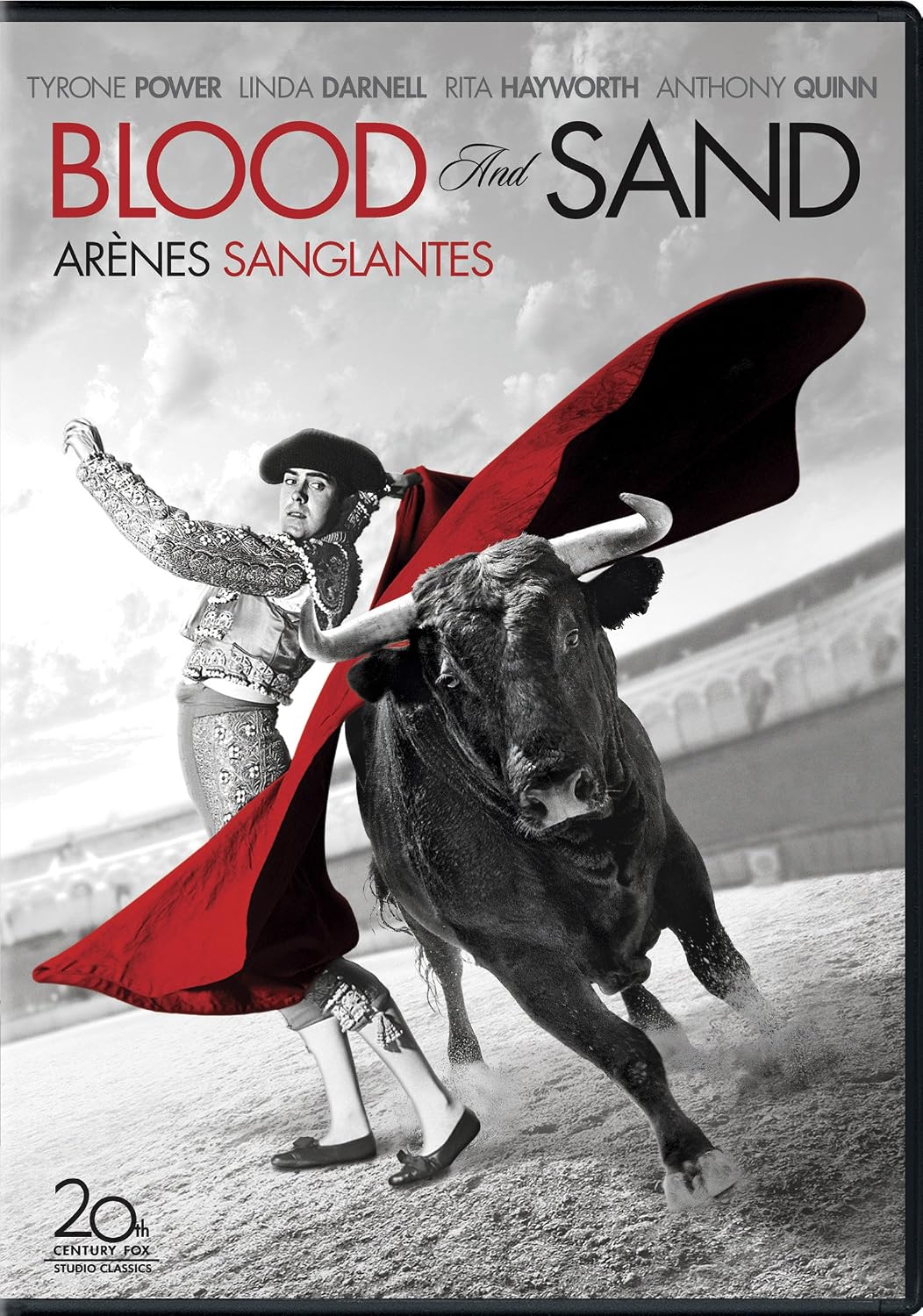
Product Description:
Experience one of Tyrone Power's most celebrated performances in the lavish Technicolor classic Blood and Sand (1941). Power stars as ambitious young bullfighter Juan Gallardo, whose rise from humble beginnings to national fame brings wealth, admiration, and temptation. Alongside unforgettable performances by Linda Darnell and Rita Hayworth, this acclaimed drama explores love, ambition, pride, and the price of success.
Film Highlights:
- • Starring Tyrone Power, Linda Darnell, Rita Hayworth, and Nazimova.
- • Spectacular Technicolor cinematography that earned an Academy Award.
- • Based on the classic novel by Vicente Blasco Ibáñez.
- • One of the signature films of Hollywood's Golden Age.
- • A compelling blend of romance, drama, and breathtaking bullfighting spectacle.
Why You'll Enjoy This Film:
Blood and Sand remains one of Tyrone Power's defining roles, showcasing both his magnetic screen presence and dramatic range. Rich costumes, vibrant color photography, memorable performances, and an emotional story make this a standout classic that continues to captivate fans of vintage Hollywood cinema.
Buy on Amazon
❤️ Personal Life
Summary: Away from the cameras, Power devoted himself to family, military service, and a private life that contrasted sharply with his public image.
Despite his image as one of Hollywood's most admired leading men, Tyrone Power kept much of his personal life out of the public spotlight. Friends and colleagues often described him as courteous, thoughtful, and deeply committed to his profession. Away from movie sets, he valued privacy and preferred spending time with family and close friends rather than embracing the constant publicity that surrounded many major stars of the era.
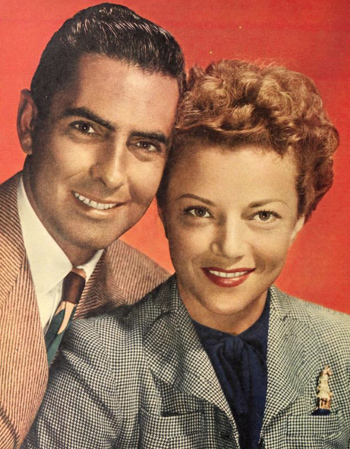
Power married French actress Annabella in 1939, creating one of Hollywood's most widely followed celebrity marriages. During their marriage, he adopted Annabella's daughter, Anne Power. Although the couple appeared glamorous in public, the demands of two acting careers and long periods apart placed increasing strain on the relationship. They divorced in 1948 after nearly a decade together.
Later that same year, Power married actress Linda Christian. The marriage attracted international media attention, and the couple became one of the entertainment industry's best-known celebrity pairs. They had two daughters, Taryn Power and Romina Power. Their marriage effectively ended in 1955, with the divorce finalized soon afterward.
In 1958, Power married actress Deborah Jean Minardos. The marriage was brief but happy, and Deborah was expecting their first child together when Power died. Their son, Tyrone Power Jr., was born several months after his father's passing and later followed the family tradition by pursuing an acting career.
Outside of filmmaking, Power maintained a lifelong interest in physical fitness, fencing, horseback riding, and outdoor activities, interests that complemented the demanding action roles he frequently portrayed on screen. He was known for approaching sword fighting with remarkable dedication, often performing challenging sequences himself. During World War II, he stepped away from Hollywood at the height of his fame to serve as a pilot in the United States Marine Corps, an experience that profoundly shaped his outlook and earned him lasting respect from both fellow actors and the public.
Those who knew Power personally often remembered a man quite different from the adventurous heroes he portrayed. Rather than seeking attention, he was regarded as humble, professional, and generous with coworkers. His reputation for kindness, strong work ethic, and quiet confidence endured long after his death, becoming as much a part of his legacy as the classic films that made him an international star.
Despite starring in numerous sword-fighting films, Power trained seriously in fencing and performed many of his own action scenes, earning respect from professional stunt performers.
🕊️ Later Years
Summary: His final years reflected an actor determined to pursue more demanding roles before his untimely death ended a remarkable career.
During the final years of his career, Tyrone Power focused on roles that challenged both audiences and critics. Rather than relying solely on the romantic and swashbuckling characters that had made him famous, he increasingly accepted dramatic parts that explored moral conflict and psychological complexity. Films such as The Sun Also Rises (1957) and Witness for the Prosecution (1957) demonstrated his continued growth as an actor and confirmed that he remained one of Hollywood's most respected leading men.
Power also returned to the stage during this period, enjoying the direct connection with live audiences. He appeared in theatrical productions in both the United States and Britain, earning praise for performances that showcased the depth of his acting beyond the screen. His stage work reflected a desire to broaden his artistic range while proving himself outside the traditional studio system that had first made him a star.
In 1958, Power accepted the leading role in the historical epic Solomon and Sheba (1959), a large international production filmed in Spain. During production, he insisted on performing an intense sword-fighting sequence himself. Shortly after completing the scene, he collapsed from a massive heart attack on November 15, 1958. He died later that day at the age of 44, bringing one of Hollywood's most celebrated careers to an unexpected end.
Because Power had completed only part of the film, production was temporarily halted. The studio cast Yul Brynner as his replacement, and the completed scenes were reshot so the production could be finished. The unusual circumstances surrounding the film became one of the most talked-about events in Hollywood at the time.
Power's death shocked the entertainment industry and his millions of admirers around the world. Newspapers devoted extensive coverage to the loss of an actor who had remained a major international star for more than two decades. Fellow performers remembered him not only for his talent but also for his professionalism, generosity, and quiet dignity.
Although his life ended far too soon, Power left behind an extraordinary body of work that continues to represent the finest traditions of Hollywood's Golden Age. His films remain widely viewed and restored for modern audiences, ensuring that his performances, whether as a romantic hero, an adventurous swordsman, or a deeply conflicted dramatic character, continue to define the enduring appeal of classic American cinema.
Tyrone Power was an accomplished amateur pilot long before many Hollywood stars embraced aviation. His love of flying carried over into his World War II service, where he flew transport missions in the Pacific rather than remaining safely in Hollywood making war films.
🏆 Legacy
Tyrone Power remains one of the defining stars of Hollywood's Golden Age. During a career that spanned more than two decades, he helped shape the image of the classic leading man through a rare combination of charisma, athleticism, and dramatic ability. While many actors of his era became identified with a single style of performance, Power successfully moved between adventure films, historical epics, romances, mysteries, and serious dramas, leaving behind a body of work that continues to attract new audiences.
His portrayal of the masked hero in The Mark of Zorro (1940) became a lasting benchmark for cinematic swashbucklers and influenced generations of actors who later took on similar roles. His performances in The Razor's Edge (1946) and Nightmare Alley (1947) revealed a willingness to challenge his own screen image, earning growing appreciation from film historians who regard those films among the finest achievements of his career.
Power's influence extends beyond his individual performances. As one of 20th Century Fox's greatest stars, he helped define the studio's success during the late 1930s and 1940s. His films continue to be shown regularly on classic movie channels, streaming services, and film festival programs, introducing modern audiences to the craftsmanship and storytelling of Hollywood's studio era.
His contributions have been recognized with a star on the Hollywood Walk of Fame, honoring his lasting impact on the motion picture industry. Critics continue to praise his versatility, noting that he evolved from a handsome romantic idol into an accomplished dramatic actor who consistently sought more demanding material as his career progressed.
The Power family name also continued in entertainment through his children, including actress Taryn Power, singer and actress Romina Power, and actor Tyrone Power Jr.. Their careers carried forward a theatrical tradition that had already spanned several generations before Tyrone Power became an international star.
More than half a century after his passing, Tyrone Power remains a symbol of classic Hollywood at its finest. His elegance, screen presence, and commitment to meaningful performances continue to earn admiration from audiences, filmmakers, and historians alike. Whether remembered for his unforgettable heroes, his dramatic depth, or his enduring influence on American cinema, his place among the great stars of the twentieth century remains secure.
🗣️ WHY THEY STILL MATTER
Tyrone Power continues to represent the elegance and craftsmanship of Hollywood's Golden Age. His films bridge the gap between classic adventure stories and sophisticated dramatic performances, proving that genuine screen presence never goes out of style. Modern audiences continue to discover his work through restored classics, while film historians regularly cite him as one of the studio era's most underrated dramatic actors.
Further Reading & Resources
📺 See: Tyrone Power — The Movie Database (TMDB)
🔍 More: The 38 Best Tyrone Power Movies, Ranked By Fans