🎭 Joan Blondell: The Wisecracking Heart of Pre-Code Hollywood
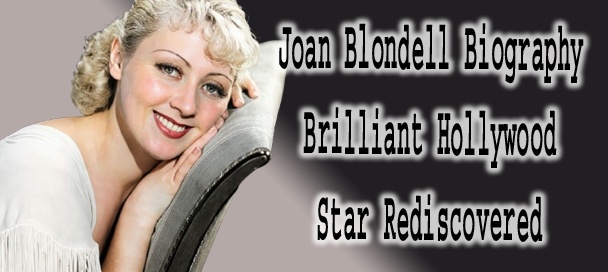
Joan Blondell did not glide into Hollywood on mystery or glamour. She arrived with quick timing, bright eyes, and the kind of confidence that suggested she had already seen enough of life to handle whatever the studios threw at her. While others were polished into porcelain, Blondell felt real. Audiences trusted her because she seemed like someone they might actually know.
Joan Blondell was a defining presence of Pre-Code Hollywood, known for her sharp wit and grounded portrayals of working women during the 1930s. Rising to prominence in films such as Gold Diggers of 1933 (1933) and The Public Enemy (1931), she became a vital part of Warner Bros.’ fast-paced studio era. Over a career spanning nearly five decades, she transitioned from wisecracking musical comedies to respected character roles in film and television. Her steady adaptability secured her place among the most enduring actresses of classic American cinema.
In the early 1930s, when films were sharp, fast, and a little daring, she thrived. The Pre-Code era rewarded nerve and wit, and Blondell had both. She could toss off a wisecrack without blinking, yet in the next moment reveal a flicker of vulnerability that made her more than just comic relief. She was often cast as the working girl, the best friend, the woman who knew the score. Somehow she made those roles feel central rather than secondary.
Her career would stretch far beyond those early years, but it was that first burst of talkies that fixed her image in the public mind. She was never distant, never icy. Even when playing tough, she gave her characters warmth. That balance, toughness and heart in the same breath, became her signature and carried her through nearly five decades on screen.
Joan Blondell survived the collapse of the Pre-Code era, the tightening of censorship rules, and the decline of the studio system, yet she continued working steadily for nearly fifty years without losing her distinctive voice.
👶 Early Life
Summary: Joan Blondell grew up in vaudeville, gaining practical stage experience that shaped her confident and natural screen presence.
Joan Blondell was born Rose Joan Blondell on August 30, 1906, in New York City. Show business was not a distant dream in her household. Her father, Levi Blondell, was a vaudeville comedian, and from childhood she traveled with her parents across the country. The stage was less an ambition than a normal part of daily life. Dressing rooms, train cars, and boardinghouses formed the backdrop of her early years.
Life on the road was uncertain and rarely comfortable. Vaudeville demanded stamina. Performers moved constantly, chasing bookings and adjusting to thin crowds or fickle managers. Blondell learned early how to read an audience and how to keep her composure when things went wrong. Those lessons would later serve her better than any formal acting class.
She attended the University of Southern California for a time, but the pull of performance was stronger than the pull of a degree. In 1926 she won the Miss Dallas beauty contest, which led to stage work in New York. Broadway followed, and with it the attention of film producers searching for voices that could carry the new talking pictures. By the end of the decade, she was headed west, bringing with her the confidence of someone who had already spent a lifetime in front of a crowd.
Explore the Biographies of Iconic Celebrities
Joan Blondell was nominated for an Academy Award for Best Supporting Actress for her performance in The Blue Veil (1951).
🎬 Movie & TV Career
Summary: From Pre-Code musicals to later dramatic roles, Blondell worked with major stars and adapted to every era of Hollywood filmmaking.
Joan Blondell entered films at the dawn of the sound era, and she moved quickly. After early stage success, she signed with Warner Bros. at the start of the 1930s, when the studio specialized in brisk, streetwise pictures. One of her early screen appearances came in Sinner’s Holiday (1930), a crime drama that also featured a young James Cagney. The chemistry between them was immediate, and it would carry into several later productions.
She became a familiar presence in the fast-talking, urban films that defined early Warner output. In The Public Enemy (1931), again alongside James Cagney, she held her own in a story dominated by gangland brutality. That same year she appeared in Blonde Crazy (1931) with Cagney once more, playing the quick-thinking partner in a world of small-time swindlers. She also shared the screen with Edward G. Robinson in Three on a Match (1932), a compact but powerful drama that helped cement the gritty style of the period.
Blondell was equally at home in musical backstage comedies. In Gold Diggers of 1933 (1933), she joined Ruby Keeler, Dick Powell, and Aline MacMahon in a film that blended Depression-era hardship with spectacle. She followed with Footlight Parade (1933), again with James Cagney, delivering sharp dialogue and a grounded presence amid elaborate musical numbers staged by Busby Berkeley. In Dames (1934) and Gold Diggers of 1935 (1935), she continued to anchor ensemble casts, often playing the practical friend who steadied more romantic leads.
Her range extended beyond wisecracking chorus girls. In Stand-In (1937), she starred opposite Leslie Howard, offering a comedic look at Hollywood itself. By the late 1930s and into the 1940s, as the industry shifted and the Production Code tightened, Blondell adapted. She appeared in films such as The Blue Veil (1951), where she portrayed a more mature, emotionally layered character in a drama starring Jane Wyman. Her performance earned serious notice and demonstrated that she could move beyond the Pre-Code persona that first made her famous.
Television opened another chapter. In the 1950s and 1960s, Blondell became a familiar face on popular series. She appeared on programs such as The Twilight Zone (1963), where her seasoned presence added weight to the anthology’s moral tales. Guest spots on shows like The Virginian (1969) and Here’s Lucy (1969) kept her in front of new audiences who may not have known her early film work.
Her late-career resurgence brought her to director Norman Jewison’s film The Cincinnati Kid (1965), where she acted opposite Steve McQueen, Edward G. Robinson, and Ann-Margret. The performance reminded critics of her enduring screen authority. In Grease (1978), starring John Travolta and Olivia Newton-John, she appeared as Vi, the sharp-tongued waitress, delivering a brief but memorable turn that introduced her to yet another generation.
Across nearly five decades, Joan Blondell appeared in more than one hundred films. She worked alongside some of the defining names of American cinema, from James Cagney and Edward G. Robinson to Steve McQueen and John Travolta. Through shifting styles and changing audiences, she remained steady, adaptable, and unmistakably herself.
She married cinematographer George Barnes, who later won an Academy Award for Rebecca (1940).
📸 The Banned 1932 Photo and the Production Code Crackdown
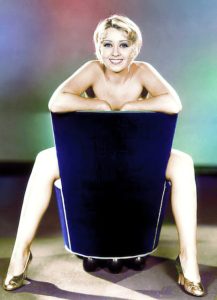
In 1932, at the height of Hollywood’s bold and playful Pre-Code period, Joan Blondell posed for a studio promotional photograph that reflected the tone of the era. The image was suggestive but not explicit by modern standards. It played on her reputation as a confident, street-smart performer who often portrayed working women with wit and independence. At the time, such publicity shots were common. Studios relied on them to sell personality as much as films.
The climate changed quickly.
By 1934, enforcement of the Motion Picture Production Code became strict and uncompromising. Although the Code had been written in 1930, it was not rigorously enforced until the Production Code Administration, under Joseph Breen, began reviewing films and promotional materials with real authority. What had once been tolerated was now scrutinized. Wardrobe, dialogue, and even marketing images were evaluated under moral guidelines designed to protect public decency.
The Code prohibited “indecent or undue exposure,” insisted that costumes must not be transparent or excessively revealing, and warned against imagery that could be interpreted as suggestive. Publicity photographs were included in this oversight. The earlier Blondell image, created before enforcement tightened, no longer fit the new standards. As a result, it was withdrawn from circulation and effectively banned under the Code’s stricter interpretation of modesty and moral presentation.
The irony is that the photograph was mild compared to what had appeared in films only a few years earlier. During the early 1930s, actresses often wore low-cut gowns, sheer fabrics, or playful bedroom attire in comedies and musicals. Characters spoke openly about romance and survival during the Depression. After 1934, that frankness faded. Necklines rose, scripts softened, and personalities were reshaped to align with newly enforced ideals.
For Blondell, the shift marked a turning point in Hollywood itself rather than in her career alone. She adapted, as she always did. The spirited independence that once came wrapped in a daring promotional pose now appeared in subtler ways, through timing, expression, and tone. The banned photograph remains a small but telling artifact from a brief window in film history when the rules had not yet closed in.
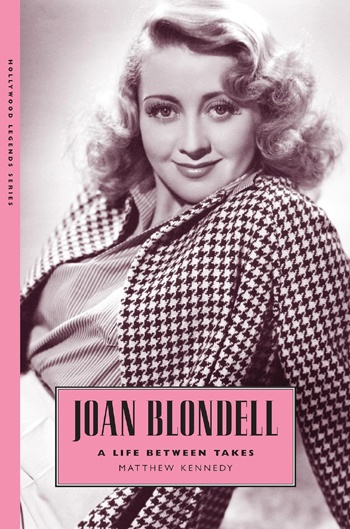
Joan Blondell: A Life between Takes
Product Description:
Joan Blondell: A Life between Takes is the first major biography of the effervescent, scene-stealing actress (1906–1979) who conquered motion pictures, vaudeville, Broadway, summer stock, television, and radio. Born to vaudevillian parents, she was on stage by age three. With her casual sex appeal, distinctive cello voice, luminous eyes, and flawless timing, she rose to prominence in Warner Bros. musicals and comedies of the 1930s, including Blonde Crazy, Gold Diggers of 1933, and Footlight Parade.
Career & Personal Highlights:
• Frequent co-star of James Cagney, Clark Gable, Edward G. Robinson, and Humphrey Bogart.
• Close friend to Judy Garland, Barbara Stanwyck, and Bette Davis.
• Married to Dick Powell and later to producer Mike Todd.
• Appeared in nearly 100 films across a career spanning more than fifty years.
• Transitioned successfully from Pre-Code musicals to later dramatic and television roles.
Why This Biography Matters:
Meticulously researched and deeply personal, this biography weaves together Joan Blondell’s public achievements with the private struggles that shaped her life. Through interviews with family, friends, and colleagues, the book presents a portrait of a woman who was generous, resilient, and unmistakably original. It offers insight into the inner workings of classic Hollywood while honoring the legacy of one of its most dependable stars.
Buy on Amazon
🕊️ Later Years
Summary: In her later decades, she embraced mature character roles in both film and television, earning renewed respect.
By the 1950s, the quick tempo of early Warner musicals had long passed, yet Joan Blondell never faded quietly into the background. She adjusted to character roles with the same assurance she once brought to leading parts. In The Blue Veil (1951), she stood alongside Jane Wyman in a sentimental drama that allowed her to show warmth and restraint rather than wisecracks. The performance reminded audiences that her strength was not confined to fast dialogue.
The 1960s brought renewed visibility. In The Cincinnati Kid (1965), directed by Norman Jewison, she shared the screen with Steve McQueen, Edward G. Robinson, and Ann-Margret. Though not the film’s central figure, she carried a quiet authority that suggested decades of experience. Critics noted that she had matured into roles that required presence more than punchlines.
Television became a steady outlet. She appeared on programs such as The Twilight Zone (1963) and later on Here’s Lucy (1969) with Lucille Ball, moving easily between drama and comedy. The medium suited her. The camera was closer, the pacing tighter, and she knew exactly how much to give.
Her final film appearance came in Grease (1978), starring John Travolta and Olivia Newton-John. As Vi, the world-weary waitress, she delivered a brief but memorable turn. It was a fitting farewell, a small role that still carried personality.
Joan Blondell died on December 25, 1979, at the age of seventy-three. By then she had appeared in well over one hundred films and countless television productions. She had begun as a traveling vaudeville child and ended as one of the last living links to Hollywood’s Pre-Code vitality. Through each shift in taste and tone, she remained steady, professional, and unmistakably herself.
Read more about James Cagney in our exclusive bio.
Joan Blondell once performed in traveling vaudeville as a child before she ever set foot on a Hollywood soundstage. Her early years on the road helped shape the practical confidence she later brought to film.”
🏆 Legacy
Summary: Joan Blondell remains remembered as one of Hollywood’s most dependable and authentic performers.
Joan Blondell’s legacy rests not on a single towering performance, but on consistency. She worked steadily for nearly fifty years, adapting to every shift in style that Hollywood demanded. From the hard-edged energy of early 1930s crime dramas to the bright nostalgia of Grease (1978), she proved that durability could be as impressive as stardom.
She became one of the defining faces of the Pre-Code era. In films like Gold Diggers of 1933 (1933) and Footlight Parade (1933), she represented the working woman who was clever, practical, and emotionally grounded. While others played ingénues or distant beauties, Blondell played women who understood rent, romance, and reality. That image resonated deeply during the Depression and still feels modern.
Her collaborations with James Cagney and Edward G. Robinson helped shape the rhythm of early Warner Bros. films. She was rarely the headline name, yet the films are difficult to imagine without her. The sharp exchanges in Blonde Crazy (1931) and the ensemble strength of Three on a Match (1932) depend in part on her steady presence.
Later generations rediscovered her through television and late-career films. Appearances in The Cincinnati Kid (1965) and guest roles on shows such as The Twilight Zone (1963) introduced her to viewers who had never seen the early talkies. By then, she carried with her the weight of history. She was not simply an actress in a scene. She was a reminder of an earlier Hollywood that moved faster and spoke more frankly.
Today, Joan Blondell is remembered as one of the essential character actresses of American film. She did not chase mystique. She built a career on timing, resilience, and an instinct for human behavior. In an industry that often prizes flash over endurance, her steady, unpretentious body of work stands as its own quiet triumph.
🗣️ Why They Still Matter:
Joan Blondell represents a generation of actresses who carried Hollywood through its formative decades. Her blend of realism, humor, and resilience continues to resonate with film historians and classic movie audiences today.
Further Reading & Resources
📖 Read: Joan Blondell, (1906–1979) - Encyclopedia.com
🔍 Explore: Joan Blondell The Movie Database (TMDB)