🎬 Robert Mitchum Biography: Hollywood Icon Who Redefined Tough Guys

Few actors projected effortless authority on screen the way Robert Mitchum did. With his heavy-lidded gaze, relaxed delivery, and unmistakable voice, he came to embody a new kind of American leading man. Mitchum did not chase glamour or theatrical showmanship. Instead, he brought a calm, almost dangerous naturalism that reshaped how audiences viewed toughness, masculinity, and quiet confidence in film.
Robert Mitchum remains one of the most recognizable figures of classic Hollywood cinema. Known for his heavy-lidded gaze, relaxed delivery, and quiet authority, he became a defining presence in film noir, westerns, and psychological thrillers. His performances in Out of the Past (1947), The Night of the Hunter (1955), and Cape Fear (1962) helped shape the tone of mid-century crime films. Over a career spanning five decades, Mitchum earned a reputation for effortless screen charisma and enduring cultural influence.
Throughout the golden age of Hollywood and well into the later decades of television and cinema, Mitchum became one of the most recognizable presences in popular culture. He moved easily between crime dramas, westerns, war pictures, and psychological thrillers, leaving a mark on each genre. Directors valued his ability to command attention without effort, while audiences were drawn to the sense that he remained slightly unpredictable, even when playing familiar roles.
More than many stars of his era, Robert Mitchum represented a bridge between classic studio filmmaking and the grittier realism that followed. His performances suggested a man who understood the darker corners of human nature yet carried himself with calm restraint. That balance made him both a symbol of mid-century American cinema and a lasting influence on later generations of actors who sought the same quiet power on screen.
Robert Mitchum’s calm, effortless acting style changed how toughness was portrayed on screen. Without shouting or dramatic gestures, he created characters that felt dangerously real.
👶 Early Life
Summary: His early years were marked by constant movement and independence, shaping the rugged personality audiences later recognized in his film roles.
Robert Mitchum was born on August 6, 1917. His early years were shaped by sudden loss and constant movement, experiences that helped form the quiet toughness people later associated with him. When he was still a child, tragedy struck the family, forcing his mother to relocate several times while raising her children. Stability was rare, and the young Mitchum quickly learned to rely on himself.
School held little appeal for him. He often clashed with authority and developed a reputation for stubborn independence. By his teenage years he was already drifting from place to place, working a variety of rough jobs to get by. Rail yards, farms, and roadside labor camps were all part of the world he knew. These experiences exposed him to people from every walk of life and gave him a firsthand understanding of hardship that would later influence the natural, world-weary characters he played on screen.
Despite his wandering lifestyle, Mitchum eventually found his way toward more stable work. In the late 1930s he began appearing in small stage productions and local theater groups, mostly out of curiosity rather than any grand ambition. The experience introduced him to performance and storytelling, planting the first real seed that acting might become more than just a passing interest. What started as casual involvement would soon lead him toward the film industry, where his unmistakable presence would eventually change the course of his life.
Explore the Biographies of Iconic Celebrities
Robert Mitchum reportedly fell asleep during the filming of some scenes because his laid-back acting style required so little visible effort.
🎬 Movie Career
Summary: Robert Mitchum’s film career defined the tone of film noir and western cinema, earning him recognition as one of Hollywood’s most distinctive leading men.
The film career of Robert Mitchum developed with remarkable speed once Hollywood recognized his unusual screen presence. After a series of small and largely uncredited appearances during the early 1940s, his breakthrough arrived with Thirty Seconds Over Tokyo (1944), starring Spencer Tracy and Van Johnson. The war drama helped introduce Mitchum to wider audiences and demonstrated his ability to blend naturally with established stars. Soon afterward he began appearing in a string of films that placed him squarely within the emerging style of dark crime cinema that would later be labeled film noir.
His reputation rose dramatically with The Story of G.I. Joe (1945), where he portrayed a weary infantry officer opposite Burgess Meredith. The performance earned Mitchum an Academy Award nomination and revealed the quiet emotional depth that would define his acting style. Rather than relying on grand gestures, Mitchum delivered a subdued, believable portrayal of wartime exhaustion that resonated strongly with audiences who had lived through the conflict themselves.
The late 1940s solidified Mitchum as one of the essential figures in film noir. In Out of the Past (1947), he starred opposite Jane Greer and Kirk Douglas, creating one of the most influential detective stories of the decade. The film’s shadowy atmosphere and fatalistic tone fit perfectly with Mitchum’s cool, detached delivery. Around the same time he appeared in Crossfire (1947) with Robert Ryan and Robert Young, another serious drama that tackled social issues while reinforcing his reputation for intensity.
Mitchum also proved comfortable in westerns, a genre that benefited greatly from his calm authority. One of his most notable appearances came in Blood on the Moon (1948), followed by Pursued (1947) alongside Teresa Wright. However, the western that many audiences remember most vividly is River of No Return (1954), where he starred opposite Marilyn Monroe. The pairing created a memorable blend of rugged frontier drama and star power, with Monroe’s musical charm contrasting sharply with Mitchum’s stoic presence.
During the 1950s he also appeared in several large-scale productions that expanded his range. In Heaven Knows, Mr. Allison (1957), directed by John Huston, Mitchum shared the screen with Deborah Kerr in a tense survival story set during World War II. The film showed a softer, more vulnerable side of his acting, proving he could carry emotionally complex material without abandoning the rugged persona audiences expected.
Another milestone arrived with The Night of the Hunter (1955), directed by Charles Laughton. Mitchum portrayed the terrifying preacher Harry Powell, a role unlike anything he had played before. With co-stars Shelley Winters, Lillian Gish, and Billy Chapin, the film blended expressionist imagery with psychological horror. Mitchum’s chilling performance eventually became one of the most studied villain roles in film history.
As the 1960s approached, Mitchum continued appearing in major productions across multiple genres. In The Sundowners (1960) he worked with Deborah Kerr again in a sweeping Australian drama. He later joined John Wayne and Dean Martin in the western El Dorado (1966), directed by Howard Hawks. The film allowed Mitchum to step comfortably into the kind of weathered gunfighter role that suited his laid-back style.
Crime and thriller films remained an important part of his career as well. In Cape Fear (1962), Mitchum delivered another unforgettable villain performance as the vengeful criminal Max Cady, terrorizing Gregory Peck and Polly Bergen. The film’s tension relied heavily on Mitchum’s slow, menacing presence, making it one of the most effective thrillers of its era.
By the 1970s Mitchum had transitioned into roles that reflected his age and experience without diminishing his authority on screen. He appeared in the detective film Farewell, My Lovely (1975), portraying Raymond Chandler’s private investigator Philip Marlowe opposite Charlotte Rampling. The performance was widely praised for capturing the weary wisdom of the classic detective character.
Even as Hollywood changed, Mitchum remained active in major productions. In Midway (1976) he joined an enormous ensemble that included Charlton Heston, Henry Fonda, and Glenn Ford. The film demonstrated how respected he had become within the industry, standing comfortably alongside several of the biggest stars of the twentieth century.
Across decades of filmmaking, Robert Mitchum built a reputation for reliability, charisma, and effortless strength. Whether appearing in noir classics like Out of the Past (1947), psychological thrillers such as The Night of the Hunter (1955), or western adventures including El Dorado (1966), he maintained a distinctive style that few actors ever matched. His filmography became a reflection of Hollywood itself, stretching from the wartime productions of the 1940s through the evolving cinema of the 1970s while preserving the calm, commanding presence that made him a legend of the screen.
Five Card Stud (1968)
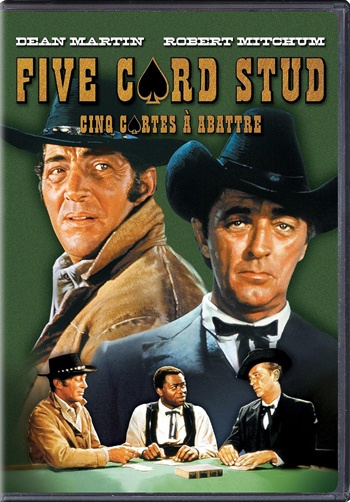
Product Description:
Five Card Stud (1968) is a suspenseful western set in a rough frontier town where a deadly poker game leads to a string of mysterious killings. When a man is caught cheating during a late-night game, the furious players take justice into their own hands. Soon afterward, the men responsible begin dying one by one, and the town realizes someone is quietly hunting them down.
Cast Highlights:
• Dean Martin as professional gambler Van Morgan.
• Robert Mitchum as Reverend Jonathan Rudd, the mysterious preacher arriving just as the killings begin.
• Roddy McDowall as Nick Evers, a quiet townsman drawn into the investigation.
• Inger Stevens as Lily Langford, the woman caught between suspicion and fear.
• Yaphet Kotto in one of his early western film appearances.
Why This Western Stands Out:
Unlike many traditional shoot-‘em-up westerns of the era, Five Card Stud blends frontier drama with a murder mystery structure. The film builds tension slowly as suspicion grows among the townspeople. Robert Mitchum’s calm and unsettling presence as the preacher adds a psychological edge, while Dean Martin provides the confident gambler trying to uncover the truth before the killer strikes again.
Western Atmosphere:
Released during the late 1960s western boom, the film combines dusty frontier settings, tense saloon scenes, and a haunting score. The story explores revenge, justice, and the uneasy morality of frontier law, giving the movie a darker tone than many westerns of the period.
Before becoming famous, Robert Mitchum worked a variety of traveling labor jobs, including railroad work and farming across several states.
🎶 Singing Career
Summary: Although primarily known as an actor, Mitchum also recorded music, including the memorable Ballad of Thunder Road tied to his film career.
Although Robert Mitchum was known primarily as a film star, he also enjoyed a brief but memorable career as a singer. Unlike many actors who recorded novelty albums tied directly to their movies, Mitchum approached music with genuine interest. His deep, relaxed voice translated naturally to song, especially in country and folk styles that matched his easygoing personality. The result was a small but fascinating musical catalog that surprised many fans who only knew him from the screen.
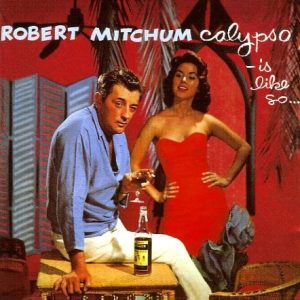
Robert Mitchum’s most notable musical project arrived with the album Calypso – Is Like So… (1957). At the time, calypso music had become a major cultural trend in the United States thanks to performers like Harry Belafonte, whose hit Day-O (The Banana Boat Song) (1956) had sparked national interest in Caribbean sounds. Mitchum’s album leaned fully into that style, mixing humor, storytelling, and island rhythms. While it was partly playful in tone, the record gained a cult following and is still remembered as one of the more unusual albums ever released by a major Hollywood star.
His most widely recognized recording, however, was connected directly to one of his films. Mitchum performed the title song for Thunder Road (1958), the moonshine-running drama he starred in alongside Gene Barry and his son James Mitchum. The song The Ballad of Thunder Road (1958) became closely associated with the film and with Mitchum himself. Delivered in a steady, almost conversational style, the recording captured the rebellious spirit of the movie and helped cement its reputation as a cult classic among fans of American car culture and outlaw stories.
Mitchum later recorded additional material, including the album That Man, Robert Mitchum… Sings (1967), which focused on country music. By that time artists such as Johnny Cash, Merle Haggard, and Buck Owens were dominating the genre, and Mitchum’s relaxed vocal style fit comfortably within that tradition. While his music never overshadowed his film career, it revealed another side of his personality and demonstrated that his talents extended beyond acting.
Today Mitchum’s recordings remain an interesting footnote in the career of one of Hollywood’s most distinctive stars. Songs like The Ballad of Thunder Road (1958) continue to appear in film retrospectives and classic country collections, reminding listeners that the legendary actor once stepped behind the microphone and left a small but memorable mark on American music.
❤️ Personal Life
Summary: His personal life reflected the same independence and calm confidence that defined his screen persona.
Robert Mitchum maintained a personal life that often seemed as rugged and unconventional as the characters he portrayed on screen. Despite decades of fame in Hollywood, he avoided the social circles and publicity culture that many actors embraced. Mitchum preferred a quieter lifestyle, often retreating from the spotlight when he was not working on a film. Friends and colleagues frequently described him as relaxed, humorous, and far more thoughtful than the tough-guy image audiences associated with his screen roles.
A constant presence throughout his life was his wife, Dorothy Mitchum, whom he married early in adulthood. Their marriage endured through the many pressures that often ended Hollywood relationships. Together they raised three children, including actor James Mitchum, who followed his father into the film industry, and Christopher Mitchum, who also became an actor. Despite his demanding career, Mitchum remained closely connected to his family and often spoke about the importance of maintaining a stable home life away from studio cameras.
Mitchum’s independent personality occasionally led to controversy, most notably a highly publicized legal incident during the late 1940s that briefly interrupted his rising career. The episode made national headlines but ultimately did little to diminish his popularity with movie audiences. In fact, many fans viewed the incident as reinforcing the rebellious persona he projected in films.
Outside of acting, Mitchum enjoyed writing poetry, composing songs, and spending time outdoors. He had a lifelong appreciation for literature and music, interests that rarely received attention in publicity materials about his career. Those who worked closely with him often remarked that he possessed a dry wit and intellectual curiosity that contrasted sharply with the tough, silent characters he frequently portrayed.
Through decades of changing Hollywood trends, Robert Mitchum remained largely the same person off screen as he appeared on it. Calm, self-assured, and quietly independent, he carried himself with a confidence that never required attention or approval. That authenticity helped define not only his performances but also the private life he maintained beyond the cameras.
Robert Mitchum once wrote hundreds of poems throughout his life, many of which were never published. He treated writing as a private escape from the pressures of Hollywood fame.
🕊️ Later Years
Summary: Even in his later years Robert Mitchum continued acting in major productions, maintaining the quiet authority that audiences admired.
As he entered the later stages of his career, Robert Mitchum remained a steady and recognizable presence in film and television. While many actors of his generation gradually disappeared from the screen, Mitchum continued accepting roles that allowed him to play seasoned authority figures, aging detectives, and hardened veterans. His calm voice and unmistakable screen presence made him well suited for these parts, and audiences responded warmly to seeing the longtime star continue working well into his senior years.
During the 1980s he appeared in several major television productions that introduced him to a new generation of viewers. One of the most notable was the miniseries The Winds of War (1983), based on the novel by Herman Wouk, where Mitchum portrayed naval officer Victor “Pug” Henry. The role placed him at the center of a large international cast that included Ali MacGraw, Jan-Michael Vincent, and John Houseman. The success of the series led to the sequel War and Remembrance (1988), which continued the sweeping World War II story and again featured Mitchum as the central character.
Even in his final film appearances he maintained the relaxed confidence that had defined his work for decades. In Dead Man (1995), directed by Jim Jarmusch, Mitchum appeared alongside Johnny Depp, Gary Farmer, and Lance Henriksen. The role served as a quiet farewell to a long and influential career, placing the legendary actor within a modern independent film that reflected how much cinema had changed since his early days in Hollywood.
By this time Mitchum had already become a respected elder figure in the industry. Fellow actors often spoke about his professionalism and the effortless style he brought to every performance. Though he rarely discussed his legacy publicly, film historians and critics increasingly recognized his influence on later performers who admired his understated approach to acting.
Robert Mitchum passed away on July 1, 1997, at the age of seventy-nine. With his death, Hollywood lost one of its most distinctive voices and screen personalities. Yet his films remained widely watched, ensuring that the calm intensity and quiet strength that defined his performances would continue to be appreciated by audiences long after his final curtain call.
🏆 Legacy
The legacy of Robert Mitchum rests on a career that reshaped the image of the American leading man. At a time when many Hollywood actors relied on dramatic gestures and theatrical delivery, Mitchum proved that quiet confidence could be just as powerful. His relaxed manner, deep voice, and heavy-lidded gaze created a screen presence that felt natural and believable. That understated style helped define the mood of mid-century crime dramas and influenced generations of actors who admired his effortless approach.
Film historians frequently point to Mitchum’s work in Out of the Past (1947), The Night of the Hunter (1955), and Cape Fear (1962) as examples of how a performer can dominate a scene without appearing to try. His ability to shift between hero, antihero, and villain gave him a versatility that many stars of his era never achieved. Directors recognized that he could bring depth to almost any role, whether it was a western gunslinger, a detective, or a dangerous criminal.
His influence extended beyond individual performances. Mitchum helped define the tone of film noir, a genre that continues to shape modern thrillers and crime stories. The brooding detectives and morally complex characters that appeared in later films and television series often echoed the quiet toughness he displayed in movies like Out of the Past (1947) and Crossfire (1947). Actors who followed, including figures such as Clint Eastwood and Nick Nolte, frequently drew comparisons to Mitchum’s cool, controlled screen style.
Even decades after his final performance, Robert Mitchum remains one of the most recognizable figures from Hollywood’s classic era. His films continue to appear in retrospectives, film studies courses, and television broadcasts devoted to classic cinema. More than anything else, his career demonstrated that true screen charisma does not require exaggeration. Sometimes the most powerful performance comes from doing less, and few actors proved that truth more convincingly than Robert Mitchum.
🗣️ WHY THEY STILL MATTER
Robert Mitchum’s influence still echoes through modern crime films and westerns. His understated approach proved that powerful acting does not require theatrical performance. By doing less and letting silence carry weight, he helped redefine the cinematic image of the American anti-hero.
Further Reading & Resources
📖 Read: Robert Mitchum biography. American film actor, writer ...
🔍 Explore: Robert Mitchum - Biography - Movies - Acting analysis