🎬 Elizabeth Taylor Biography: Powerful Screen Legend with Lasting Impact
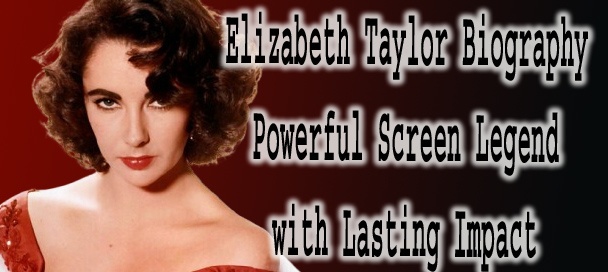
Elizabeth Taylor stands as one of the most enduring figures in twentieth-century cinema, a performer whose presence bridged the studio era and the rise of modern celebrity culture. With striking screen command and an unmistakable image, she became both a defining actress of her generation and a public figure whose influence extended far beyond the boundaries of film. Her name carried weight not only in Hollywood but across international audiences, where she represented a blend of glamour, intensity, and unmistakable star power.
Elizabeth Taylor was a defining figure of classic Hollywood, known for powerful performances in films like “Cleopatra,” “Giant,” and “Who’s Afraid of Virginia Woolf?” She stood at the intersection of studio-era glamour and modern celebrity culture, commanding attention both on and off screen. With a career spanning decades, she became one of the most recognizable and influential actresses in film history. Her legacy extends beyond cinema into philanthropy, business, and global cultural impact.
Throughout her career, Taylor demonstrated a rare ability to combine emotional depth with visual magnetism, shaping performances that left a lasting impression on both critics and the public. She moved with ease between dramatic roles and larger-than-life productions, often anchoring major films through sheer presence alone. At a time when the industry was shifting in tone and style, she remained a constant, adapting without losing the qualities that made her instantly recognizable.
Beyond her work on screen, Taylor’s public life contributed to her lasting cultural imprint. She became synonymous with a form of celebrity that was both admired and closely followed, setting a standard for how personal identity and professional achievement could intersect in the public eye. Her legacy rests not only in the films she made but in the way she helped define what it meant to be a star in a rapidly changing world.
Her life became as closely followed as any film she starred in, turning personal relationships into global headlines that reshaped how the world viewed celebrity.
👶 Early Life
Summary: Her early life was shaped by artistic influences and a transatlantic upbringing that introduced her to the film world at a young age.
Elizabeth Taylor was born on February 27, 1932, in London, England, into a family already connected to the arts. Her father, Francis Lenn Taylor, was an American art dealer, and her mother, Sara Sothern, was a former stage actress who had performed in both England and the United States. The household moved within cultured circles, and from the beginning, she was surrounded by conversation, aesthetics, and performance, all of which quietly shaped her early identity.
Her childhood was marked by a transatlantic shift that would influence her formative years. With the approach of war in Europe, her family relocated to the United States, settling in California. There, she was introduced to a different rhythm of life, one tied more closely to the motion picture industry that defined the region. Though still young, she displayed a natural poise and self-assurance that drew attention, and her appearance alone set her apart in a setting where image often carried weight.
During her early teens, Taylor’s exposure to performance became more structured. Her mother recognized her potential and encouraged her to pursue acting, guiding her through early opportunities and helping her navigate the expectations placed on a young performer. These years were not without pressure, as she adjusted to the demands of public attention while still developing her own sense of self. The balance between private life and growing visibility became a defining challenge, shaping her discipline and resilience before adulthood.
Explore the Biographies of Iconic Celebrities
Elizabeth Taylor was one of the first actresses to negotiate a $1 million salary for a single film role.
🎬 Film & TV Career
Summary: Taylor’s film career evolved from youthful roles into commanding dramatic performances that defined multiple eras of Hollywood.
Elizabeth Taylor’s transition into film began with early studio work that quickly revealed her on-screen presence, leading to roles in “There’s One Born Every Minute” (1942) and “Lassie Come Home” (1943). Her breakthrough came with “National Velvet” (1944), where her performance as Velvet Brown established her as a young star and introduced audiences to a talent that carried both innocence and determination. As she matured, she moved into more complex roles, appearing in “Life with Father” (1947) and “Little Women” (1949), working alongside notable figures such as Spencer Tracy and June Allyson, steadily building her reputation within the studio system.
By the 1950s, Taylor had firmly transitioned into adult roles, gaining recognition for performances in “A Place in the Sun” (1951) opposite Montgomery Clift, and “Giant” (1956) alongside Rock Hudson and James Dean. These films marked a turning point, showcasing her dramatic range and emotional depth. She continued to take on challenging material in “Cat on a Hot Tin Roof” (1958) with Paul Newman, Burl Ives, and “Suddenly, Last Summer” (1959) featuring Katharine Hepburn and Montgomery Clift, solidifying her standing among the most respected actresses of her time.
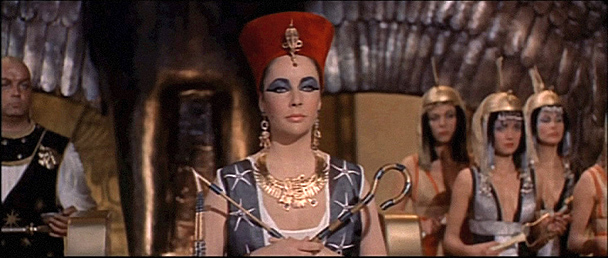
The early 1960s brought both critical acclaim and major studio spectacle. Taylor earned recognition for “BUtterfield 8” (1960), a performance that reflected a more mature and complex screen persona. She then took on the monumental role in “Cleopatra” (1963), a production that became one of the most discussed films of its era, co-starring Richard Burton, Rex Harrison along with Hume Cronyn, and Roddy McDowall. Her collaboration with Burton continued in “The V.I.P.s” (1963) and “The Sandpiper” (1965), drawing significant public attention. Her work reached a dramatic peak with “Who’s Afraid of Virginia Woolf?” (1966), where she starred again with Burton, delivering a performance that remains one of the most studied in modern film acting.
As the industry evolved in the late 1960s and 1970s, Taylor adapted to changing tastes while maintaining her established stature. She appeared in films such as “The Taming of the Shrew” (1967), again with Richard Burton, and “Reflections in a Golden Eye” (1967) opposite Marlon Brando. Later projects included “The Comedians” (1967) with Richard Burton and Alec Guinness, as well as “X, Y and Zee” (1972) along side Michael Caine. Though film roles became less frequent, her presence remained significant, and she continued to choose projects that allowed her to command attention through character-driven performances.
In later years, Taylor expanded her work into television, bringing her established reputation to a new medium. She appeared in productions such as “Malice in Wonderland” (1985), portraying gossip columnist Louella Parsons, and made guest appearances on popular series including “General Hospital” (1981), where she shared the screen with Anthony Geary. She also lent her voice and presence to television specials and occasional projects, maintaining visibility across decades. Through each phase, her career reflected both the evolution of the entertainment industry and her ability to remain a recognizable and influential figure within it.
Butterfield 8 (DVD)
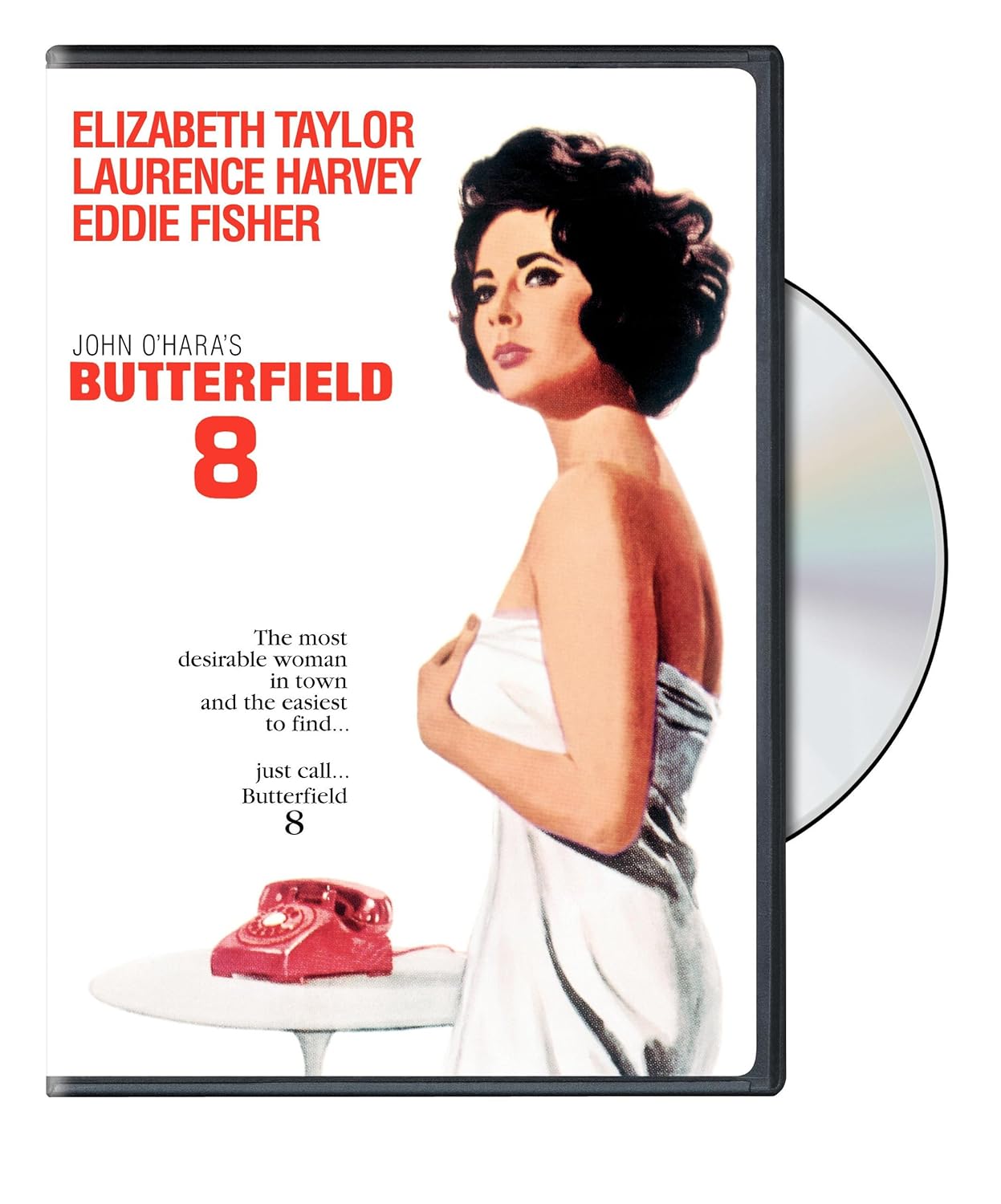
Product Description:
The most desirable woman in town and the easiest to find...just call BUtterfield 8 Elizabeth Taylor delivers a searing, Academy Award-winning performance as Gloria Wandrous, a model and party girl who lives for pleasure and uses her beauty to get what she wants from men until she meets wealthy, married executive Weston Liggett, played by Laurence Harvey Their relationship becomes a volatile and emotional collision that strips away illusion and exposes vulnerability on both sides.
Film Highlights:
• Academy Award-winning performance by Elizabeth Taylor
• Co-starring Laurence Harvey in a complex dramatic role
• Bold, adult storytelling that challenged Hollywood standards of the time
• Sharp dialogue and emotional intensity throughout
• A defining character study from the early 1960s
Why You’ll Enjoy This Film:
“Butterfield 8” stands as one of Elizabeth Taylor’s most talked-about performances, capturing a turning point in her career where glamour gave way to deeper emotional roles. The film explores desire, identity, and consequence with a directness that set it apart from many productions of its era. For fans of classic drama, this is essential viewing that showcases both the power of its lead performance and the evolving tone of Hollywood storytelling.
❤️ HIV/AIDS Advocacy
Summary: Elizabeth Taylor became a leading voice in HIV/AIDS advocacy, using her fame to raise awareness and support global efforts.
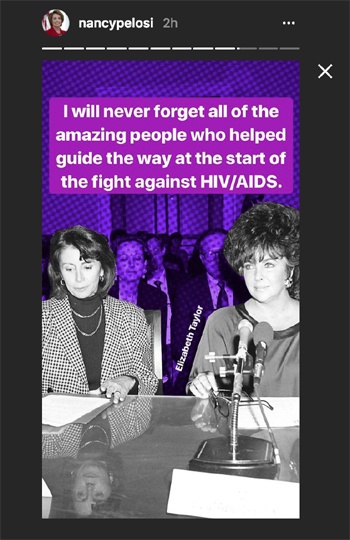
Elizabeth Taylor emerged as one of the most visible and determined public figures in the fight against HIV/AIDS at a time when the subject was widely misunderstood and often avoided. As the crisis grew during the 1980s, she used her stature to bring attention to the issue, speaking openly and urging both the public and policymakers to confront it directly. Her involvement marked a shift in how major celebrities engaged with public health, moving from quiet support to active, visible leadership.
In 1985, she helped organize efforts that led to the formation of the American Foundation for AIDS Research, working alongside advocates and medical professionals to promote research, education, and funding. She later established the Elizabeth Taylor AIDS Foundation in 1991, focusing on direct care and prevention programs. Through fundraising events, public appearances, and persistent advocacy, she raised millions of dollars and helped shift public perception during a period when stigma often overshadowed compassion.
Her commitment extended beyond fundraising into sustained public engagement, where she met with patients, supported caregivers, and maintained a consistent presence in the movement. She worked with political leaders, medical communities, and fellow advocates to push for increased awareness and resources. In doing so, she helped redefine the role of a public figure in times of crisis, leaving a legacy that stands alongside her achievements in film as a lasting contribution to global health efforts.
Elizabeth Taylor's famous violet-colored eyes were natural, though often enhanced by studio lighting and makeup techniques.
💍 Personal Life
Summary: Her personal life drew intense public interest, reflecting the changing nature of celebrity culture.
Elizabeth Taylor’s personal life drew sustained public attention, shaped by a series of high-profile relationships that unfolded alongside her career. She married eight times to seven husbands, including hotel heir Conrad Hilton Jr., actor Michael Wilding, producer Mike Todd, singer Eddie Fisher, and actor Richard Burton, whom she married twice. Her relationship with Burton became one of the most widely followed unions in modern celebrity culture, marked by both creative partnership and intense public scrutiny.
Beyond her marriages, Taylor’s private life was closely observed by the press, often reflecting broader shifts in how fame and personal identity intersected in the public sphere. She navigated these pressures with a mix of openness and resolve, rarely retreating from attention and instead maintaining a presence that kept her at the center of cultural conversation. Her friendships within the entertainment world, including a lifelong bond with Rock Hudson, further connected her personal experiences to the wider Hollywood community.
Family remained an important part of her life, as she raised four children while balancing the demands of public attention. Despite the complexities that accompanied her relationships, she sustained a sense of continuity through her roles as a mother and confidante. Her personal life, often discussed in headlines, ultimately reflected the same intensity and visibility that defined her career, contributing to an enduring image that extended far beyond the screen.
💎 Jewelry & Business Ventures
Summary: Elizabeth Taylor’s passion for jewelry and business ventures expanded her influence beyond film into global branding.
Elizabeth Taylor’s association with fine jewelry became an essential part of her public identity, reflecting both personal taste and a deep appreciation for craftsmanship. Over the years, she assembled a collection that included some of the most remarkable gemstones ever seen in private hands, many tied to significant moments in her life. Pieces such as the 33.19-carat Krupp Diamond and the 69.42-carat Taylor-Burton Diamond became widely recognized, not only for their size and quality but for the stories attached to them. Her understanding of jewelry went beyond ownership, as she spoke with authority about design, history, and the artistry behind each piece.
Her passion eventually moved into the commercial world, where she developed a successful line of jewelry that translated her personal style into accessible designs. This venture allowed admirers to connect with her aesthetic in a more direct way, blending elegance with wearability. She approached the business with the same confidence that defined her screen presence, ensuring that her name carried a clear sense of identity rather than serving as a simple endorsement.
Taylor also found lasting success in the fragrance industry, launching a series of perfumes that became strong sellers across multiple markets. Beginning with “White Diamonds” (1991), her fragrances combined classic appeal with broad accessibility, establishing a brand that endured for decades. These ventures reflected a shift from traditional film work into a wider business presence, demonstrating her ability to extend her influence into new areas while maintaining the distinct image that audiences recognized.
Elizabeth Taylor once outbid museums and private collectors to acquire some of her most famous jewels, treating them as both art and personal history.
🕊️ Later Years
Summary: In later years, Elizabeth Taylor was widely honored for both her artistic achievements and humanitarian contributions.
In her later years, Elizabeth Taylor remained a respected and visible figure, honored for both her work in film and her contributions beyond it. She received two Academy Awards for Best Actress for “BUtterfield 8” (1960) and “Who’s Afraid of Virginia Woolf?” (1966), along with the Jean Hersholt Humanitarian Award in 1993. Additional recognition included honors from the American Film Institute, the Screen Actors Guild, and the British Academy of Film and Television Arts, reflecting both her artistic achievements and her lasting cultural influence. In 2000, she was made a Dame Commander of the Order of the British Empire by Queen Elizabeth II, marking one of the highest distinctions of her career.
Though her screen appearances became less frequent, she continued to be celebrated at major industry events and retrospectives, where her legacy was revisited and reaffirmed. Her presence carried a sense of continuity with an earlier era of Hollywood, and she remained a symbol of enduring stardom. Public appearances, interviews, and honors kept her connected to audiences who had followed her work across decades, ensuring that her influence did not fade with time.
Elizabeth Taylor died on March 23, 2011, in Los Angeles, California, at the age of 79. Her passing marked the end of a life that had spanned multiple eras of entertainment and public life. Tributes from around the world reflected not only admiration for her performances but recognition of her broader impact, securing her place as one of the most significant figures in the history of film and modern celebrity.
🏆 Legacy
Summary: Her legacy remains rooted in both cinematic excellence and a lasting cultural presence.
Elizabeth Taylor’s legacy rests on a rare combination of enduring screen work and a public presence that helped shape modern celebrity. Her performances continue to be studied for their emotional force and command, while her image remains closely tied to the idea of classic Hollywood glamour. Films such as “A Place in the Sun” (1951), “Giant” (1956), and “Who’s Afraid of Virginia Woolf?” (1966) stand as lasting examples of her range, influencing generations of actors who followed. She demonstrated that star power could coexist with serious dramatic work, setting a standard that few have matched.
Beyond the screen, Elizabeth Taylor helped redefine how public figures engage with global issues, particularly through her leadership during the HIV/AIDS crisis. Her willingness to speak openly and act decisively at a critical moment shifted expectations for celebrity involvement in social causes. This aspect of her life added depth to her public identity, ensuring that her influence extended well beyond entertainment into areas of lasting human impact.
Her name endures as a symbol of both artistic achievement and cultural presence, representing an era when film stars held a central place in public life. The combination of her work, personal narrative, and advocacy created a legacy that remains firmly embedded in popular culture. Long after her passing, Elizabeth Taylor continues to stand as a defining figure whose impact reaches across film history, fashion, philanthropy, and the evolving nature of fame itself.
🗣️ Why They Still Matter:
Elizabeth Taylor remains a lasting symbol of Hollywood at its most powerful, where talent, image, and public identity combined to create a global figure. Her influence can still be seen in how modern celebrities manage fame, build personal brands, and use their platform for broader causes.