Listeners and musicians engaging with Classic Irish Folk Records during an informal listening and performance session
Why Classic Irish Folk Records Matter to Collectors
Classic Irish Folk Records hold a distinct place in recorded music because they document a living tradition rather than a studio-driven genre. For collectors, these recordings represent points where regional practice, individual style, and historical circumstance intersected in a form that could be preserved and revisited. They are not valued simply for age or scarcity but for the way they fix musical approaches that were once transmitted primarily through direct teaching and communal performance.
Classic Irish Folk Records are commercial sound recordings that document Irish traditional music as it was performed, transmitted, and preserved during the twentieth century. These records served both as entertainment products and as practical reference materials for musicians learning repertoire and style. They were produced to capture regional performance practices at a time when oral transmission was being supplemented by recorded media. Within Irish cultural history, these recordings mark a transition point between local music-making and wider distribution through modern formats.
The importance of these recordings lies in their function as reference points. Many later performers learned their phrasing, ornamentation, and repertoire from records that circulated widely after the Second World War. When collectors seek out Classic Irish Folk Records, they are often looking for versions that set standards rather than interpretations that followed established templates. This gives the records an authority that goes beyond personal taste.
There is also a practical dimension to their value. Earlier recordings often captured musicians who were deeply embedded in local traditions before modernization and commercial touring altered the music’s social role. Classic Irish Folk Records can preserve repertory choices, tempos, and ensemble balances that later became uncommon. For the collector, ownership is not only about completeness but about access to these earlier musical decisions.
Finally, these records matter because they continue to shape listening habits. Even experienced listeners return to them to recalibrate their sense of what the tradition sounds like at its core. In that sense, Classic Irish Folk Records remain active participants in the culture rather than archival curiosities.
Explore the St. Patrick’s Day Movies – 15 Best Irish Films to Watch
Scope and Selection Standards
Any serious discussion of essential recordings requires clear boundaries. The term “classic” is not applied to every early release, nor does age alone justify inclusion. Selection rests on musical influence, representativeness, and the degree to which a recording reflects established practice rather than novelty.
Albums chosen for serious consideration tend to meet several conditions. They are performed by musicians recognized within the tradition, they present repertoire drawn from well-documented sources, and they avoid excessive arrangement that obscures melody and rhythm. Commercial success may coincide with these qualities, but it is not a requirement.
Another factor is continuity. Recordings that remained in circulation or were repeatedly reissued often did so because musicians and listeners continued to find them useful. This persistence is a strong indicator of lasting value, especially when paired with documented influence on later performers.
Classic Irish Folk Records From the Foundational Era
The foundational period of recorded Irish folk music spans roughly from the late 1940s through the 1960s, when recording technology became accessible enough to capture performers rooted in older traditions. Classic Irish Folk Records from this era often feature small ensembles or solo performers, with minimal studio intervention and straightforward presentation.
Many of these albums were made quickly, sometimes in a single session. This resulted in performances that emphasized continuity over perfection. Ornamentation, bowing patterns, and vocal delivery were not standardized for a mass audience but reflected the habits of individual musicians. As a result, Classic Irish Folk Records from this period can sound austere when compared to later productions, yet they offer clarity that collectors value.
The foundational era also established the canon of commonly recorded tunes and songs. While the repertoire itself predates recording, these albums fixed particular versions that became widely learned. For collectors, these records provide insight into how the tradition was framed at the moment it entered the modern recording industry.
Representative Albums Often Considered Classic Irish Folk Records
- Seán Ó Riada Our Musical Heritage
- The Chieftains The Chieftains 1
- The Dubliners The Dubliners
- Clancy Brothers & Tommy Makem Songs of Ireland
- Michael Coleman The Famous 78s
- Planxty Planxty
- Sweeney’s Men Sweeney’s Men
- Willie Clancy The Minstrel from Clare
- Liam Clancy The Liam Clancy Album
- De Danann De Danann
The Dubliners Greatest Hits (LP)
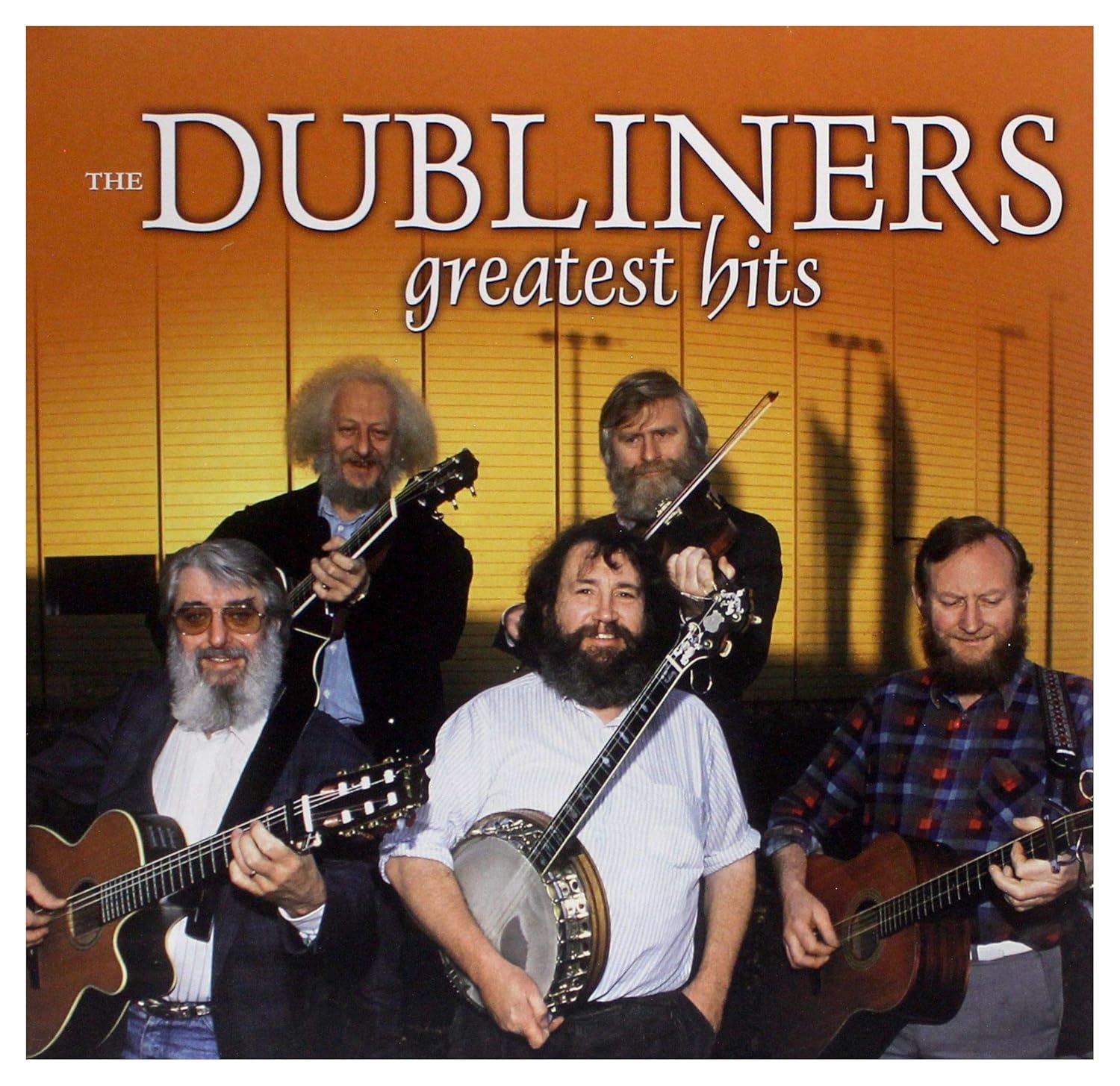
Cover art for The Dubliners – Greatest Hits LP
Product Description:
This compilation brings together some of the most enduring recordings by The Dubliners, presenting traditional Irish folk songs and ballads that helped define the group’s early reputation. The album reflects their direct, unpolished style, with an emphasis on storytelling, group vocals, and acoustic instrumentation.
Album Highlights:
• Includes well-known songs associated with The Dubliners’ core repertoire
• Features banjo, fiddle, tin whistle, and guitar arrangements typical of the group’s early sound
• Captures studio recordings that closely mirror their live performance approach
• Pressed on vinyl, preserving the original analog listening experience
Why This Record Matters:
The Dubliners – Greatest Hits serves as an accessible entry point into mid-twentieth-century Irish folk recording. Rather than reinterpret tradition, these tracks document how the music was commonly performed and heard during the group’s formative years, making the album a practical reference for listeners and collectors interested in classic Irish folk recordings.
Buy on Amazon
Regional Styles and Lineages
Irish folk music has always been shaped by regional variation. Differences in rhythm, ornamentation, and repertoire can often be traced to specific counties or even smaller localities. Recordings that clearly reflect these distinctions are especially valuable because they allow listeners to hear contrasts that are less evident in contemporary performances.
Lineages are another key aspect. Many musicians learned directly from family members or local teachers, and their playing carries identifiable traits passed down over generations. Albums that document these lineages offer more than individual performances; they capture the transmission of style over time.
Understanding regional context also helps explain why certain records are considered essential. Their importance may rest not on technical virtuosity but on how faithfully they reflect a local approach that might otherwise have faded from view.
Defining Authenticity in Classic Irish Folk Records
Authenticity in Classic Irish Folk Records is not a matter of purity but of intent and context. Authentic recordings present the music as it functioned within its community, without imposing external expectations about polish or novelty. This often means accepting uneven tempos, rough vocal timbres, or sparse arrangements.
Collectors often look for signs that a recording prioritizes tradition over adaptation. In Classic Irish Folk Records, this can be heard in tune selection, adherence to established forms, and restraint in accompaniment. Instruments are used to support melody rather than to showcase individual skill.
It is also important to recognize that authenticity does not exclude evolution. Some records are considered authentic precisely because they document moments of change, such as the introduction of new instruments or ensemble formats. What matters is that these developments arise from within the tradition rather than being imposed to meet commercial trends.
Pressings, Labels, and Variants
From a collector’s perspective, physical details matter. Early pressings may differ subtly in sound quality due to mastering choices or manufacturing limitations. Labels, catalog numbers, and even sleeve design can provide clues about a record’s origin and distribution.
Reissues complicate this picture. While many later pressings offer improved durability or clarity, they sometimes alter the original balance or sequencing. Collectors often compare versions to determine which most accurately reflects the initial release.
Variants also exist in track listings and artwork, especially for albums issued in multiple markets. These differences can affect desirability and value, but they also offer insight into how the music was presented to different audiences.
Building a Collection Around Classic Irish Folk Records
Building a coherent collection around Classic Irish Folk Records involves more than acquiring famous titles. Collectors often start with widely acknowledged essentials and then expand outward to include lesser-known recordings that deepen understanding of the tradition.
A balanced collection reflects diversity of style, region, and ensemble type. It includes instrumental and vocal albums, solo and group performances, and recordings from different periods of the twentieth century. This breadth allows listeners to hear how approaches varied and how certain conventions became established.
Condition and provenance also play a role. While pristine copies are desirable, some collectors accept wear if the recording itself is scarce or historically significant. The goal is not uniformity but a representative cross-section of the tradition as captured on record.
Listening Context and Preservation
Listening to these recordings benefits from attention to context. Many were made for audiences familiar with the music’s conventions, and they may assume a level of knowledge that casual listeners lack. Understanding basic forms and rhythms can greatly enhance appreciation.
Preservation is an ongoing concern. Older records require careful handling and appropriate storage to prevent damage. Digitization can aid access, but it does not replace the original artifact’s value or the information conveyed by its physical form.
Ultimately, careful listening and preservation ensure that these recordings remain accessible as references. Their continued study and enjoyment depend on both informed collectors and attentive listeners who recognize their place in musical history.
Further Reading & Resources
📖 Read: 5 Real World Irish traditional albums you should hear
🔍 Explore: Top Irish Folk Music albums of all time

ML Lamp is the owner of Kilroy Was Here. After his 20 years of working in Las Vegas in the entertainment promotions field, Mr. Lamp retired in 2002 from his job to pursue his passion for collectibles. Now as a guest speaker and author he’s living the dream, and sharing his warmth with You.