🎭 Katharine Hepburn Biography, Film Career & Classic Hollywood Legacy

Few stars in American film history carried themselves with the independence and sharp intelligence of Katharine Hepburn. She was not shaped by the studio system. Instead, she reshaped it. With a voice that carried authority and a manner that ignored convention, she built a career that spanned more than six decades without surrendering her individuality.
Katharine Hepburn was a four-time Academy Award–winning actress whose career spanned more than six decades. Known for films such as The Philadelphia Story, The African Queen, and The Lion in Winter, she became a defining figure of classical Hollywood cinema. Her commanding presence, sharp intelligence, and refusal to conform reshaped the image of leading women on screen. She remains one of the most honored and studied actresses in film history.
At a time when actresses were expected to fit a narrow mold, Hepburn wore trousers, spoke her mind, and refused to soften her edges for public approval. Audiences did not merely watch her. They adjusted to her. That rare shift in power marked the beginning of one of the longest and most respected careers in Hollywood history.
Her record remains unmatched. She won four Academy Awards for Best Actress and received twelve nominations. Stage triumphs. Screen classics. Public admiration that endured well beyond the Golden Age of film. Yet she never seemed to chase fame. She treated acting as work, not spectacle, and guarded her private life with almost stubborn discipline.
What makes her story remarkable is not only longevity but consistency. Through changing tastes, new generations of actors, and the decline of the studio era, Hepburn maintained control over her career. She chose roles that reflected intelligence, strength, and moral clarity. In doing so, she created a model for actresses who wished to stand as equals rather than ornaments.
Her legacy is not built on glamour alone. It rests on independence, discipline, and an unwavering belief in her own judgment.
Her record of four Academy Awards for Best Actress still stands unmatched. Through changing decades and shifting film styles, she remained entirely herself, never surrendering control of her career.
👶 Early Life
Summary: Katharine Hepburn’s early life in a progressive Connecticut household shaped her independence and confidence.
Katharine Hepburn was born on May 12, 1907, in Hartford, Connecticut, into a household that valued education, debate, and independence. Her father, Dr. Thomas Hepburn, was a respected physician who spoke openly about public health issues. Her mother, Katharine Martha Houghton, was an active suffragist who campaigned for women's voting rights. Conversation at the dinner table was direct and often political. Children were expected to think for themselves.
She grew up with five siblings in a home that encouraged physical strength and intellectual discipline. The Hepburn children swam, played tennis, and competed in outdoor sports. Katharine was especially close to her older brother, Tom, whom she admired deeply. His sudden death when she was a teenager left a lasting mark on her emotional life and shaped the guarded quality she carried into adulthood.
Education mattered in the Hepburn household. She attended Bryn Mawr College, where she studied history and participated actively in theater before turning her attention fully to the stage. College theater productions revealed her confidence and her natural authority before an audience. Even then, classmates noted that she did not blend in. She projected certainty, and she did not appear eager to please.
Explore the Biographies of Iconic Celebrities
Katharine Hepburn was an accomplished golfer and once considered playing competitively before fully committing to acting.
🎬 Film Career
Summary: Katharine Hepburn's film career included four Academy Awards and landmark performances that defined multiple eras of Hollywood.
The screen career of Katharine Hepburn began with confidence and immediate recognition. Her third film, Morning Glory (1933), earned her first Academy Award. In it, she portrayed an ambitious young actress determined to conquer Broadway. The role mirrored her own resolve and established the tone for much of her work. That same year she appeared in Little Women (1933) as Jo March, giving the beloved literary character a restless intelligence that audiences embraced.
By the late 1930s she faced a downturn at the box office, yet she answered critics with one of the great screwball comedies of the era, Bringing Up Baby (1938) opposite Cary Grant. The film later became a classic, praised for its speed and wit. She quickly regained standing with The Philadelphia Story (1940), a project she helped bring from stage to screen. Starring alongside James Stewart and Cary Grant, and secured her independence from studio control.
Her professional and personal partnership with Spencer Tracy began with Woman of the Year (1942). Their chemistry shaped a series of intelligent comedies and dramas, including Adam's Rib (1949), in which they portrayed married attorneys arguing opposite sides of a courtroom battle. Their performances were balanced and adult, presenting marriage as a contest of equals.
In The African Queen (1951), Hepburn starred opposite Humphrey Bogart in a rugged adventure set during World War I. Her portrayal of a disciplined missionary gradually softened by circumstance revealed both strength and vulnerability. She followed with Summertime (1955), a quiet and reflective performance set in Venice, demonstrating her ability to carry a film through subtle emotion rather than force.
The 1960s brought demanding dramatic roles. In Suddenly, Last Summer (1959) she shared the screen with Elizabeth Taylor in a tense psychological drama. She delivered a powerful stage adaptation in Long Day's Journey into Night (1962), earning critical praise for her portrayal of a troubled matriarch.
Her second Academy Award came with Guess Who's Coming to Dinner (1967), again opposite Spencer Tracy in his final screen appearance. The film addressed interracial marriage at a moment when the subject divided audiences, and her performance carried moral authority without sentimentality.
One year later she appeared in The Lion in Winter (1968) as Eleanor of Aquitaine. Fierce, intelligent, and commanding, she won her third Academy Award. The role confirmed that age had not diminished her presence. If anything, it sharpened her authority on screen.
In 1975 she reunited with John Wayne in Rooster Cogburn (1975), a Western sequel that paired her disciplined spinster with Wayne’s rough marshal. The contrast between their styles gave the film energy and humor.
Across more than sixty years of work, Hepburn chose roles that valued intellect and independence. Comedy, drama, romance, historical epic, and adventure all found a place in her filmography. Through shifting decades and changing tastes, she remained unmistakably herself, building a body of work that continues to define classical American cinema.
Katharine Hepburn famously preferred wearing trousers in public long before it became socially common for women in Hollywood.
The Philadelphia Story (1940) DVD
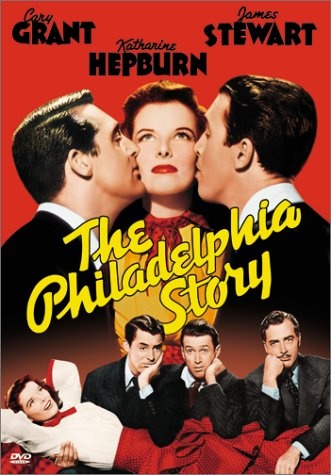
Cover Art for The Philadelphia Story (1940) DVD
Product Description:
Enjoy the sophisticated wit and sparkling performances of The Philadelphia Story (1940), starring Katharine Hepburn, Cary Grant, and James Stewart. This classic romantic comedy blends sharp dialogue with elegant charm as a high-society wedding weekend turns into a battle of pride, love, and second chances.
Film Highlights:
• Starring Katharine Hepburn, Cary Grant, and Academy Award winner James Stewart
• Directed by George Cukor
• Academy Award winner for Best Actor (James Stewart) and Best Screenplay
• Adapted from Philip Barry’s celebrated stage play
• Crisp black-and-white cinematography capturing Golden Age sophistication
Why You’ll Enjoy This Film:
The Philadelphia Story delivers intelligent humor and layered performances that still feel modern. Hepburn commands the screen as Tracy Lord, a woman forced to confront her own expectations and vulnerabilities. The film’s balance of romance, pride, and redemption makes it one of the most enduring comedies of Hollywood’s Golden Age.
❤️ Personal Life
Summary: Katharine Hepburn's personal life reflected the same discipline and privacy that marked her professional choices.
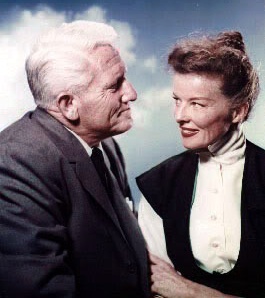
The private life of Katharine Hepburn was carefully guarded, though public interest followed her for decades. She married Ludlow Ogden Smith in 1928, shortly after college. The marriage was brief. They divorced in 1934, and she never married again. In later interviews, she spoke of the union with candor and without regret, describing it as youthful and mismatched.
Her most enduring relationship was with Spencer Tracy. They met while filming Woman of the Year (1942) and remained close for the rest of his life. Tracy was married and separated but never divorced, and Hepburn respected the boundaries surrounding his family life. She rarely discussed their relationship publicly while he was alive. Only after his death did she acknowledge its depth, describing him as the great love of her life.
Hepburn valued privacy and resisted the Hollywood publicity machine. She preferred time at her family home in Connecticut to social life in Los Angeles. Fame did not interest her as much as craft. She enjoyed swimming, golf, and long walks, habits formed in childhood and maintained into old age.
Her independence often led to speculation. She wore trousers when it was uncommon for women to do so in public, refused to soften her opinions for interviews, and showed little patience for gossip. Yet friends described her as loyal and deeply devoted to those she trusted. She was not sentimental in public, but she cared intensely in private.
Read more about Spencer Tracy in our exclusive bio.
Katharine Hepburn once lost an Academy Award and later discovered it had been misplaced for years. Despite winning four Oscars, she rarely attended the ceremonies.
🕊️ Later Years
Summary: In later years, she continued acting selectively while becoming a living symbol of cinematic excellence.
In the final decades of her life, Katharine Hepburn worked less frequently but chose her roles with care. She moved comfortably into television, winning an Emmy Award for Love Among the Ruins (1975) opposite Laurence Olivier. The performance showed that age had not weakened her command of dialogue or timing.
In 1981 she appeared in On Golden Pond (1981) alongside Henry Fonda and Jane Fonda. Playing the steady and affectionate wife of a difficult aging professor, she brought warmth and quiet strength to the role. The film earned her a record fourth Academy Award for Best Actress. Though arthritis had begun to limit her mobility and affect her speech, her presence remained steady and assured.
As the years passed, public appearances became rare. She declined many invitations and preferred the calm of her Connecticut home. Interviews from this period show a woman reflective but unsentimental. She spoke plainly about aging, often remarking that growing old was simply part of living long enough.
By the 1990s her health gradually declined. Even so, her reputation only grew. Film historians and younger actors cited her as a standard of discipline and independence. She had outlived most of her contemporaries and witnessed the transformation of Hollywood from the studio era to modern filmmaking.
Katharine Hepburn died on June 29, 2003, at the age of 96, at her home Fenwick, Connecticut. The film industry paused in recognition of a career that had stretched across the twentieth century. Her later years were quiet, but her influence remained constant, carried forward by the films that continued to introduce her to new audiences.
🏆 Legacy
Summary: Her legacy rests on independence, longevity, and unmatched achievement in American film.
The legacy of Katharine Hepburn rests on more than awards, though the numbers remain striking. Four Academy Awards for Best Actress. Twelve nominations. A record that still stands. Yet statistics alone do not explain her influence.
She redefined what a leading actress could be. At a time when Hollywood favored softness and glamour, Hepburn presented intelligence, resolve, and moral certainty. Her characters argued, challenged, and stood their ground. In films such as The Philadelphia Story (1940), Adam's Rib (1949), and The Lion in Winter (1968), she portrayed women who were not secondary figures but central forces within the story.
Younger performers frequently cited her as proof that an actress could maintain control over her career. She selected roles carefully, resisted long-term studio contracts, and returned to the stage whenever she felt it sharpened her craft. That independence became part of her public image and part of her lasting reputation.
Her work also bridged eras. She succeeded in the early sound period, flourished during the Golden Age of Hollywood, adapted to postwar realism, and remained relevant into the 1980s. Few actors of any generation managed such range across changing tastes and audiences.
Beyond film, she became a cultural symbol of self-reliance. The tailored trousers, the direct speech, the refusal to conform to expectation. These traits, once considered unconventional, later came to represent strength and authenticity. She did not campaign to become an icon. She simply refused to compromise.
Today her performances continue to be studied in film schools and revisited by audiences who discover them without the context of her time. The authority she projected still feels modern. Her independence still feels earned. In that sense, her legacy is not confined to the past. It remains active each time her voice is heard on screen.
🗣️ Why They Still Matter
Katharine Hepburn remains a benchmark for artistic independence and professional longevity. Modern actresses continue to cite her as proof that strength, intelligence, and discipline can define a lasting career in film.
Further Reading & Resources
📖 Read: Katharine Hepburn | Biography, Movies, Spencer Tracy, & Facts - Britannica
🔍 Explore: Katharine Hepburn Biography