Forgotten Cigarette Machines From America’s Past
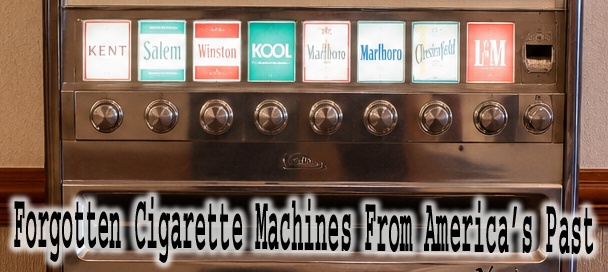
There was a time, not so long ago, when forgotten cigarette machines from America’s past stood in the corners of American public life as naturally as pay phones and jukebox selectors. You would find them in hospital lobbies, hotel corridors, diner vestibules, and airport waiting rooms. Nobody thought much about these cigarette machines. They were simply there, humming quietly, waiting for a quarter or two, ready to dispense a pack of Pall Malls or Lucky Strikes with a satisfying mechanical clunk. For several decades across the middle of the twentieth century, these machines were woven into the fabric of daily American commerce and habit.
The Golden Age of Cigarette Machines
The explosion of cigarette vending machines as a category began in earnest after World War Two. Returning soldiers had been supplied with cigarettes as part of military rations, and the habit came home with them in enormous numbers. Manufacturers recognized that these forgotten cigarette machines from America’s past could reach consumers in spaces where no dedicated tobacco counter existed. By the late 1940s, cigarette machines were appearing in bus depots, hotel lobbies, factory break rooms, and hospital waiting areas at a pace that the vending industry had not previously seen.
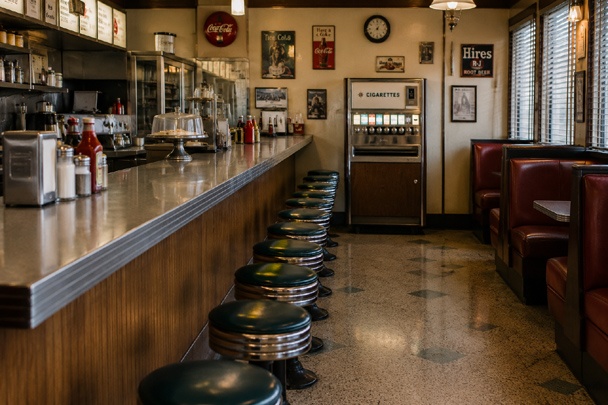
Through the 1950s and into the 1960s, the expansion continued. Restaurants added them near coat checks. Motor lodges placed them beside the ice machine at the end of each corridor. The machines became so common in certain settings that their absence would have seemed unusual. By the early 1970s, estimates placed the number of cigarette vending machines in the United States somewhere in the hundreds of thousands, a figure that represented a significant slice of total cigarette retail volume nationwide.
The first commercially successful cigarette vending machine in the United States was patented in 1926 by William Rowe, whose company eventually became one of the largest vending equipment manufacturers in the country.
When Cigarettes Cost Pocket Change
Part of the particular nostalgia attached to these machines comes from the prices those coin slots accepted. In the early postwar years, a pack of cigarettes from a vending machine might cost twenty-five cents. By the mid-1960s, prices had crept upward, but a transaction still felt like something purchased with pocket change. A person might drop two quarters into a forgotten cigarette machine from America’s past, hear the mechanical resistance give way, and receive a fresh pack along with a few coins back in change.
The selection panels typically offered a dozen or more brands, from major national names like Camel and Winston to regional favorites that have since vanished from shelves entirely. Operators restocked the machines on regular routes, much like the bread and milk routes that serviced grocery stores of that period. The ritual of the transaction itself, the sound of the mechanism engaging, the delay of a second or two, and then the pack dropping into the retrieval tray, had a tactile satisfaction that is difficult to reproduce with a modern touch screen.
Other Collectible & Pop-Culture Articles
The Look and Design of Vintage Cigarette Machines
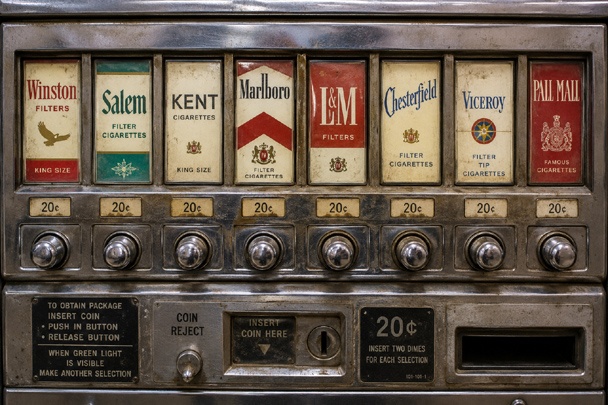
From a design standpoint, the machines of the 1940s through the 1960s were often striking objects. Many featured chrome trim that caught light across the top panels and sides. Brand selection buttons glowed softly in some models, each illuminated label serving as a small advertisement embedded directly into the machine face. Art deco influences persisted in certain models well into the postwar period, with geometric cabinet shapes, stepped profiles, and stylized lettering.
The color palettes varied by manufacturer but tended toward deep reds, blacks, and creams, colors that projected a kind of midcentury commercial confidence. Today, collectors and decorators seek out these machines precisely because they compress an entire design era into a freestanding object. Restored examples in good condition command real prices at auction and in specialty antique markets, valued not as functional tobacco dispensers but as dimensional artifacts of postwar American commercial style.
Cigarette Machines in Movies and Television
The visual language of mid-century American film and television returned to cigarette machines frequently because they were simply present in the locations where those stories unfolded. Hardboiled detective pictures of the 1940s and 1950s often staged scenes in diners and bus terminals where the machines sat prominently in the background, part of the set dressing that communicated working-class American interiors without a word of explanation. Nightclub sequences in studio pictures from that same era included them near cloakrooms and bar entrances.
Television programs set in precinct houses, newsrooms, and bowling alleys used them similarly, understanding that the machines communicated time and place instantly to an audience that encountered them in everyday life. Watching those productions today, the casual presence of cigarette machines in the background registers as an unintentional time marker, an element that anchors a scene to a specific window of American social history more precisely than hairstyles or automobile models sometimes do.
Bars, Bowling Alleys, and Roadside America
Among the specific locations where people most reliably remember encountering these machines, bars and bowling alleys occupy a prominent place in American memory. The combination of dim lighting, the smell of spilled beer, and the sound of pins falling created an atmosphere in which a cigarette machine felt entirely at home. Roadside culture also relied on them heavily. Truck stops along federal highways positioned machines near the register or beside the payphone bank, convenient for long-haul drivers stretching their legs.
Independent motels along routes like US 66 or US 1 placed machines in covered outdoor corridors where guests could make a late-night purchase without waking the front desk clerk. The machines became part of the sensory texture of American road travel at a moment when the interstate highway system was young and roadside businesses still had strong regional character. That connection to a particular kind of mobile American life gives them a nostalgic weight that goes beyond the product they dispensed.
By 1960, the Rowe International company alone had placed more than 200,000 cigarette vending machines in locations across the United States, representing a substantial fraction of all tobacco retail outside of dedicated stores.
The Don Bowman “Coin Machine” Song Connection
Country comedian Don Bowman recorded a novelty song that poked gentle fun at coin machines. Bowman was known for self-deprecating humor and a willingness to find comedy in the ordinary frustrations of working American life, and the coin machine premise gave him a relatable target. The song captured a specific cultural moment when consumers were beginning to notice that the pocket-change era of the vending machine was ending.
That kind of humor, directed at a mundane commercial object, only lands when the audience shares an intimate familiarity with that object. The fact that Bowman chose of a coin machine as the subject confirms how deeply embedded these machines were in everyday American consciousness by the time the recording was made.
Why Cigarette Machines Disappeared
The disappearance of cigarette machines from American public spaces was gradual and driven by several converging forces. Age verification was the central legislative problem. A coin-operated machine has no mechanism for confirming the age of the person feeding it coins, and as public health concern about youth tobacco use intensified through the 1980s and into the 1990s, lawmakers at the state and local level began restricting or outright banning the machines in locations accessible to minors. Some jurisdictions required machines to be placed behind a bar counter or in restricted areas where staff could observe transactions.
This largely defeated the operational purpose of having an automated device. Federal regulations that took effect in the mid-1990s restricted cigarette machines to adult-only establishments, eliminating them from restaurants, hotel corridors, and waiting rooms in a single regulatory stroke. The broader cultural shift away from public smoking completed what the laws had started. By the early 2000s, machines that had stood for decades in familiar corners were being removed, sold off, or simply disconnected and left in storage.
Vintage Cigarette Machines Became Collectibles
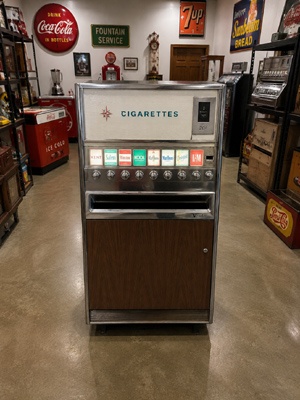
The collecting market for these machines developed as the machines themselves became scarce. Enthusiasts who remembered them from childhood began seeking them out through estate sales, restaurant liquidations, and salvage operations. Restored examples found their way into basement recreation rooms, retro-themed taverns, and private collections organized around a broader mid-century commercial aesthetic.
Antique malls in the South and Midwest became reliable places to locate machines in varying states of condition, from rough cosmetic cases needing full restoration to well-preserved examples requiring only cleaning and minor mechanical attention. The restoration process itself became a community, with dedicated hobbyists sharing knowledge about sourcing replacement parts, refinishing chrome, and repairing coin mechanisms. A fully restored machine in working condition, fitted with period-appropriate brand panels, became a centerpiece object capable of anchoring an entire room’s decorative scheme.
The Strange Items Some Machines Sold
Cigarette machines occupied a broader vending ecosystem that has largely disappeared alongside them. The same locations that housed tobacco dispensers often featured companion machines offering complementary products. Comb and aspirin machines appeared in bus terminal restrooms. Postcard vending machines stood in hotel lobbies near the front desk. Nylon stocking machines, which seem almost impossible to imagine today, were a genuine presence in department stores and women’s restrooms during the postwar years.
They offered single-pair packages to shoppers whose stockings had run unexpectedly. Perfume atomizer machines dispensed single applications for a nickel in certain upscale locations. Match machines, which provided a small book of matches for a penny, occupied space near cigarette units as a natural companion sale. This entire category of coin-operated specialty retail has vanished so completely that younger generations often require a moment to process that such machines existed at all.
Some early cigarette vending machines used a gravity-fed chute system rather than mechanical pushers, meaning the packs were stacked at an angle and slid forward under their own weight when a lever was released by the coin mechanism.
Remembering a Different America
What these machines ultimately represent, when considered with some distance, is a particular configuration of American public space that no longer exists in the same form. The diner with a jukebox in the corner, a cigarette machine near the register, and a rotating pie display on the counter was a complete sensory environment that communicated something specific about mid-century American commercial culture.
Neon signs advertised availability rather than concept. Roadside businesses competed on service and familiarity rather than brand identity. The vending machine, in this context, was not an innovation but a convenience. It was a quiet background element of daily life that most people used without reflection. Its absence now, in spaces that once contained it as a matter of course, is the kind of change that accumulates gradually until a generation looks back and realizes that an entire layer of the physical environment they grew up in has dissolved without ceremony.
Further Reading & Resources
📖 Read: The History of Vending Machines
🔍 More: How-To Restore Vintage Coin Machines