Jack Palance Biography: The Powerful Story Behind a Fearless Hollywood Icon
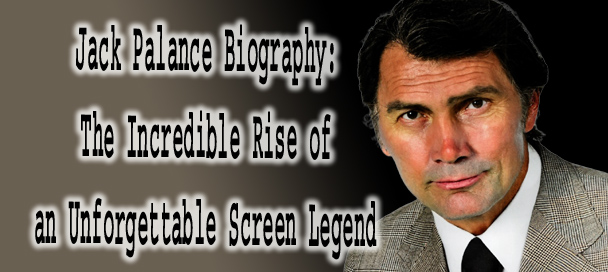
Few actors projected strength and intensity as convincingly as Jack Palance. Across several decades, he became one of the most recognizable figures in American film and television, known for a commanding screen presence that could convey menace, authority, determination, or unexpected humor. His distinctive appearance and unmistakable voice helped establish an identity that stood apart from his contemporaries.
Jack Palance was one of Hollywood’s most distinctive actors, known for his commanding screen presence, rugged appearance, and unforgettable performances. Best remembered for films such as Shane, The Professionals, Batman, and City Slickers, he built a career that spanned more than five decades. His Academy Award-winning performance in City Slickers introduced him to a new generation of viewers while reinforcing his reputation as one of the most recognizable character actors in American film history. His influence remains visible throughout modern cinema and television.
Palance emerged during a period when Hollywood was redefining its leading men and villains, bringing a rugged authenticity that resonated with audiences. He appeared in a wide range of productions, from major studio films to television dramas, earning respect for performances that combined physical power with emotional depth. His work contributed to the enduring popularity of the Western, crime drama, and adventure genres.
Beyond individual roles, Palance became a cultural symbol of toughness and resilience. Generations of viewers associated him with larger-than-life characters whose presence could dominate a scene with little more than a glance. His career reflected both the changing landscape of American entertainment and the lasting appeal of performers who possess a truly distinctive screen identity.
The most remarkable aspect of Jack Palance’s story may be that he achieved one of the greatest career comebacks in Hollywood history. After decades of memorable performances, he won his first Academy Award at age seventy-three and instantly became a favorite of an entirely new generation.
👶 Early Life
Summary: His early years in a Pennsylvania mining community helped shape the discipline, resilience, and determination that defined his character.
Jack Palance was born Volodymyr Palahniuk on February 18, 1919, in Lattimer Mines, Pennsylvania. He was the son of Ukrainian immigrant parents, Ivan Palahniuk and Anna Gramiak. Raised in a coal-mining community, he grew up in an environment shaped by hard physical labor, strong family ties, and the traditions of Eastern European immigrant culture.
His childhood was spent among working-class families whose daily lives revolved around the demands of the mining industry. The rugged surroundings and disciplined atmosphere of the region left a lasting impression on his character. Friends and neighbors often remembered him as determined, physically capable, and independent from an early age. Those qualities would remain central to his public image throughout his life.
During his teenage years, Palance developed a strong interest in athletics and physical competition. He became known for his size, strength, and endurance, traits that set him apart from many of his peers. At the same time, he discovered an appreciation for literature, performance, and public expression. Balancing practical responsibilities with personal ambitions was not always easy, and like many young people from working-class families, he faced economic challenges and limited opportunities. These experiences helped shape the discipline, resilience, and self-reliance that defined his early adulthood.
Explore the Biographies of Iconic Celebrities
Jack Palance performed one-armed pushups live on stage during the Academy Awards ceremony after winning his Oscar for City Slickers.
🎬 Film & TV Career
Summary: From acclaimed Westerns to television appearances and an Academy Award-winning comeback, Palance built one of Hollywood’s longest and most respected careers.
Jack Palance‘s rise in film and television coincided with a period of major change in American entertainment. After developing his craft on the New York stage, he moved into motion pictures during the late 1940s and quickly attracted attention for his commanding presence, rugged features, and ability to portray intense, unpredictable characters.
His breakthrough came with Panic in the Streets (1950), directed by Elia Kazan, where he appeared alongside Richard Widmark. The performance established Palance as a formidable screen presence and opened the door to larger opportunities in Hollywood. Just two years later, he earned widespread acclaim for portraying the ruthless gunslinger Jack Wilson in Shane (1953). The film became one of the most celebrated Westerns ever produced and remains one of the defining works of his career.
During the 1950s, Palance became one of Hollywood’s most recognizable villains. He received Academy Award nominations for Sudden Fear (1952) and Shane (1953), demonstrating a rare ability to bring complexity and intelligence to antagonistic roles. His performances often combined physical intimidation with psychological depth, creating characters that audiences remembered long after the films ended.
Throughout the decade, he appeared in a steady stream of productions including Arrowhead (1953), Flight to Tangier (1953), Sign of the Pagan (1954), Man Without a Star (1955) with Kirk Douglas, The Big Knife (1955), Attack! (1956), and The Lonely Man (1957). His versatility allowed him to move between Westerns, war films, crime dramas, and historical epics without losing the distinctive qualities that made him unique.
As Hollywood evolved during the 1960s, Palance increasingly worked in international productions. He appeared in Revak the Rebel (1960), Barabbas (1961), and The Professionals (1966), a major Western adventure featuring Burt Lancaster, Lee Marvin, Robert Ryan, and Claudia Cardinale. The film remains one of the most respected ensemble Westerns of its era.
Television also became an important part of his career. During the 1960s and 1970s, Palance appeared in numerous television productions and guest roles, bringing the same intensity that had defined his film work. He became familiar to audiences through dramatic anthologies, western programs, and made-for-television movies.
One of his most significant television achievements came with The Strange Case of Dr. Jekyll and Mr. Hyde (1968). His dual performance earned critical praise and demonstrated his ability to handle psychologically demanding material. The role showcased a broader acting range than many viewers associated with his tough-guy image.
In 1973, Palance became host of The Hollywood Palace, a popular variety program that introduced him to an even wider audience. The position revealed a more personable side of his personality and allowed viewers to see qualities beyond the intense characters for which he was famous.
Throughout the 1970s and early 1980s, he continued appearing in films such as Chato’s Land (1972), Craze (1974), Breakout (1975) with Charles Bronson, Mister Scarface (1976), and Contempt (1963), which gradually gained recognition as a significant work from director Jean-Luc Godard. His international work expanded his reputation beyond Hollywood and strengthened his standing as a globally recognized actor.
A major career revival arrived with Bagdad Cafe (1987). The film became an international success and introduced Palance to a new generation of viewers. While the cast ensemble received much of the attention, his appearance reinforced his ability to adapt to changing styles of filmmaking.
His most famous late-career role came in City Slickers (1991), where he portrayed the weathered cowboy Curly Washburn opposite Billy Crystal, Daniel Stern, and Bruno Kirby. The performance blended humor, wisdom, and toughness in a way that resonated strongly with audiences. More than four decades after his first Academy Award nomination, Palance won the Academy Award for Best Supporting Actor for the role.
His acceptance speech at the 64th Academy Awards became one of the ceremony’s most memorable moments. At the age of seventy-three, he surprised viewers by dropping to the floor and performing one-armed pushups on stage. The moment instantly became part of Oscar history and reinforced his reputation for remarkable physical strength.
Following the success of City Slickers, he reprised the role in City Slickers II: The Legend of Curly’s Gold (1994). He continued working steadily in film and television during the 1990s, appearing in productions such as Young Guns (1988), Batman (1989) as crime boss Carl Grissom, Tango & Cash (1989) alongside Sylvester Stallone and Kurt Russell, and Treasure Island (1990).
Television audiences also embraced him through projects including Ripley’s Believe It or Not!, which he hosted from 1982 to 1986. His distinctive voice, authoritative delivery, and larger-than-life personality made him an ideal choice for presenting unusual stories and mysteries from around the world.
Across a career that spanned more than half a century, Jack Palance appeared in well over one hundred film and television productions. He worked with many of the industry’s most respected directors and actors while leaving an unmistakable mark on genres ranging from Westerns and war films to crime dramas, thrillers, adventure stories, and comedy. His ability to remain relevant across multiple generations secured his place among the most recognizable and enduring screen personalities of the twentieth century.
Before becoming a successful actor, Palance was a professional boxer and fought under the name Jack Brazzo.
🕊️ Later Years
Summary: His later years brought renewed recognition, continued creative pursuits, and appreciation as one of the last stars of Hollywood’s classic era.
Following his Academy Award victory for City Slickers (1991), Jack Palance entered a period of renewed public recognition. While many actors of his generation had largely stepped away from the spotlight, Palance remained active in film and television, continuing to take roles that reflected his distinctive screen presence. Audiences who had known him primarily as a dramatic actor also embraced the humor and self-awareness he displayed in his later appearances.
Throughout the 1990s, he continued working in both major productions and independent projects. His performances carried the authority and confidence that had defined his career for decades, while his Oscar success introduced his work to younger viewers. Public appearances, interviews, and award ceremonies frequently highlighted the toughness and vitality that had become central parts of his public image.
Away from the camera, Palance maintained interests that reflected his lifelong appreciation for physical activity and self-discipline. He remained known for his fitness well into his later years, often surprising audiences with demonstrations of strength and endurance. His reputation as a rugged individualist was reinforced by stories of outdoor pursuits, exercise routines, and a lifestyle that emphasized independence.
In addition to acting, Palance explored creative interests outside traditional film work. He wrote poetry, painted, and spent time pursuing artistic projects that received far less public attention than his screen career. These pursuits revealed a thoughtful and reflective side that contrasted with the intimidating characters he frequently portrayed on screen.
During his final years, Palance largely stepped back from regular acting work while remaining a respected figure within the entertainment community. Tributes often emphasized not only his memorable performances but also his professionalism, longevity, and ability to reinvent himself across multiple decades.
Jack Palance died on November 10, 2006, at the age of eighty-seven. His passing marked the end of a remarkable career that had spanned more than fifty years and included some of the most memorable characters in American film and television. He left behind a legacy defined by strength, versatility, and an unmistakable screen presence that continues to be recognized by audiences around the world.
Jack Palance once published a collection of poetry, revealing a creative side that surprised many fans who knew him only as a tough-guy actor. He was also an accomplished painter who continued creating artwork throughout much of his life.
🏆 Legacy
Jack Palance occupies a distinctive place in the history of American entertainment. Few actors possessed a screen presence as instantly recognizable or as difficult to imitate. His sharp features, commanding voice, and powerful physicality allowed him to create characters that left lasting impressions on audiences across multiple generations. Whether appearing as a villain, a hero, or a mentor figure, he brought a level of intensity that became his trademark.
Throughout the twentieth century, Palance helped redefine what a tough screen character could be. Rather than relying solely on physical strength, he often infused his performances with intelligence, unpredictability, and emotional complexity. This approach elevated many of his roles beyond traditional genre stereotypes and contributed to the enduring appeal of films such as Shane (1953), The Professionals (1966), and City Slickers (1991).
His influence can be seen in the work of later actors who embraced rugged authenticity and commanding screen charisma. Generations of performers have cited classic Hollywood character actors as inspirations, and Palance remains one of the most memorable examples of an actor whose presence alone could shape the tone of an entire film. His ability to dominate a scene with minimal dialogue became a benchmark for powerful screen acting.
Palance also demonstrated remarkable longevity in an industry known for constant change. He successfully navigated the transition from the classic studio era to modern filmmaking while remaining relevant to new audiences. His Academy Award victory for City Slickers (1991) served as both recognition of a single performance and acknowledgment of decades of contributions to film and television.
Film historians continue to recognize Jack Palance as one of the defining character actors of his era. His body of work spans Westerns, war films, crime dramas, adventures, thrillers, television productions, and international cinema. Few performers managed to remain both distinctive and adaptable for so long.
Today, Jack Palance is remembered not simply for the roles he played, but for the unique qualities he brought to them. His combination of strength, discipline, charisma, and authenticity secured his place among the most enduring figures in American screen history. More than a generation after his passing, his performances continue to be discovered, studied, and admired by audiences around the world.
🗣️ WHY THEY STILL MATTER
Jack Palance remains relevant because he represented a rare combination of physical presence, acting ability, and authenticity. His performances continue to influence actors who seek to project strength without sacrificing emotional depth. Decades after his most famous roles were released, audiences still recognize his unique voice, unforgettable appearance, and commanding screen presence. His work stands as a lasting reminder of Hollywood’s classic era and the enduring power of true character acting.
Further Reading & Resources
📖 Read: Jack Palance — The Movie Database (TMDB)
🔍 More: Jack Palance – Biography, Facts & Life Story