⛽Ethyl Got Full Service: A Vintage Gas Station
Long before self service pumps and convenience stores, a visit to a gas station was a very different experience.
A bell rang as your tires rolled across a rubber hose.
An attendant stepped outside.
Windows were cleaned.
Oil was checked.
Directions were offered.
Today, many of the objects once found at a vintage gas station have become highly sought after collectibles. Some are displayed in museums. Others fill private collections and man caves across America.
Pull off the highway and let’s take a look around.
⛽Welcome to a Vintage Gas Station
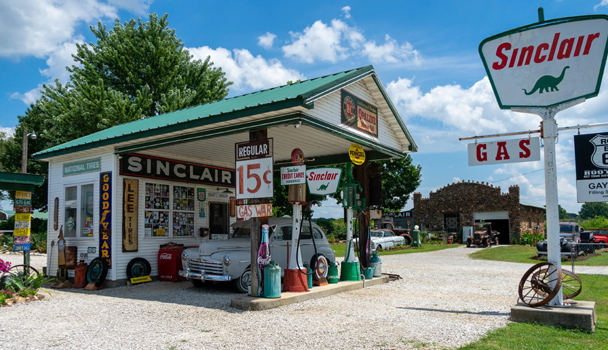
In the middle of the twentieth century, a stop for gasoline was treated almost like an event. Attendants wore matching uniforms, often with a company patch stitched over the pocket and a cap to match. As soon as a car rolled in, the attendant greeted the driver, asked how much fuel was needed, and got to work.
Full service meant exactly that. While the tank filled, the attendant checked the oil, looked over the tire pressure, and wiped down the windshield without being asked. Many stations offered free road maps at the counter and gave directions to travelers passing through unfamiliar towns. A gas station was not simply a place to refuel a car. It was a small, reliable stop built around courtesy, and it played a quiet but important role in the growth of American road travel.
Gas prices were often displayed in tenths of a cent, like 31.9 cents a gallon, a pricing quirk left over from decades earlier that stuck around well into the era of full service stations.
⛽Gas Pump Globe
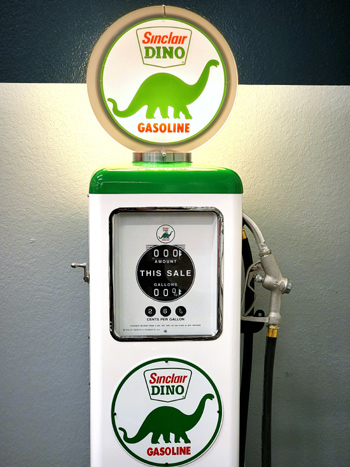
Mounted on top of early gas pumps, the glass globe was designed to be seen from a distance. Lit from within at night, these globes displayed a company’s name and logo in bold colors, making it easy for motorists to spot their preferred brand of gasoline from the road. Over time, the globe became one of the most recognizable symbols of the American service station, and today it stands as one of the most popular and valuable collectibles in the hobby.
⛽Popular Globe Brands
Collectors often search for globes from well known companies such as Texaco, Sinclair, Phillips 66, Mobilgas, and Standard Oil. Each company used its own color palette and logo style, and those designs changed over the decades as branding evolved. A globe from the 1930s can look quite different from one made by the same company in the 1960s, which gives collectors plenty of variety to pursue.
⛽What Makes a Globe Valuable
Condition plays a major role in determining a globe’s worth. Collectors look closely at whether the glass or plastic body is original, whether the lenses are cracked or faded, and whether the globe has ever been restored or replaced. Because so many reproductions exist today, originality is often the single biggest factor separating a modest find from a prized piece.
🪧Porcelain Gas Station Signs
Porcelain enamel signs were a familiar sight outside service stations for decades. Oil companies relied on them to advertise their brand, and the material itself made them remarkably durable. Unlike painted tin signs, porcelain enamel held its color and shine through years of sun, rain, and temperature swings, which is part of why so many original examples have survived to this day.
🪧How They Were Made
Porcelain enamel signs were created by fusing powdered glass onto a steel base at extremely high temperatures. The process produced a hard, glossy surface that resisted fading and chipping far better than ordinary paint. It was a more expensive method of sign making, but the durability made it a worthwhile investment for companies that wanted their advertising to last.
🪧Spotting an Original vs a Reproduction
Because porcelain signs are so collectible, reproductions are common. Collectors often check the back of a sign for grommet holes and manufacturer stamps, and they look closely at the chip patterns along the edges, since authentic chips tend to reveal layered porcelain rather than a single flat coating. Rust bleed around screw holes and natural wear patterns are also good indicators of age, while a sign that looks too clean or uniform may be a more recent reproduction.
Read From Bullet Bras to Magic Fingers: A Mid-Century Motel
⛽Visible Gas Pumps
Before the technology existed to measure fuel electronically, visible pumps used a glass cylinder mounted at the top of the unit. Gasoline was pumped up into the cylinder first, where the customer could watch the exact amount being measured, before it flowed down into the vehicle’s tank. This visible measuring process gave customers confidence that they were getting the amount they paid for, and it gave the pumps their name. Today, visible pumps are treasured as one of the clearest symbols of early American motoring.
🛢️Oil Cans
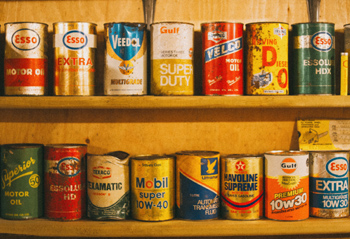
Motor oil cans were a staple of every service station, lined up on shelves and stacked near the service bay. As competition between oil companies grew, so did the artwork on these cans. Bright colors, bold lettering, and changing logos turned a simple container into a small piece of advertising art. Many collectors today focus specifically on oil cans, drawn to the graphic design as much as the history behind the brands themselves.
Some stations employed “grease boys,” young attendants whose only job was sliding under cars on a creeper board to apply chassis lubrication, a service most modern vehicles no longer even need.
🗺️Road Maps
Long before GPS and smartphones, oil companies printed and distributed free road maps at their stations. A driver could pull in for gas and walk out with a detailed map of the state or region, often decorated with colorful artwork and company branding on the cover. These maps were meant to be practical, but many of the designs have aged into genuine pieces of travel history. Collectors today preserve them not only for their usefulness but for the snapshot they offer of how Americans once found their way down the highway.
🚬Cigarette Machines
Cigarette vending machines were a common fixture in service stations and roadside businesses throughout the mid-century. These coin operated machines came in a variety of designs, often decorated with chrome trim and colorful branding to match the cigarette companies they served. While the product they once sold has fallen out of favor, the machines themselves have found a second life as standout pieces in Americana and roadside collections.
🧊Coca-Cola Vending Machines
Many service stations doubled as a quick stop for a cold drink, and a Coca-Cola vending machine was often parked right by the door. Drop in a coin, and the machine would release a single glass bottle, ice cold and ready to drink on the spot. These red machines, covered in bold Coca-Cola branding, became a familiar sight for travelers on a hot afternoon. Their simple mechanical design and unmistakable look are part of why Coca-Cola vending machines remain such popular collectibles and decorative pieces today.
🚗License Plates
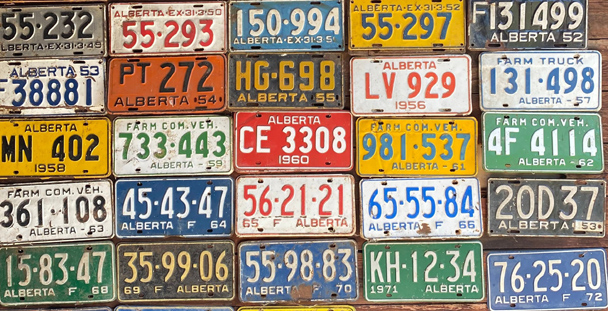
License plates may not have been sold at the gas station, but they were closely tied to the roadside travel experience and often displayed at stations as part of the decor. Each state produced its own designs, and those designs changed from year to year, giving collectors a way to track both geography and history through a single small piece of stamped metal. Old license plates are now widely collected and frequently used to decorate garages, man caves, and vintage stations that have been restored.
Many gas stations in the 1950s and 60s gave out free drinking glasses, dishware, or even S&H Green Stamps with a fill up, turning a routine errand into a small shopping trip.
Why Collectors Still Chase These Pieces of Roadside History
From Ordinary Objects to Prized Collectibles
Much of the appeal behind these items comes down to nostalgia. Route 66 culture, roadside Americana, and a renewed interest in automobile history have all helped turn once ordinary objects into desirable collectibles. A gas pump globe or porcelain sign was never meant to be art, yet today these pieces are appreciated for their advertising design and craftsmanship as much as their history.
Preserving More Than Signs and Pumps
For many collectors, the appeal goes beyond the objects themselves. A porcelain sign or an oil can can bring back memories of family road trips, small town service stations, and a slower pace of travel that has largely disappeared. Collecting these pieces becomes a way of holding onto that experience, long after the stations themselves have closed or changed beyond recognition.
Frequently Asked Questions
What is the most valuable vintage gas station collectible?
Early glass gas pump globes and rare porcelain signs in excellent original condition tend to command the highest prices among collectors, especially when they come from well known brands or feature unusual designs.
How can you tell if a porcelain sign is authentic?
Look closely at the chip patterns, edge wear, and any rust bleed around the screw holes. Authentic signs typically show layered porcelain beneath chips, along with manufacturer stamps on the back, while reproductions often look too clean or uniform.
Why are gas station collectibles so popular right now?
Renewed interest in Route 66 culture and roadside Americana has driven much of the recent popularity, along with a broader appreciation for vintage advertising design and mid-century automobile history.
Conclusion
Today most drivers stop for fuel, pay at the pump, and continue down the road a few minutes later.
Yet a vintage gas station offered far more than gasoline. Gas pump globes, porcelain signs, visible pumps, oil cans, road maps, cigarette machines, Coca-Cola coolers, and license plates became part of the American roadside experience. While the stations themselves may have changed, collectors continue preserving these colorful reminders of a different era of travel.
Further Reading & Resources
📖 Read: Route 66 Hall of Fame and Museum, Pontiac, Illinois
🔍 More: Pete’s Route 66 Gas Station Museum, Williams, Arizona