🎬Cameron Mitchell Biography: Remarkable Life of a Fearless Actor
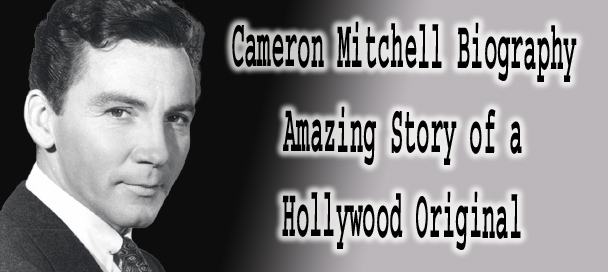
Cameron Mitchell built one of the most varied acting careers of his generation, moving comfortably between major Hollywood productions, television, stage work, and independent films. With a career spanning several decades, he became the kind of dependable character actor whose presence could give weight to a drama, authority to a Western, or menace to a thriller.
Cameron Mitchell was an American stage, film, and television actor whose career spanned classic Hollywood, Westerns, horror, international cinema, and low-budget cult films. He created the role of Happy Loman in the original Broadway production of Death of a Salesman and later played the character on film. His best-known screen work includes How to Marry a Millionaire, Carousel, Blood and Black Lace, The Toolbox Murders, and his long-running role as Buck Cannon on The High Chaparral. His unusually broad career connected mainstream Hollywood with television and the cult-film world.
Mitchell was particularly effective in forceful, complicated roles. His rugged appearance and commanding voice made him a natural fit for Westerns, war pictures, crime stories, and adventure films, but his range extended well beyond those genres. He worked during an era when actors could move steadily between cinema and television, and his extensive body of work reflects the changing shape of American entertainment from the studio years through the rise of television and independent filmmaking.
His lasting significance also comes from the unusual breadth of his career. Mitchell appeared in prestigious productions as well as exploitation films, horror pictures, European productions, and television series, rarely allowing genre or budget to define the kind of actor he could be. That willingness to work across the full spectrum of the industry left him with a filmography that is remarkably broad and made his face familiar to several generations of viewers.
Explore the Biographies of Iconic Celebrities
Cameron Mitchell never fit neatly into Hollywood’s usual categories. Hedda Hopper recognized that quality as early as 1952, describing him as the kind of true actor who could take on whatever personality a role required. That ability helps explain how the same man could move from Broadway drama and Marilyn Monroe movies to television Westerns, Italian horror, and some of the strangest low-budget films of the 1980s.
👶 Early Life
Summary: Born Cameron McDowell Mitzell in Pennsylvania, Mitchell turned an early interest in performance into a professional stage career before becoming a familiar screen actor.
Cameron Mitchell was born Cameron McDowell Mitzell on November 4, 1918, in Dallastown, Pennsylvania. He was the son of Charles Michael Mitzell, a minister, and Kathryn Isabella Ehrhart Mitzell. Growing up in a religious household shaped by his father’s ministry, Mitchell spent parts of his childhood in several Pennsylvania communities as the family moved with his father’s church assignments.
As a boy and teenager, Mitchell was drawn to performance, although acting was not an obvious career path for a minister’s son during the Depression years. He attended schools in Pennsylvania and became involved in dramatic activities while still young. His interest gradually developed from school and community performances into a serious ambition to work on the stage.
Mitchell continued his education at Dickinson College in Carlisle, Pennsylvania, where he studied for a time before choosing acting over a conventional academic path. Establishing himself professionally required the usual uncertainty faced by young stage actors, including finding steady work and proving himself through smaller theatrical opportunities. He eventually made his way to New York, where stage work provided the training and experience that prepared him for professional acting.
One of Cameron Mitchell’s most unexpected credits was Dixie Ray: Hollywood Star (1983), an adult film starring John Leslie, Lisa De Leeuw, Juliet Anderson, Veronica Hart, Kelly Nichols, and Samantha Fox.. Mitchell played The Lieutenant and appeared only in the dramatic, non-sexual portion of the production. A non-explicit version of the movie was also released under the title It’s Called ‘Murder’, Baby.
🎬 Movie & TV Career
Summary: Mitchell worked with some of Hollywood’s biggest stars and directors while building hundreds of film and television credits across an extraordinary range of genres.
After serving during World War II, Cameron Mitchell entered motion pictures during the final years of Hollywood’s studio era. His early screen credits included They Were Expendable (1945), directed by John Ford and starring Robert Montgomery and John Wayne, and What Next, Corporal Hargrove? (1945). He followed with A Letter for Evie (1946), Cass Timberlane (1948) with Spencer Tracy and Lana Turner, Homecoming (1948) with Clark Gable and Lana Turner, and Command Decision (1949) with Clark Gable, Walter Pidgeon, Van Johnson, and Brian Donlevy.
One of Mitchell’s most important early roles came from Arthur Miller’s Death of a Salesman. After playing Happy Loman onstage, Mitchell reprised the character in the 1951 film adaptation, opposite Fredric March as Willy Loman and Kevin McCarthy as Biff. The role demonstrated that Mitchell could handle serious dramatic material and helped establish him as more than another rugged supporting player.
The early 1950s quickly showed how difficult Mitchell was to typecast. He appeared in the science-fiction adventure Flight to Mars (1951), the Western Man in the Saddle (1951) with Randolph Scott, the war film Okinawa (1952), and Les Misérables (1952), starring Michael Rennie as Jean Valjean. In Man on a Tightrope (1953), directed by Elia Kazan, Mitchell worked alongside Fredric March, Terry Moore, and Gloria Grahame.
Mitchell reached one of his most widely remembered Hollywood roles in How to Marry a Millionaire (1953). The glossy 20th Century Fox comedy brought together Marilyn Monroe, Lauren Bacall, and Betty Grable, with Mitchell playing Tom Brookman, the man who ultimately wins the affection of Grable’s character, Loco Dempsey. Sharing a major studio picture with three of Hollywood’s most recognizable female stars gave Mitchell exposure to an audience far beyond the Westerns and dramas in which he was already working.
He remained busy in major productions throughout the middle of the decade. Hell and High Water (1954), directed by Samuel Fuller, placed him alongside Richard Widmark and Bella Darvi. Mitchell reunited with Fuller for the striking crime thriller House of Bamboo (1955), starring Robert Ryan and Robert Stack. That same year he appeared in Love Me or Leave Me (1955) with Doris Day and James Cagney, playing Johnny Alderman in the musical biography of singer Ruth Etting.
Another memorable musical assignment came with Carousel (1956), the screen adaptation of the Richard Rodgers and Oscar Hammerstein II musical. Mitchell played the troublesome sailor Jigger Craigin opposite Gordon MacRae and Shirley Jones. The picture again showed that the tough physical presence that served him so well in Westerns and crime films did not confine him to those genres.
Mitchell took on one of his strongest leading roles in Monkey on My Back (1957), portraying real-life boxer Barney Ross. The film dealt with Ross’s boxing career, military service, and addiction to heroin following wartime treatment with morphine, giving Mitchell material considerably darker than the romantic and adventure roles surrounding it in his filmography. Dianne Foster appeared opposite him, with Jack Albertson and Paul Richards among the supporting cast.
Westerns remained an important part of Mitchell’s screen identity. His credits included The Tall Men (1955) with Clark Gable, Jane Russell, and Robert Ryan, The Last Wagon (1956) with Richard Widmark, and Ride in the Whirlwind (1966), directed by Monte Hellman and written by Jack Nicholson. His weathered appearance, physical confidence, and ability to play men who could be sympathetic in one scene and threatening in the next made him particularly useful to filmmakers working in the genre.
During the 1960s, Mitchell increasingly worked outside the United States, particularly in European productions. He appeared in Italian and international adventure films, historical epics, Westerns, and sword-and-sandal pictures. Among them were The Last of the Vikings (1961), Erik the Conqueror (1961), directed by Mario Bava, Julius Caesar Against the Pirates (1962), Minnesota Clay (1964), directed by Sergio Corbucci, and Knives of the Avenger (1966), again working with Mario Bava.
Mitchell’s association with Mario Bava produced one of the most important horror films in his career. In Blood and Black Lace (1964), Mitchell played fashion-house owner Massimo Morlacchi alongside Eva Bartok. Bava’s elaborate use of color, masked murder, fashion imagery, and stylized violence helped make the picture a landmark of the Italian giallo tradition and a major influence on later slasher films. Mitchell’s presence connected his mainstream Hollywood career directly to a film that became increasingly important to horror history.
Television eventually gave Mitchell the role for which many American viewers remembered him best. From 1967 to 1971, he starred as Buck Cannon on NBC’s Western series The High Chaparral. Created by David Dortort, who had already found enormous success with Bonanza, the series starred Leif Erickson as John Cannon, Linda Cristal as Victoria Cannon, Henry Darrow as Manolito Montoya, Mark Slade as Billy Blue Cannon, and Mitchell as John’s hard-drinking, good-humored brother Buck.
Buck Cannon became an ideal Cameron Mitchell character. He could be funny, reckless, loyal, dangerous, and unexpectedly tender without losing the rough edge that made him believable in a Western. Mitchell appeared throughout the show’s 1967–1971 run, and his chemistry with Henry Darrow became one of the series’ strongest elements. After years of moving from picture to picture, The High Chaparral gave Mitchell a continuing character that television audiences could follow week after week.
His television work extended far beyond that series. Mitchell appeared in programs including Bonanza, The Virginian, Gunsmoke, Ironside, Cannon, Police Story, SWAT, Charlie’s Angels, Fantasy Island, The Love Boat, Matt Houston, The Fall Guy, Simon & Simon, Murder, She Wrote, and Matlock. He also returned to regular television with The Swiss Family Robinson (1975–1976), playing Jeremiah Worth alongside Martin Milner and Pat Delaney.
Mitchell never abandoned feature films, and by the 1970s his career had taken another turn toward independent productions, exploitation pictures, action films, and horror. He appeared in Buck and the Preacher (1972), directed by and starring Sidney Poitier alongside Harry Belafonte, and in Slaughter (1972) with Jim Brown, Stella Stevens, and Rip Torn. Other credits from the decade included Viva Knievel! (1977) with Evel Knievel, Gene Kelly, Lauren Hutton, and Red Buttons, and the disaster film The Swarm (1978), whose enormous cast included Michael Caine, Katharine Ross, Richard Widmark, Richard Chamberlain, Olivia de Havilland, Henry Fonda, Fred MacMurray, and Slim Pickens.
For horror audiences, one of Mitchell’s most notorious later roles came in The Toolbox Murders (1978). Playing apartment-building owner Vance Kingsley, Mitchell delivered an increasingly disturbed performance in a film that became a familiar title during the home-video era. He followed it with further genre work including , Frankenstein Island (1981), Raw Force (1982), Night Train to Terror (1985), The Tomb (1986), and the anthology horror film From a Whisper to a Scream (1987), which also featured Vincent Price, Clu Gulager, Susan Tyrrell, and Rosalind Cash.
Mitchell could still turn up in polished mainstream productions. In My Favorite Year (1982), starring Peter O’Toole, Mark Linn-Baker, and Jessica Harper, he played Karl Rojeck. The role was another example of the strange breadth of his career. By this point, Mitchell could move from a major studio comedy to a low-budget horror or action production without treating either as beneath him.
That willingness to work became especially visible during the 1980s. Mitchell appeared in a remarkable succession of action, horror, science-fiction, and direct-to-video productions, including Kill Squad (1982), Killpoint (1984), Mission Kill (1986), Low Blow (1986), Deadly Prey (1987), Nightforce (1987), Hollywood Cop (1987), Code Name: Vengeance (1987), Mutant War (1988), Memorial Valley Massacre (1988), Trapped Alive (1988), Terror in Beverly Hills (1989), and Action U.S.A. (1989).
Few of those later films became as notorious as Space Mutiny (1988). Mitchell played Commander Alex Jansen in the low-budget science-fiction production starring Reb Brown and John Phillip Law. The movie eventually developed a cult following for reasons far removed from conventional critical acclaim, particularly after its later exposure to television audiences through Mystery Science Theater 3000. It became another unexpected chapter in a career already filled with unlikely turns.
Even near the end of his working life, Mitchell continued appearing before the camera. His credits included Terror Night (1989), Easy Kill (1990), Crossing the Line (1990), and Demon Cop (1990). He also provided English-language voice work for New Dominion Tank Police (1993).
One especially unusual credit appeared long after Mitchell’s death. He had worked with director Orson Welles on The Other Side of the Wind, a film shot intermittently during the 1970s but left unfinished for decades. Mitchell played Zimmer in a cast that included John Huston, Peter Bogdanovich, Susan Strasberg, Lilli Palmer, Edmond O’Brien, and Dennis Hopper. The completed film was finally released in 2018, giving Mitchell a new screen credit more than two decades after his death.
Across film and television, Mitchell accumulated hundreds of acting appearances and worked with an extraordinary range of performers and filmmakers. His credits stretched from John Ford, Elia Kazan, Samuel Fuller, Mario Bava, Sergio Corbucci, and Orson Welles to Marilyn Monroe, Lauren Bacall, Betty Grable, Clark Gable, James Cagney, Doris Day, Richard Widmark, Robert Ryan, Sidney Poitier, Harry Belafonte, Vincent Price, and Peter O’Toole. Few actors moved quite so freely between prestige Hollywood productions, network television, European genre cinema, Westerns, horror, exploitation, and low-budget independent filmmaking.
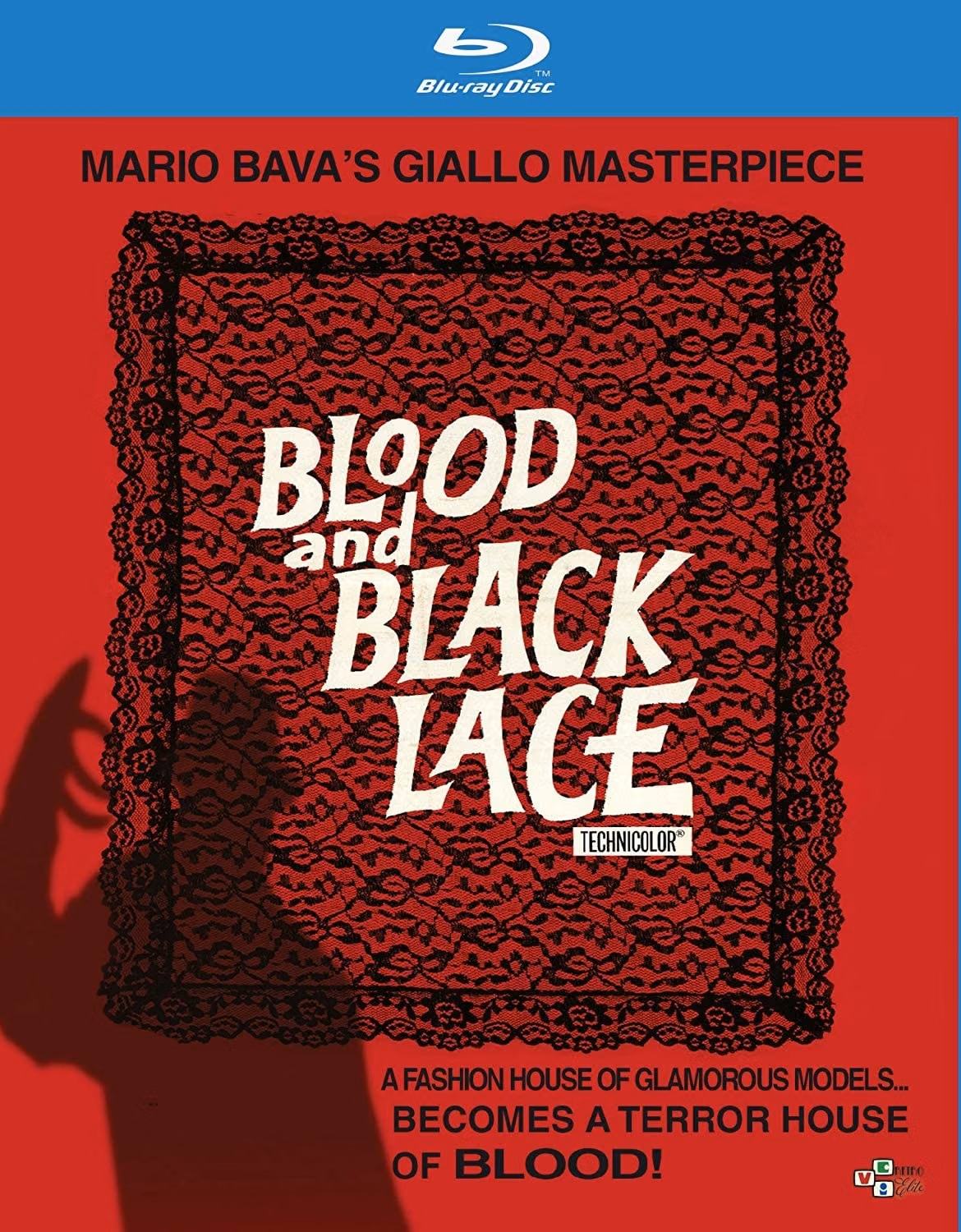
Blood and Black Lace (Blu-ray)
Product Description:
Fans exploring the career of Cameron Mitchell should not overlook Mario Bava’s stylish horror classic Blood and Black Lace. Widely regarded as one of the films that helped define the giallo genre, this visually stunning mystery combines glamorous fashion, shocking murders, and unforgettable cinematography. Cameron Mitchell delivers a memorable supporting performance in a movie that continues to influence horror filmmakers around the world.
Key Features:
• Mario Bava’s landmark giallo thriller on Blu-ray
• Features Cameron Mitchell in one of his best-known horror roles
• Beautiful high-definition presentation of a horror classic
• A fascinating blend of mystery, suspense, and stylish visual storytelling
• Essential viewing for fans of classic Italian horror and Cameron Mitchell’s career
Why This Works:
If you’ve been reading about Cameron Mitchell, this is one of the standout films worth adding to your collection. Blood and Black Lace helped shape the visual style of countless slasher and suspense films that followed, and Mario Bava’s bold use of color and atmosphere still feels fresh decades later. Whether you’re discovering the film for the first time or upgrading your collection, this Blu-ray belongs on every classic horror fan’s shelf.
Buy on Amazon
Mitchell reportedly had enough talent as a high-school baseball pitcher to attract interest from major-league teams. Acting ultimately won, leaving Hollywood with a character actor who might otherwise have tried his luck in professional baseball.
🕊️ Later Years
Summary: Mitchell continued acting into his later years despite financial and health difficulties, remaining a working performer almost to the end of his life.
By the late 1980s and early 1990s, Cameron Mitchell had become one of the industry’s most prolific veteran character actors. He continued accepting film and television work rather than formally retiring, appearing in everything from independent action pictures and horror films to guest roles on established television series. The pace and variety of the work reflected a career-long habit of treating acting as a working profession rather than limiting himself to prestigious productions.
Mitchell’s later years were also marked by personal and financial difficulties. Despite decades of steady employment, he experienced serious money problems, including disputes involving taxes and property. His private life included three marriages, to Camille Janclaire, Lissa Jacobs Gertz, and Margaret Brock Johnson Mozingo, as well as a large family. The contrast between his familiar screen presence and his troubles away from the camera was considerable.
Even as his health declined, Mitchell remained connected to acting. His final years came after a career that had carried him through the studio system, the growth of network television, European filmmaking, the independent-film market, and the home-video era. By then, younger audiences were also discovering some of his horror and exploitation pictures, giving films that had once been regarded as minor assignments a second life among collectors and genre fans.
Cameron Mitchell died on July 6, 1994, at the age of 75, in Pacific Palisades, California. The cause was lung cancer. His death ended a professional acting career that had lasted for roughly half a century and had produced an unusually large body of work across stage, film, and television.
Mitchell left behind the rare filmography of an actor who had worked near the center of classic Hollywood and far beyond its edges. By the end of his life, his credits connected several distinct periods of American screen history, from major studio pictures of the 1940s and 1950s through television Westerns, European genre films, horror, exploitation, and the independent productions of the 1980s and 1990s.
Before becoming a successful actor, Cameron Mitchell worked as a page at Radio City Music Hall alongside another young aspiring actor: Gregory Peck. Both men would eventually become major Hollywood names.
🏆 Legacy
Cameron Mitchell left behind one of the most varied bodies of work among American character actors of his generation. His career stretched from the final decades of the Hollywood studio system into the age of television, international filmmaking, independent productions, and home video. Rather than becoming identified with a single period, Mitchell remained visible as the industry around him changed.
His work in Death of a Salesman (1951), How to Marry a Millionaire (1953), Love Me or Leave Me (1955), The Tall Men (1955), and Carousel (1956) preserved his place in classic Hollywood. For television audiences, The High Chaparral (1967–1971) gave him one of his most enduring characters in Buck Cannon, a role that remains closely associated with Mitchell and with the great television Westerns of the period.
Horror fans remember a different Cameron Mitchell. Blood and Black Lace (1964) became a landmark of Italian horror and the developing giallo form, while The Toolbox Murders (1978) became a cult favorite among later generations of horror viewers. Films such as From a Whisper to a Scream (1987), Space Mutiny (1988), and numerous low-budget genre pictures further established Mitchell as a familiar presence in the cult-film world.
That range is central to his reputation. Mitchell could appear opposite Marilyn Monroe, Lauren Bacall, Betty Grable, Clark Gable, James Cagney, Doris Day, Richard Widmark, Robert Ryan, Sidney Poitier, Vincent Price, and Peter O’Toole, while working for filmmakers as different as John Ford, Elia Kazan, Samuel Fuller, Mario Bava, Sergio Corbucci, and Orson Welles. His career crossed boundaries that later became convenient labels for separating prestige pictures, television, horror, exploitation, and independent cinema.
Mitchell’s willingness to keep working also helped preserve his visibility. Some actors of his era became associated almost entirely with the films of their peak years. Mitchell continued appearing in new productions for decades, allowing successive audiences to encounter him in completely different settings. A viewer might know him as Tom Brookman, Buck Cannon, a Mario Bava horror actor, or the veteran face appearing in a late-night action movie.
His legacy ultimately rests on durability as much as fame. Cameron Mitchell was never confined to one genre, one medium, or one period of screen history. His enormous filmography forms an unusual bridge between classic Hollywood and cult cinema, giving him a place in film history that has remained recognizable long after many of the productions in which he appeared first reached audiences.
🗣️ Why He Still Matters
Cameron Mitchell remains worth discovering because his career connects parts of film history that are often treated as separate worlds. Classic-Hollywood viewers can find him beside Marilyn Monroe, Lauren Bacall, Clark Gable, and Doris Day. Western fans know Buck Cannon, while horror audiences recognize Blood and Black Lace and The Toolbox Murders. Cult-film viewers can go even deeper into his later work. Few actors left behind a career that offers so many different doors through which a new audience can discover them.
Further Reading & Resources
📺 See: Cameron Mitchell (actor) – Wikipedia
🔍 Cameron Mitchell — The Movie Database (TMDB)