🎄Christmas Store Windows: The Magical Displays That Stopped Downtown Traffic
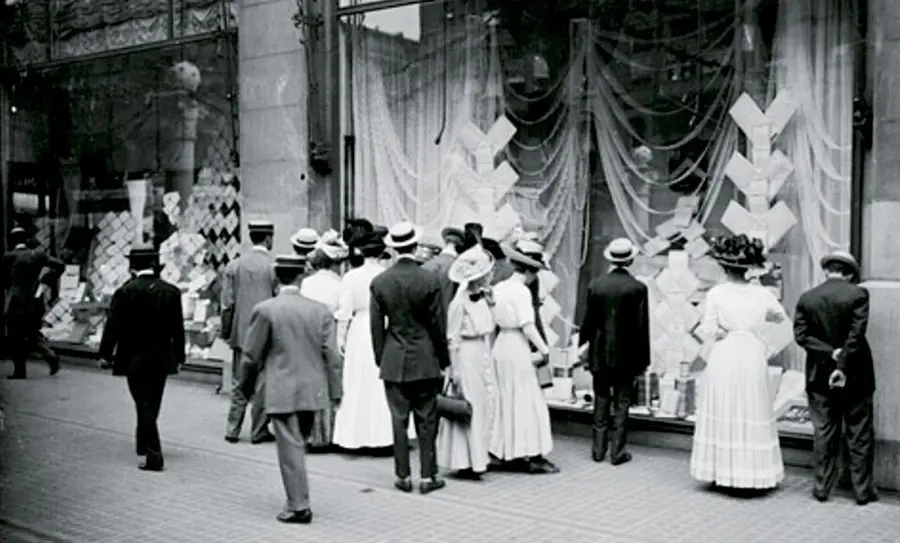
There was a time when the best show in town was free, open all night and only a few inches thick. It sat behind a pane of plate glass on Main Street. Christmas store windows turned ordinary downtown sidewalks into a holiday theater, and whole families bundled up just to stand outside and look.
When Downtown Became a Christmas Attraction
For generations of Americans, the Christmas trip downtown was an event. It was not just shopping. Families planned the day weeks ahead. Kids wore their good coats. Parents saved up for lunch at the department store tearoom. Somewhere on the schedule, always, was a slow walk past the windows.
Suburban families made a special annual trip into the city, not to visit relatives, but to see the sights. In Chicago, that meant State Street. In Cleveland, it meant Euclid Avenue and Public Square. In New York, it meant Fifth Avenue and Herald Square. Smaller cities had their own versions, and they were just as beloved.
The windows were the reason the sidewalk crowds slowed to a shuffle. People lined up for blocks to see them. Nobody minded the cold. The glass glowed, the figures moved and the whole street felt like the North Pole had opened a branch office downtown.
Sears Wish Book: The Amazing Christmas Catalog Kids Loved
How Christmas Store Windows Began
The story starts with glass. Before the middle of the 1800s, most shops had small windows made of many little panes. There was no room for a real display. That changed as cast iron storefronts and cheaper plate glass made large show windows possible.
In the United States, the show window grew up alongside Manhattan’s first department stores on lower Broadway. American plate glass manufacturing began in the 1850s. Then, in 1883, the Pittsburgh Plate Glass company started producing plate glass, and big storefront windows spread quickly. Merchants suddenly had a giant picture frame facing the street.
Light came next. Gas lamps lit some show windows at night, casting a warm glow onto murky streets. Electric lighting later gave stores something even better. It turned the display window into a true stage, complete with stage lighting.
Then came Christmas. In 1874, R.H. Macy decorated his store windows on 14th Street with a holiday theme. That first display used porcelain dolls posed in scenes from Uncle Tom’s Cabin. It is widely credited as the first major Christmas window in America. Macy’s even claimed to have $10,000 worth of dolls in its holiday display that year.
The Department Store Becomes a Stage
Early windows were mostly about merchandise. A few dolls, some toys and maybe a potted plant were enough to draw a glance. But merchants soon realized something important. People would stop for a show, and people who stopped might come inside.
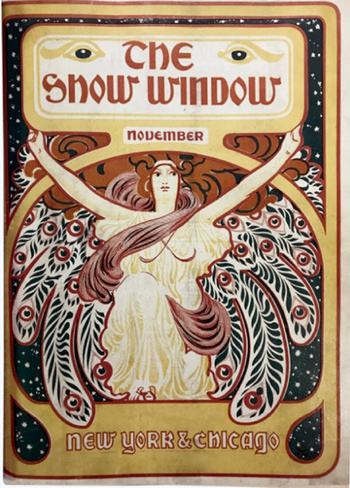
One unlikely figure helped turn window dressing into a real profession. In 1897, L. Frank Baum launched The Show Window, a trade magazine for window designers. A year later, he founded a professional association for window trimmers. In 1900, he published a full book on decorating store windows. That same year, he also published The Wonderful Wizard of Oz.
Baum taught merchants how to borrow tricks from the theater. He showed them how to use motors and electric lighting to create movement and drama. His trade magazine still exists today, now known as VMSD.
The biggest leap came during the Great Depression. In the late 1930s, Lord & Taylor in New York created holiday windows with no merchandise at all. Its famous Bell Windows showed ringing bells above a snowy winter scene. They were pure entertainment, a free gift to a city that badly needed some cheer. The idea was so popular that the windows returned every year until 1941.
Toys That Moved Behind the Glass
Movement was the magic ingredient. A still window was pretty. A window where things moved was irresistible. Stores began experimenting with motion surprisingly early.
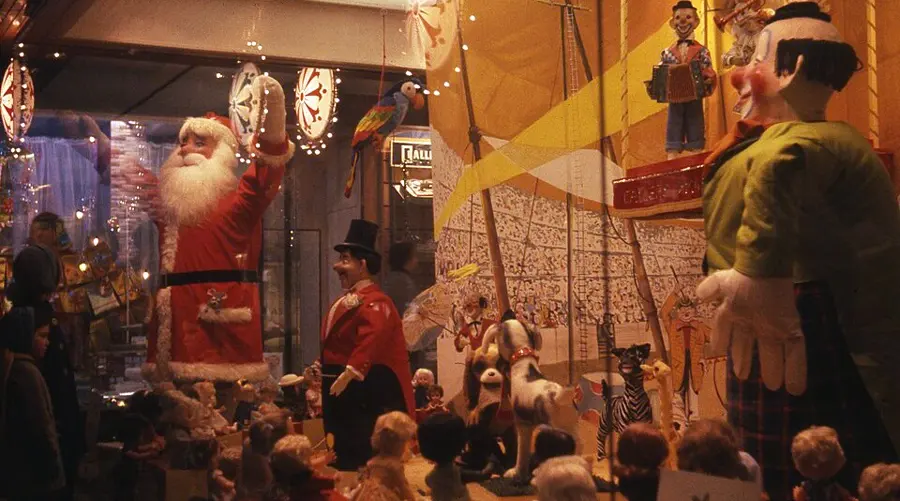
One of the first animated windows, called the Dolls’ Circus, appeared at Ehrich Brothers in New York in 1881. In 1883, Macy’s built a steam powered window with figures moving along a track. By 1901, Macy’s was showing a Red Star Circus with animated riders, clowns, jugglers and acrobats.
The 1938 Lord & Taylor windows are part of the legend too. That November was unseasonably warm, so the designers brought the winter to the window. Accounts say they made a blizzard behind the glass using fans and cornflakes. A sign promised the snow was coming, sooner or later.
By the middle of the century, the windows were full of motion. Elves hammered on toys. Bears nodded their heads. Skaters glided in circles. Toy trains rolled through tiny towns. Photos in Cleveland’s archives show Higbee’s windows filled with Lionel trains in the 1930s. For a train loving kid, nothing on earth beat a window like that.
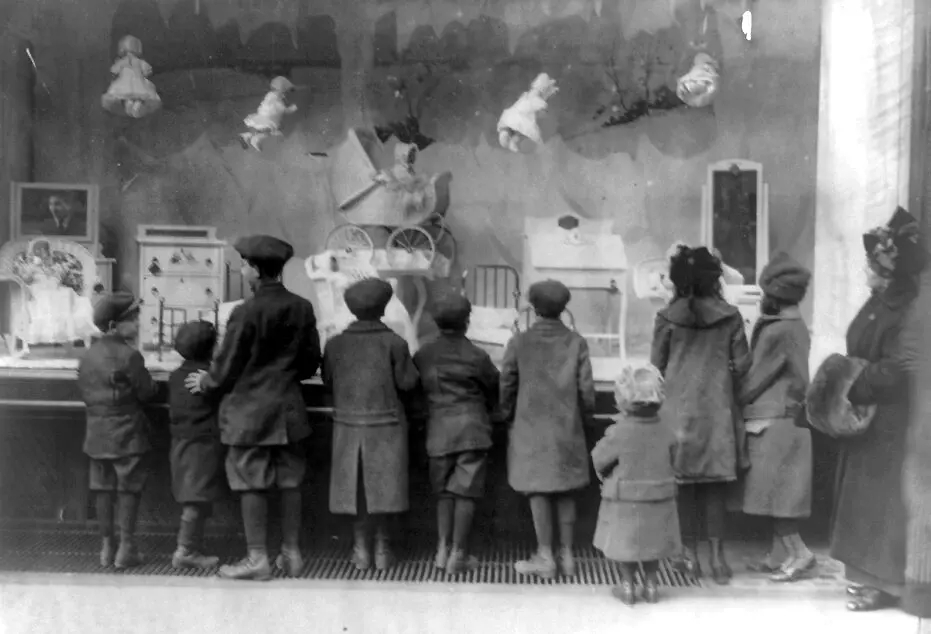
When Kids Pressed Their Faces Against the Window
Ask anyone who saw the great windows as a child, and the memories come in pieces. The cold air. A mitten held tight by a parent. The fog of breath on the glass. The small figure of a bear or elf that seemed to turn and look right back.
Kids always tried to get as close as possible. Noses pressed against the glass. Little hands left smudges at exactly the height of a six year old. Some children stood so long that parents had to drag them to the next window.
The best windows were built with children in mind. The action was low enough for small eyes. The stories were simple and bright. Santa’s workshop, a snowy village, a toy parade or a classic fairy tale filled the glass. Every window offered something a kid could point to and explain to someone else.
Hollywood captured that feeling perfectly. In A Christmas Story, Ralphie and his friends stare into the Higbee’s department store window in Cleveland. That is where Ralphie spots his beloved Red Ryder BB gun. For millions of viewers, that single scene sums up the whole tradition.
Santa Comes Downtown
The windows were the opening act. Santa was the headliner. Department stores knew that a visit with Santa would bring families inside, and the windows got them to the door.
Macy’s was a pioneer here too. By its own account, it brought Santa Claus into its New York store in 1862, years before its first Christmas windows. Other stores soon built their own Toylands, Santa lines and holiday floors. A kid could see the windows, ride the escalator to the toy department and sit on Santa’s lap, all in one trip.
Some stores tied the windows directly to Santa. In 1948, window designer James Albert Bliss built a display for Macy’s with a special mailbox on the street. Children dropped letters to Santa into the box. Inside the window, the letters appeared to travel up a conveyor belt to an animated Santa, who stamped them received.
Stores even created their own Christmas characters. In 1946, Marshall Field’s in Chicago introduced Uncle Mistletoe to compete with Montgomery Ward’s Rudolph. Aunt Holly joined him later. In Cleveland, Halle’s had Mr. Jingeling, the keeper of Santa’s keys. These local heroes became as much a part of Christmas as Santa himself in their hometowns.
Hollywood loved the department store Santa too. Miracle on 34th Street, released in 1947, placed its kindly Kris Kringle inside Macy’s in New York. The film made a trip to the big store feel like part of the Christmas story itself.
The Great Downtown Department Stores
Nearly every big American city had at least one department store that made Christmas special. Chicago had Marshall Field’s. Detroit had J.L. Hudson’s. Minneapolis had Dayton’s. Indianapolis had L.S. Ayres. Des Moines had Younkers. Pittsburgh once had six department stores with Christmas windows downtown.
Competition pushed every store to do more. In New York, Lord & Taylor, Macy’s, Bloomingdale’s and Saks Fifth Avenue spent decades trying to top one another. Each unveiling was treated like an opening night. In Boston, Jordan Marsh and Filene’s waged their own friendly war.
Marshall Field’s took storytelling to a new level. Its Christmas window tradition stretched back to 1897. Starting in 1944 with The Night Before Christmas, its themed windows told one story across the length of State Street. Shoppers followed the tale window by window as they walked down the block.
Some cities borrowed displays from bigger markets. In Dayton, Ohio, store owner Frederick Rike arranged in 1945 to bring a popular animated display from New York to his store windows. The little figures became a beloved local tradition for decades.
Lights, Motors and Mechanical Magic
Behind every great window was a crew of craftspeople working long before the first snowflake. Planning often began months ahead. Some Cleveland stores started on their holiday windows as early as March.
The figures themselves were built by hand. Many early animated figures were made of papier mâché, with electric motors installed inside. Artists painted faces, sewed costumes and built tiny furniture. Carpenters built sets. Mechanics rigged belts, cams and gears so that an elf could swing a hammer for weeks without stopping.
Specialist companies grew up to serve the stores. Spaeth Design, founded in New York in 1945, became one of the best known. It has built animated windows for Lord & Taylor, Saks Fifth Avenue and Macy’s. As its owner once put it, the only difference between a window and a theater set is that the main characters have motors inside them.
Those motors had to work hard. In some displays, animated pieces run 24 hours a day for two months straight. When a figure froze or a belt snapped, someone had to crawl into the window and fix it. The audience never saw the work. They only saw the magic.
15 Vintage Christmas Collectibles: Shocking Prices Revealed
The Nighttime Christmas Shopping Trip
The windows looked good in daylight, but they came alive after dark. The glow of the glass, the strings of lights overhead and the music from somewhere down the block all worked together. Downtown at night in December felt like another world.
Families often planned the trip to end in the evening. They shopped, ate dinner and then walked the windows when the lights were brightest. Streetlamps wore wreaths. Bell ringers stood on the corners. Crowds moved slowly from one window to the next, with children perched on their fathers’ shoulders for a better view.
It was entertainment for everyone, and it cost nothing to watch. A family that could not afford much under the tree could still enjoy the best show in town. That may be the most generous thing about Christmas store windows. They belonged to anyone who walked by.
What Happened to the Great Christmas Windows?
The first big blow came from the suburbs. After World War II, millions of families moved out of the cities. Windowless shopping malls followed them. By the 1960s, downtown department stores faced growing competition from suburban malls.
The slow decline lasted decades. Family owned department stores merged into national chains. Many old flagship stores closed. L.S. Ayres ended its festive windows within a few years of being sold in 1986. Higbee’s in Cleveland became a Dillard’s in 1992 and closed for good at the end of 2001.
Even the giants fell. Marshall Field’s on State Street became Macy’s in 2006, to the dismay of many Chicagoans. Macy’s left the old Dayton’s building in Minneapolis in 2017. Lord & Taylor, the store that brought motion to the windows, closed its Fifth Avenue flagship in early 2019.
Many of the old figures were simply thrown away. Most props were never built to last, and stores had no room to store them. Yet some survived. In Buffalo, Dayton, Indianapolis and Green Bay, rescued figures from old department store windows now appear in museums, arts centers and downtown holiday displays.
Dayton offers one of the happiest endings. When the old Rike’s complex was razed in 1999, many of its little figures went into storage. Some were later bought, restored and donated. They have appeared in the Schuster Performing Arts Center every holiday season for more than 20 years.
Why Christmas Store Windows Still Matter
In a way, the great windows were a kind of American folk art. They were made by hand, enjoyed by everyone and taken down after a few short weeks. Nobody bought a ticket. Nobody hung them in a museum, at least not at first. They existed for one season and then vanished.
That temporary quality is part of their power. Each year’s windows lived only in the memories of the people who saw them. Ask a grandparent about the windows, and you will hear about a specific bear, a certain train or one perfect snowy night downtown.
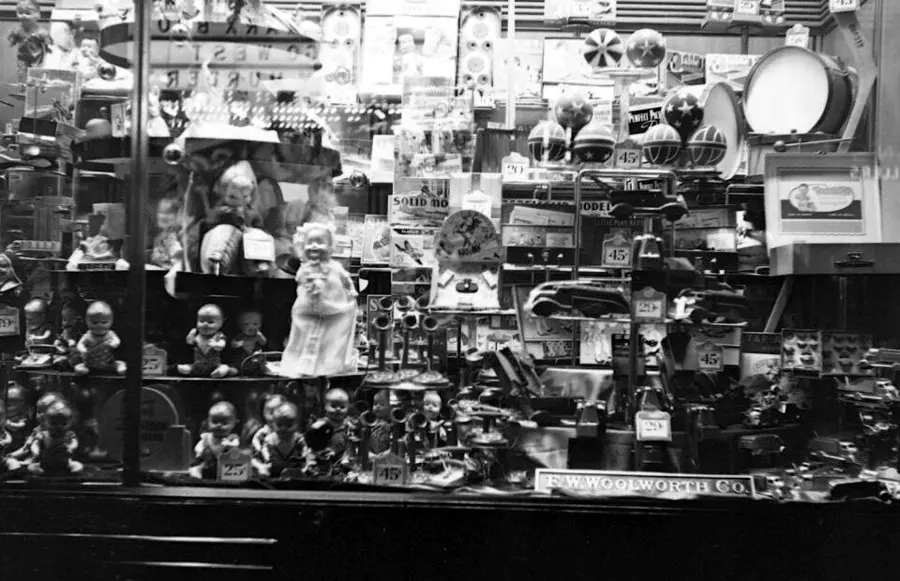
Not every town had a Marshall Field’s, and it did not matter. Christmas store windows in smaller downtowns carried the same spirit on a smaller budget. A local department store, a dime store or a hardware shop could still fill its glass with lights, toys and a little bit of wonder.
The tradition has not died completely. New York’s big stores still unveil elaborate windows every holiday season. In Cleveland, the old Higbee’s building has hosted holiday window displays again in recent years. In Minneapolis, developers revived Christmas windows at the old Dayton’s building in 2021.
Still, something special lived in those downtown sidewalks. Christmas store windows taught generations of kids that wonder could appear anywhere, even behind a pane of glass on a cold city street. That lesson is worth remembering every December.