🩸DIY Fake Blood for Halloween, Movies, and Cosplay: 6 Professional Recipes That Actually Work
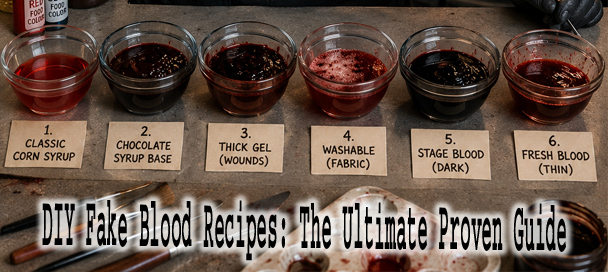
Fake blood has been a staple of horror films, Halloween costumes, and theatrical productions for as long as filmmakers and performers have needed to convince an audience that something terrible just happened. The recipes used on professional sets are often simpler than most people expect, built from kitchen ingredients and drugstore supplies rather than anything exotic or expensive. Some of them are edible. Some of them wash out of fabric. Some of them are specifically designed to stay exactly where you put them under hot lights for hours without running or drying to the wrong color.
DIY fake blood recipes have been a staple of professional film and theatrical production for decades, with documented use of corn syrup and food coloring formulas on productions including Brian De Palma's Carrie in 1976 and chocolate syrup as a black and white film blood substitute in Alfred Hitchcock's Psycho in 1960. Professional makeup effects artists working in film and television use a range of formula types depending on the specific application, from thin flowing formulas for splatter and drip effects to thick gel formulas for wound appliances and prosthetic work. The six recipes covered in this article represent the primary formula categories used across professional production contexts, all adapted for home production from grocery store and drugstore ingredients at minimal cost. Each formula serves a specific application purpose and understanding which formula fits which costume or effect is the foundation of convincing Halloween and cosplay makeup work.
What most DIY fake blood articles do not tell you is that different applications require different formulas, and what works beautifully as a splatter effect on a costume will look completely wrong dripping from a wound prosthetic. A thin formula that photographs well under studio lighting will look too bright and too liquid under the warm indoor light of a Halloween party. A thick gel formula that holds perfectly on a latex wound appliance will not soak convincingly into fabric. Knowing which formula serves which purpose is the difference between fake blood that looks like a prop and fake blood that makes people look twice.
Every recipe in this article is buildable from ingredients available at a grocery store, a drugstore, or a craft supply store. Each one is tied to a real production context, a film, a show, or a verified industry practice that confirms the formula works under professional conditions. The DIY versions are direct translations of those professional approaches, scaled for home use and adjusted for the materials most readers will have available. Internal links throughout this site will point to the costume articles where each formula is most useful, so you can match the right blood to the right build.
🎬 The Classic: Corn Syrup and Food Coloring
This is the foundational fake blood formula and it has been in continuous use in film and television production for decades. The corn syrup and red food coloring combination is confirmed as the base formula used on the set of Carrie, Brian De Palma's 1976 adaptation of the Stephen King novel, for the famous prom scene in which Sissy Spacek's character is drenched in pig's blood from above. The production used a corn syrup base specifically because it needed a formula that would flow correctly from a bucket, coat the hair and clothing evenly, and photograph as a deep, saturated red under the film's lighting conditions. The result is one of the most iconic images in horror film history and it was achieved with grocery store ingredients.
To make this formula at home, combine one cup of light corn syrup with one tablespoon of red food coloring and mix thoroughly. The result will be a bright, slightly transparent red that reads well under most lighting conditions and photographs accurately. For a darker, more realistic tone, add two to three drops of blue food coloring and one drop of green. The additional colors pull the bright red toward the deeper, more complex tone of actual blood without muddying the color. For a thinner consistency that flows and drips more freely, add water a teaspoon at a time until you reach the viscosity you need. For a thicker formula that moves more slowly and holds its shape on a surface, the base corn syrup formula without added water is the correct starting point.
This formula is edible, which matters when it is being applied near the mouth or used in a scene that requires an actor to interact with it directly. It is not washout-friendly on fabric and will stain most clothing permanently, so apply it to costume pieces you are prepared to sacrifice or protect surfaces carefully before using it. On skin it wipes away easily with a damp cloth and leaves no staining.
Explore other Great Halloween Ideas Here
🎥 The Film Industry Standard: Chocolate Syrup Base
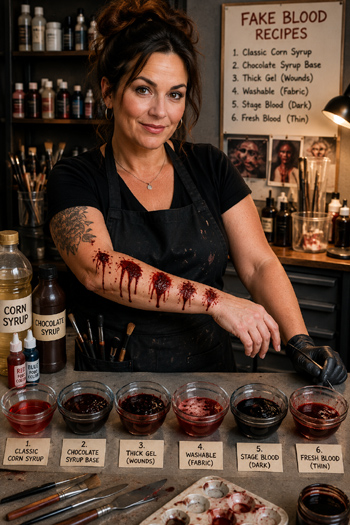
Before color film became the industry standard, productions needed a fake blood formula that read correctly as dark and rich on black and white stock rather than as a bright liquid that photographed as pale gray. The solution was chocolate syrup, which has a density and a darkness that translates accurately to black and white film and holds its consistency under the heat of studio lighting without thinning. Alfred Hitchcock used chocolate syrup as fake blood in the shower scene in Psycho in 1960, one of the most analyzed sequences in film history. The formula worked because it photographed with exactly the right tonal range and moved convincingly down the drain in a way that a thinner formula would not have managed.
For a color-accurate version that serves modern productions and Halloween applications, combine three quarters of a cup of chocolate syrup with one quarter cup of corn syrup and two tablespoons of red food coloring. The chocolate provides the brown undertone that gives the formula its depth and realism, pulling it away from the too-bright quality of a pure red formula and toward the darker, more complex color of blood that has been exposed to air. The corn syrup adds viscosity and shine. The food coloring brings it into the red range without losing the brown base.
This formula holds up particularly well under warm or amber lighting, where a pure red formula can look too bright and too theatrical. It is the right choice for wound effects that need to read as realistic in indoor party lighting or in photographs taken under warm household bulbs. Like the corn syrup formula, it will stain fabric and should be applied to clothing with that in mind.
🩸 The Wound Formula: Cornstarch Gel Blood
When a production needs fake blood that stays in a specific location rather than running or spreading, the corn syrup and food coloring formula is too thin and too mobile. The solution used by makeup effects artists for wound applications, cuts, gashes, and injury effects that need to hold their shape on the skin through a full shooting day is a cornstarch thickened gel formula. This approach is standard in television medical dramas and procedural crime shows where wound effects need to look accurate in close-up and stay consistent across multiple takes.
To make this formula, combine two tablespoons of cornstarch with one tablespoon of warm water and mix until smooth, eliminating all lumps before adding any coloring. Add two tablespoons of corn syrup and mix thoroughly. Add red food coloring a drop at a time, mixing after each addition, until you reach the right color. For wound applications, a slightly darker formula with a drop of blue added reads more accurately as the darker blood of a deep cut rather than the brighter color of surface bleeding. The finished formula should be thick enough to hold a shape when applied with a spatula or brush and should not flow freely when the surface it is applied to is tilted.
This formula is the right choice for any costume in this series that involves a wound effect, a zombie application, or a horror character with visible injury makeup. It applies cleanly with a small palette knife or a silicone brush, holds its position through an evening of wear, and photographs with a realistic gel quality that thin formulas cannot match. It will crack slightly if applied thickly and then the skin underneath is flexed repeatedly, so apply it to areas of the face or body that do not move significantly during normal expression and movement.
👻 The Splatter Formula: Powdered Sugar Blood
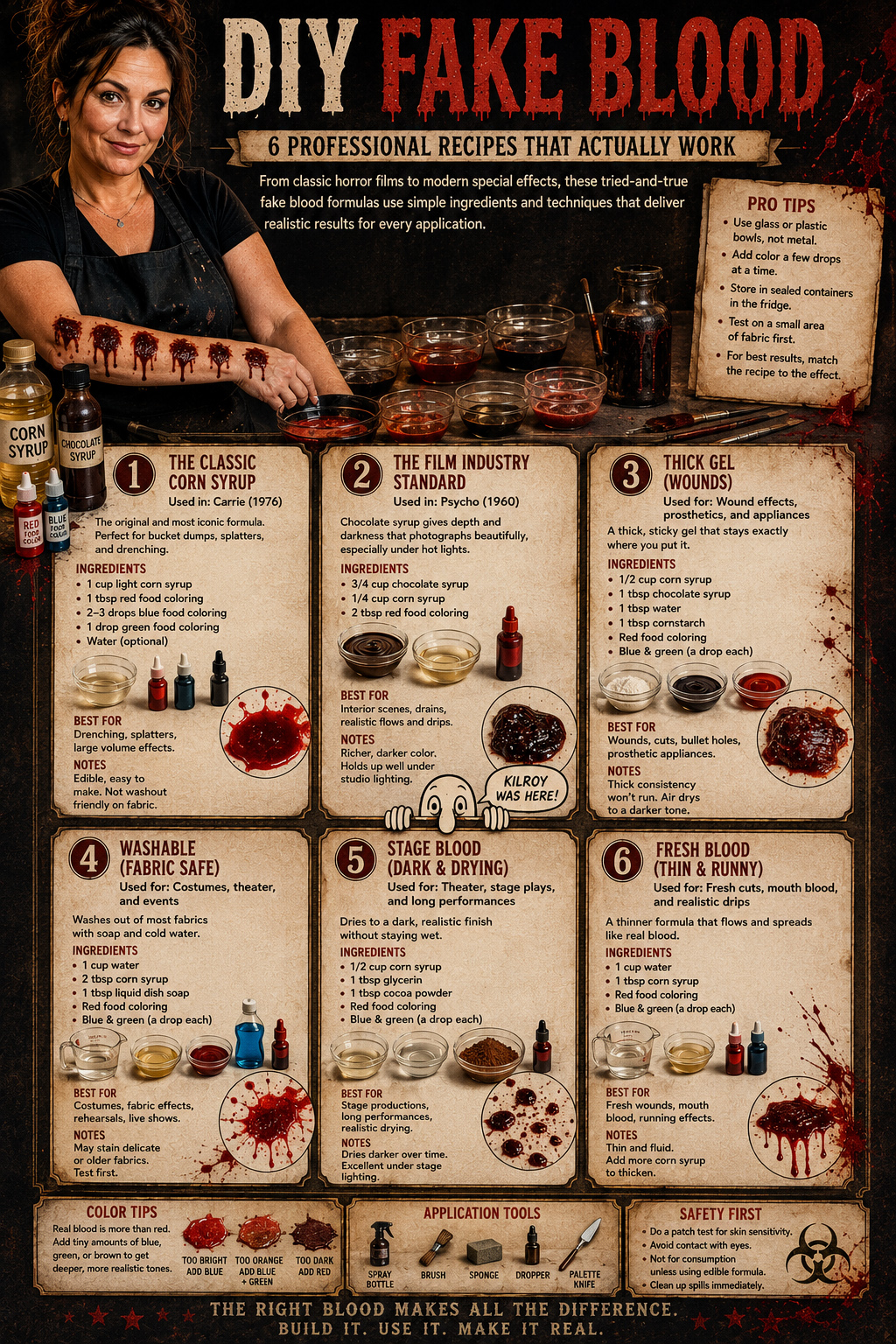
When a production needs fake blood that can be applied to fabric in a splatter or spray pattern and then photographed without the wet, shiny quality of a corn syrup formula, the powdered sugar base formula is the professional solution. This approach is used in productions where blood effects on clothing need to look like dried or partially dried blood rather than fresh liquid, and where the costume or wardrobe piece needs to be worn for an extended period without the blood formula remaining wet or tacky against the skin.
To make this formula, combine half a cup of powdered sugar with enough warm water to create a thin, pourable consistency, starting with two tablespoons and adding more as needed. Add red food coloring and a small amount of brown or black food coloring to reach a darker, more dried-blood tone. The powdered sugar base dries faster than corn syrup and leaves a matte finish rather than a shiny one, which reads as older blood rather than fresh blood. Apply it to fabric using a brush for controlled application or flick it from a loaded brush for a splatter effect. Let it dry completely before wearing the costume, which takes approximately twenty to thirty minutes depending on how thickly it was applied.
This formula washes out of most fabrics more easily than corn syrup formulas, though it will still leave a stain on light colors. It is the right choice for costume pieces where the blood effect needs to look like something that happened earlier rather than something happening now, which is the correct reading for most zombie costumes, murder victim costumes, and survivor horror looks.
🧟 The Makeup Effects Formula: Cream Cheese Gel Blood
Professional makeup effects artists working on productions that require blood to stay precisely in a wound appliance or around the edges of a latex prosthetic without migrating onto the surrounding skin use a cream cheese base formula that provides the right combination of density, color, and adhesion to stay exactly where it is placed. This formula is used in practical effects work on horror productions where liquid formulas would bleed outside the edges of a wound appliance and ruin the effect. The cream cheese base grips the surface it is applied to rather than flowing away from it.
To make this formula, soften two tablespoons of plain cream cheese to room temperature and mix it smooth. Add one tablespoon of corn syrup and blend thoroughly until the mixture is uniform with no lumps. Add red food coloring and a small amount of brown coloring, mixing after each addition until you reach the right tone. The finished formula should have a thick, paste-like consistency that holds a peak when lifted with a spatula and does not flow when the surface is tilted. Apply it with a small palette knife or a cotton swab for precision work around prosthetic edges, wound appliances, or detailed injury effects.
This is the right formula for any costume build in this series that involves a latex or foam latex prosthetic, including zombie applications, creature effects, and detailed wound makeup. It will not run under warm conditions the way thinner formulas will and it holds its color and consistency through an evening of wear better than any other formula in this article. It does not wash out of fabric easily and should be kept away from clothing.
🎃 The All-Purpose Party Formula: The Safe and Simple Mix
For Halloween parties, group costumes, children's costume events, and any application where the blood formula will be worn by someone who might come into contact with other people's clothing, furniture, or upholstery, the all-purpose formula built for easy cleanup and skin safety is the professional event standard. Haunted house attractions and Halloween entertainment venues that outfit dozens or hundreds of performers per season use simplified formulas specifically because they need to be applied quickly, look convincing under event lighting, and clean up without destroying costumes or venue surfaces.
To make this formula, combine half a cup of light corn syrup with two tablespoons of red food coloring and one tablespoon of liquid dish soap. The dish soap does two things. It helps the formula spread more evenly on skin and fabric, and it makes cleanup significantly easier at the end of the evening because the soap is already present in the formula. Add a small amount of brown food coloring to deepen the tone from bright red to a more realistic dark red. For a thinner consistency suitable for drip effects, add water a teaspoon at a time. For a thicker formula suitable for wound applications, add a teaspoon of cornstarch dissolved in warm water before mixing in the other ingredients.
This formula is the most versatile in this article and the most forgiving in application. It wipes away from skin easily, cleans up from most surfaces with warm water, and looks convincing under the range of lighting conditions encountered at a Halloween party. It is the right starting point for anyone building their first fake blood formula and the right choice for any application where easy cleanup is a priority.
🏆 Which Formula Is Right for Your Costume
The right fake blood formula depends on what you are building and where you are going to wear it. For zombie costumes and horror character builds where wound effects are part of the makeup, the cornstarch gel formula and the cream cheese gel formula are the right choices for the face and prosthetic work, with the splatter formula applied to clothing before the event and allowed to dry. For costume builds where the blood is decorative rather than wound-specific, the classic corn syrup formula or the all-purpose party formula are the right choices depending on how important easy cleanup is to you.
For photography and film work where the formula needs to read accurately under controlled lighting, the chocolate syrup base formula is the professional standard and the one most likely to produce results that look genuinely cinematic rather than theatrical. For children's costumes and family Halloween events, the all-purpose party formula with its dish soap component is the safest and most practical choice.
Every formula in this article can be made in under ten minutes from ingredients available at a grocery store. Every one of them has a verified professional application somewhere in the history of film, television, or theatrical production. Start with the one that fits your specific build, test it on a surface that does not matter before applying it to your costume, and adjust the consistency and color until it reads the way you need it to. The goal is always the same whether you are working on a Halloween costume or a film set. It should look real enough that someone looks twice, and then it should look real enough that they look a third time.
🕸️ Related Costumes to Try
DIY Vampire Look
DIY Zombie Nurse Costume
DIY Carrie Prom Queen Costume
DIY Butcher Costume