🎬 Sean Connery Biography: The Legendary Career That Changed Hollywood

Sean Connery emerged as one of the defining screen presences of the twentieth century, a performer whose authority, voice, and physical command reshaped the idea of the modern leading man. With a style that combined restraint, wit, and unmistakable confidence, he became an international symbol of sophistication and strength. His work reached audiences across generations and continents, establishing a standard for cinematic charisma that many later actors would attempt to match.
Sean Connery stands as one of the most influential actors in film history, best known for defining the role of James Bond in Dr. No (1962) and its groundbreaking sequels. Over a career spanning more than four decades, he combined charisma, intelligence, and authority in roles ranging from The Man Who Would Be King to The Untouchables. His performances helped shape the modern action hero while proving his range as a serious dramatic actor. Connery’s presence, voice, and commanding style made him a lasting symbol of cinematic sophistication.
At the center of Connery’s reputation was an ability to balance elegance with danger. On screen he projected intelligence and composure while suggesting a quiet readiness for action, a combination that proved irresistible to audiences and filmmakers alike. This blend of polish and toughness helped define the tone of an era in popular cinema and elevated the characters he portrayed into enduring cultural icons.
Beyond any single role, Connery’s career demonstrated remarkable staying power and range. Over decades he appeared in productions that spanned genres, historical periods, and filmmaking styles, yet his presence remained unmistakable. The voice, the posture, and the steady confidence became part of the actor’s legend, securing his place among the most recognizable and influential figures in film history.
Sean Connery didn’t just play James Bond. He defined the character so completely that every actor who followed had to measure themselves against the standard he created.
👶 Early Life
Summary: His early life reflected modest beginnings that shaped the discipline and confidence later seen throughout his film career.
Sean Connery was born on August 25, 1930. His arrival came during a difficult economic period, and the circumstances of his birth reflected the working-class world that shaped many figures of his generation. From the beginning, his life unfolded in a practical environment where hard work and discipline were everyday expectations rather than abstract ideals.
His family lived modestly, and daily life revolved around ordinary routines familiar to countless households of the time. The culture surrounding him valued reliability, loyalty, and physical toughness, traits that later observers often noted in his public persona. Those early surroundings quietly formed the foundation of the steady confidence that audiences would later recognize on screen.
As a young man, Connery moved through a variety of jobs before the entertainment world ever entered the picture. The experience exposed him to different social circles and demanded adaptability, resilience, and independence. These formative years, lived far from the spotlight, created the grounded character that remained a defining feature of Sean Connery throughout his long career.
Explore the Biographies of Iconic Celebrities
Sean Connery once competed in the Mr. Universe bodybuilding contest in the early 1950s, finishing among the top finalists before pursuing acting.
🎬 Film Career
Summary: Connery’s film career spanned dozens of major productions including Dr. No, Goldfinger, The Untouchables, and The Hunt for Red October.
Sean Connery’s film career began to gain momentum during the late 1950s with supporting roles that introduced his commanding screen presence to wider audiences. One of his earliest notable appearances came in No Road Back (1957), followed by roles in Hell Drivers (1957) and Another Time, Another Place (1958). These early projects allowed Connery to develop a reputation as a reliable and physically convincing performer. During this period he also appeared in Darby O'Gill and the Little People (1959), a Walt Disney fantasy film that showed a different side of his personality and helped expand his visibility with international audiences.
Everything changed in 1962 when Connery was cast as the secret agent James Bond in Dr. No (1962). The film introduced a new kind of cinematic hero cool, confident, and stylish and Connery’s portrayal immediately captured the imagination of audiences around the world. The success of Dr. No (1962) was followed by From Russia with Love (1963), a sequel widely praised for its suspense and sophisticated tone. Connery’s performance established the character as a cultural phenomenon and helped launch one of the most successful franchises in film history.
The Bond series expanded rapidly with Goldfinger (1964), which became one of the defining films of the decade. Its blend of humor, spectacle, and espionage cemented Connery’s place as a global star. He returned in Thunderball (1965), a large-scale production that broke box office records and further elevated the popularity of the series. By this point Connery had become inseparable from the Bond image, an association that would follow him for the rest of his career.
Connery continued the role with You Only Live Twice (1967) before briefly stepping away from the character. During this time he pursued other projects that demonstrated his range as an actor. Among these were The Hill (1965), a stark military drama directed by Sidney Lumet, and Marnie (1964), directed by Alfred Hitchcock and co-starring Tippi Hedren. These performances proved that Connery could succeed outside the Bond formula and work effectively with some of the most respected directors in cinema.
Despite initially leaving the series, Connery returned to the role once more in Diamonds Are Forever (1971). The film marked his official farewell to the Eon Productions Bond series at that time, though audiences would later see him reprise the character in Never Say Never Again (1983), a separate production that revisited the famous spy with an older, more experienced interpretation.
Throughout the 1970s Connery focused on diverse roles that strengthened his reputation as a serious dramatic actor. He appeared in The Anderson Tapes (1971), a crime thriller set in New York, and the adventure film The Wind and the Lion (1975). One of his most respected performances came in The Man Who Would Be King (1975), directed by John Huston and co-starring Michael Caine. The film has since become regarded as a classic adventure story and remains one of the most admired entries in Connery’s filmography.
The following decade continued to bring strong roles. Connery appeared in the science-fiction fantasy Zardoz (1974) earlier in the decade and later starred in Outland (1981), a space-set thriller often compared to classic Westerns in tone. In 1986 he played a pivotal role in The Name of the Rose (1986), portraying the intelligent monk William of Baskerville in a film adaptation of Umberto Eco’s novel. His performance was widely praised and earned several international awards.
One of the most important moments of Connery’s later career came with The Untouchables (1987). In the film he portrayed Irish-American lawman Jim Malone alongside Kevin Costner and Robert De Niro. The performance earned Connery the Academy Award for Best Supporting Actor and confirmed his standing as one of the most respected performers of his generation.
During the late 1980s and early 1990s Connery continued appearing in major productions, including Indiana Jones and the Last Crusade (1989), where he played the father of Harrison Ford’s famous adventurer. The role revealed a warm comedic side that audiences embraced. He followed this success with films such as The Hunt for Red October (1990), where he portrayed Soviet submarine captain Marko Ramius, and Robin Hood: Prince of Thieves (1991), in which he made a memorable cameo as King Richard.
Connery remained active through the 1990s with high-profile roles in Rising Sun (1993), Just Cause (1995), Dragonheart (1996), and The Rock (1996), the latter becoming one of the decade’s most successful action films. In 1999 he appeared in the stylish caper film Entrapment (1999) opposite Catherine Zeta-Jones, demonstrating that his screen presence remained as compelling as ever.
His final major screen appearance came with The League of Extraordinary Gentlemen (2003), an ambitious comic-book adaptation in which Connery played the legendary adventurer Allan Quatermain. Although the film received mixed reactions, it marked the end of a film career that had spanned more than four decades.
Across dozens of films, Sean Connery built a legacy defined by authority, wit, and unmistakable charisma. From international spy adventures to historical epics and character-driven dramas, his performances left a lasting mark on the history of cinema.
Despite being famous for playing a British spy, Connery remained proudly Scottish and spoke with his natural accent in nearly all of his films.
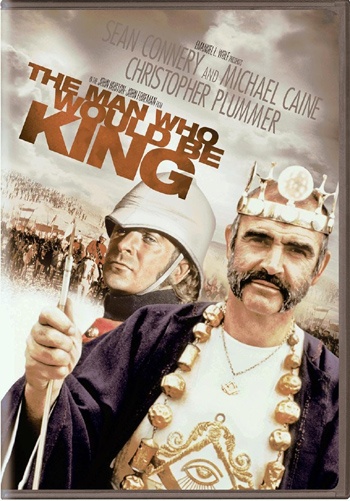
The Man Who Would Be King (DVD)
Product Description:
Academy Award winners Sean Connery and Michael Caine star in director John Huston’s sweeping adventure epic The Man Who Would Be King. Based on the classic story by Rudyard Kipling, the film follows two bold adventurers seeking fortune and glory beyond the edges of the British Empire.
Film Overview:
Writer Rudyard Kipling, portrayed by Christopher Plummer, recounts the incredible tale of two soldiers of fortune—Daniel Dravot (Sean Connery) and Peachy Carnehan (Michael Caine). The pair set out on a dangerous expedition into the remote mountains of Afghanistan, hoping to carve out wealth and power far from civilization.
The Adventure Unfolds:
As the two Englishmen conquer tribes and display astonishing bravery in battle, the local people begin to believe they are divine rulers. Dravot and Carnehan suddenly find themselves treated as kings, surrounded by riches and power. Yet the illusion proves fragile. When Dravot becomes convinced he is the reincarnation of Alexander the Great, his growing arrogance leads to a dramatic and tragic downfall once the truth about their mortality is revealed.
Why This Film Matters:
Released in 1975, The Man Who Would Be King is widely regarded as one of the greatest adventure films ever made. Director John Huston combines sweeping landscapes, sharp humor, and powerful storytelling while Connery and Caine deliver unforgettable performances filled with friendship, ambition, and hubris.
Starring:
• Sean Connery as Daniel Dravot
• Michael Caine as Peachy Carnehan
• Christopher Plummer as Rudyard Kipling
🧑 Personal Life, Taxes, and Politics
Summary: Outside of film, Connery maintained a private personal life while publicly supporting Scottish independence.
Sean Connery’s personal life remained largely private despite his international fame. He married actress Diane Cilento in 1962, and the couple had one son, actor Jason Connery. The marriage ended in divorce in 1973. Connery later married French-Moroccan painter Micheline Roquebrune in 1975, and the two remained together for the rest of his life. Known for valuing privacy, Connery often avoided the celebrity social circuit and preferred spending time away from the Hollywood spotlight.
In later years Connery lived primarily outside the United Kingdom, spending extended periods in Spain and the Bahamas. His residence abroad occasionally drew attention in discussions surrounding taxation, particularly because he had spent much of his career working internationally while maintaining a relatively private financial profile. Like many globally successful actors of his generation, his finances and tax status sometimes became subjects of public discussion in the press, though Connery himself rarely commented extensively on such matters.
Connery was also known for his political views, particularly his strong support for Scottish independence. A proud Scotsman throughout his life, he openly backed the Scottish National Party and was a visible advocate for greater political autonomy for Scotland. His public support included financial contributions and participation in political campaigns related to Scottish self-governance.
Despite these political interests, Connery generally avoided becoming deeply involved in day-to-day political debate. His advocacy centered primarily on cultural pride and national identity rather than broader political office or policy roles. In this respect, his public stance reflected a lifelong attachment to Scotland and a belief that the country should have greater control over its own political future.
🕊️ Later Years
Summary: In his later years, Sir Sean Connery retired from acting, leaving behind one of the most recognizable legacies in cinema.
During the later decades of his life, Sean Connery gradually stepped away from regular film work while remaining one of the most recognizable figures in cinema. By the early 2000s he had effectively retired from acting, choosing to focus on private life rather than new screen roles. His final film appearance came in The League of Extraordinary Gentlemen (2003), after which he declined numerous offers to return to the screen.
In recognition of his contributions to film and culture, Connery was knighted in 2000. The honor was formally bestowed by Queen Elizabeth II during a ceremony at the Palace of Holyroodhouse in Edinburgh, Scotland. From that point forward he was widely known as Sir Sean Connery, a title that reflected both his international fame and his status as one of Scotland’s most celebrated cultural figures.
Connery spent much of his retirement living quietly in the Bahamas with his wife, Micheline Roquebrune. Although he remained largely out of the public eye, his legacy in film continued to be celebrated by critics, filmmakers, and audiences around the world. His portrayal of James Bond and his later dramatic roles ensured that his work remained widely viewed long after his retirement.
Sir Sean Connery died on October 31, 2020, at the age of 90. News of his passing prompted tributes from across the film industry and beyond, with many recognizing him as one of the most influential actors of the twentieth century. His career, spanning more than four decades, left an enduring mark on cinema and secured his place among the great legends of the screen.
Sean Connery was not the first choice to play James Bond. Author Ian Fleming initially opposed the casting, but after seeing Connery’s performance in Dr. No he later admitted the actor perfectly captured the character.
🏆 Legacy
Sean Connery’s legacy rests on a rare combination of star power, longevity, and cultural influence. His portrayal of James Bond beginning with Dr. No (1962) did more than launch a successful film series. It established the template for the modern cinematic spy: confident, intelligent, physically capable, and unmistakably stylish. Later actors who played the role inherited a character that Connery had already defined for audiences worldwide.
Beyond Bond, Connery proved himself as a versatile actor capable of moving between genres with ease. Performances in films such as The Man Who Would Be King (1975), The Name of the Rose (1986), The Untouchables (1987), Indiana Jones and the Last Crusade (1989), and The Hunt for Red October (1990) demonstrated his ability to command the screen in both leading and supporting roles. His Academy Award for The Untouchables (1987) confirmed what many critics had long argued: that Connery’s talent extended far beyond the famous spy who made him a household name.
Sean Connery also became a symbol of Scottish pride on the international stage. Throughout his life he remained strongly connected to Scotland, often speaking about its culture and identity while supporting political efforts related to Scottish self-government. His knighthood in 2000 recognized not only his achievements in film but also his broader cultural influence.
Even after his retirement from acting, Connery’s work continued to shape how audiences think about screen heroes and cinematic charisma. His distinctive voice, commanding presence, and unmistakable confidence remain part of film history. Decades after his first appearance on screen, Sean Connery is still remembered as one of the most influential and iconic actors of the twentieth century.
🗣️ WHY THEY STILL MATTER
Sean Connery’s influence still echoes through modern cinema. The confident, intelligent action hero that dominates film today owes much to the template he created in the James Bond series. Beyond that single role, his later performances proved that a major star could successfully evolve into complex dramatic characters, helping redefine what longevity in Hollywood could look like.
Further Reading & Resources
📖 Read: Sean Connery | Biography, Films, & Facts | Britannica
🔍 Explore: Sean Connery Biography: Early Life, Career, and Achievements