The 5 Best Horror FX Artists from Hollywood Movies

Before computers could paint blood onto a screen, horror movies needed real artists with real rubber, real foam latex and gallons of fake gore. These are the 5 best horror FX artists, the craftspeople who turned latex, paint and sheer nerve into the nightmares we still talk about. Their work was built by hand and filmed right in front of the camera. Decades later, it still makes audiences squirm.
Why Practical Horror Effects Still Matter
Modern horror leans heavily on computer effects. Digital blood, digital monsters and digital wounds are fast, flexible and easy to fix. Yet many fans still prefer the old way. There is something about a practical effect that the eye simply believes.
A practical effect is physically there on set. The actor can touch it, react to it and be covered in it. Lighting hits it the way it hits everything else in the room. That weight and texture are hard to fake, and audiences can feel the difference even when they cannot explain it.
The artists on this list built their careers in that hands on world. They sculpted, molded, painted and rigged their creations one piece at a time. Several of them changed how movies were made. All of them left behind images that horror fans will never forget.
How We Picked the 5 Best Horror FX Artists
Ranking artists is always a little unfair. Every fan has a favorite, and every list leaves someone out. For this one, we looked at four things.
First, we looked at landmark horror work, the scenes that changed the genre. Second, we considered influence on other artists. Third, we counted lasting recognition, from Academy Awards to fan devotion. Finally, we asked a simple question. Do people still talk about the effects today?
The result is a list that runs from the 1970s to the streaming era. It covers possession, werewolves, zombies, shape shifting aliens and the walking dead. It also traces a family tree, because many of these artists learned from one another.
How Practical Horror Effects Were Made
Before meeting the artists, it helps to know what their job looked like. A typical makeup effect started with a life cast. The artist covered an actor’s face or body in molding material to capture every detail.
From that cast, the artist sculpted the new feature in clay. It might be a wound, a demon face or a rotting zombie cheek. Then a mold was made from the sculpture. Foam latex, gelatin or other materials were poured into the mold to create a soft, flexible piece.
The finished piece was glued to the actor and painted to blend with real skin. A complex makeup could take hours to apply every shooting day. Creatures and transformations often needed puppets, cables, air bladders and teams of puppeteers hidden just out of frame.
Then there was the blood. Effects artists mixed their own recipes and rigged tubes and pumps to deliver it on cue. Getting a gush to look real on camera was an art all its own. The 5 best horror FX artists mastered every part of this process, often on tight budgets and tighter schedules.
1. Dick Smith: The Godfather of Makeup
Any list of great horror effects artists has to start with Dick Smith. Known as the “Godfather of Makeup,” he shaped the entire field. Many of the methods used to apply prosthetics to faces today were developed by Smith, according to his protégé Rick Baker.
Smith worked in television before moving into film. His work on The Godfather gave Marlon Brando his famous jowls. Horror fans, however, know him best for The Exorcist in 1973. Smith turned young Linda Blair into a possessed child, and the effects stunned audiences.
Rick Baker later called The Exorcist a real turning point for makeup effects. The film showed that makeup could do far more than make actors look scary or old. It could tell a story, build dread and change how a whole film felt.
Smith’s horror and fantasy credits also include Altered States and Scanners. He won an Academy Award for the aging makeup in Amadeus. In 2011, he received an honorary Oscar for his lifetime of work. He was the first makeup artist ever to receive that honor.
Smith was famous for his generosity too. He shared his techniques freely and mentored many younger artists, including Rick Baker. He died in 2014 at age 92. His influence can be seen in nearly every prosthetic effect made since.
2. Rick Baker: The Werewolf That Won the First Oscar
If Dick Smith was the godfather, Rick Baker was his most famous student. Baker assisted Smith on The Exorcist. While still on that job, he was hired to create the monstrous baby for Larry Cohen’s 1974 horror film It’s Alive.
Baker’s true breakthrough came with An American Werewolf in London in 1981. Its transformation scene showed a man turning into a wolf in full light, bone by bone and stretch by stretch. There were no cutaways to hide the trick. Audiences had never seen anything like it.
That scene made history. When the Academy created a new Oscar for Best Makeup, Baker won the very first one for American Werewolf. Director John Landis then hired him to create the ghouls and werecat for Michael Jackson’s Thriller video.
Baker went on to win a record seven Academy Awards for makeup from a record eleven nominations. His wins include Harry and the Hendersons, Ed Wood, The Nutty Professor, Men in Black, How the Grinch Stole Christmas and The Wolfman. He also made and wore the gorilla suit in the 1976 King Kong.
There is a fun bit of horror history in that first win too. Baker’s Oscar for American Werewolf was presented to him by horror legend Vincent Price. It was a fitting handoff from one generation of monster movies to the next.
Baker retired in 2015. He said computer effects had taken away much of the animatronics and makeup work he loved. His career remains the gold standard for monster makers everywhere.
3. Tom Savini: The Godfather of Gore
No one is more closely tied to splatter than Tom Savini. Fans call him the Godfather of Gore, and the title fits. His effects helped define the look of American horror in the late 1970s and 1980s.
Savini’s path was unusual. He served as a combat photographer during the Vietnam War. His job was photographing damage to machines and people. He has said that experience shaped how he thought about realistic wounds on screen.
Savini found his big break with Pittsburgh filmmaker George A. Romero. Dawn of the Dead, released in 1978, gave him a bigger budget and room to create his signature bite marks and severed limbs. He also did stunts and played the biker Blades in the film.
He then created the shocking effects for the original Friday the 13th in 1980. That film is often credited with kick starting the slasher boom. Savini returned for Friday the 13th: The Final Chapter in 1984, where he got to kill off Jason, the character he helped create.
His credits read like a horror fan’s shopping list. They include Creepshow, Day of the Dead, Maniac, The Burning, Monkey Shines and The Texas Chainsaw Massacre 2. He won a Saturn Award for his work on Day of the Dead.
Savini has also acted, directed and taught. In 2000, he launched his Special Make-Up Effects Program at Douglas Education Center in Pennsylvania. That school has trained a new generation of effects artists.
His acting career is a treat for fans as well. He played the memorable Sex Machine in From Dusk Till Dawn. He also directed the 1990 remake of Night of the Living Dead, bringing his career full circle with Romero’s zombies.
4. Rob Bottin: The Young Genius Behind The Thing
Rob Bottin may be the least famous name on this list, but his work is some of the most jaw dropping ever filmed. As a teenager, he sent drawings to Rick Baker. Baker was impressed and brought him into the business.
Bottin’s first major horror showcase was The Howling in 1981. Its werewolf transformation hit theaters a few months before his mentor’s famous scene in An American Werewolf in London. The student had beaten the teacher to the screen.
Then came John Carpenter’s The Thing in 1982. Bottin was only about 22 years old during production. He created a shape shifting alien that bursts, splits and melts into things no one had imagined. Heads sprout legs, chests open into jaws and bodies twist into impossible shapes.
The Thing got a rough reception when it opened, and some critics found it too gross. Over the years, it became a classic. Today, its creature effects are often named among the greatest practical effects ever made.
Bottin kept pushing the craft. He built the RoboCop suit and created effects for Total Recall, which earned him a Special Achievement Academy Award. He also worked on Legend, Se7en and Fight Club. Every one of those projects carries his fearless touch.
5. Greg Nicotero: From Day of the Dead to The Walking Dead
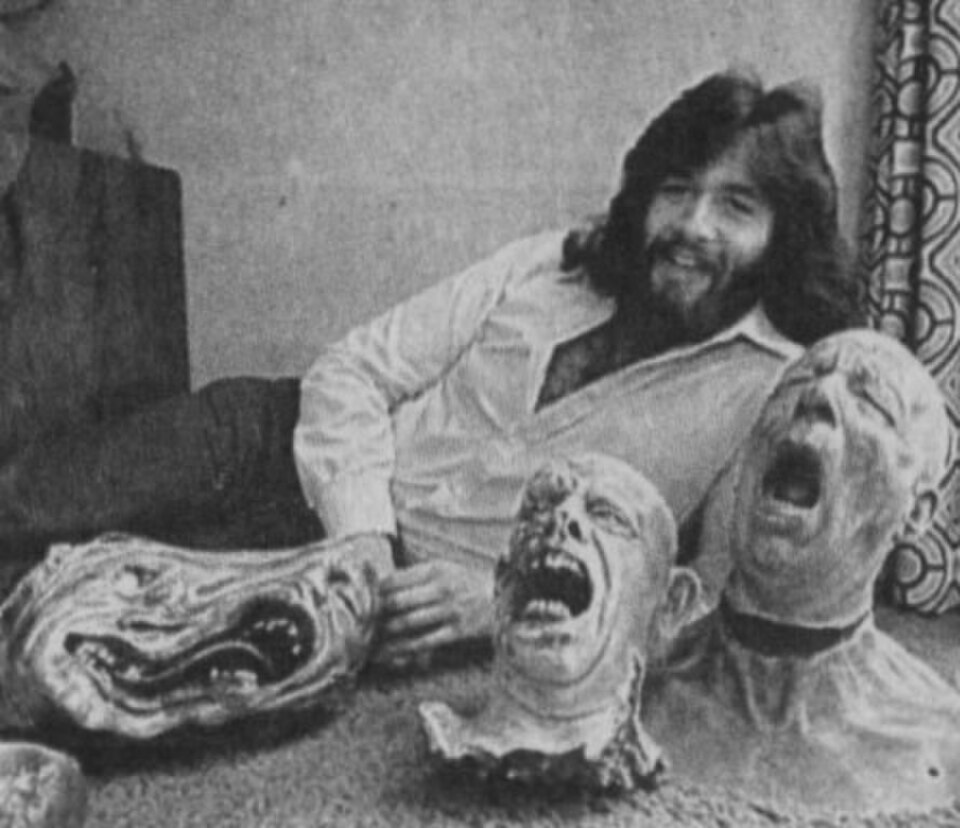
Greg Nicotero connects the golden age of practical effects to the streaming era. He has said his interest in effects began after seeing Jaws. Few artists have worked on as many horror projects in as many different eras.
Nicotero grew up in Pittsburgh and got his start on George A. Romero’s Day of the Dead in 1985. He learned the craft under Tom Savini and even appeared on screen as a soldier.
On that same set, Nicotero met Howard Berger. In 1988, Nicotero, Berger and Robert Kurtzman founded KNB EFX Group, named for the initials of their last names. The studio grew into one of the busiest effects houses in Hollywood.
KNB has worked on hundreds of film and television projects. Its horror credits include Evil Dead II and Land of the Dead, Romero’s later zombie film. The studio also won an Academy Award for its makeup work on The Chronicles of Narnia.
Nicotero’s best known work came on AMC’s The Walking Dead. Starting in 2010, he brought Romero style zombies to weekly television. Under his watch, the show’s walkers became some of the most detailed zombies ever filmed.
He did not stop at makeup. Nicotero became an executive producer and directed dozens of episodes of The Walking Dead. He also supervised effects on Fear the Walking Dead. In many ways, he carries on the tradition Savini and Romero started in Pittsburgh.
Honorable Mentions
Five names cannot cover a whole art form. Several other artists could easily have made this list.
Stan Winston built some of the most famous creatures in movie history. His work includes The Terminator, Aliens and Predator. He also directed the horror film Pumpkinhead.
John Carl Buechler directed Friday the 13th Part VII: The New Blood and gave Jason one of his most gruesome looks. He also directed Troll, created creatures for Ghoulies and designed makeup effects for A Nightmare on Elm Street 4 and Halloween 4.
Howard Berger, Nicotero’s longtime KNB partner, deserves his own spotlight too. So do many talented artists who worked behind the scenes on countless horror films without ever becoming household names.
Where to See Their Work on DVD
The best way to appreciate these artists is to watch their work, ideally on a quiet night with the lights off. Many of these films are easy to find on DVD and Blu-ray. Special editions often include behind the scenes footage of the effects being built.
Here is a starter list of practical effects classics to look for:
- The Exorcist (1973), Dick Smith
- Dawn of the Dead (1978), Tom Savini
- Friday the 13th (1980), Tom Savini
- The Howling (1981), Rob Bottin
- An American Werewolf in London (1981), Rick Baker
- The Thing (1982), Rob Bottin
- Day of the Dead (1985), Tom Savini and Greg Nicotero
- Evil Dead II (1987), future KNB founders
Watching these films back to back is a crash course in horror history. You can see techniques being invented, borrowed and improved from one film to the next. You can also see why so many fans still prefer rubber and latex to pixels.
Stop by the shop and dig through the DVD bins. A practical effects classic is the perfect way to spend a dark and stormy night.
Why the 5 Best Horror FX Artists Still Matter
The 5 best horror FX artists did more than scare audiences. They built a craft. Dick Smith developed the methods. Rick Baker proved makeup deserved its own Oscar. Tom Savini made gore feel terrifyingly real. Rob Bottin showed there were no limits. Greg Nicotero carried the tradition into a new century.
Their story is also a story of mentors and students. Smith taught Baker. Baker encouraged Bottin. Savini trained Nicotero. Each generation handed its secrets to the next, and horror movies were better for it.
That chain still runs today. Savini’s school keeps training new artists. Young fans still study these films frame by frame, trying to figure out how a head exploded or a wolf grew a snout. The craft lives on because the work was too good to forget.
Computer effects will keep improving, and that is fine. But there will always be a place for monsters you could reach out and touch. Thanks to these artists, the best of those monsters are still waiting on the shelf, ready to give you nightmares all over again.