Mickey Rooney Biography: Incredible 88 Year Career
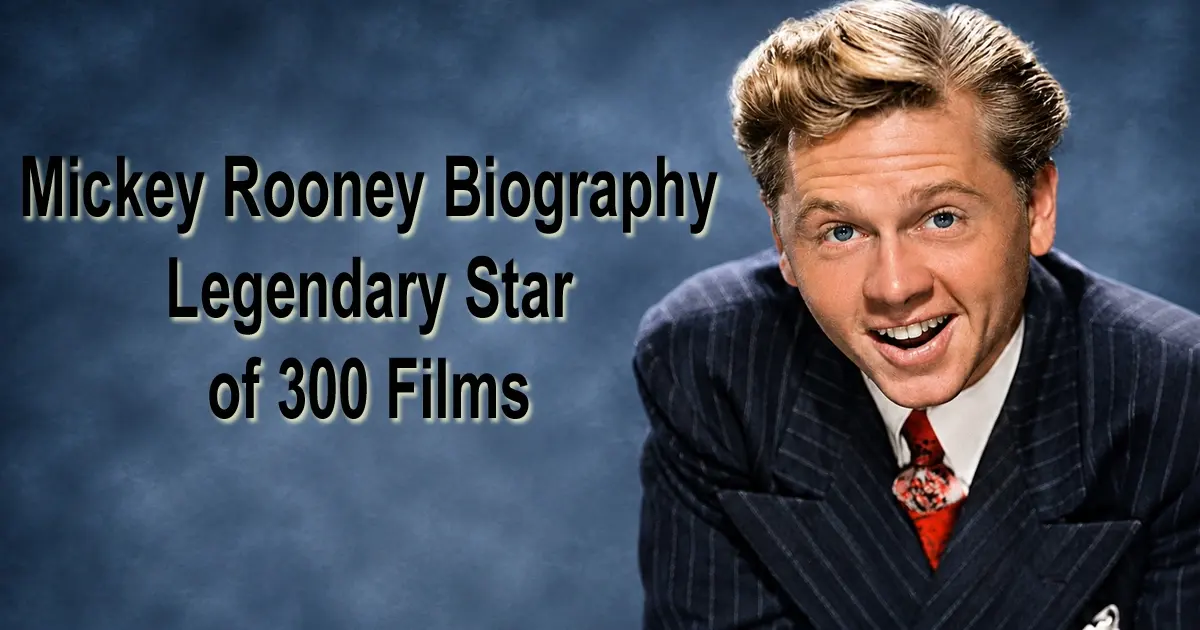
Mickey Rooney was one of the most extraordinary performers in the history of American entertainment, a man whose career stretched across nearly nine decades and more than three hundred films. Beginning in vaudeville as a toddler and appearing in his first film during the silent era, he became the biggest box office star in the world as a teenager, then spent the rest of his long life reinventing himself again and again through film, television, radio, Broadway, and the touring stage. He was among the last surviving stars of the silent film era and worked until weeks before his death.
Mickey Rooney (September 23, 1920, to April 6, 2014) was an American actor and entertainer whose career spanned nearly nine decades and more than 300 films, from silent era shorts to Night at the Museum: Secret of the Tomb (2014). He was Hollywood’s top box office star from 1939 to 1941, famed for playing Andy Hardy in sixteen films and for musicals with Judy Garland such as Babes in Arms. He received four Academy Award nominations, a Juvenile Academy Award, and an Honorary Academy Award, won an Emmy and Golden Globe for Bill (1981), and earned a Tony nomination for Sugar Babies. His later films included The Black Stallion and Silent Night, Deadly Night 5: The Toy Maker.
As a performer, Rooney was defined by boundless energy and astonishing versatility. He could sing, dance, play instruments, clown, and break hearts, often in the same picture, and he moved effortlessly between broad comedy, splashy musicals, and serious drama. Fellow actors and directors regarded him with awe. Laurence Olivier counted him among the greatest actors he had ever seen, and director Clarence Brown called him the closest thing to a genius he had ever worked with.
To the public, Rooney embodied both the brightest and the most turbulent sides of Hollywood fame. As Andy Hardy he became the idealized American teenager, and with Judy Garland he formed one of the most beloved screen partnerships of all time. His later life was marked by eight marriages, financial ruin, and family heartbreak, yet he always bounced back. His endurance came from an irrepressible love of performing and a resilience that made him, in many ways, the ultimate survivor of show business.
At the height of Andy Hardy mania, MGM boss Louis B. Mayer grew so worried about teenage Mickey Rooney’s offscreen behavior that he grabbed the young star by the lapels and lectured him: “You’re Andy Hardy! You’re the United States!” Rooney promised to behave. Decades later, he said those clashes with Mayer helped shape him into a true star.
👶 Early Life
Summary: Born Joe Yule Jr. in Brooklyn in 1920 to vaudeville parents, Rooney performed as a toddler and became a child star in the Mickey McGuire short films.
🎭 Born Into Vaudeville
Mickey Rooney was born Ninnian Joseph Yule Jr. on September 23, 1920, in Brooklyn, New York. He was the only child of two vaudeville performers. His father, Joe Yule, was a Scottish born comedian who had come to New York from Glasgow as an infant, and his mother, Nellie W. Carter, was a former chorus girl and burlesque performer from Kansas City, Missouri. The family lived in the Greenpoint neighborhood of Brooklyn, and when their son was born, his parents were appearing together in a Brooklyn production of A Gaiety Girl.
🤵 A Performer at 17 Months
Joe Jr. grew up backstage. According to his memoirs, he made his first stage appearance at just seventeen months old as part of his parents’ act, wearing a specially tailored miniature tuxedo. From that moment on, performing was the only life he ever knew.
🌴 Moving to Hollywood
His parents separated in 1924, when he was four, and the following year his mother moved with him to Hollywood in search of film work. He enrolled at the Hollywood Professional School, which served young performers, and later attended Fairfax High School in Los Angeles.
🎬 First Film
At the age of six, the boy made his film debut in the 1926 short Not to Be Trusted (1926), playing a small part. Bit roles followed in feature films, allowing him to work alongside stars such as Clark Gable, Jean Harlow, John Wayne, and Douglas Fairbanks Jr.
🧢 Mickey McGuire
His mother saw an advertisement for a child to play the tough little hero of a series of comedy shorts based on the Toonerville Folks comic strip by Fontaine Fox. Joe Jr. won the role and became Mickey McGuire, starring in seventy eight short films between 1927 and 1936, beginning with Mickey’s Circus (1927). The series made him a popular child star, but a legal dispute with the comic strip’s owners eventually barred him from using the McGuire name. He adopted the stage name Mickey Rooney, which he would carry for the rest of his life.
Explore the Biographies of Iconic Celebrities
🎖️ World War II Service
Summary: Rooney served nearly two years in the U.S. Army, entertaining more than two million troops and earning the Bronze Star.
🪖 Drafted Into the Army
In June 1944, at the height of his fame, Rooney was inducted into the United States Army. He served more than twenty one months, until shortly after the end of World War II.
🚙 Entertaining the Troops
Rooney was assigned to Special Services, performing in the traveling “Jeep Shows” that brought entertainment directly to soldiers in the United States and Europe, often close to the front lines. He also worked as a radio personality on the American Forces Network. Over the course of his service, he entertained more than two million troops.
🥉 The Bronze Star
Rooney was awarded the Bronze Star Medal for entertaining troops in combat zones. He also received the Army Good Conduct Medal, the American Campaign Medal, the European African Middle Eastern Campaign Medal, and the World War II Victory Medal.
During his years as a child star in the Mickey McGuire comedies, Rooney briefly provided the voice of Oswald the Lucky Rabbit for Walter Lantz Productions, the cartoon character originally created by Walt Disney.
🎬 Film and TV Career
Summary: From Boys Town and National Velvet to The Black Stallion, Bill, and Silent Night, Deadly Night 5: The Toy Maker, Rooney worked in every era and genre.
🧚 A Midsummer Night’s Dream (1935)
At fourteen, Rooney played the mischievous sprite Puck in a stage production of Shakespeare’s A Midsummer Night’s Dream and then in Warner Bros.’ lavish film version, A Midsummer Night’s Dream (1935), directed by Max Reinhardt and William Dieterle. James Cagney played Bottom and Olivia de Havilland played Hermia. Rooney’s wild, cackling, otherworldly Puck astonished audiences, and critic David Thomson later called it one of cinema’s most arresting pieces of magic.
⛵ Captains Courageous (1937)
After signing with MGM, Rooney appeared in Victor Fleming’s seafaring drama Captains Courageous (1937), starring Spencer Tracy and Freddie Bartholomew, playing Dan Troop, the young son of the captain of a Gloucester fishing schooner.
🏠 Boys Town (1938)
Rooney’s breakthrough as a dramatic actor came in Norman Taurog’s Boys Town (1938), opposite Spencer Tracy as Father Edward Flanagan, the real life priest who founded a home for troubled and homeless boys in Nebraska. Rooney played Whitey Marsh, a cocky young delinquent who arrives with a chip on his shoulder and is gradually redeemed. His performance, swaggering, tough, and ultimately heartbreaking, made him a star. Tracy won the Academy Award for Best Actor, and the film became Louis B. Mayer‘s favorite of his MGM years.
💡 Young Tom Edison (1940)
Rooney played the inventor Thomas Edison as a boy in Norman Taurog’s biographical drama Young Tom Edison (1940). His restrained, thoughtful performance earned praise, and he appeared on the cover of Time magazine to coincide with the film’s release.
📬 The Human Comedy (1943)
In Clarence Brown‘s adaptation of William Saroyan‘s The Human Comedy (1943), Rooney played Homer Macauley, a sensitive teenage telegram messenger in a small California town who must deliver news of soldiers’ deaths to their families during World War II. His moving performance earned him his second Academy Award nomination for Best Actor.
🐎 National Velvet (1944)
Rooney reunited with Clarence Brown for National Velvet (1944), playing Mi Taylor, a troubled former jockey who helps a horse crazy English girl, played by the young Elizabeth Taylor, train her horse to run in the Grand National steeplechase. The film became a beloved family classic and launched Taylor to stardom.
🥊 Postwar Films
Returning from the war, Rooney found it difficult to win the roles he once had. Too old to play teenagers and, at about five feet two inches tall, too short for most leading men, he took on a series of tougher roles in low budget films, including the boxing drama Killer McCoy (1947). He played the songwriter Lorenz Hart in the musical biography Words and Music (1948), which paired him with Judy Garland for the final time on film. In The Fireball (1950), he played a roller skating champion opposite a young Marilyn Monroe.
🚁 The Bridges at Toko Ri (1954)
In Mark Robson‘s Korean War drama The Bridges at Toko Ri (1954), starring William Holden and Grace Kelly, Rooney played Mike Forney, a cocky, green top hatted Navy helicopter rescue pilot. His colorful supporting performance helped revive his career.
🪖 The Bold and the Brave (1956)
Rooney earned his third Academy Award nomination, his first for Best Supporting Actor, for the World War II drama The Bold and the Brave (1956), directed by Lewis R. Foster, playing Dooley, a wisecracking, gambling infantryman in Italy. His long, improvised craps game scene became the film’s most celebrated sequence.
🔫 Baby Face Nelson (1957)
In Don Siegel‘s gritty crime film Baby Face Nelson (1957), Rooney played the notorious 1930s gangster Lester Gillis, known as Baby Face Nelson. His explosive, menacing performance as the volatile killer showed a dark side audiences had never seen, and critics later praised it as one of his finest dramatic achievements.
📺 The Mickey Rooney Show and The Comedian
Rooney starred in his first television series, The Mickey Rooney Show (1954 to 1955), also known as Hey, Mulligan, created by Blake Edwards, which ran for thirty two episodes on NBC. In 1957 he gave a celebrated live performance as a monstrous, egomaniacal television comedian in The Comedian, a ninety minute drama for Playhouse 90 written by Rod Serling and directed by John Frankenheimer.
🎬 Directing
Rooney also tried his hand at directing. He made his directorial debut with My True Story (1951), starring Helen Walker, and directed and starred in the comedy The Private Lives of Adam and Eve (1960).
🍳 Breakfast at Tiffany’s (1961)
Rooney played Mr. Yunioshi, Holly Golightly’s Japanese upstairs neighbor, in Blake Edwards‘s Breakfast at Tiffany’s (1961), starring Audrey Hepburn. In later decades the performance was widely criticized as an offensive racial caricature. Rooney said that he would never have taken the role had he known it would hurt people.
🥊 Requiem for a Heavyweight (1962)
In Ralph Nelson‘s film adaptation of Rod Serling‘s Requiem for a Heavyweight (1962), Rooney played Army, the devoted cut man and trainer of a washed up boxer played by Anthony Quinn, with Jackie Gleason as the boxer’s manager. His tender, understated performance was one of the finest of his career.
🚗 It’s a Mad, Mad, Mad, Mad World (1963)
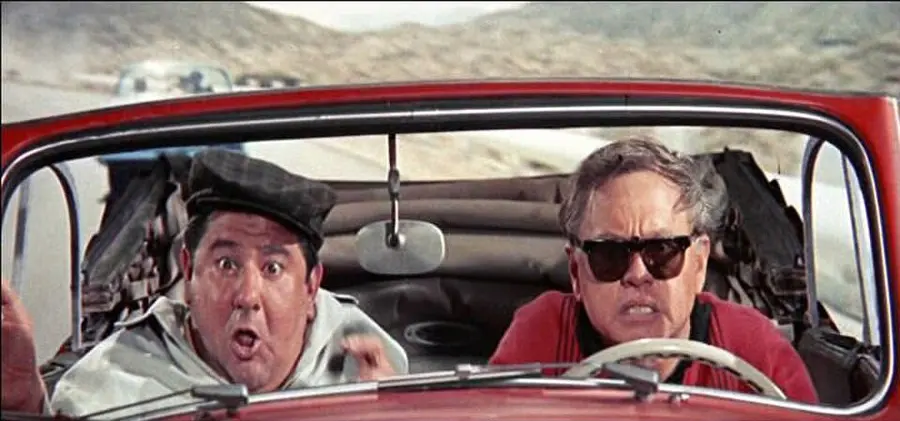
Rooney joined the vast comedy ensemble of Stanley Kramer‘s It’s a Mad, Mad, Mad, Mad World (1963), playing Ding Bell, one of a pair of television writers, alongside Buddy Hackett, who join a frantic race to find a buried fortune. The film became one of the most popular comedies of the decade.
📺 Television in the 1960s and 1970s
Rooney gave a remarkable one man performance as a disgraced jockey in “The Last Night of a Jockey,” a 1963 episode of The Twilight Zone, and starred in the sitcom Mickey (1964 to 1965), in which his son Tim played his son. He guest starred on dozens of series, including Combat!, The Fugitive, Night Gallery, and The Love Boat. In 1970 he began a long association with Rankin and Bass, voicing Santa Claus in the beloved stop motion special Santa Claus Is Comin’ to Town (1970) and later in The Year Without a Santa Claus (1974).
🐉 Pete’s Dragon (1977)
Rooney played Lampie, a lovable, hard drinking lighthouse keeper, in Disney’s musical fantasy Pete’s Dragon (1977), alongside Helen Reddy, Jim Dale, and Red Buttons, singing and dancing with the same exuberance he had shown four decades earlier.
🏇 The Black Stallion (1979)
When Francis Ford Coppola produced Carroll Ballard‘s The Black Stallion (1979), he cast Rooney as Henry Dailey, a retired jockey and horse trainer who helps a shipwrecked boy train a wild Arabian stallion for a championship race. The film was a critical and commercial triumph, and Rooney’s warm, wise performance earned him his fourth Academy Award nomination. He later reprised the role in the television series The Adventures of the Black Stallion (1990 to 1993).
When Francis Ford Coppola asked Rooney whether he could play a jockey in The Black Stallion, Rooney joked that he didn’t know because he had never played one before. In fact, he had played jockeys in at least three earlier films, including National Velvet.
🦊 The Fox and the Hound (1981)
Rooney provided the voice of the adult Tod, a red fox who grows up as the best friend of a hound dog, in Disney’s animated film The Fox and the Hound (1981), with Kurt Russell voicing the hound, Copper.
❤️ Bill (1981)
Rooney gave one of the most acclaimed performances of his career in the CBS television film Bill (1981), based on the true story of Bill Sackter, a man with an intellectual disability who struggles to build an independent life after spending most of his life in an institution. Dennis Quaid co-starred as the young filmmaker who befriends him. Rooney won the Emmy Award for Outstanding Lead Actor in a Limited Series or Special and the Golden Globe Award for the role, and he received another Emmy nomination for the sequel, Bill: On His Own (1983).
🧸 Silent Night, Deadly Night 5: The Toy Maker (1991)
In one of the most unusual roles of his late career, Rooney starred in the Christmas horror film Silent Night, Deadly Night 5: The Toy Maker (1991). The fifth entry in the Silent Night, Deadly Night series, it departed from the earlier films’ killer Santa story with a sinister twist on Pinocchio. Rooney played Joe Petto, a toy shop owner in Los Angeles whose deadly mechanical toys begin killing people during the holiday season. Made on a reported budget of about $250,000 and released directly to home video in November 1991.
🐷 Babe: Pig in the City (1998)
Rooney played Fugly Floom, an elderly clown with a troupe of performing animals, in George Miller‘s dark family fantasy Babe: Pig in the City (1998). He also starred in the Disney Channel film Phantom of the Megaplex (2000).
🏛️ Night at the Museum (2006 to 2014)
Rooney introduced himself to a new generation as Gus, a cantankerous retired night guard, in Shawn Levy’s family comedy Night at the Museum (2006), starring Ben Stiller, Dick Van Dyke, and Bill Cobbs. He made a cameo in The Muppets (2011), and in 2014, at ninety three and using a wheelchair, he reprised the role of Gus in Night at the Museum: Secret of the Tomb (2014), filmed just weeks before his death. The film was dedicated to his memory and to that of Robin Williams.
🏡 Andy Hardy
Summary: Playing Andy Hardy in sixteen films made Rooney the nation’s favorite teenager and the top box office star in America from 1939 to 1941.
🎬 A Family Affair (1937)
In 1937, MGM cast Rooney as Andy Hardy, the teenage son of a small town judge, in A Family Affair (1937), a modest picture intended as a B movie. Lionel Barrymore played Judge James Hardy. The film was an unexpected hit, and MGM launched a series.
📈 An American Institution
Lewis Stone took over as the wise, patient Judge Hardy, and Rooney’s Andy, an anxious, energetic, girl crazy teenager forever getting into scrapes, quickly became the heart of the series. In all, Rooney played Andy in sixteen films, including Love Finds Andy Hardy (1938), Andy Hardy Gets Spring Fever (1939), Andy Hardy Meets Debutante (1940), and Andy Hardy’s Double Life (1942), culminating in Andy Hardy Comes Home (1958), in which the grown up Andy returns to his hometown.
🇺🇸 The Idealized American Family
The Andy Hardy films offered Depression and wartime audiences a comforting portrait of small town American life, built around a loving family and the father son talks between Andy and the judge. Rooney’s Andy became one of the most beloved characters in film history and the image of what many parents hoped their teenagers would be.
🌟 Launching Future Stars
The series also served as a showcase for MGM‘s rising young actresses, including Judy Garland, Lana Turner, Esther Williams, Kathryn Grayson, and Donna Reed, all of whom appeared as Andy’s romantic interests early in their careers.
🏆 Box Office King
On the strength of the Andy Hardy films and his musicals, Rooney became the number one box office star in the United States in 1939, 1940, and 1941, outdrawing Clark Gable, Errol Flynn, and Tyrone Power. Between the ages of fifteen and twenty five, he made forty three films and became one of the highest paid actors in Hollywood.
🎵 Mickey and Judy
Summary: Rooney and Judy Garland became one of Hollywood’s most beloved teams in musicals such as Babes in Arms, Strike Up the Band, and Girl Crazy.
🐴 Thoroughbreds Don’t Cry (1937)
Rooney first appeared with Judy Garland in Thoroughbreds Don’t Cry (1937), a horse racing drama in which he played a jockey. The two young MGM stars became close friends and soon one of the most popular screen teams in Hollywood.
🎪 Babes in Arms (1939)
Their first great musical together was Busby Berkeley‘s Babes in Arms (1939), based on the Rodgers and Hart stage show, in which the children of out of work vaudevillians put on their own show to save their families. Rooney played Mickey Moran, and his singing, dancing, and impressions dazzled audiences. At nineteen, he became the first teenager ever nominated for an Academy Award and the second youngest Best Actor nominee in history.
🥁 Strike Up the Band (1940) and Babes on Broadway (1941)
Busby Berkeley directed the pair again in Strike Up the Band (1940), in which Rooney played a high school drummer determined to lead his band to a national radio contest, and Babes on Broadway (1941), in which they played young performers chasing Broadway dreams. The “let’s put on a show” spirit of these films became a lasting part of American popular culture.
🤠 Girl Crazy (1943)
Rooney and Garland’s final starring musical together was Girl Crazy (1943), featuring the songs of George and Ira Gershwin, in which Rooney played a playboy sent to a remote Western college. Garland also appeared in three of the Andy Hardy films, playing a girl hopelessly devoted to Andy.
💞 A Forever Friendship
Rooney spoke of Garland with deep affection throughout his life. He described their bond as something deeper than a romance, a love so close they could have come from the same womb, and said that long after her death in 1969 she remained with him in every heartbeat.
🎭 Sugar Babies and the Broadway Comeback
Summary: At 59, Rooney triumphed on Broadway in Sugar Babies with Ann Miller, earning a Tony nomination and a spectacular career revival.
💃 A Belated Broadway Debut
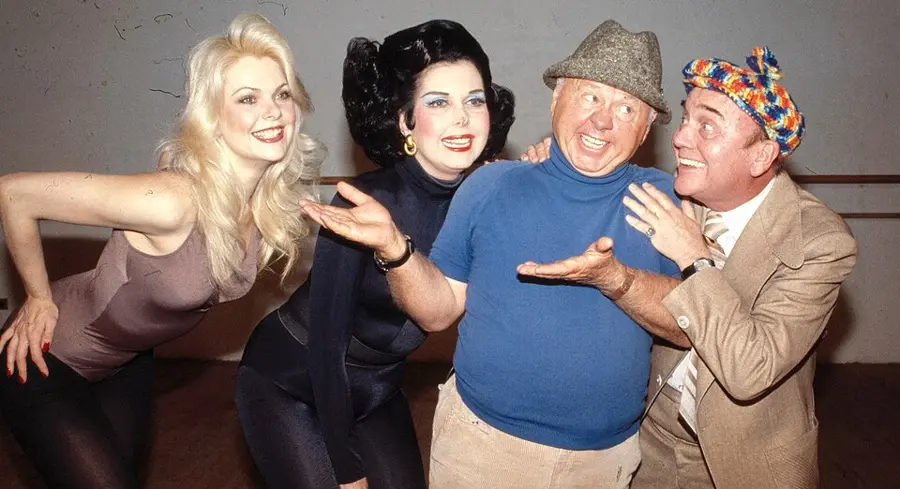
By the late 1970s, many in show business considered Rooney’s career finished. Then, on October 8, 1979, at the age of fifty nine, he made his Broadway debut in Sugar Babies, an affectionate tribute to the old time burlesque shows of his parents’ era, co starring the former MGM dancing star Ann Miller.
🎉 A Triumphant Run
The show opened to rave reviews and became a smash hit. Rooney and Miller performed it 1,208 times on Broadway and then toured with it for years, including an eight month run in London. Rooney earned Tony Award and Drama Desk Award nominations for Best Actor in a Musical, and he reportedly earned as much as $65,000 a week.
🎟️ More Stage Work
Rooney continued to work on stage for the rest of his life. He toured in Stephen Sondheim’s A Funny Thing Happened on the Way to the Forum, returned to Broadway in The Will Rogers Follies in the 1990s, and played the Wizard in a stage production of The Wizard of Oz at Madison Square Garden. From 2005 to 2011, he and his wife, Jan, toured the country in their own revue, Let’s Put on a Show.
❤️ Personal Life
Summary: Married eight times, including to Ava Gardner, Rooney endured financial ruin and family tragedy while raising nine children.
💍 Marriage to Ava Gardner (1942 to 1943)
In 1942, Rooney married his first wife, Ava Gardner, then an unknown twenty year old MGM starlet who would later become one of Hollywood‘s great beauties. The marriage lasted only about a year and ended in divorce in 1943.
💍 Marriage to Betty Jane Phillips (1944 to 1949)
While stationed in Alabama during the war, Rooney married Betty Jane Phillips, who later became a singer under the name B. J. Baker. They had two sons, Mickey Rooney Jr. and Tim Rooney, before divorcing after the war.
💍 Marriage to Martha Vickers (1949 to 1951)
Rooney married the actress Martha Vickers in 1949. They had a son, Teddy Rooney, who later appeared with his father in Andy Hardy Comes Home (1958). The couple divorced in 1951.
💍 Marriage to Elaine Mahnken (1952 to 1958)
In 1952, Rooney married the actress Elaine Mahnken, who later acted under the name Elaine Devry. They divorced in 1958.
💔 Marriage to Barbara Ann Thomason (1958 to 1966)
In 1958, Rooney married the model and actress Barbara Ann Thomason, who performed as Carolyn Mitchell. They had four children: Kelly Ann, Kerry, Michael, and Kimmy Sue. In January 1966, while Rooney was filming in the Philippines, Barbara was murdered at their Los Angeles home by the actor Milos Milos, who then took his own life, using a gun belonging to Rooney. The tragedy devastated the family.
💍 Marriages to Marge Lane and Carolyn Hockett
Rooney next married Marge Lane, a friend of Barbara’s, in 1966, but the marriage lasted only about one hundred days. He married Carolyn Hockett in 1969, and they had two children, Jimmy and Jonelle, before divorcing in 1975.
💍 Marriage to Jan Chamberlin (1978 to 2014)
In 1978, Rooney married his eighth and final wife, the singer Jan Chamberlin. Their marriage lasted thirty six years, longer than all his previous marriages combined, and the couple performed together on stage for many years. They separated in 2012 but remained married until his death.
💸 Financial Troubles
Although he earned many millions over his career, Rooney struggled with money for much of his life. Gambling, multiple divorces, and poor management drove him into bankruptcy in 1962, and he declared bankruptcy again in 1996.
✝️ Faith and Health
In the late 1970s, Rooney became a born again Christian, and his faith became an important part of his later life. He struggled with bipolar disorder and with a long addiction to sleeping pills, which he finally overcame in 2000, when he was nearly eighty.
📚 Author
Rooney published a memoir, Life Is Too Short, in 1991, filled with his trademark self deprecating humor, and a novel about a child star, The Search for Sonny Skies, in 1994.
When the original Silent Night, Deadly Night was released in 1984, Mickey Rooney was among its public critics, condemning the film’s killer Santa premise. Seven years later, he took the starring role in Silent Night, Deadly Night 5: The Toy Maker.
🕊️ Later Years and Death
Summary: An Honorary Oscar recipient who testified against elder abuse, Rooney worked into his nineties and died on April 6, 2014, at 93.
🏆 Honors and Recognition
Rooney received a special Academy Juvenile Award in 1939, shared with Deanna Durbin, for bringing the spirit of youth to the screen. He received four competitive Academy Award nominations, for Babes in Arms (1939), The Human Comedy (1943), The Bold and the Brave (1956), and The Black Stallion (1979). In 1983 the Academy of Motion Picture Arts and Sciences presented him with an Honorary Academy Award recognizing his extraordinary lifetime of achievement. He also won an Emmy Award and a Golden Globe Award for Bill (1981).
⚖️ Speaking Out Against Elder Abuse
In his final years, Rooney accused members of his own family of financial and emotional abuse. In February 2011 he obtained a restraining order against his stepson, and on March 2, 2011, he testified before a special committee of the United States Senate considering legislation to combat elder abuse, describing feeling trapped, frightened, and helpless. His finances were placed under the control of a conservator, who described him as completely competent. The family members he accused denied the allegations, and the restraining order was later replaced by a confidential settlement.
🎬 Working to the End
Rooney continued performing into his nineties, appearing in films, on stage, and even making his British pantomime debut in his late eighties. His final film appearance came in Night at the Museum: Secret of the Tomb (2014), completed just weeks before his death.
⚰️ Death
Mickey Rooney died on April 6, 2014, at the age of 93, at his home in the Studio City area of Los Angeles, California. He died of natural causes, including complications from diabetes. He was survived by eight of his children, as well as stepchildren, nineteen grandchildren, and several great grandchildren. A memorial gathering of friends and family, including the actor Mickey Rourke, was held on April 18, 2014, and a private funeral took place on April 19 at Hollywood Forever Cemetery in Los Angeles, where he was buried. Despite having earned millions over his career, his estate was valued at only about $18,000 at his death.
🏆 Legacy
⏳ A Career Without Equal
Few performers in any era have matched the sheer length of Mickey Rooney‘s career. From vaudeville stages in the early 1920s to a Hollywood blockbuster in 2014, he worked in virtually every form of entertainment the twentieth century produced. His career was a living history of American show business.
🎭 A Complete Entertainer
Rooney could do it all: sing, dance, play drums and piano, perform comedy, and deliver devastating drama. Directors and fellow actors from Laurence Olivier to Marlon Brando to Clarence Brown regarded him as one of the most naturally gifted performers who ever lived, an actor who seemed to need only a single rehearsal to deliver a perfect scene.
🔄 The Ultimate Comeback Artist
Rooney’s life was a series of rises, falls, and resurrections. Again and again, when Hollywood wrote him off, he returned with an acclaimed performance, a hit Broadway show, or a beloved character role. His resilience became a symbol of the persistence that show business demands.
💔 A Cautionary Tale
Rooney’s struggles with money, marriage, and family, and the troubled circumstances of his final years, have also made him a cautionary figure, a reminder of the costs that early fame and the old studio system could exact. His testimony about elder abuse brought national attention to an issue affecting countless older Americans.
🏆 Mickey Rooney’s Place in American Entertainment
Mickey Rooney was the boy next door for an entire nation, the teenage king of Hollywood’s golden age, and a survivor who kept performing for nearly ninety years. From Puck and Andy Hardy to his musicals with Judy Garland, his acclaimed character roles, and even a killer toymaker in a Christmas horror film, he never stopped working and never stopped entertaining. His legacy is ultimately one of irrepressible talent and resilience, of a vaudeville baby who became the biggest star in the world, lost nearly everything more than once, and kept getting back up to put on a show.
🗣️ Why He Still Matters
Mickey Rooney still matters because his career is a living map of American entertainment, from silent shorts and vaudeville to golden age musicals, live television, Broadway, cult horror, and modern blockbusters. His Andy Hardy films still shape how Americans picture small town family life, his musicals with Judy Garland gave the world the timeless spirit of “let’s put on a show,” and his performances in Boys Town, Bill, and The Black Stallion still move audiences today. His struggles and comebacks remind us of both the price of fame and the power of resilience, and his courageous testimony on elder abuse continues to protect older Americans long after the final curtain.